

2025 High School Graduation Exam: Same exam questions, same exam period, but to what extent will provinces have autonomy?
According to experts, the Ministry of Education and Training's draft proposal for the high school graduation exam starting in 2025, which decentralizes power and authority to local governments, is entirely correct.
According to the draft plan for organizing the high school graduation exam from 2025, the Ministry of Education and Training will provide overall direction, issue regulations and guidelines for organizing the exam; develop a question bank and create exam papers to provide to localities organizing the exam; stipulate a common exam schedule; and inspect and supervise the organization of the exam and the recognition of high school graduation.
Local authorities will direct and organize the high school graduation examination and recognition process; they will also inspect, check, and supervise the organization of the high school graduation examination and recognition process in their localities according to the Ministry's general examination schedule.
Meanwhile, over the past eight years, the organization of the high school graduation exam has also undergone changes towards gradual decentralization to the local level. Specifically, in the period from 2015 to 2019, following a roadmap for gradual decentralization to the local level, the exam was divided into two clusters in 2015 and 2016, and then into one cluster from 2017 onwards in each province, chaired by the Department of Education and Training, with universities and colleges coordinating the organization.
Since 2020, the high school graduation exam has been fully organized and overseen by local authorities, with higher education institutions primarily participating in inspection, examination, and supervision activities. This decentralization has proven effective, promoting autonomy, accountability, and increased proactiveness of local authorities.
Is it necessary for local authorities to make their own decisions independently?
Over the years, Ho Chi Minh City has repeatedly requested autonomy in determining high school graduation. Seven years ago (2016), during a meeting with the then Minister of Education and Training, Mr. Phung Xuan Nha, the Ho Chi Minh City Department of Education and Training proposed special mechanisms, including a request to grant provinces and centrally-administered cities the authority to conduct examinations, assessments, and recognize high school graduation.
Accordingly, the Ministry of Education and Training will periodically organize assessments of the quality of education in provinces and cities according to international standards (PISA, PASEC, etc.) and widely publicize the results nationwide.
At the same time, high schools are given autonomy in adjusting the teaching time for subjects while ensuring the required knowledge and skills standards, proactively developing integrated, interdisciplinary curricula, and diversifying assessment methods to suit the actual teaching situation in each type of school, including specialized schools and modern, advanced schools.
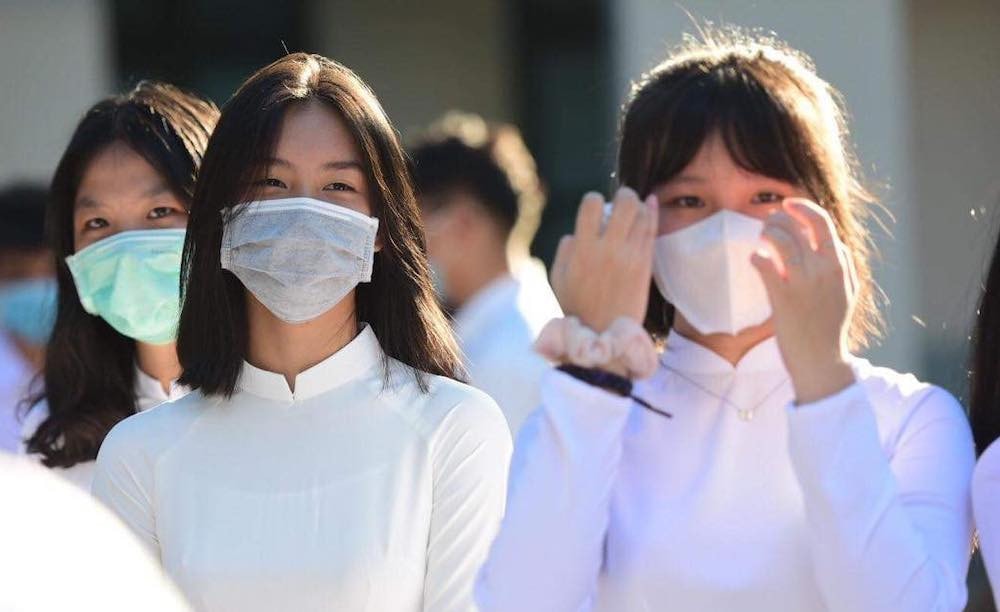 |
| Students in Ho Chi Minh City. Illustration photo: Thanh Tung |
In 2018, at an online conference, the Ho Chi Minh City Department of Education and Training continued to propose this issue. In 2021, in its report on the implementation of Resolution 16 and Resolution 54, the Ho Chi Minh City Department of Education and Training once again requested the application of a special mechanism. The Department continued to express its desire for the Ministry of Education and Training to delegate authority to provinces and cities to conduct assessments and certify high school graduation.
Most recently, the proposal for autonomy was reintroduced by the Department of Education and Training in the draft Report on the Development of Education and Training in Ho Chi Minh City for the period 2021-2025 and vision 2030. In this report, the Department of Education and Training recommends that the Ministry of Education and Training assign the People's Committee of Ho Chi Minh City full responsibility for directing all stages of organizing examinations and recognizing high school graduation in the locality.
The exam questions are developed by the Departments of Education and Training in accordance with the regulations of the examination rules and ensure that they adhere to the structure and format of the exam questions issued by the Ministry of Education and Training.
Gradually decentralizing power to local authorities is appropriate.
According to Mr. Le Truong Tung, Chairman of the Board of Directors of FPT University, the current exam system is stable and should not be left to local authorities to decide independently. The draft plan for the high school graduation exam after 2025 is clear: students will be tested on what they have learned, and there will still be 6 subjects.
However, to ensure students receive the best comprehensive education, the regulations stipulate three core subjects: Literature, Mathematics, and Foreign Language, while the remaining three subjects will be determined in the middle of the second semester each year. Regarding the decentralization and delegation of authority in organizing exams, it remains the same, meaning the Ministry and local authorities will organize the exams.
Regarding Ho Chi Minh City's proposal to allow localities to independently decide on the organization of graduation exams, Mr. Tung said: "Perhaps it's not necessary yet, because the current exam system is working well and doesn't need many changes."
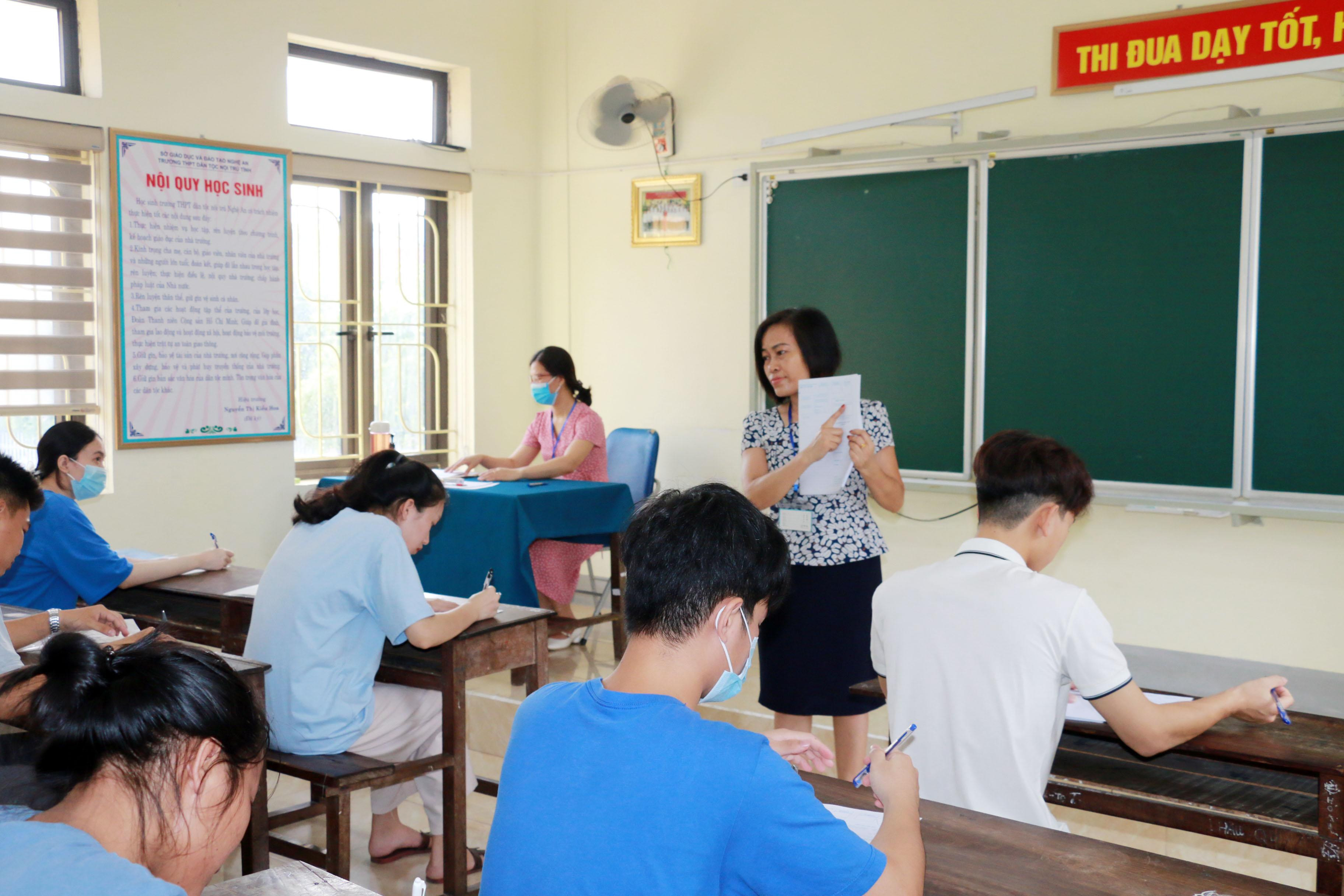 |
Students from the Provincial Boarding High School for Ethnic Minorities participating in the 2022 high school graduation exam. Photo courtesy of My Ha. |
Regarding the issue of computer-based testing, Mr. Tung believes that thorough preparation is necessary because it involves a large number of people. Localities and regions that find it suitable should pilot it first. As for the new curriculum, which is oriented towards assessing students' competencies but uses separate subject-based exams, only adjustments to the exam questions are needed to ensure suitability.
The purpose of the graduation exam is also to "serve as a basis for evaluating the quality of teaching and learning in high schools and the guidance work of educational management agencies" (graduation exam regulations), therefore using a common exam paper from the Ministry is necessary.
Mr. Nguyen Van Ngai, former Deputy Director of the Ho Chi Minh City Department of Education and Training, believes that, frankly speaking, Ho Chi Minh City currently has the necessary conditions, capabilities, and experience to independently assess and certify high school graduation for 12th-grade students studying in Ho Chi Minh City (including regular high school students and students in the adult education program).
However, Mr. Ngai believes that the Ho Chi Minh City Department of Education and Training should not do this at present, as it could create a disadvantageous situation for students studying in Ho Chi Minh City. Firstly, according to Mr. Ngai, many universities still use the results of the high school graduation exam as one of the methods for admitting students to their institutions.
 |
Candidates listen to the Regulations for the 2022 High School Graduation Examination. (Photo: My Ha) |
The second reason is that when students study abroad, a diploma based on the results of a local exam may not necessarily be considered as valuable or equivalent to a diploma obtained through a national exam organized by the central government (Ministry of Education and Training).
Therefore, instead of requesting autonomy in the examination and recognition of high school graduation, the Ho Chi Minh City Department of Education and Training proposes that the Ministry of Education and Training decentralize the examination and recognition of high school graduation to each province/city, to be organized under the direction, inspection, supervision, and monitoring of the Ministry. Provinces/cities facing difficulties should report to the Ministry of Education and Training for specific guidance and assistance.
From the perspective of the Ministry of Education and Training, the nationwide high school graduation exam, as it has been and continues to be held, allows the Ministry to monitor the process, quality of education, management, and learning outcomes of students nationwide and in each province/city, in order to provide appropriate guidance and adjustments in accordance with the general policies and directions of the central government.
The Ministry should strengthen and organize regular inspections and audits throughout the teaching process and student learning in each locality to promptly encourage and reward those who perform well; and correct, assist, and address those who have shortcomings or violations.
Mr. Ngai affirmed that he basically agrees with the draft published by the Ministry of Education and Training. In particular, the draft outlines a direction for gradually decentralizing the organization of high school graduation exams to more provinces and cities.
The Ministry of Education and Training will provide overall direction, issue regulations and guidelines for organizing the exam; develop a question bank and create exam papers to provide to localities organizing the exam; stipulate a common exam schedule; and inspect and supervise the organization of the exam and the recognition of high school graduation.
Local authorities directing, organizing, and reviewing high school graduation exams; inspecting, checking, and supervising the organization of high school graduation exams and review processes at the local level according to the Ministry's general exam schedule is entirely appropriate.
Currently, the Ministry has significantly and clearly decentralized the organization of the high school graduation exam to local authorities. Local authorities, specifically the People's Committees of provinces/cities, are primarily responsible for organizing the exam within their respective areas.
The Ministry of Education and Training is responsible for issuing regulations, developing exam questions, and conducting inspections, examinations, and supervision. In recent exams, especially in 2020, 2021, and 2022, this model has shown many advantages, with increasingly specific decentralization and clear responsibilities.
As we know, there are currently differences between provinces and cities, from the capacity to create exam questions to the organization of assessments and question development, while ensuring uniformity in quality, universality, and similarity across localities requires careful planning and a clear roadmap.
To ensure consistency, the Ministry remains responsible for issuing exam regulations, preparing exam questions, and conducting inspections and audits; other tasks are entirely the responsibility of the localities. The Ministry will continue to focus on improving regulations and conducting inspections and audits at both the ministerial and local levels to ensure the exam results are as safe, objective, and transparent as possible.