

Light the flame of gratitude
(Baonghean.vn) - Remembering April 30th, the younger generation, who did not know the smell of bombs and bullets, the fortunate citizens born after the war, are enjoying the fruits of national independence and a unified country. Let us never forget everything that our nation has gone through...
Smash it to pieces.old arguments
As major national holidays approach, especially April 30th each year, many social media and multimedia platforms run by overseas Vietnamese see the appearance of numerous articles and video clips edited with bitter, resentful, and extremist tones, denying the true values and facts.Distorting and misrepresenting the meaning of the resistance war against the US.It's ironic that they're raising so many questions and making arguments like, "Was the Vietnam War a proxy war, an ideological war?", and "Was it really necessary to go through war to gain independence? How much more valuable would it have been if we had found a different, less bloody path to our national independence?"...
The essence of these arguments is to deny the nature, righteousness, and achievements of the resistance war against the US, to insult the honor of the nation and the conscience of the era, and to justify the crimes committed against our people by the US imperialists and their henchmen.
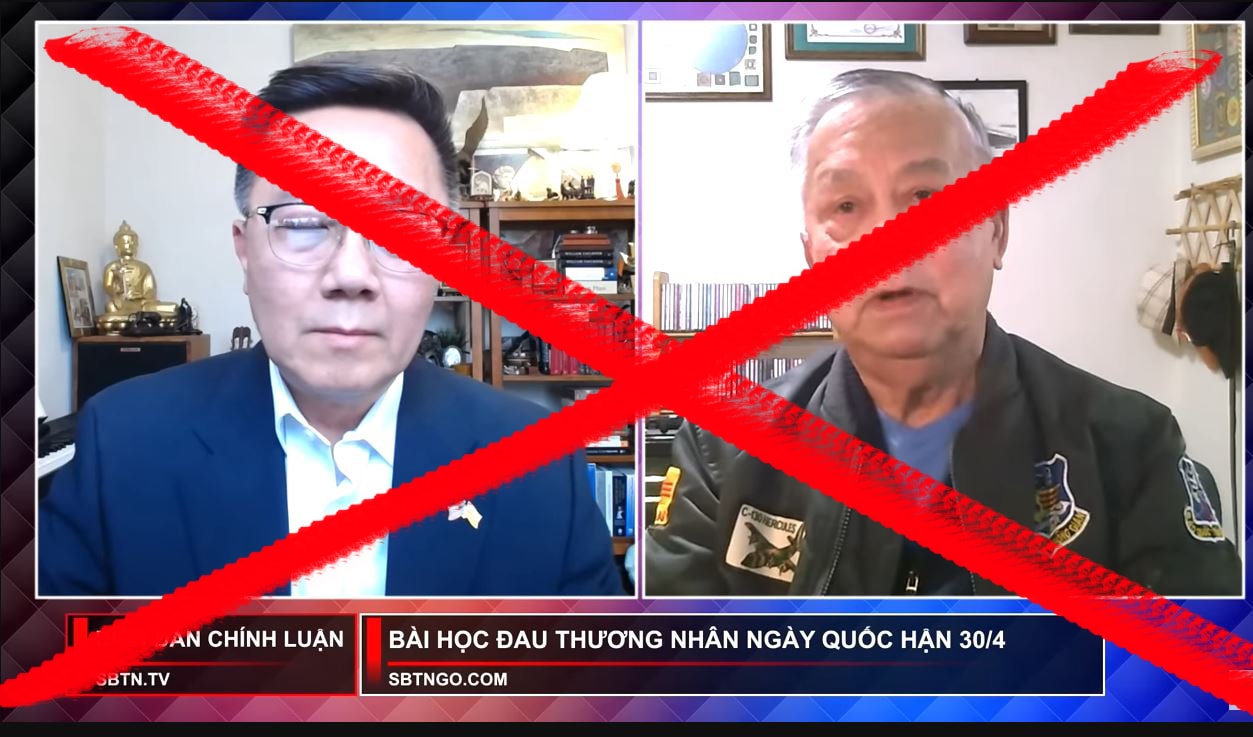 |
Exploiting social media, exiled reactionary elements organize live streams to distort and slander the achievements of the Vietnamese revolution, aiming to deny its accomplishments. |
The practical experience of 30 years of revolutionary war from 1945 to 1975 and 21 years of resistance against the US for national salvation confirms that the US interventionist war was essentially a continuation of the French colonial war of aggression, carried out by the US and the Saigon government, and was absolutely not a "civil war" or an "ideological war".
The history of the Vietnamese nation is a history of thousands of years of nation-building and national defense. To have the beautiful land and landscape of Vietnam today, many generations of Vietnamese people have faced numerous wars of invasion and foreign domination, sacrificing countless lives and resources to win and protect national independence. More than anyone else, the Vietnamese people understand the price of peace and cherish it. But when the country is invaded, the land is trampled, and the homeland is divided, the Vietnamese people will not submit to slavery; they must rise up to fight and drive out the enemy, as the lyrics of a song say, "We love roses, but the enemy forces us to embrace guns."
The resistance war against the US, for national liberation, from 1954 to 1975 was not a "civil war," meaning a war between two factions within a country without foreign intervention or presence. In reality, it was a resistance war of the Vietnamese people against the aggression of the US imperialists and their puppets. Although the US attempted to "civilize" this war through its "Vietnamization" strategy—essentially "using war to fuel war, using Vietnamese to fight Vietnamese"—it failed.
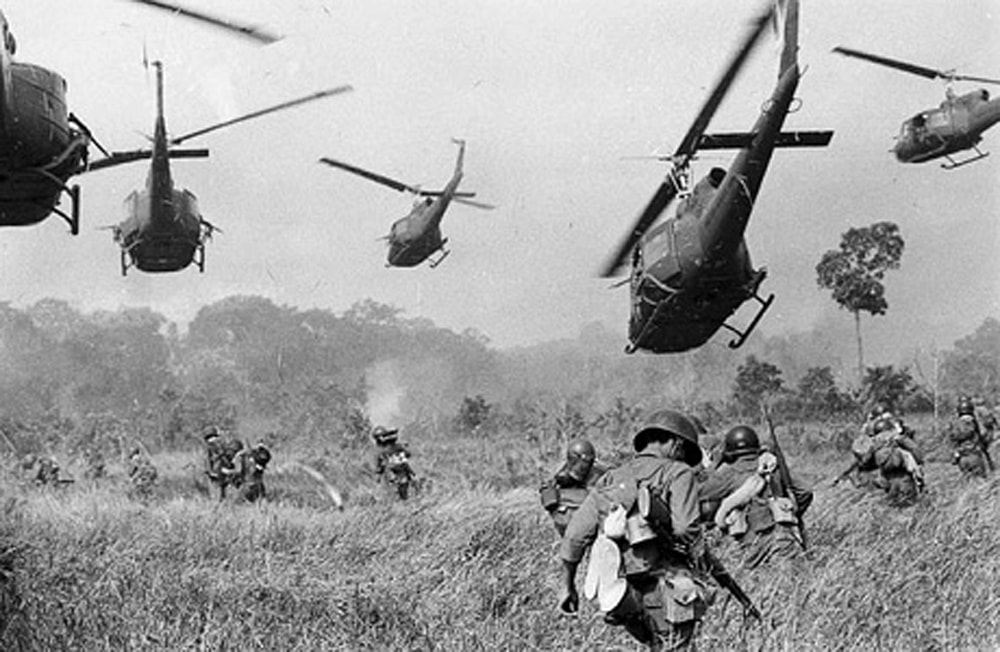 |
Starting in 1965, the US began escalating the war in Vietnam. In the photo, a US helicopter is flying over Tay Ninh, firing into the forest ahead to clear a path for infantry preparing for an offensive to hunt down Viet Cong forces. (Archival photo) |
The resistance war against the US for national salvation was absolutely not a "proxy war" because it was only true from one side: the US imperialists commissioned the Saigon government to act as a "frontline against Communism" for the US in Southeast Asia. The Vietnamese people's resistance against the US imperialists was primarily for national independence and reunification, relying mainly on self-reliance, with some assistance from international friends, but absolutely without any "assignment of tasks" from outside, and without carrying out any "attached" tasks.
Always keep the flame of gratitude burning.
At 11:30 a.m. on April 30, 1975, the revolutionary flag flew atop the Independence Palace, signaling the victorious end of the 21-year resistance war against the US, liberating the South and unifying the country. However, achieving this historic event on April 30 was by no means simple or easy. The Vietnamese people had to endure more than 20 years of hardship, heroism, and unwavering determination to fight for national independence and reunification.
 |
After the Geneva Accords were signed, restoring peace in Indochina, Vietnam was divided by a provisional demarcation line at the 17th parallel, at Hien Luong Bridge over the Ben Hai River (Vinh Thanh commune, Vinh Linh district, Quang Tri province). Photo: LIFE |
The 17th parallel of the Ben Hai River, the Hien Luong Bridge in Quang Tri province, became a place of distance and separation, dividing the country into two parts for a grueling 20 years. When national reunification could not be achieved through general elections as stipulated in the 1954 Geneva Agreement due to the conspiracies and schemes of the US imperialists and their puppets, the Vietnamese people had only one choice: to proceed with reunification.national liberation warTo drive out neocolonialism, liberate the South, and unify the country.
The aspiration for national reunification is a legitimate desire, a sacred demand of the nation, and to realize that aspiration, the army and people of both North and South Vietnam have upheld the ideal of "Nothing is more precious than independence and freedom."
The North simultaneously built socialism, fulfilled its role as a major rear base for the great front line in the South, and shared the burden with its compatriots in the South to fight against two wars of destruction waged by the US air and naval forces.
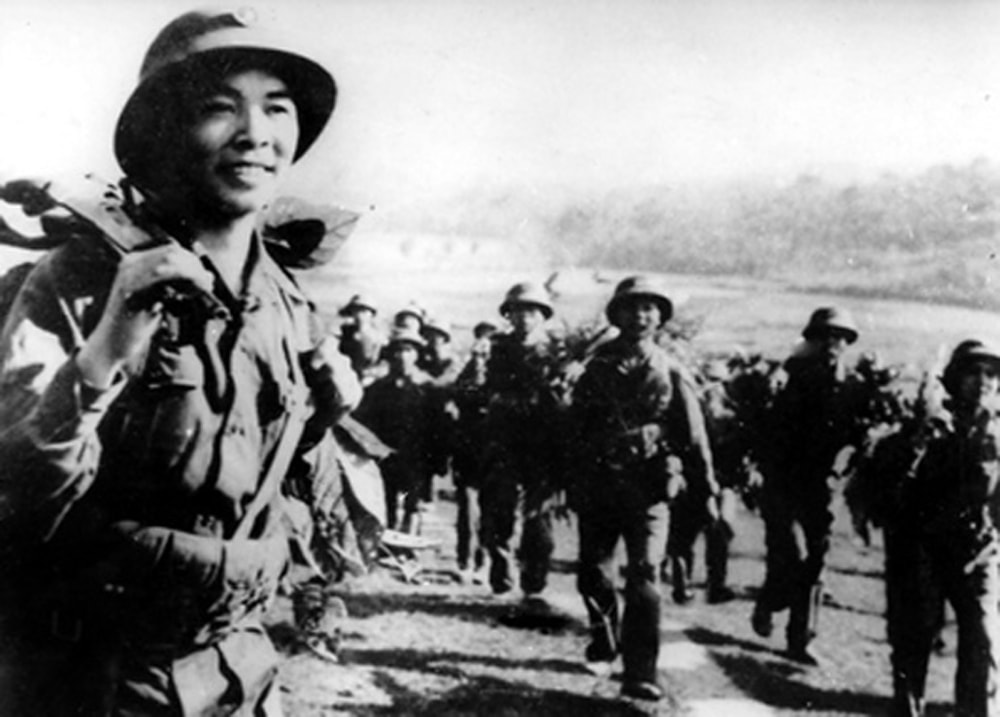 |
Young people from North Vietnam eagerly set off to fight in the South. (Photo: Archival material) |
Mothers successively bid farewell to their sons as they enlisted in the army to "march across the Truong Son Mountains to save the country," and then, "three times they bid farewell to their sons, two times they wept silently." These Heroic Vietnamese Mothers have carved immortal monuments in the hearts of the nation, such as Mother Nguyen Thi Thu and Mother Van Thi Thua in Quang Nam, Mother Le Thi He and Mother Tran Thi Mit in Quang Tri, Mother Nguyen Thi Ranh in Cu Chi, Mother Le Thi Tu in Binh Duong, Mother Pham Thi Ngu in Binh Thuan, and Mother Le Thi Soi in Thanh Hoa... These mothers not only sacrificed their youth for the country but also lost their husbands, sons, and beloved grandsons for the cause of national liberation. How noble, how great, yet how painful and pitiable these women were.
War bestowed upon these virtuous women that great but also incredibly painful title. Their sacrifice is worthy of all Vietnamese people calling them by the most sacred word: Mother. These Heroic Vietnamese Mothers deserve to have monuments erected in their honor, and they will always be an indomitable monument in the hearts of the Vietnamese nation.
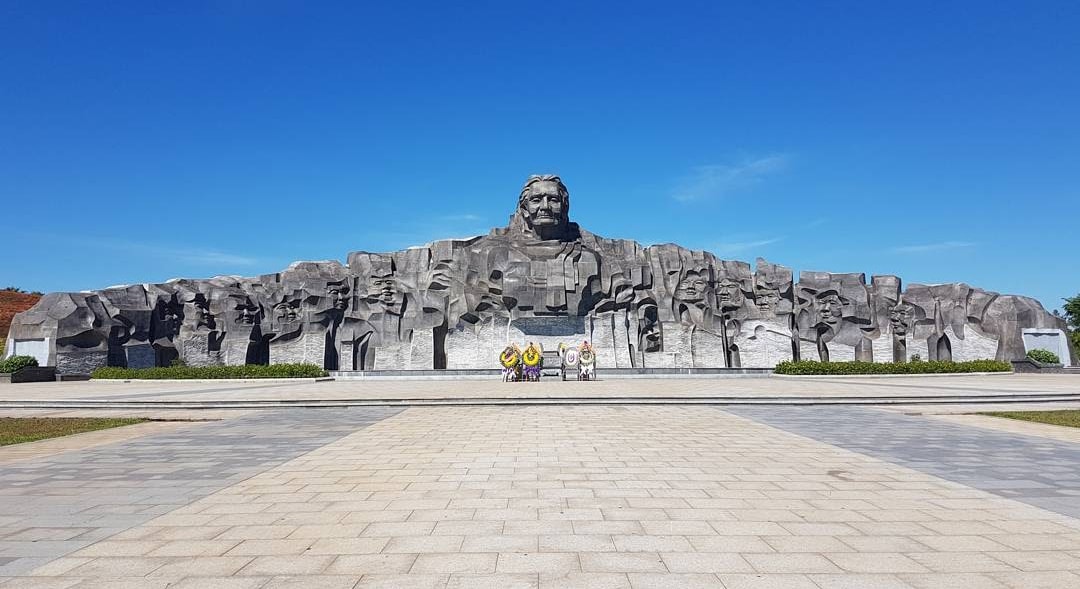 |
The Mother Thu Monument - one of the enduring symbols of the strength of the Vietnamese nation. Photo: Archival material. |
Then, answering the call of the Fatherland, tens of thousands of young volunteers and civilian laborers braved the gunfire to build roads and fill bomb craters, creating the legendary Truong Son Road, and immortalizing the epics of Ham Rong Bridge, Hoang Mai Bridge, Cam Bridge, Hoa Tien Cave, Truong Bon, Dong Loc Crossroads, Tam Co Cave, Ben Thuy Ferry, Gianh Ferry, Xuan Son Ferry, Trong Dai Ferry, the victorious Highway 20, and the heroic Highway 9...
The young women and female volunteers, embodying the spirit of "Three Ready" and "Five Volunteers," were always ready to volunteer and head to the front lines in response to the call of the nation, dedicating their youth and volunteering to go to the most difficult places, the most fiercely contested areas, such as Le Thi Tuyen at Ham Rong Bridge in Thanh Hoa, the 12 girls of Truong Bon, the 10 young female volunteers at Dong Loc Crossroads... They bravely leveled mountains, built roads, filled bomb craters, and courageously sacrificed themselves buried by enemy bombs and bullets, creating immortal epics. These women and girls dedicated their youth to the Fatherland to write the legendary Truong Son Road. Thousands of female soldiers of Truong Son have laid down their lives in the vast Truong Son mountains, contributing to the shining tradition of "Heroic, indomitable, loyal, and capable" Vietnamese women.
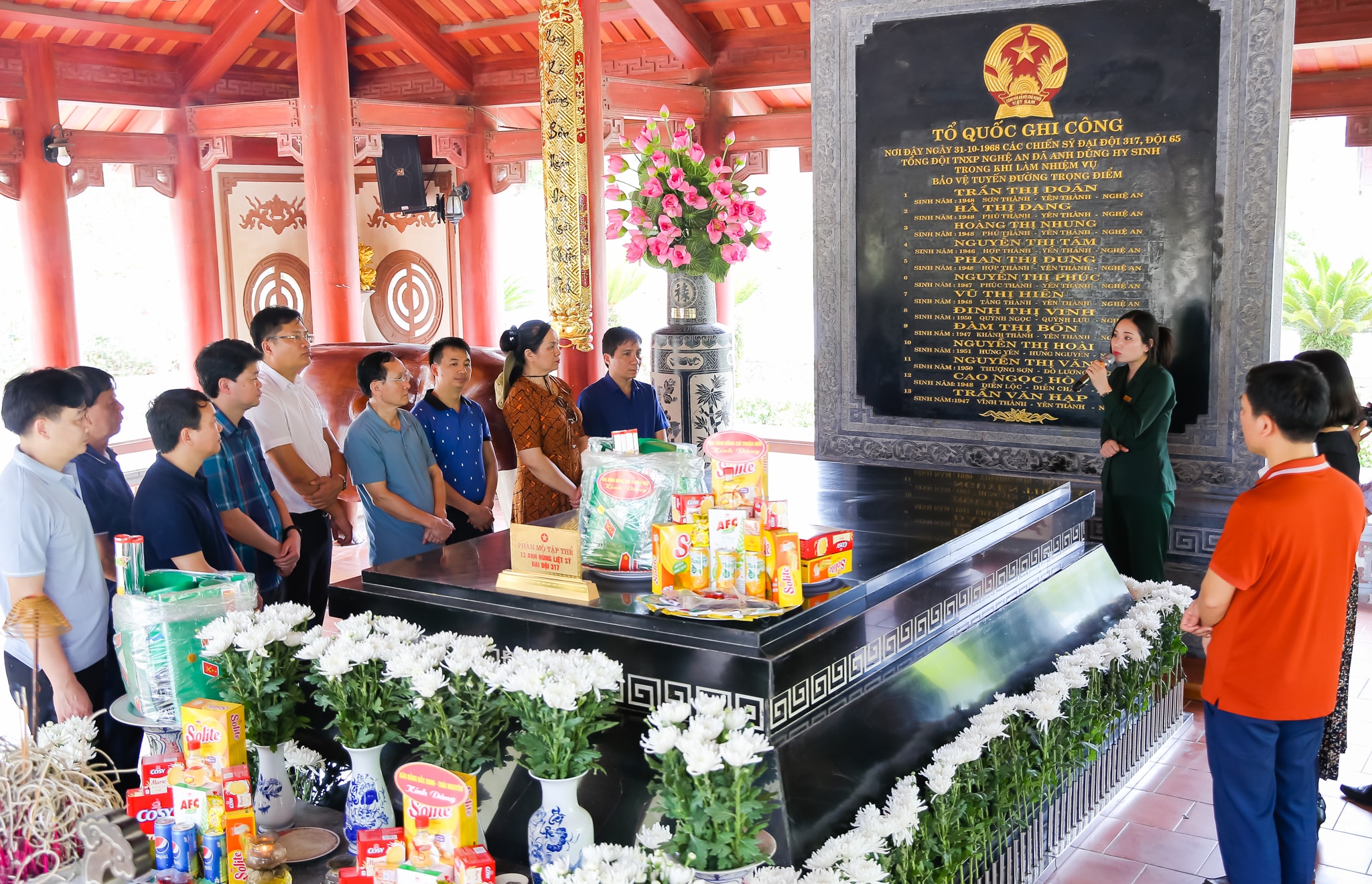 |
Visitors listen to a guide introducing the Truông Bồn Historical Site and the heroic sacrifice of the 13 martyrs. Photo: Lâm Tùng |
During the war against the US, the Central Highlands was one of the fiercest battlefields, where both sides deployed their most elite forces. The ferocity of bombs and bullets, the constant hunger and cold, the scarcity of rice and salt, the lack of medicine for the sick, and the debilitating jungle fevers all contributed to the extremely difficult and arduous conditions. To support the fighting, the Pa Cô, Vân Kiều, Ba Na, Jarai, and Ê Đê ethnic groups along the western side of the Trường Sơn mountain range, the Central Highlands, and the Southeast region sheltered and protected the cadres, carefully saving every grain of rice, potato, and corn, and carrying supplies and ammunition across hills and streams for the soldiers.
The victory of April 30th, 48 years ago, was a shared victory of the entire nation, of national unity, of the bond between the army and the people, of the rear supporting the front lines, including the immense contributions of the ethnic minority people of the majestic Central Highlands.
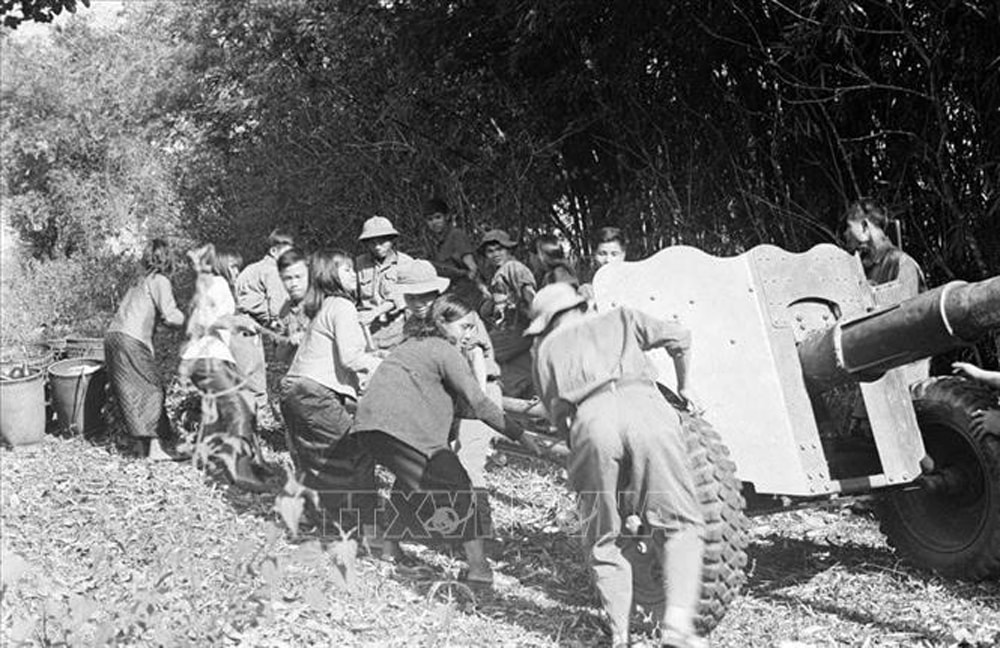 |
People of the Central Highlands, along with soldiers, pulled artillery to capture the high peaks in Pleiku during the Central Highlands Campaign, marking the beginning of the General Offensive and Uprising of Spring 1975. Photo: Archival material. |
Remembering April 30th, we, the younger generation who did not know the smell of bombs and bullets, the fortunate citizens born after the war, are enjoying the fruits of national independence and a unified country. Let us never forget everything our nation has gone through, everything our army and people have struggled to fight for and bravely sacrificed for the aspiration of national unity.
On our journey south along National Highway 1A, we must pass over Hien Luong Bridge, spanning the Ben Hai River as it flows into Cua Tung Bay. Let's pause and observe what we see at this historical site to understand why it is a Special National Monument. Let's be silent and reflect on why Hien Luong Bridge and the Ben Hai River are historical witnesses bearing the pain of 20 long years of national division, and why they have become a symbol of the aspiration for national reunification. Throughout those 20 years leading up to the final victory, driven by the aspiration for national reunification, the Vietnamese people have etched glorious milestones into history. From the "Uprising" movement (1959-1960) to the victory at Ap Bac (January 1963), from the victories at Nui Thanh and Van Tuong (August 1965) to the Tet Offensive and Uprising of 1968, from the strategic offensive of Spring-Summer 1972 to the Spring 1975 General Offensive and Uprising, with its peak being...Ho Chi Minh campaignComplete victory. Everything is interconnected through dialectical reasoning and cause and effect.
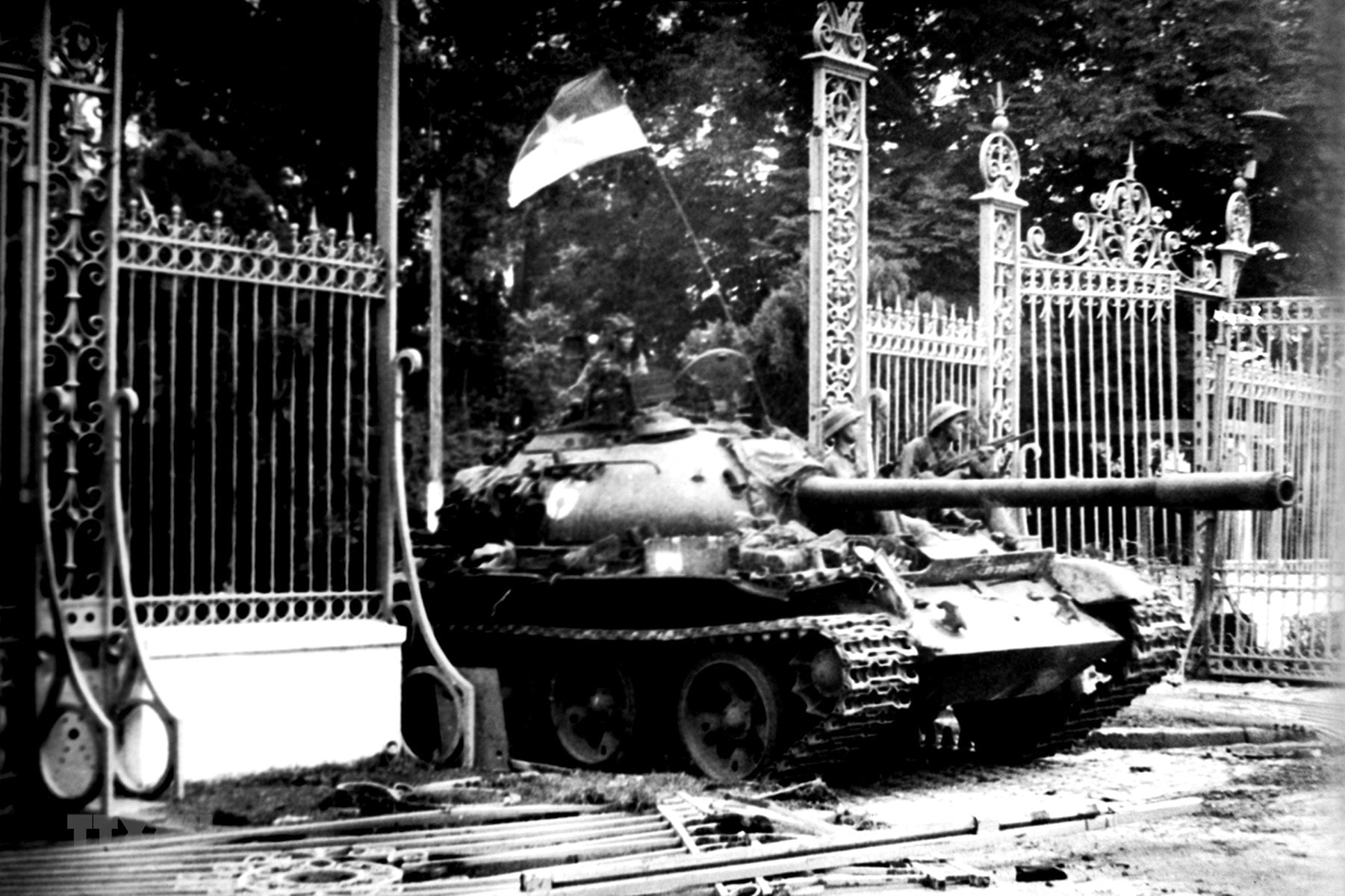 |
Liberation Army tanks capture the Presidential Palace of the Saigon puppet regime. Photo: Tran Mai Huong/VNA |
And the image of the revolutionary flag planted atop the Independence Palace at 11:30 AM on April 30, 1975, was the result of countless drops of sweat, effort, resources, blood, and lives of the Vietnamese army and people fighting and serving in the struggle for national independence. The consequences of that war to unify the country were thousands of martyrs' cemeteries, millions of people affected by Agent Orange, and hundreds of thousands of women who lost their husbands and children. Many revolutionary fighters were captured, tortured, imprisoned, and killed in various prisons, from the Nine Tunnels Prison (Hue) to Lao Bao Prison, Buon Ma Thuot Prison, Kon Tum Prison, Chi Hoa Prison, from Phu Quoc Prison to Con Dao Prison...
The war has gradually receded into the past, but tens of thousands of soldiers still lie hidden somewhere on the hills, at the bottom of rivers and streams, in the ancient forests, and in the vast seas of Truong Sa and Hoang Sa. It is heartbreaking that in many martyrs' cemeteries throughout the country, many graves are still marked with the inscription "Unknown Martyr." Those born after that war, when visiting the National Martyrs' Cemetery on Highway 9 or the Truong Son National Martyrs' Cemetery, will understand the high price of peace. The larger the cemetery, the greater the sorrow. This is to remind future generations to understand the line "The flag stained with the blood of victory carries the soul of the nation" from the national anthem, to explain why April 30th is a national holiday and why we all get a day off.
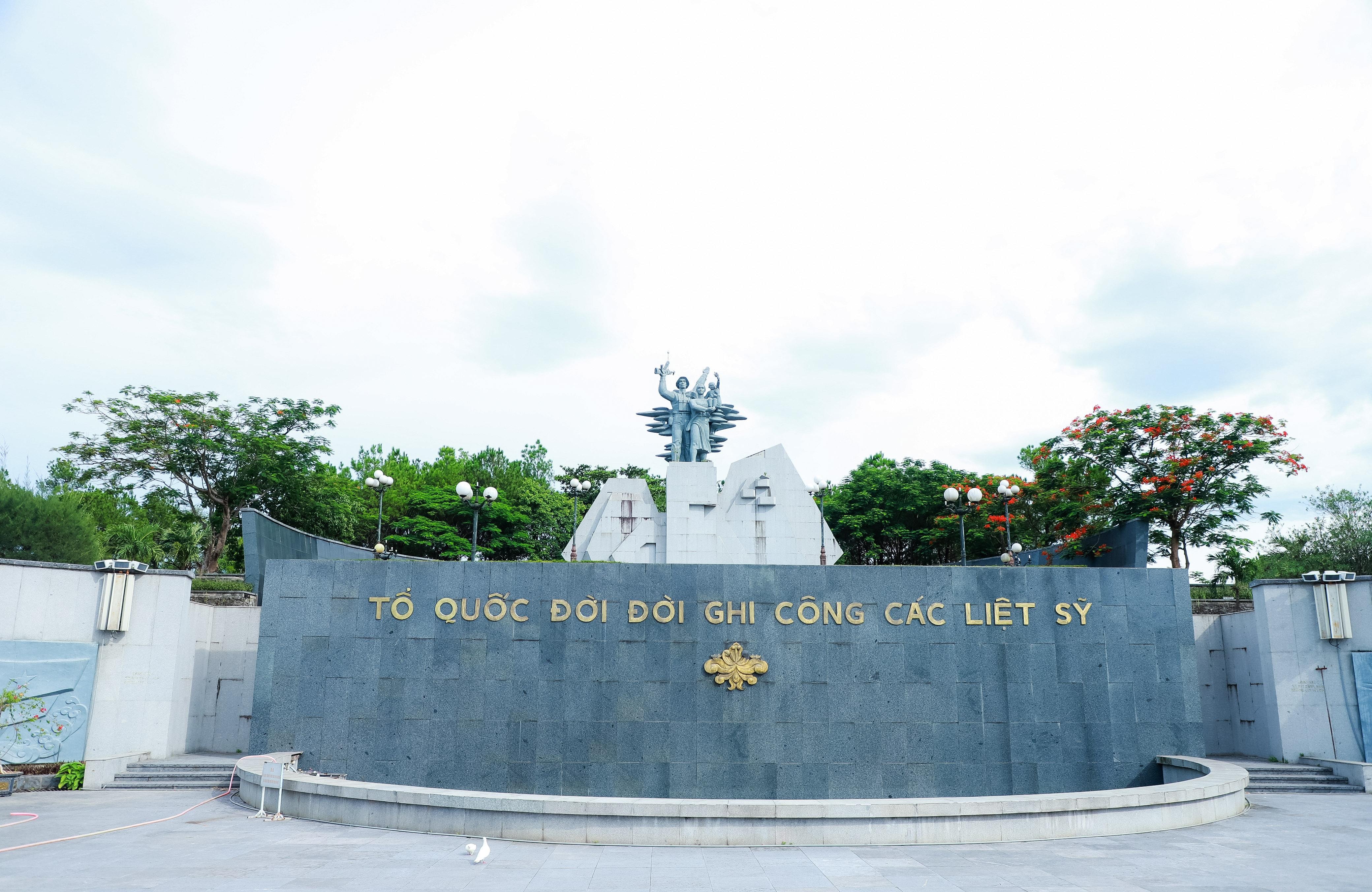 |
The National Martyrs' Cemetery on Highway 9 in Dong Ha City, Quang Tri Province, is the resting place of more than 10,800 martyrs. Photo: Thanh Duy |
Let us take a break to remember and honor the generations of our ancestors who fell for national independence. Let us take a break to understand the price of the peace we now enjoy. Let us cherish the past, so that we may never be ungrateful to history. Let us take a break to learn about the origins of our victory, to understand the profound and sacred meaning of April 30th.
On April 30th, I bow my head before the wooden crutches and tombstones, then raise my head to look at the sacred national flag and sing "The Vietnamese army marches on..."