

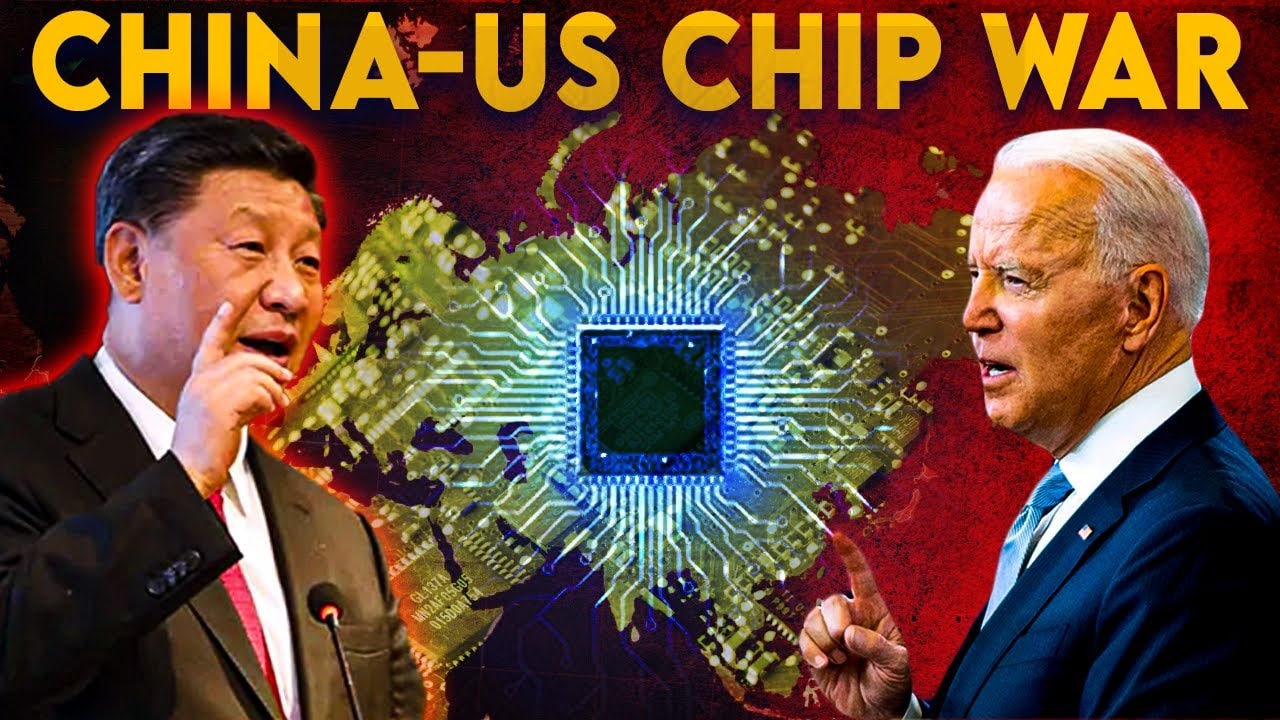
Has the semiconductor chip war between the US and China reached its peak?
(Baonghean.vn) - The US has imposed sanctions in recent months to prevent China from accessing the most advanced semiconductors, as well as the equipment and talent needed to manufacture them, citing national security reasons.
The semiconductor war between the US and China seems never-ending. Despite the COVID-19 pandemic disrupting global semiconductor supply chains for the past three years, the industry is gradually recovering to meet the growing demand for semiconductors.
It's undeniable that China is a global player in the semiconductor industry, and the U.S. still manufactures many of its products in China. However, the ongoing sanctions imposed by the U.S. on China are now reaching a breaking point for this industry.
The U.S. has taken steps in recent months to block China's access to the most advanced semiconductors, as well as the equipment and talent needed to manufacture them, citing national security concerns.
China has dismissed those concerns, accusing the U.S. of "technological terrorism" and unfairly hindering its economic growth. At the same time, it has sought to counter the containment measures imposed by the U.S. government.
 |
Why are semiconductor chips important?
Microchips are the lifeblood of the global economy in the Industry 4.0 era: tiny silicon wafers are found in all sorts of electronic devices today, from LED light bulbs and washing machines to cars and smartphones. They are also crucial to core services such as healthcare, law enforcement, and utilities.
According to a report published last year by the global management consulting firm McKinsey (USA), the semiconductor industry is projected to become a $1 trillion industry globally by 2030.
Nowhere is their essential nature more evident than in China, the world's second-largest economy, which relies heavily on a stable supply of foreign semiconductor chips for its massive electronics manufacturing facilities.
In 2021, China imported semiconductors worth $430 billion, more than it spent on oil.
 |
Why target China?
Beyond products like iPhones, Teslas, and PlayStations, the most powerful semiconductor chips are also crucial to the development of cutting-edge technologies such as artificial intelligence (AI), advanced weapons including hypersonic missiles, and stealth fighter jets.
The Washington administration imposed a series of export controls last year on semiconductor chips and equipment used to manufacture them to prevent “technologies sensitive to military applications” from being acquired by China’s armed forces and its intelligence and security agencies.
In March of this year, the Dutch government also imposed controls on the sale of equipment used to manufacture semiconductor chips abroad to prevent its use for military purposes on the grounds of national security.
Along with the Netherlands, Japan has also announced similar measures to prevent the use of advanced semiconductor chips for military purposes.
Although the Netherlands, a member of the North Atlantic Treaty Organization (NATO), and Japan, an ally of the United States, did not specifically name China, their restrictions angered the Beijing government.
The restrictions target the most advanced semiconductor chips and chip manufacturing technologies that can be used for supercomputers, high-end military equipment, AI development, and other applications.
Why is China worried?
Semiconductor chip manufacturing is extremely complex and often requires a great deal of research and development time. Meanwhile, many stages in the advanced semiconductor chip manufacturing process depend on American technology and state-of-the-art equipment from Japan and the Netherlands.
This has given the US-Japan-Netherlands trio significant influence over the global semiconductor chip industry.
Chris Miller, author of the book "The Chip War: The World's Most Important Technology War," argues: "It will take China years to develop solutions to replace the technologies it is losing access to. If it were easy, Chinese companies would have already done it."
What sanctions have been imposed on China?
Chinese semiconductor chip manufacturers stockpiled components and machinery ahead of last October's US export controls to mitigate the impact. But one major chipmaker told AFP that once inventory runs out or repairs are needed, the US export controls will begin to take effect.
Some Chinese technology companies have been unable to secure access to semiconductor chips, leading to the loss of lucrative overseas contracts, forcing them to cut jobs and freeze expansion plans.
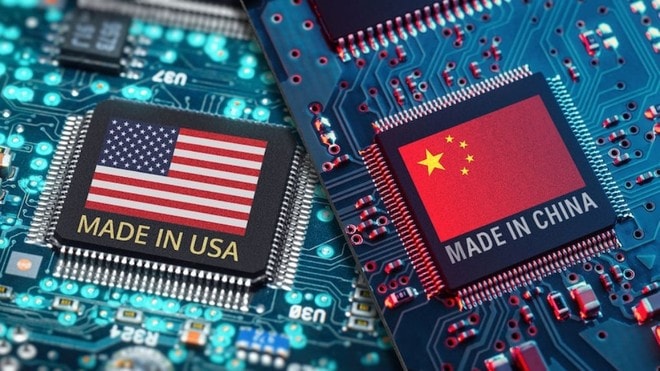
Restrictions imposed by the US, the Netherlands, and Japan have directly impacted some of China's largest chip manufacturers, including leading Chinese semiconductor producer Yangtze Memory Technologies (YMTC).
Furthermore, these sanctions have also depleted China's semiconductor talent pool. A recent survey of the workforce of Chinese semiconductor companies showed that they will need approximately 800,000 semiconductor workers from abroad by 2024.
 |
How did China react?
In response to sanctions from the Washington administration and its allies, the Beijing government reacted with anger and defiance, vowing to accelerate its efforts to become self-sufficient in semiconductors.
To circumvent US sanctions, two leading semiconductor researchers at the Chinese Academy of Sciences unveiled a detailed plan last February, proposing that the Chinese government invest more effectively in high-quality human resources and research and development (R&D) in the semiconductor field.
One of the companies that has benefited most from the US sanctions is semiconductor manufacturer YMTC. Company records show that it has received up to $7.1 billion in aid since the new US export controls took effect.
Is more investment the answer for China?
Tens of billions of dollars that China has poured into its domestic semiconductor industry have yet to yield significant results. China has set a target of achieving 70% self-sufficiency in semiconductor chips by 2025, but some consultants estimate that the country currently meets less than 20% of its needs.
John Lee, director of the consulting firm East-West Futures, said: “China has no good option but to double down on state support for its semiconductor industry.”
Experts believe that China could achieve its goal of self-sufficiency in semiconductor chips, but it would take longer due to restrictions imposed by the US and its allies.
Meanwhile, Bill Gates, co-founder of the renowned technology corporation Microsoft, stated: "I don't think the U.S. will succeed in preventing China from acquiring advanced semiconductor chips. But we will force them to spend the time and a lot of money to do so."
(According to https://techwireasia.com/2023/04/is-the-chips-war-between-us-and-china-reaching-tipping-point/)