

Germany adopts its first-ever strategy on China.
(Baonghean.vn) - The German government has for the first time revealed its "Strategy on China," focusing on reducing trade dependence on its largest economic partner, which Berlin considers a "systemic rival."
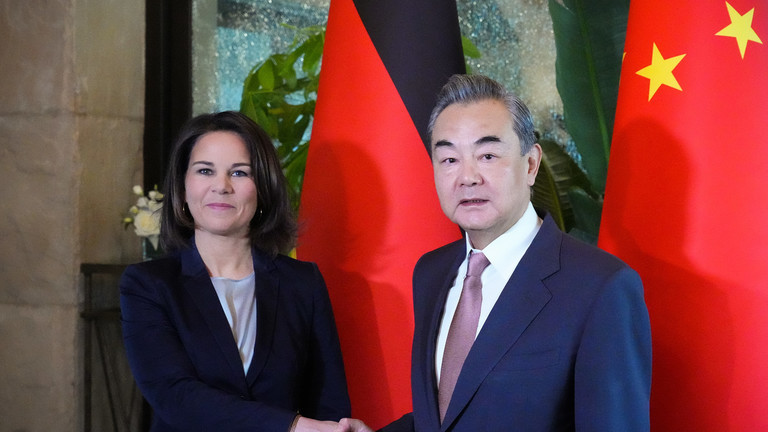
The strategy document, published on the German Foreign Ministry's website, states that China has changed and, as a result, Germany needs to adjust its approach. After achieving strong economic growth over the past few decades, Beijing is now pursuing an economic policy “aimed at making itself less dependent on other countries, while simultaneously trying to make other countries more dependent on China,” the document states.
While Germany is not seeking to decouple itself from Beijing, “risk mitigation is essential,” the 40-page English version of the strategy states. The document cites the example of Germany’s past dependence on Russia as its primary energy supplier and the need to avoid similar situations arising with other countries in areas critical to energy transition or technological innovation. The strategy emphasizes: “Our top priority is to mitigate such risks rapidly and at a cost acceptable to the German economy.”
According to the document, Germany is dependent on China in many areas, including various rare earth metals and elements, medical and pharmaceutical technology, as well as information technology and products necessary for semiconductor manufacturing. Germany aims to expand its technological capabilities and diversify its supply chains. The strategy describes “risk mitigation” as “a practical complement to our real strength, namely the openness of our political, economic and social systems.” China is Germany’s largest trading partner, with bilateral trade reaching a record €300 billion ($337 billion) last year. The strategy describes China as both “a partner, a competitor and a systemic rival.” Despite concerns, Berlin plans to further strengthen cooperation with Beijing, which remains an “indispensable partner” in areas such as mitigating the impacts of climate change, food security and addressing the international debt crisis.