

Commercial silkworm farming generates high income in Do Luong.
(Baonghean.vn) - Silkworm farming for cocoons is a long-standing traditional occupation in Dang Son commune, Do Luong district. However, in recent years, the people here have switched to raising silkworms for food, which yields a relatively high income.
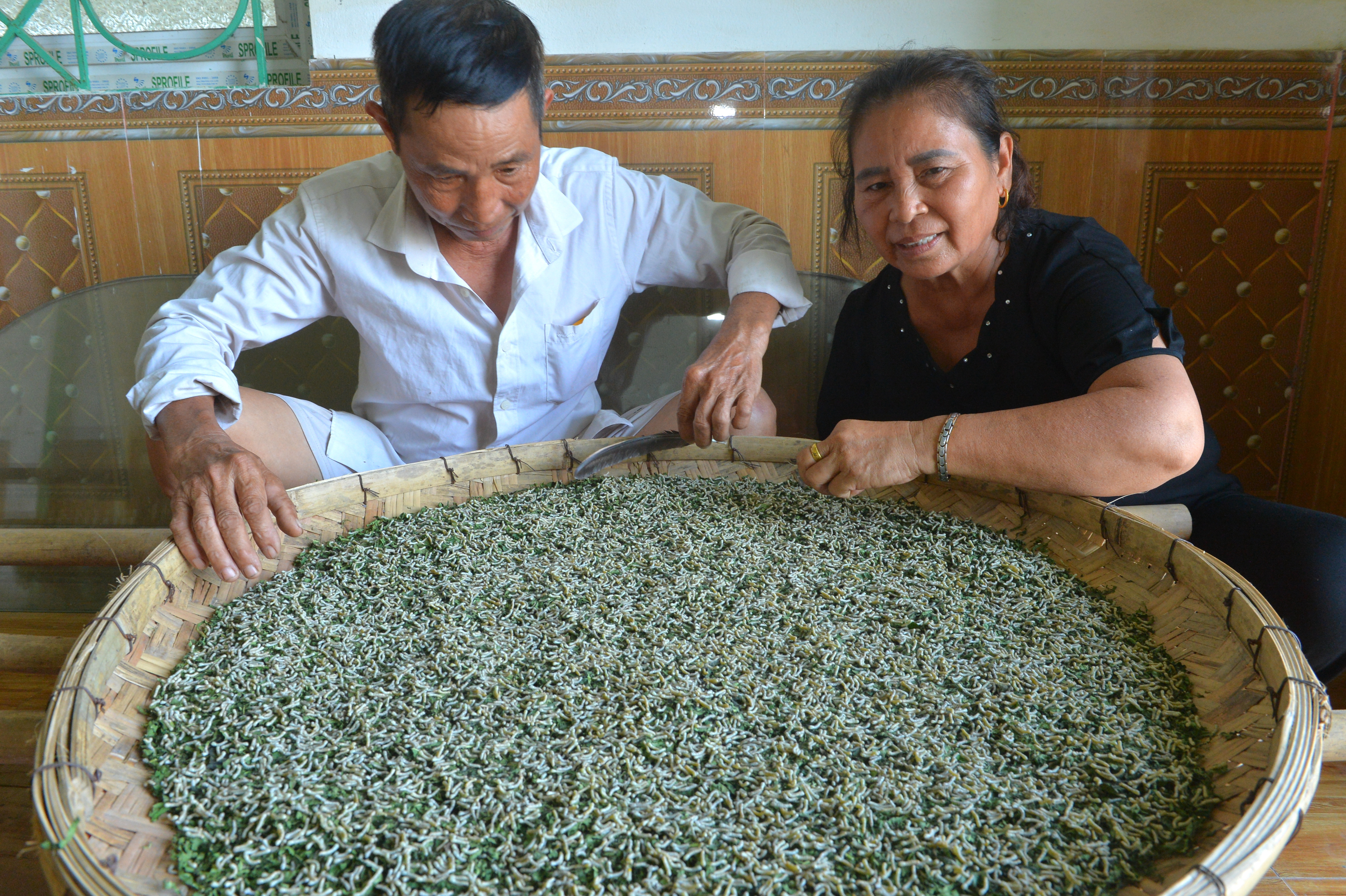
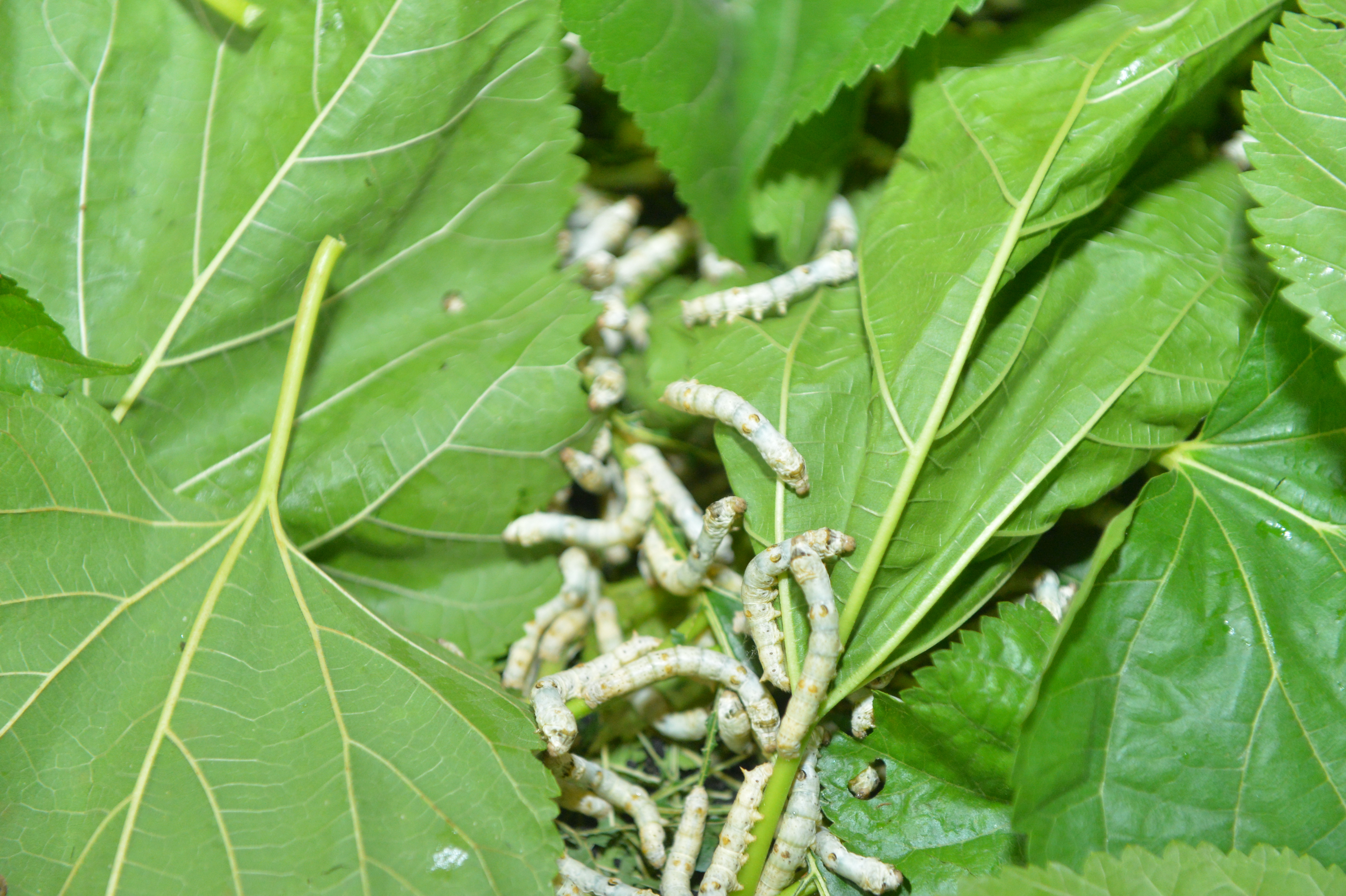
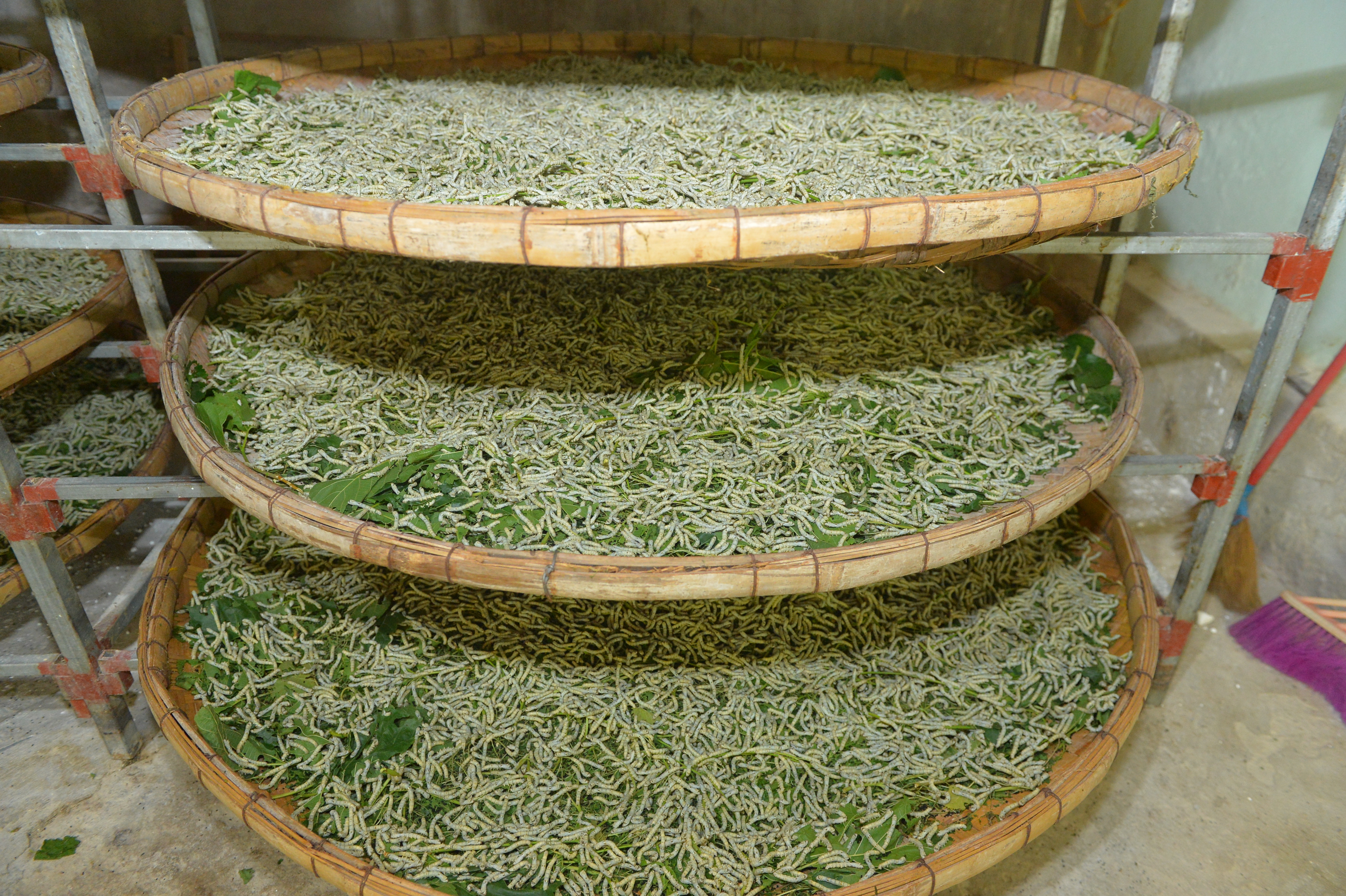
Present at the home of Ms. Mai Thi Loan in Hamlet 3, Dang Son Commune, districtDo LuongI saw rows of silkworm trays placed side-by-side on heavy iron racks. The silkworms crawled around, eating mulberry leaves on the trays; they were only about 3-4 days away from being ready for sale.
Ms. Mai Thi Loan, who was feeding silkworms with mulberry leaves, shared: "Previously, we raised silkworms for cocoons, but because the cocoon market was cheap, we switched to raising silkworms for food, which is more economically efficient. With traditional methods, we could only raise them once a year, but now we have invested in technology to raise them year-round."
During the extremely hot season, the silkworm rearing house is equipped with air conditioning and a water fan system, maintaining a temperature of 26-28 degrees Celsius. In the cold winter, a heating system with electric lamps and other warming devices is installed, so the silkworms still develop normally.
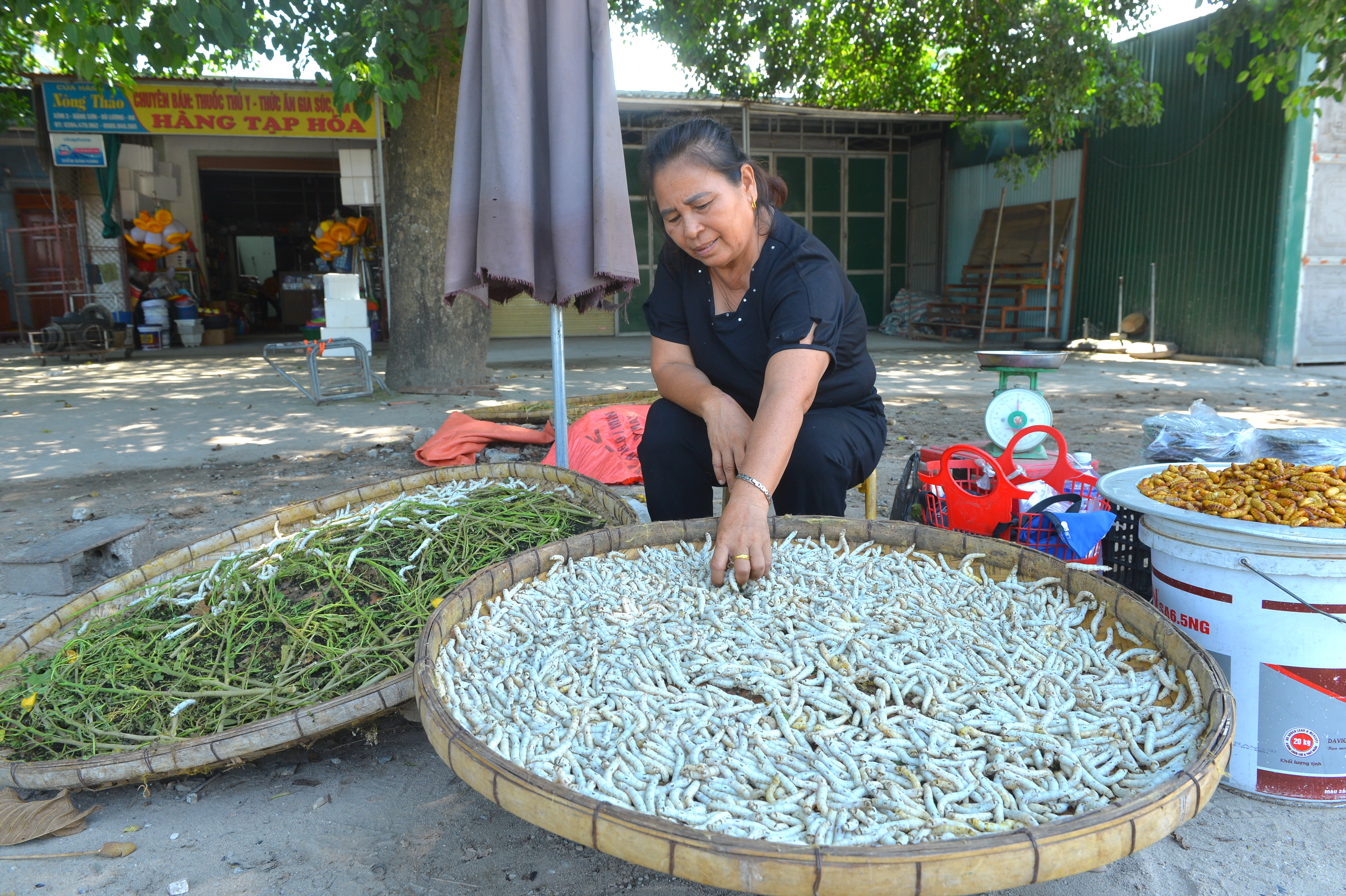
Currently, Ms. Loan cultivates over 1 hectare of mulberry trees on the Lam River alluvial plain, enough to support 25-30 silkworm trays. She harvests a batch every 25-27 days, yielding 400 kg of silkworms, which she sells for 100,000 VND/kg. After deducting expenses, she earns a profit of over 30 million VND for her four workers.
According to Ms. Loan, silkworms are popular because they are a clean and nutritious food source. Despite the high price, silkworms are always in high demand. Every batch they raise is bought up by traders, and her family plans to expand their operation to meet customer needs.
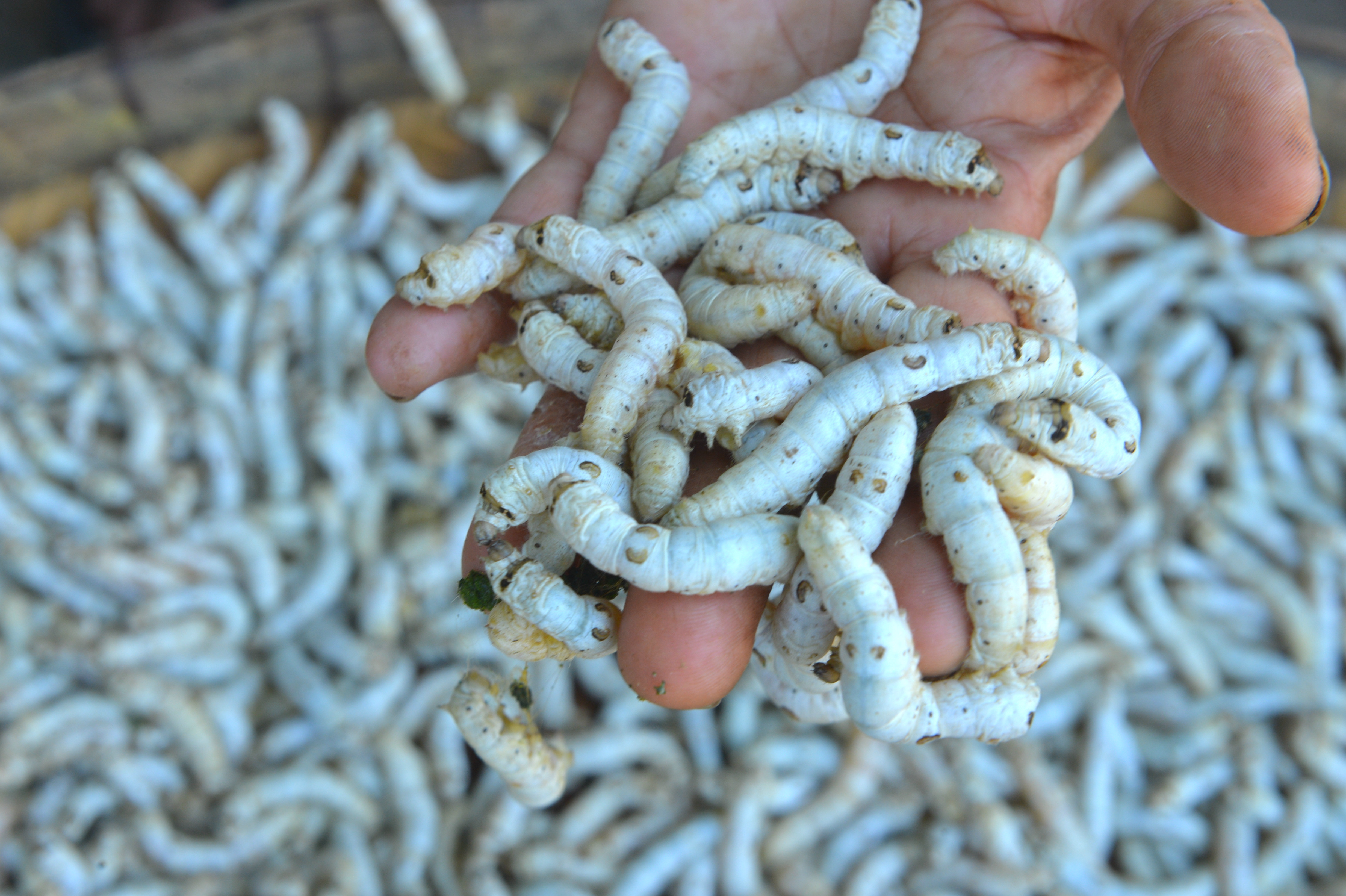
In the area near Do Luong Bridge, bordering Luu Son and Dang Son communes, silkworms for food are displayed in large quantities on bamboo trays along the roadside. Many customers stop to buy silkworms to eat. Ms. Tran Thi Minh from Vinh City, who just bought 5 kg of silkworms, shared: “At first, I was a little scared because the silkworms looked like worms wriggling around, but after eating them a few times, I craved them. Fresh silkworms stir-fried with betel leaves or deep-fried with lime leaves, or roasted silkworms eaten with rice crackers are incredibly delicious.”
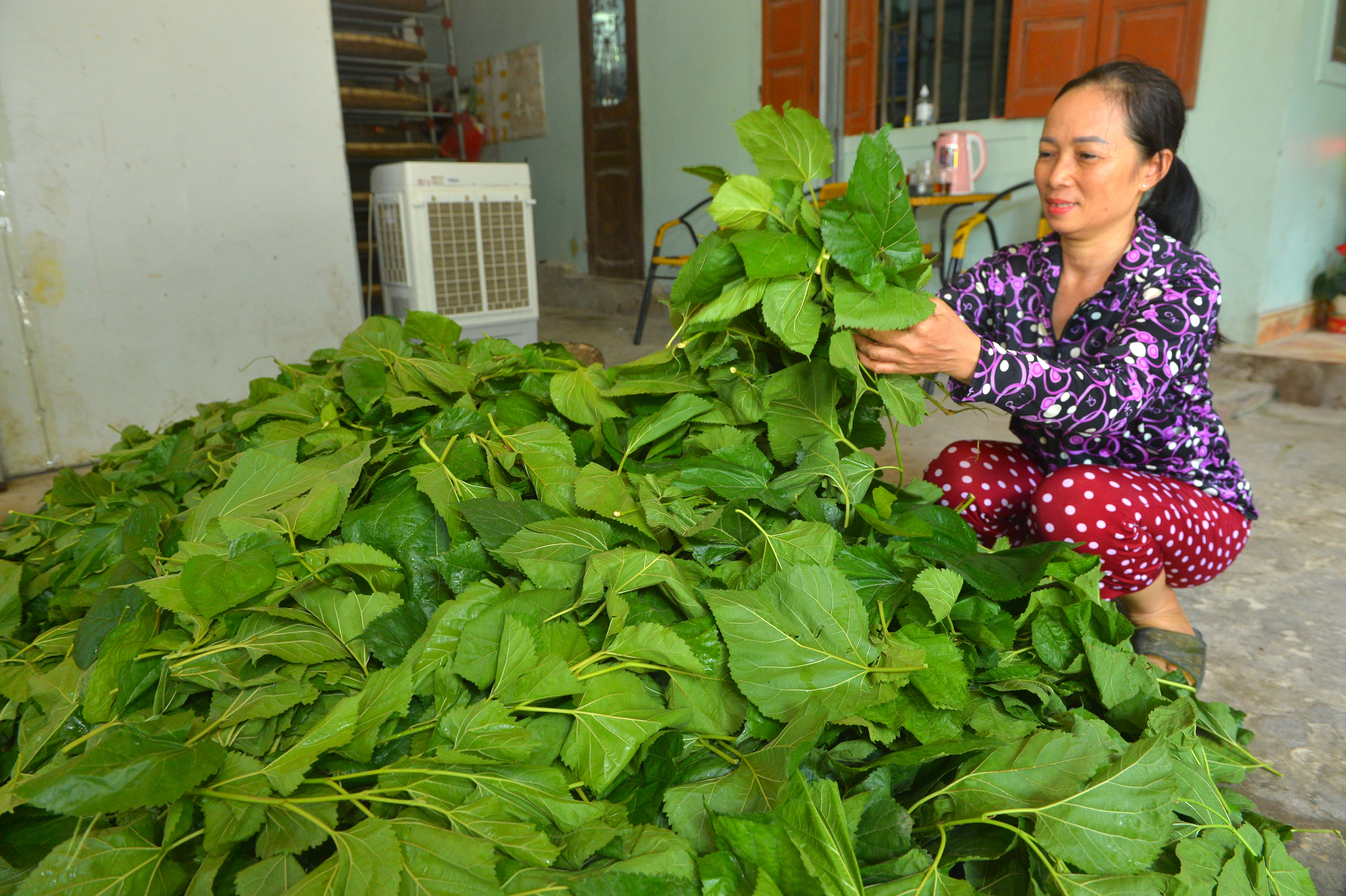
Ms. Nguyen Thi Lan, who sells silkworms for food at the foot of Do Luong bridge, shared: "Every day I sell 25-30 kg of silkworms, earning a profit of 300,000-500,000 VND. To have silkworms to sell daily, I have to collect them from both the Xuan Nhu silkworm farming village and silkworm farmers in Luu Son, Boi Son, and Lam Son communes..."
Mr. Tran Van Luong, head of Hamlet 3 (Xuan Nhu silk village), added: During its heyday, Xuan Nhu silk village had over 60 households engaged in silkworm farming for cocoons. Now, only over 20 households remain, mainly raising silkworms for food on a small scale, with only 2-3 households raising them on a large scale.
Raising silkworms for food is highly profitable, but the Xuân Như village craft industry faces difficulties in expanding due to a labor shortage, as young people are now working as factory workers in the southern provinces. Furthermore, many silkworm farming households lack the resources to invest in facilities such as building workshops and installing air conditioning and heating systems.