Effectively exploiting the potential for developing OCOP products in Nghe An.
(Baonghean.vn) - Baonghean.vn interviewed Ms. Vo Thi Nhung, Deputy Director of the Department of Agriculture and Rural Development, about the effectiveness of the OCOP program and current product promotion efforts.
PV:Could you please tell us how Nghe An province has exploited its potential and advantages in developing OCOP products today?
Comrade Vo Thi Nhung:It must be affirmed that, after more than 4 years of implementation, thanks to the decisive involvement of the entire political system, the consensus of the people, and the efforts of OCOP product producers, the "One Commune One Product" (OCOP) program in Nghe An province has achieved positive and encouraging results; becoming a production movement with widespread influence in rural areas.
The movement has created new momentum, unleashing the potential of agricultural production in localities throughout the province and has been highly appreciated by the central government. To date, Nghe An has 422 products ranked OCOP 3 stars or higher, including one 5-star product (lanterns from Duc Phong Company, Vinh City); 41 products ranked 4 stars, and 380 products ranked 3 stars. Nghe An ranks second nationwide in the number of recognized star-rated products, after Hanoi.

The OCOP program is a rural economic development program focused on developing local strengths and increasing added value; it is a solution and task in implementing the National Target Program for building new rural areas. One of the tasks of the OCOP program is to exploit the potential of land, products, and raw material areas to promote production organization and increase the added value of products.
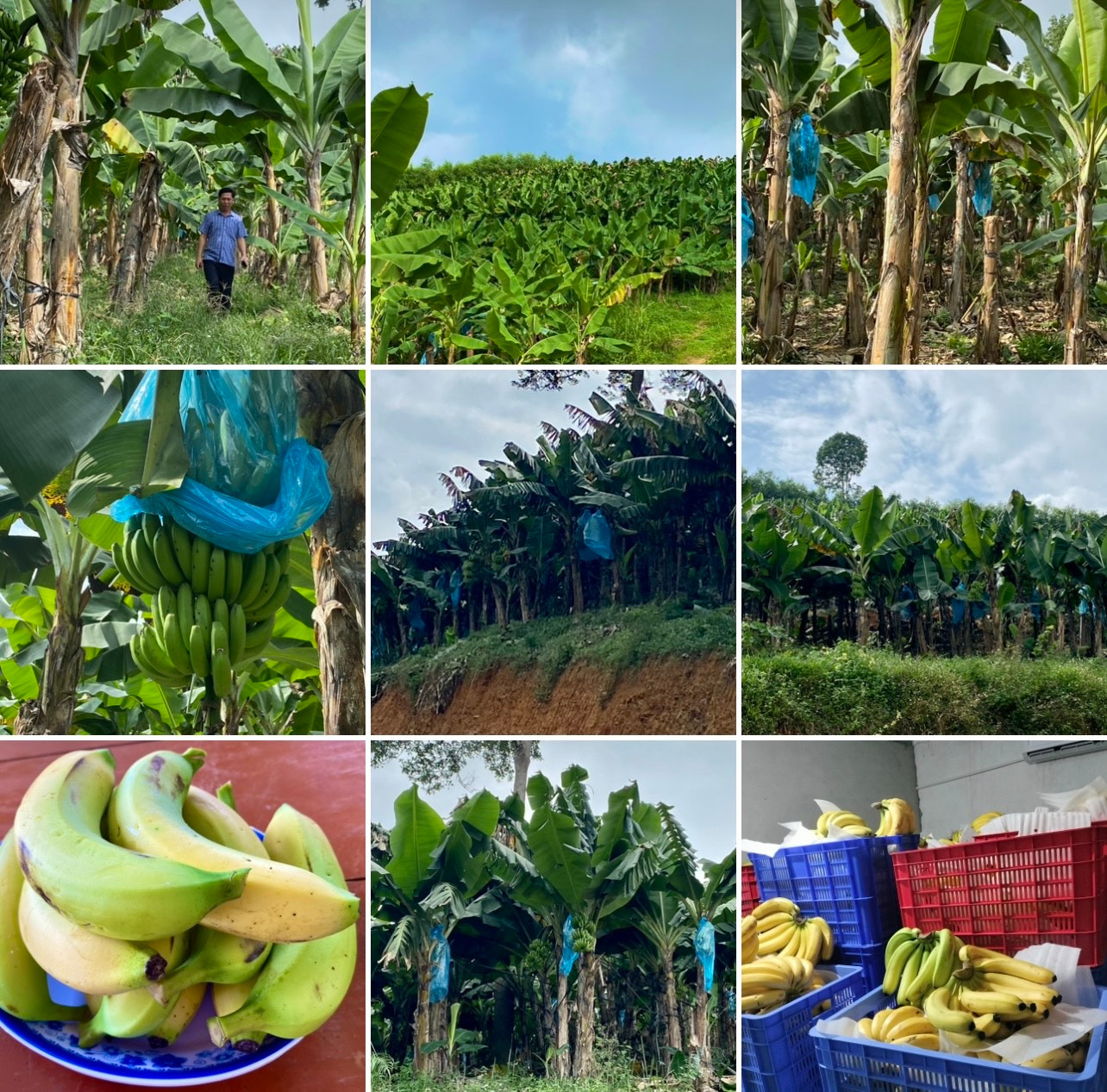
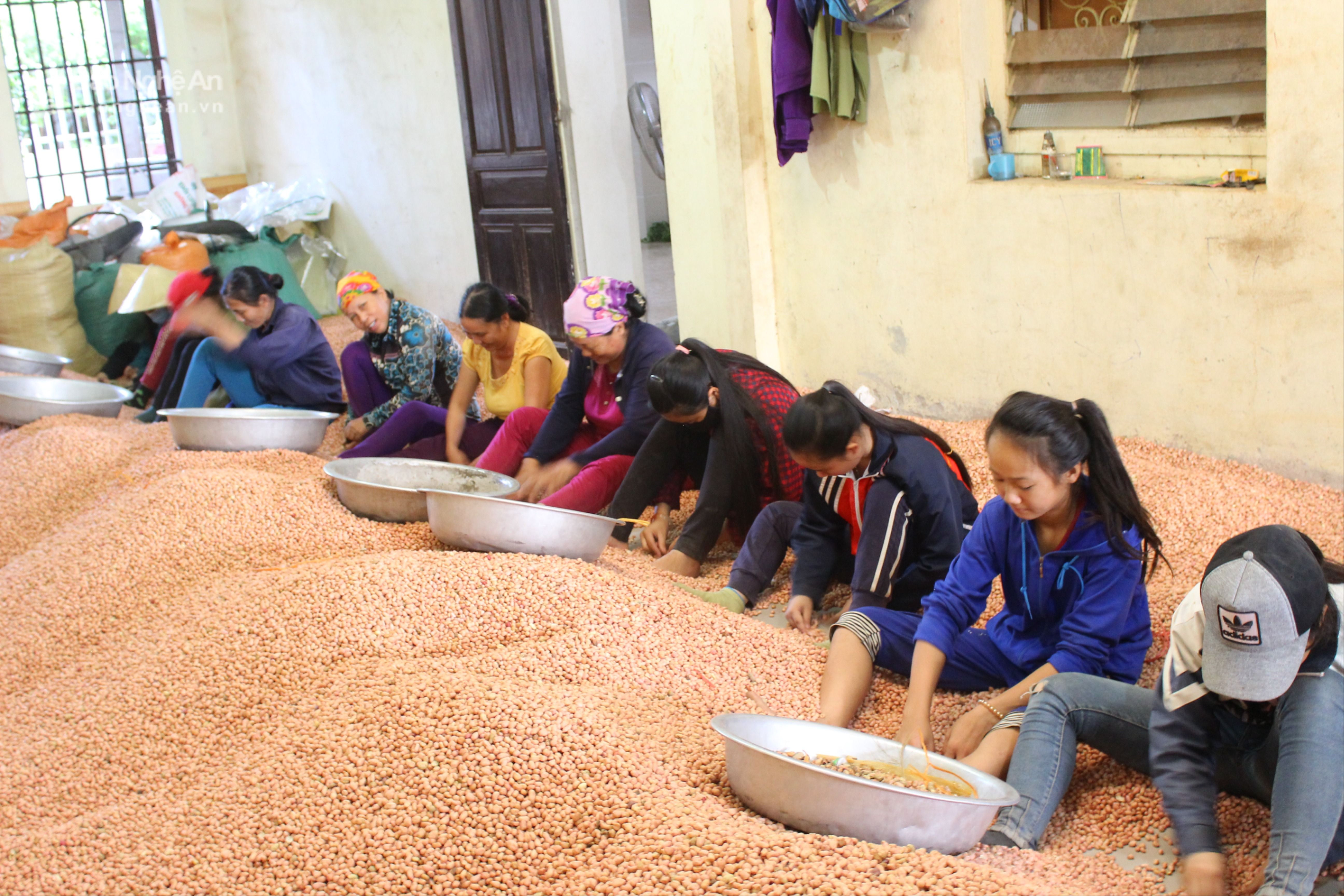
Localities in the province have conducted surveys and investigations on land conditions and production areas to promote land consolidation, prioritize investment in infrastructure, and apply science and technology to production. Many policies support land leaseholders for production and factory construction, thereby investing in upgrading, expanding scale, and improving quality to increase product value. High-economic-value crops and livestock are introduced into production, suitable to land conditions and linked to the planning of raw material areas and the culture of each locality to develop OCOP products. Examples include lotus cultivation in Nam Dan district; Pu Mat medicinal herbs in Con Cuong district; tea, peaches, plums, and ginger in Ky Son district; peanuts in Dien Chau district; yellow flower tea in Que Phong district; aquatic and marine products in Cua Lo town and Dien Chau and Quynh Luu districts; rice, vermicelli, soy sauce, and community tourism in western Nghe An… with many outstanding products that have established a foothold in the market.
Furthermore, the program has leveraged its human resources to exploit local cultures, link production, ensure environmental protection and social welfare, and manage and develop various forms of production organization. The agricultural sector has organized numerous training courses and awareness campaigns about the OCOP program for officials at all levels and stakeholders.
Through training courses, management officials at all levels, from district to grassroots, and business entities have grasped important content regarding the development and promotion of OCOP products. Currently, many entities have gradually developed production and business plans, invested in packaging and labeling, and developed products based on local labor resources, creating jobs, increasing people's income, preserving landscapes and traditional culture, especially in mountainous and disadvantaged areas. Some entities have strategies to enhance product value, thereby creating a highly effective workforce to implement the program.
PV:Promoting OCOP products to domestic and international markets is a crucial task to ensure these products reach consumers. Currently,labourHow is this work being implemented, and what kind of support is the agricultural sector providing to the stakeholders, Comrade?
Comrade Vo Thi Nhung:From the very beginning of the program's implementation, all sectors, levels, and localities have identified the promotion and market access for OCOP products as the key to the program's success. This is because the production of goods must reach consumers and be sold to be truly effective. Trade promotion activities have been given attention and implemented in diverse forms by the Department of Agriculture, the Nghe An Investment, Trade and Tourism Promotion Center, and the Department of Industry and Trade. This includes promoting the application of digital technology in communication and boosting e-commerce development for OCOP products through e-commerce platforms.
Some of the province's OCOP product promotion activities in the past include: The province and relevant departments regularly organize delegations to explore markets, promote products, sign agreements, and connect with trade agencies, corporations, distributors, supermarkets, and chain stores in other provinces.
To date, Nghe An province has signed cooperation and consumption programs with many provinces and cities nationwide, especially those with large consumption markets, such as Ho Chi Minh City, Hanoi, Da Nang, etc.; and signed agreements for the consumption of Nghe An's agricultural products with corporations, distributors, supermarkets, and convenience food chains such as WinCommerce, Winmart+, Mega Markit, BigC, Lotte, SiBA food, etc.
Since then, many agricultural products from Nghe An province have been stably consumed in the markets of other provinces and food distribution chains. The province has organized participation in trade fairs and product introductions in domestic markets, such as: the week-long promotion of Nghe An's agricultural, forestry, and aquatic products at major shopping centers in Hanoi, with dozens of display booths attracting significant public interest; and organized for production and processing facilities to participate in trade fairs in other provinces and cities such as Hanoi, Ho Chi Minh City, Da Nang, Quang Ninh, Thua Thien Hue, etc.
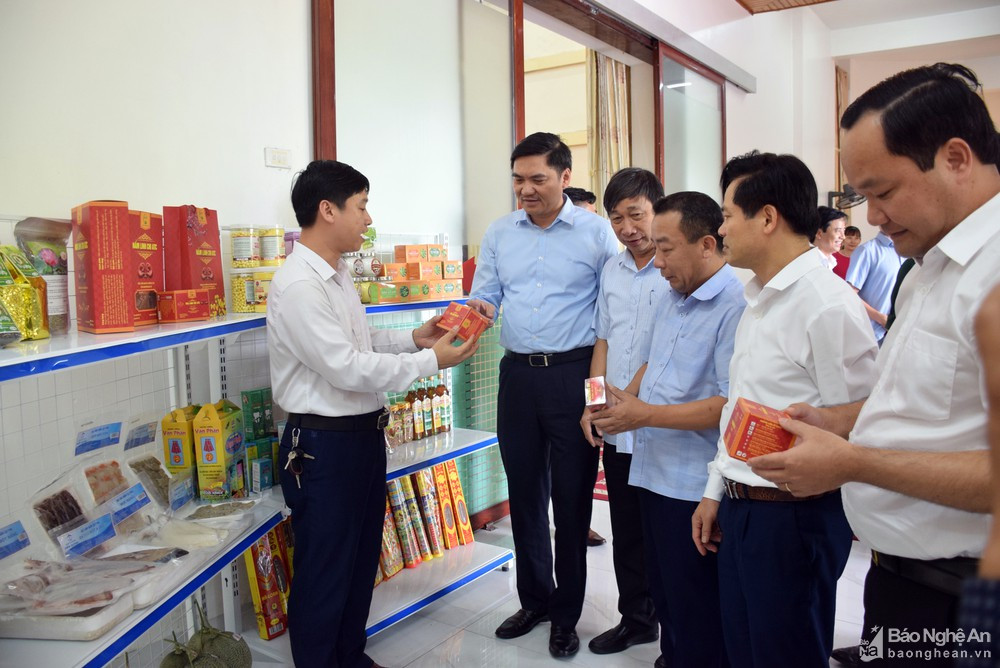
The businesses have participated in exhibiting their products at more than 69 trade fairs; 50 supply-demand connection conferences and exhibitions at several specialized conferences; the entire province has established 17 OCOP sales points in various localities…
In 2022, the province organized and participated in 12 trade fairs, with the participation of 128 agricultural product producers. In May 2023, the province successfully organized the Forum for Connecting Agricultural Product Consumption Across the Country in Nghe An.
At the 60th anniversary celebration of Vinh City, 60 booths showcasing and promoting OCOP products and typical products of the province attracted many consumers. Support was provided to agricultural, forestry, and aquatic product processing facilities to boost product sales through e-commerce channels, including signing agreements for the consumption of agricultural products on the VOSO.VN e-commerce platform of Viettel Group; the postmart.vn e-commerce platform of Vietnam Post Corporation; and currently connecting agricultural product consumption on the TikTok platform.
In 2022, the Nghe An e-commerce platform (nghean37.com.vn) of the Department of Industry and Trade supported 21 districts, cities, and towns in opening district-level booths, featuring over 300 distinctive and typical products, OCOP products, etc. It also supported over 470 businesses and traders in registering as members and setting up booths; attracted over 9.2 million visits; and introduced and offered for sale 3,723 products and services.
Through trade promotion activities, OCOP products from Nghe An province have gradually reached consumers, becoming known and used by consumers both within and outside the province, as well as internationally. Currently, over 20 OCOP product manufacturers have signed agreements to introduce their products into several major distribution systems, and 268 OCOP products have been introduced into supermarkets, online sales channels, and direct interactive sales channels (livestream), such as: Pu Mat herbal tea, lotus products from the Que Bac Lotus Cooperative, Do Luong rice crackers, Dien Chau lotus peanuts, seafood from Bien Quynh and Cua Lo, Nam Dan veal sausage, etc.
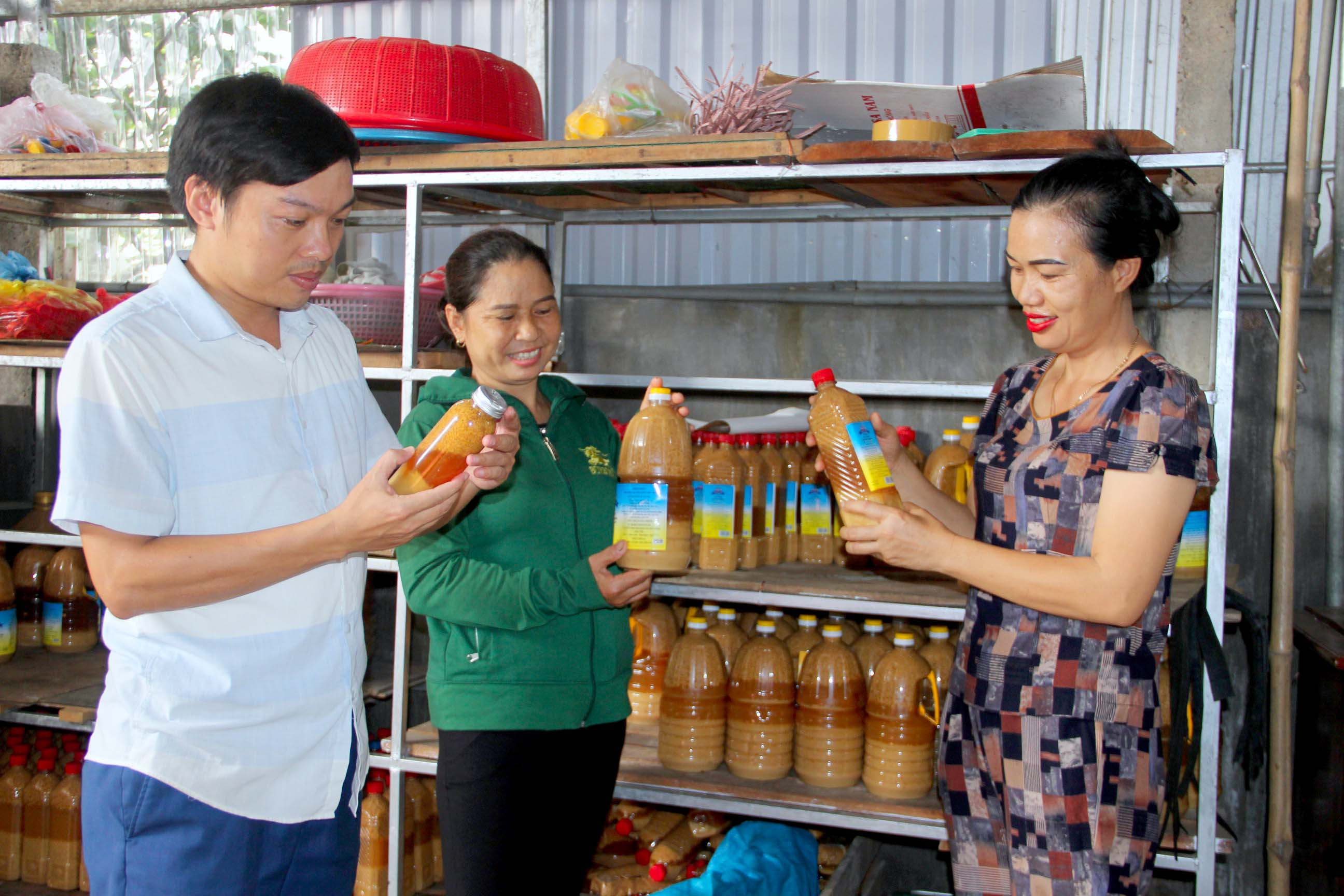
Many OCOP products from Nghe An province have now been exported to international markets, such as Duc Phong rattan and bamboo weaving products (5 stars), which have been exported to countries like France and Germany; Dien Thai coriander (Dien Chau), which has been exported to South Korea and Japan; Van Phan fish sauce (Dien Chau), which has been exported to Japan; eel products (NAP), which have been exported to Australia and Japan; and seafood products from Bien Quynh, which have been exported to the United States...
PV:Does the Department of Agriculture and Rural Development have any new policies or initiatives for the OCOP program coming up, Comrade?
Comrade Vo Thi Nhung:To facilitate the implementation of the OCOP Program by businesses throughout the province, in the coming period, the Department of Agriculture and Rural Development, in coordination with relevant departments and agencies and the People's Committees of districts, cities, and towns, will continue to promote propaganda, mobilization, inspection, supervision, and guidance for businesses to effectively implement the OCOP Program. They will also advise on integrating resources to help businesses innovate technology, improve designs and packaging, and enhance quality.
Advise the Provincial People's Committee on allocating additional resources to implement Resolution No. 25/2020/NQ-HĐND dated December 13, 2020, of the Provincial People's Council, which stipulates a number of policies to support the implementation of the "One Commune One Product" (OCOP) program in Nghe An province, giai đoạn 2021-2025. Review and further refine policies to suit the new phase, prioritizing the development of local raw material areas; human resource training; promotion, introduction, and trade facilitation activities; support in accessing credit sources; and organizing the evaluation, classification, and monitoring of OCOP products.
PV:Thank you, comrade!