

The profession of raising lac insects in Ky Son is coming to an end.
(Baonghean.vn) - Raising lac insects is a traditional occupation passed down from our ancestors, but nowadays, when you go to the remote border district of Ky Son and ask about lac insect farming, few people are enthusiastic about talking about it anymore. In the forests, the lac insect farming industry is gradually shrinking.
A product that was once famous
In the 1990s, hundreds of hectares of lac resin plantations were located in Ky Son district. The lac resin farming industry emerged in many communes such as Nam Can, Pha Danh, Keng Du, and Huoi Tu… Many households escaped poverty, and some even became well-off, thanks to lac resin. In remote forests, it was not uncommon to find "lac resin tycoons" cultivating hundreds of host trees, harvesting tons of resin in some seasons, such as Mr. Luong Phia Chan in Keo Luc 1 village (Pha Danh commune) and Mr. Moong Pho My in Huoi Phuon 2 village (Keng Du commune)…
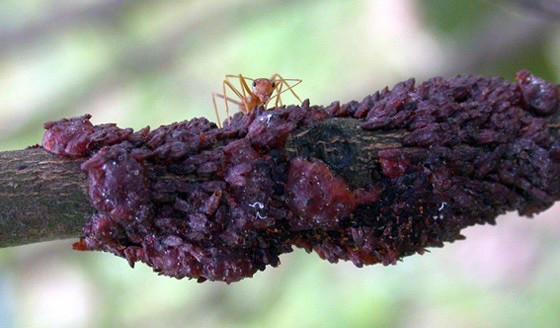
Raising lac insects is a traditional occupation passed down from our ancestors. In the forests, lac insects are raised on resinous trees such as the fir, fig, and even the fig tree. Lac resin is the sap secreted by the ants on the tree trunks.
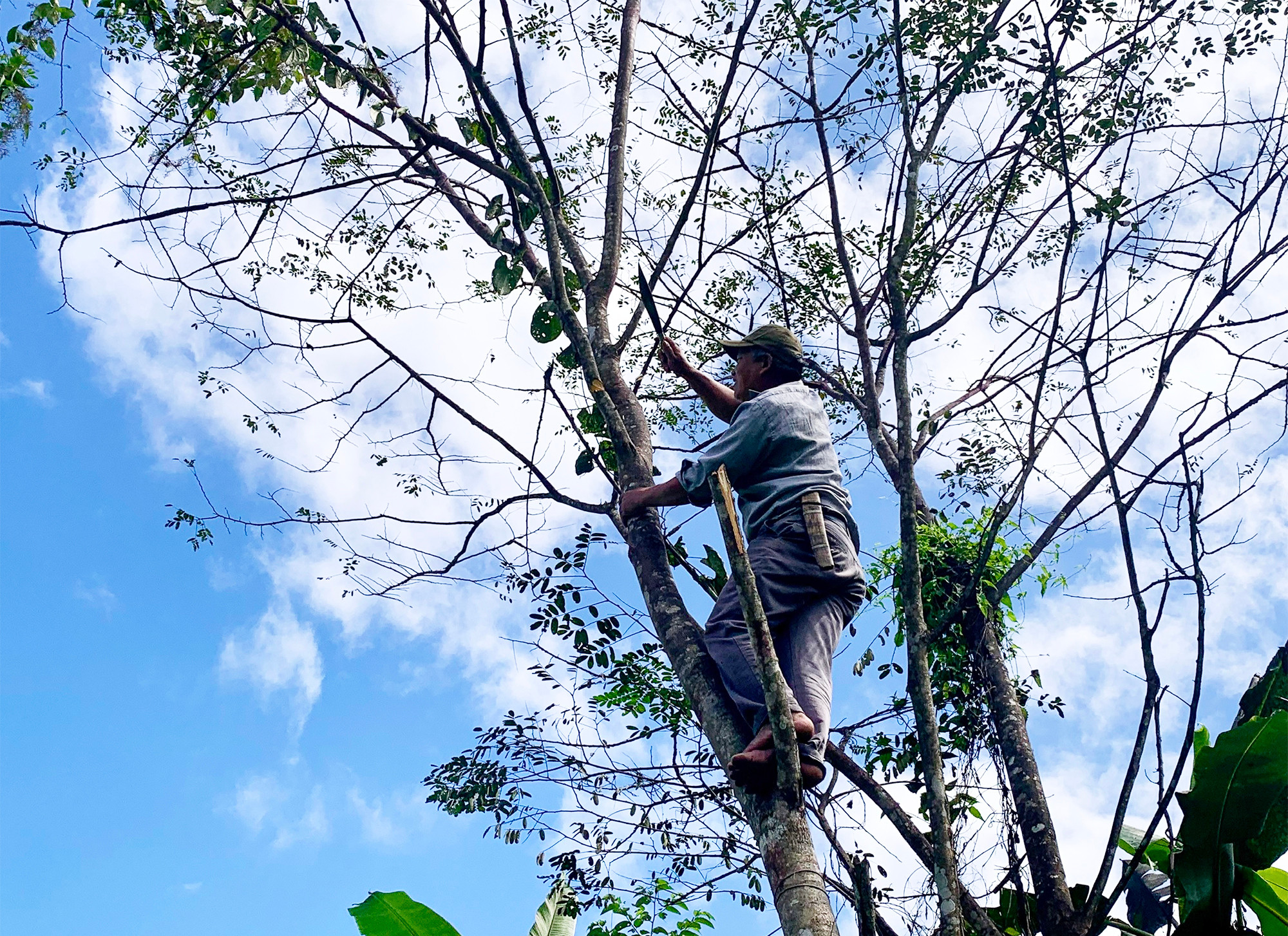
This profession doesn't require much skill; some people still manage to breed red lac insects themselves. In October, people begin releasing the lac insect larvae, inoculating them onto the host tree trunks. The insects gradually spread and cling to the branches, forming white patches. The breeding season for red lac insects is concentrated in April each year, with harvesting in October, or it can extend from the end of the year into the summer of the following year.
There were times when, during the harvest season, traders flocked to buy the resin, and the dried lac was immediately collected. But now, if you go to this remote, high-altitude border district and ask about lac farming, few people are enthusiastic about talking about it anymore; the red lac farming industry is gradually shrinking.
Families once known as "lac kings," like Mr. Cụt Bún Ma in Noọng Dẻ village, Nậm Cắn commune, once planted over 500 lac trees on 1 hectare of hillside garden to raise lac insects, harvesting tons of resin each year. However, since 2002, due to a shortage of seedlings and fluctuating prices, his family has cut down nearly 300 trees.
A great potential
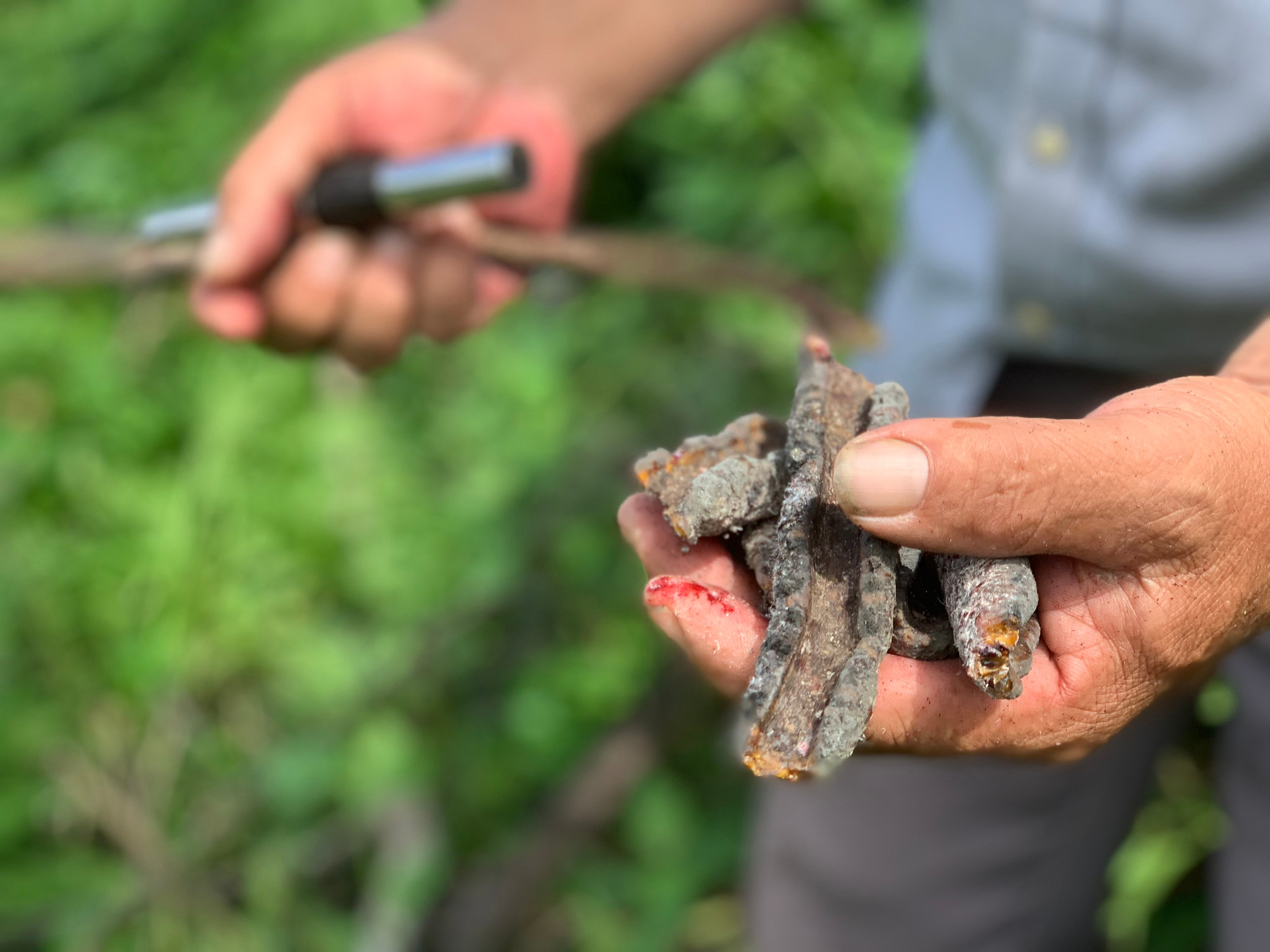
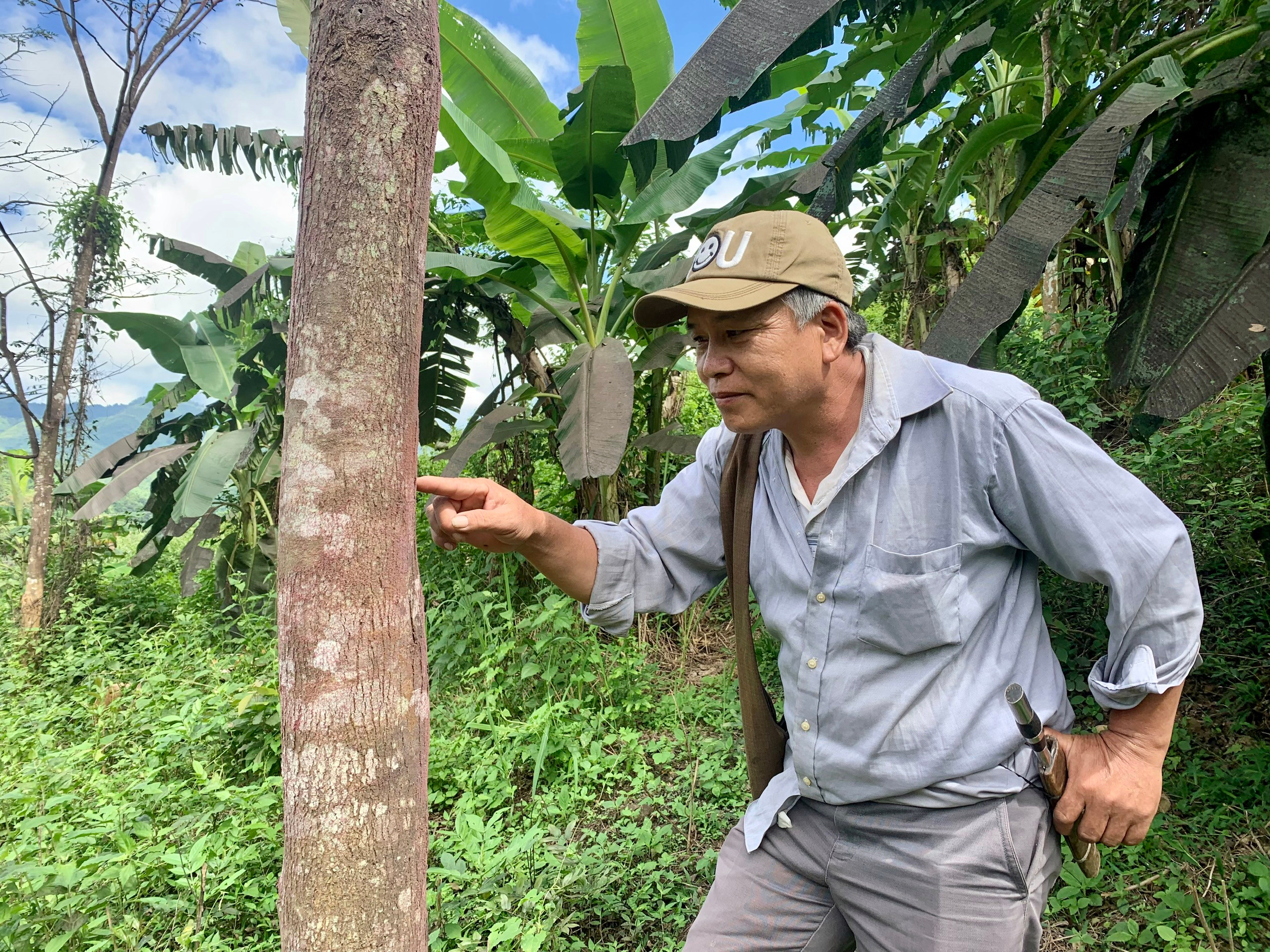
To learn about lac resin farming in Ky Son district, we traveled over 50 km to Na Loi commune, one of the few communes still where people practice lac resin farming. Climbing up into the high forest, leeches were jumping around underfoot this season. While inspecting tree trunks infested with red aphids, Mr. Vi Van Binh from Na village, Huu Lap commune, told us about lac resin farming.
Although he lives in Huu Lap commune, he goes all the way to Na Loi commune to raise lac insects on more than 100 host trees. “I only release the lac insects on these more than 100 host trees for less than a week. Only in years when it's too cold and the lac insects die do I have to re-release them. A host tree usually yields about 5-15 kg of resin, the yield depends on the size of the tree, whether it has a lot of resin or little resin. In exceptional cases, some large trees yield hundreds of kilograms of resin per year. The collected resin is dried in the yard before being sold; it can be stored from year to year without spoiling,” Mr. Binh explained.
In Na Loi commune, there are now only 5-6 households raising lac resin. Currently, lac resin is sold at 50,000 - 60,000 VND/kg, but there were times 5-6 years ago when the price dropped to 15,000-20,000 VND/kg, and other years when the price rose to around 1.5 million VND/kg.
According to Mr. Nguyen Sy Son, Deputy Head of the Agriculture and Rural Development Department of Ky Son district, the reasons for the decline of lac insect farming are the limited knowledge of lac insect farming among the people, deforestation which destroys the lac insect breeding stock, the shrinking area of host trees, and the unstable market.
Ky Son currently has over 150 hectares of scattered host trees suitable for breeding and raising lac insects. If it were to recover to its "golden age," Ky Son district would need at least 10 tons of lac insect cuttings annually. Clearly, green economic practices have existed in Ky Son district for a long time, but due to a lack of perseverance and limited application of science and technology, this great potential has been lost...
With its many uses, shellac resin is particularly popular and in high demand on the market. In medicine, it has cooling and detoxifying properties. In industry, shellac resin is used as a pigment, paint, and coating for products requiring resistance to heat, acid, and harsh weather conditions. Shellac products are also used in the aerospace industry to manufacture aircraft and high-end electronics; and are widely used in pharmaceuticals, food, and cosmetics.