

Tips for identifying cars with a history of flooding.
According to automotive engineers, to identify a car with a history of flooding, observe all the bolts and nuts securing the engine, the bolts securing the exhaust pipe, the car's interior, and the seat belts.
However, this common inspection method relies heavily on individual experience, making it difficult to definitively conclude whether a vehicle has ever been flooded. Therefore, buyers of used cars should thoroughly investigate the vehicle's history instead of making a purchase based on intuition.
Here are some suggested items to check to determine if a car has ever been flooded.
Check the headlights.
First, when visually inspecting a car, buyers should observe the headlight area. If the car has been flooded, the headlight housings will often show yellow stains, haze, water marks, or scratches from being removed for cleaning.
Check all bolts and screws on the vehicle.
Besides inspecting the headlights, car buyers should also check the bolts and screws. If there are signs of rust, scratches, clamp marks, loosening or loosening, or even a shiny screw, it's possible the car has been repaired or had parts replaced.
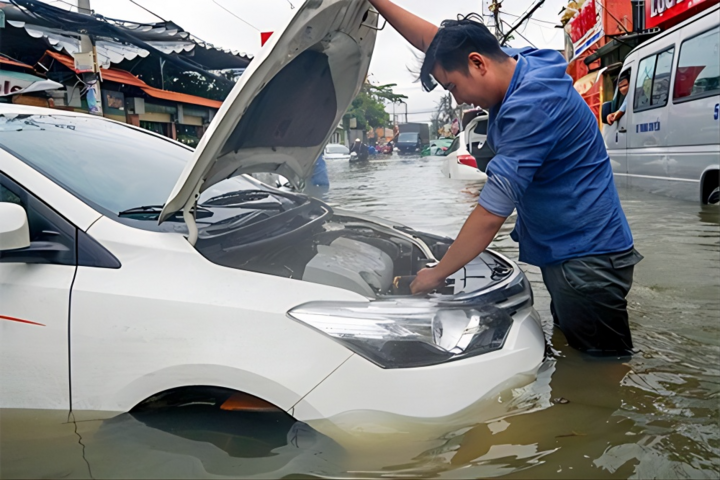
In addition, car buyers should also check all the bolts on the engine, fuel lines, coolant lines, and electrical wires... to see if there is any grease or oil residue on them, as this can be a sign that the car has been disassembled before.
Check the cylinder head gasket and cylinder head.
In this detail, if you see that the cylinder head gasket and cylinder head are brand new or that the silicone seal is leaking out, it means the engine has been tampered with. Normally, for a completely original car that has never had its engine opened, this gasket will be tight and the silicone seal will be very straight.
Inspect the car's interior.
If a car has been flooded, you'll notice a distinct musty smell inside. The previous owner or the dealership may have used various air fresheners or deodorizers to mask the musty odor in the car's interior.
Therefore, to verify this, buyers of used cars should get inside the vehicle, close all the doors, and turn off the air conditioning. If the smell of perfume or air freshener is too strong, or if there is a noticeable musty smell, buyers should avoid choosing such vehicles.
Additionally, buyers should lift the floor mats and check for any mud or dirt stuck under the floor or in the car's nooks and crannies. If any abnormalities are found under the brake pedal, accelerator pedal, seat bolts, etc., buyers should avoid the vehicle.
Inspect the undercarriage and exhaust system.
The area under a car's chassis contains many metal parts, and it's also the first and most frequently exposed to water. Therefore, when buying a car, buyers should inspect the undercarriage to detect rust, discoloration, or any signs of previous disassembly.
Test drive the car
In addition to visual inspection, buyers must perform a final check by driving the vehicle to feel its performance.
First, the buyer should start the engine to listen to the exhaust sound and check for smoke. Then, accelerate from slow to fast to feel the responsiveness of the accelerator and brake pedals, the steering system, and the stability of the car when cornering at high speeds.
After driving for about 10 minutes, you should open the hood to check the engine temperature. If it's warm and still touchable, you can rest assured about the car. If it has been repaired, the engine will be very hot and possibly untouchable.