

A brief overview of the folk songs of Nghe An and Ha Tinh provinces: Vi and Giam.
(Baonghean.vn) - Ví and Giặm folk songs, formed and developed in the labor and life of the people of Nghe An and Ha Tinh provinces, were inscribed by UNESCO on the List of Representative Intangible Cultural Heritage of Humanity in 2014.
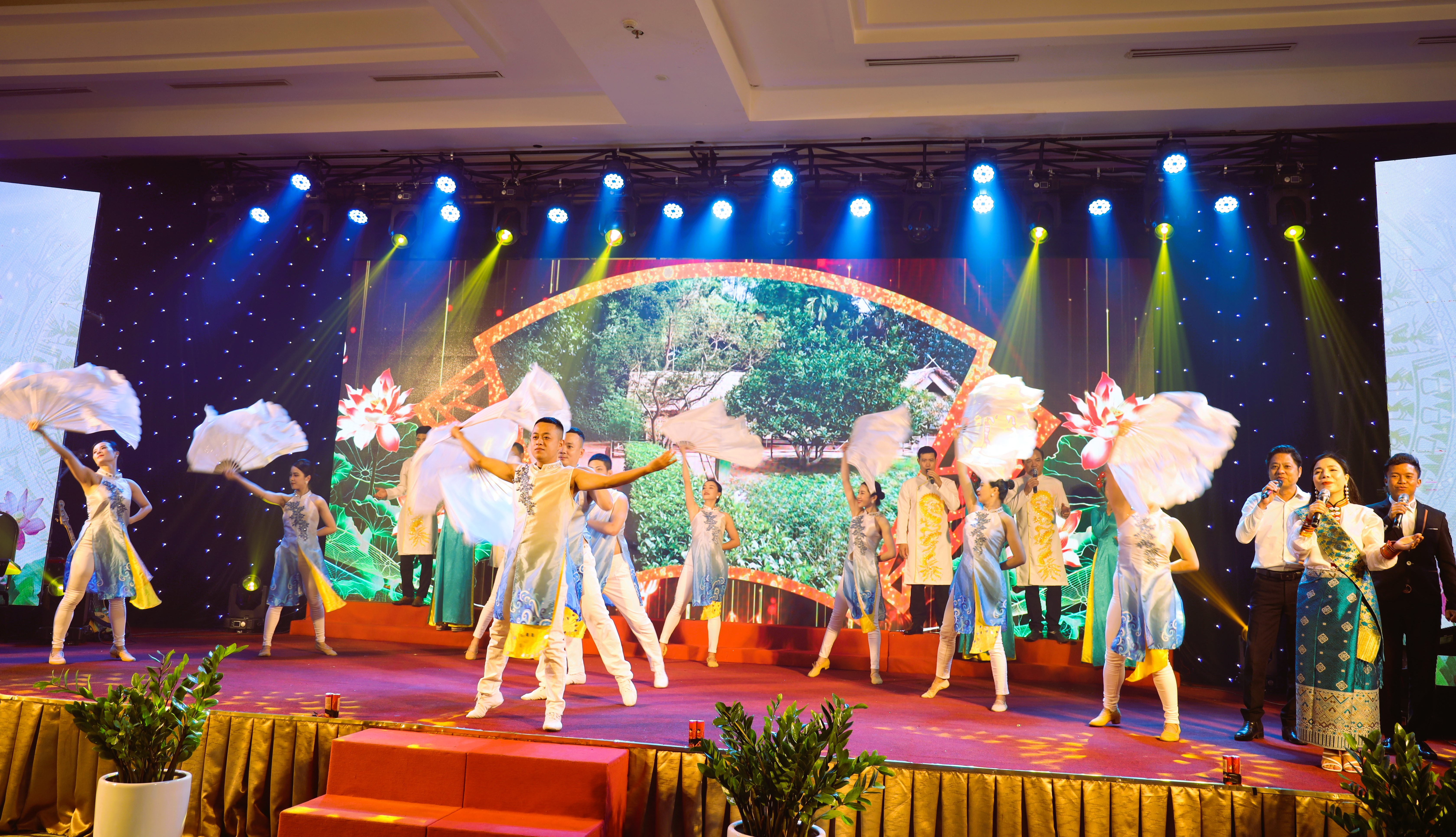
In the cultural heritage of Nghe An and Ha Tinh provinces, "vi" and "giam" are two unique forms of folk singing, each with its own distinct characteristics that cannot be confused with folk songs from any other region. Originating hundreds of years ago, the "vi" and "giam" folk songs of Nghe An and Ha Tinh stem from the working lives of the people, so each melody and lyric corresponds to a specific occupation.
These are two styles of unaccompanied folk singing, created by the community of Nghe An province, with lyrics that have diverse content, reflecting all aspects of life.
Many of these songs carry profound educational messages: respect for parents, loyalty, affection, honesty, and contribute to preserving good customs and traditions in social conduct in villages. Ví and Giặm folk songs are widely practiced in Vietnamese communities in the two provinces of Nghe An and Ha Tinh. According to a 2013 survey by the Vietnam Institute of Culture and Arts, there are 260 villages, including 168 in Nghe An province and 92 in Ha Tinh province, where people practice Ví and Giặm folk songs.
Ví and Giặm folk songs possess distinct local characteristics in terms of scale, mode, rhythm, melody, and vocal style. The skills of singing correctly in terms of rhythm, pitch, duration, and embellishments are primarily passed down through generations orally, directly from the artists, ensuring the expression of the Nghệ-Tĩnh dialect's vocal style and intonation. Ví and Giặm are performed in three forms: solo singing, call-and-response singing, and group singing.
Each singing performance typically consists of three stages: introductory singing, call-and-response singing, and concluding singing, with the most prominent being courtship singing.
Lyrics in the lục bát (six-eight) verse form, song thất lục bát (seven-six-eight) verse, variations of lục bát (hát ví), and five-word verse (hát giặm) are concise, succinct, easy to learn, remember, and sing. Hát ví has a free melody depending on the lyrics, context, and mood of the singer, with a vocal range not exceeding one octave. Hát giặm has a clear rhythm, with strong and weak beats, and 3/4 and 6/8 time signatures. These two singing styles always alternate with each other.
References
1. Nguyen Chi Ben, Bui Quang Thanh,Folk songs of Nghe An and Ha Tinh provinces: Vi and Giam, PublisherInformation CultureHanoi, 2013.
2. Hoang Trong Canh,Local terms with a parallel structure in Nghe Tinh folk poetry - Preserving and promoting the values of Nghe Tinh folk songs and chants, PublisherNghe An, 2012.
3. Ninh Viet Giao,The scholarly quality in the lyrics of Nghe An's Vi and Giam folk songs - Preserving and promoting the values of Nghe An's Vi and Giam folk songs., PublisherNghe An, 2012.
4. Vu Ngoc Khanh,Some observations on Nghe Tinh folk songs, MagazineArts and Culture of Nghe Tinh, No. 21, 1996, p. 117.