

The cultural space for the formation of the Ví and Giặm folk songs of Nghe An and Ha Tinh provinces.
(Baonghean.vn) - The simple, rustic lyrics and melodies, expressed in the phonetics of Nghe An province, have created a unique character for the folk songs of Vi and Giam, imbued with love for the homeland, the country, its people, and romantic love, contributing to the preservation of good customs and traditions in social behavior in villages.
Formation space
Throughout the nation's history, the Nghe An - Ha Tinh region has changed its name several times. During the Nguyen Dynasty, it reverted to the name Nghe An province. In 1831, during the reign of Emperor Minh Menh, Nghe An province was divided into two provinces: Nghe An and Ha Tinh. From 1976 to 1991, the two provinces of Nghe An and Ha Tinh were merged into one province, Nghe Tinh. In 1991, Nghe Tinh province was again separated into the two provinces of Nghe An and Ha Tinh as they are today.
In his research, Professor Ngo Duc Thinh pointed out the constituent elements of regional culture, including: natural environment, population origin, historical conditions, level of socio-economic development, and cultural exchange. Thus, the specific spatial context of the Nghe An cultural sub-region must perhaps take into account the historical circumstances that impacted this land, creating a cultural cradle from which the people and culture of Nghe An were formed and developed. The remote nature and the rather complex interrelationships between the periphery and the center, between the Vietnamese and the former ethnic minorities and the Cham people, are the strong factors that shaped the personality traits and cultural characteristics of this region.
It can be said that the character of the people of Nghe An is shaped by their behavior within the political, historical, and social environment of this region. There have been many differing opinions and observations about the character of the people here, as many factors combine and interact within the population's origins. The character of the people of Nghe An is diverse and even contradictory, making it difficult to judge from a single perspective. A prominent characteristic is their strong sense of community. They use a very unique dialect, one that has transformed them into a community with a distinct identity, which is incorporated into their folk songs and ballads, creating an artistic world rich in humanistic values.
The formation and development of folk singing culture.
Like many other forms of folk culture, the Ví and Giặm folk songs of Nghe An province were formed and developed within the agricultural, rice-farming cultural environment. The cultural space of Ví and Giặm spans across the two provinces of Nghe An and Ha Tinh, from the mountainous regions to the coastal plains and both banks of the Lam River. Outside of Nghe An province, separated from its people, Ví and Giặm struggle to survive and develop. This is a unique characteristic, showing that, alongside the natural landscape, the spirit, lifestyle, and cultural activities of the people of Nghe An have a significant influence on the formation and development of this art form. In other words, the biosphere of Ví and Giặm is created from the soul and rhythm of life of the land and people of Nghe An. Without these elements, it has no basis for existence and development.
Ví and Giặm became a popular cultural activity in Nghe An province from the 18th century. To date, it has a history of existence and development spanning over two centuries. While not a long period, it has been sufficient to shape and deeply permeate the spiritual life of the people. The performance style of Ví and Giặm includes both solo and group singing. Whether sung on the river, in the fields, on the docks, or by the loom behind the bamboo groves of the village, the performance space remains the rural setting, connected to three fundamental elements: the countryside, agriculture, and farmers. The lyrics of Ví and Giặm are simple, rustic, and close to everyday language, "Nghệ-ized" and "folklorized" from existing language, creating a rich and distinctive system of lyrics that is among the best in the treasury of Vietnamese folk songs.
It is evident that folk songs and chants have played a crucial role in shaping and preserving the cultural values of the Nghe An countryside. If folk culture and literature are expressions of democratic aspirations and consciousness, then Nghe An folk songs and chants exemplify that democracy. There are no strict rules, no distinctions between superiors and inferiors, rich and poor, and no taboos. The freedom of thought is reflected in the language, and the equality and closeness in the forms of address are evident. It can be said that this is a unique and distinctive method of communication in the traditional villages of Nghe An. Thanks to this, many spiritual values are preserved and developed.
Ví and Giặm folk songs are a product of community life of the people of Nghe An province.
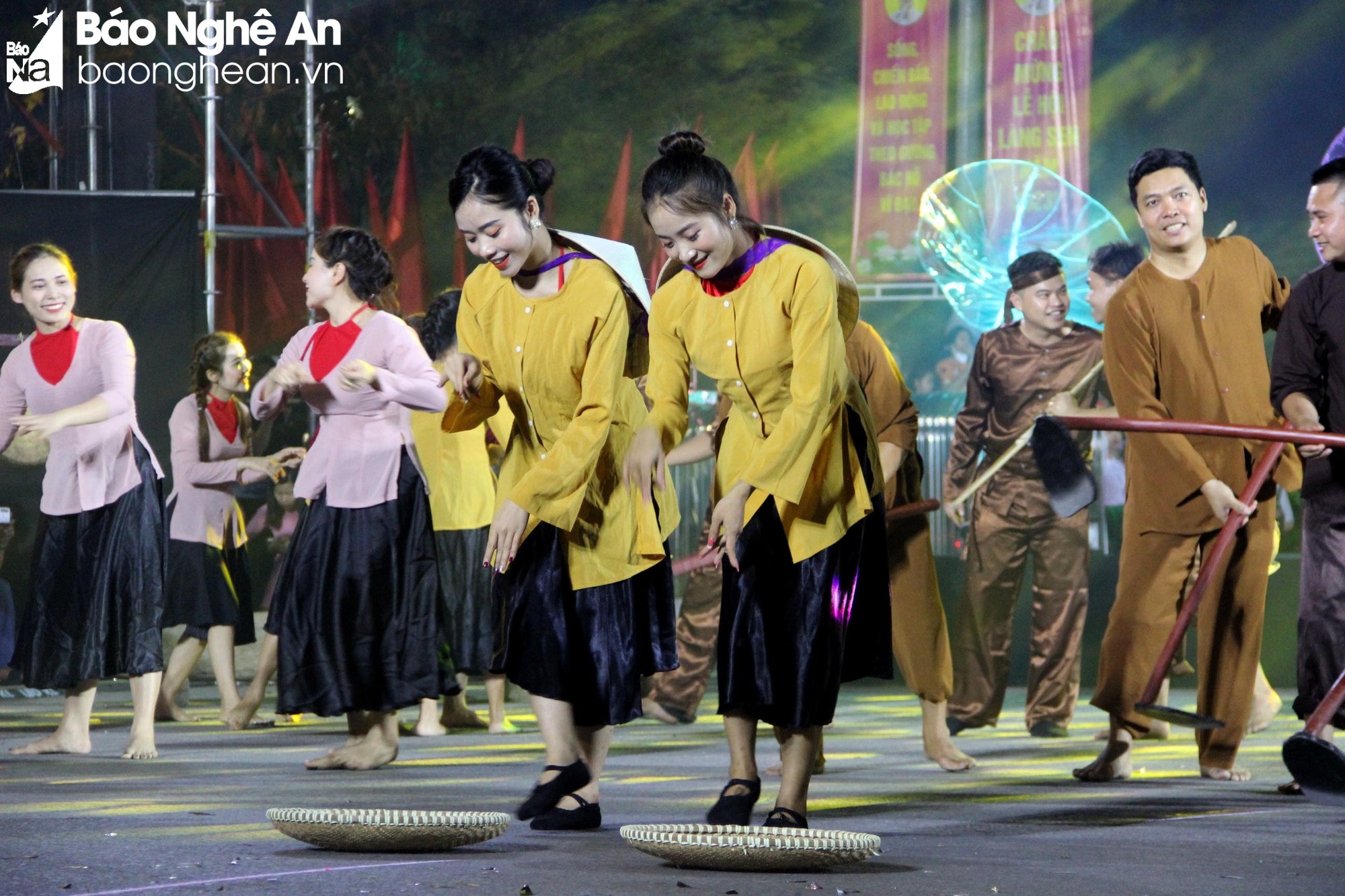
Ví and Giặm are folk songs deeply rooted in the identity of Nghe An province, encompassing melodies, lyrics, content, and the time and place of their performance. They are spiritual products that truthfully reflect the unique aspects of life in this region. People from Nghe An, with their talent for improvisation and unique yet rich and poignant voices, are the creators and transmitters of Ví and Giặm. This type of folk song primarily takes place within community activities, varying in scale and setting, and is closely intertwined with community life. This connection to community life has shaped the fundamental characteristics and key dimensions of its origins, creators, and the environment in which it has existed and developed.
References
1. Nguyen Chi Ben, Bui Quang Thanh,Folk songs of Nghe An and Ha Tinh provinces: Vi and Giam, PublisherInformation CultureHanoi, 2013.
2. Hoang Trong Canh,Local terms with a parallel structure in Nghe Tinh folk poetry - Preserving and promoting the values of Nghe Tinh folk songs and chants, PublisherNghe An, 2012.
3. Ninh Viet Giao,The scholarly quality in the lyrics of Nghe An's Vi and Giam folk songs - Preserving and promoting the values of Nghe An's Vi and Giam folk songs., PublisherNghe An, 2012.
4. Vu Ngoc Khanh,Some observations on Nghe Tinh folk songs, MagazineArts and Culture of Nghe Tinh, No. 21, 1996, p. 117.