
Nghe An province is holding those responsible accountable for the mass pneumoconiosis cases among workers.
(Baonghean.vn) - Currently, Nghe An province is focusing on directing efforts to address the shortcomings at the company, while clearly identifying the collective and individual responsibilities involved.
The company is liable under the law.
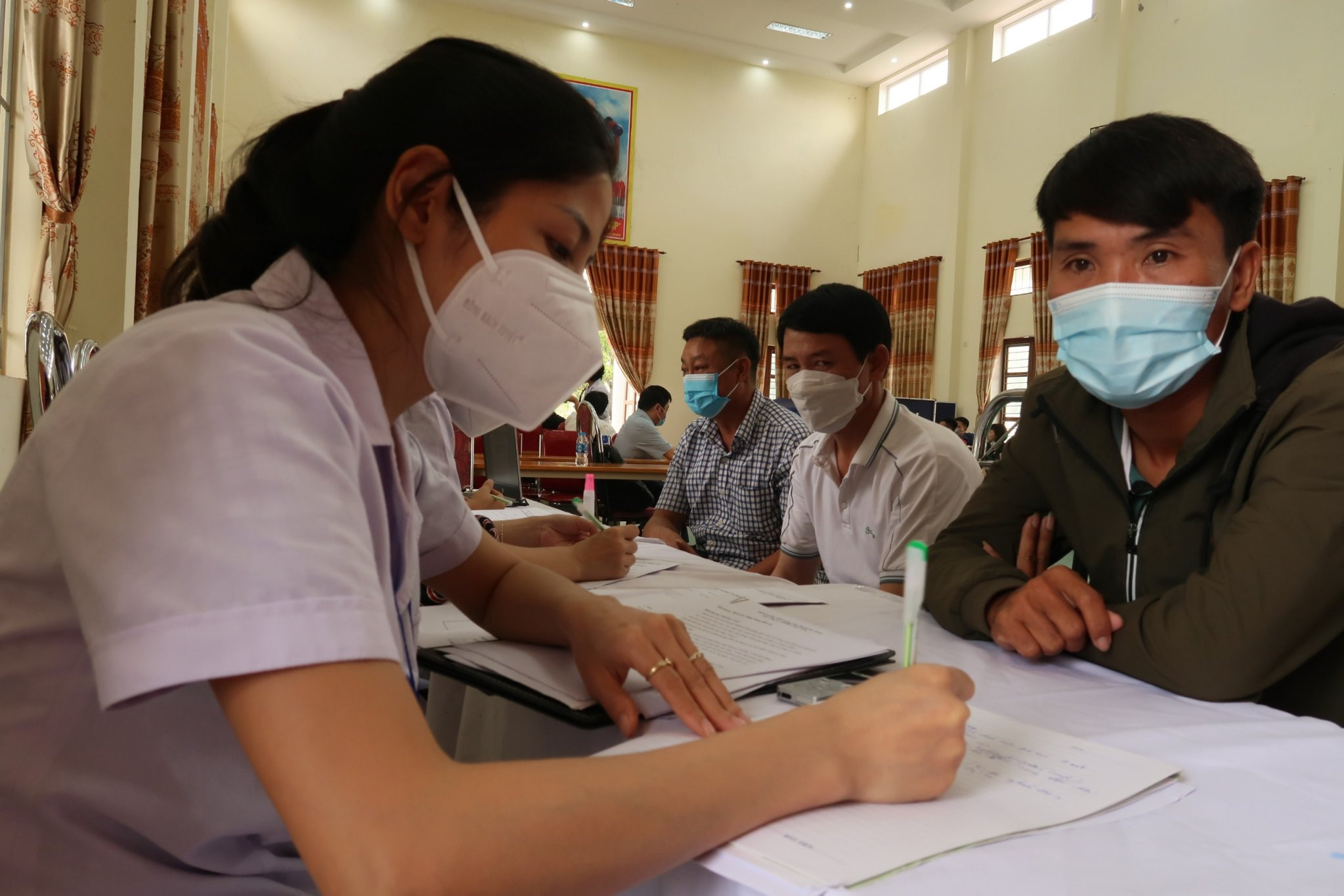
Nearly two months have passed since the Occupational Disease Investigation Team of the Department of Health concluded that 62 out of 87 people who had worked at Chau Tien Co., Ltd. (located in Nghi Long commune, Nghi Loc district) were suffering from silicosis, but Mr. Hoang Sy Quyet (38 years old, Dien Loc commune, Dien Chau district) has still not received any notification from the company owner. Like many others, Mr. Quyet only learned of his silicosis after receiving information from a reporter.
So far, no one has informed us or given us any instructions on what to do. Meanwhile, this disease can only be cured if it is detected early and we go to the hospital promptly.
Mr. Quyet has only been working at Chau Tien Co., Ltd. for about 9 months, in the mechanical department, but medical examinations have revealed that he has severe silicosis. Despite this, Mr. Quyet is still working at the company.
Unable to wait any longer from the company, Mr. Quyet and two colleagues recently went to the Central Lung Hospital for examination. The results showed that one of his colleagues was sent home because his condition was too severe and beyond saving. “As for me, the doctors said I have silicosis, but I need further monitoring. I have to come back for another check-up in three months,” Mr. Quyet recounted. After returning home from the hospital, Mr. Quyet resumed working at the company.
According to Mr. Quyet, the company ceased production a long time ago, but about 10 workers are still working there, dismantling machinery in the workshops. Among these 10 workers, many have been diagnosed with silicosis. “We’ve asked the manager many times, but he also has severe silicosis. When we asked the owner, he said nothing, just kept avoiding the question,” Mr. Quyet added.
Regarding this matter, at a recent press conference on the province's economic, social, and national defense and security situation, Vice Chairman of the Provincial People's Committee Bui Dinh Long stated that the province is currently focusing on addressing the shortcomings of Chau Tien Co., Ltd. over the past period, while also determining the responsibilities of the collective and individuals involved.
Meanwhile, Mr. Le Tien Tri, Head of the Management Board of the Southeast Nghe An Economic Zone, assessed this as a very serious incident.
The Provincial People's Committee directed the establishment of an inter-agency inspection team, which identified numerous violations at the company, including those related to environmental monitoring and occupational safety. The province also issued decisions to fine Chau Tien Co., Ltd. over 110 million VND.
Following the penalty, the People's Committee of Nghe An province also assigned responsibility to relevant departments, agencies, localities, and Chau Tien Co., Ltd. to address shortcomings and limitations such as investment activities, occupational safety and hygiene, and policies for workers…; "The company must be held accountable before the law and the workers who contracted the disease. Specifically, the enterprise must compensate the relatives of the deceased, and provide compensation and support according to regulations to workers who have been diagnosed with pneumoconiosis by the occupational disease investigation team," Mr. Tri emphasized.
Patients are entitled to compensation.
Mr. Nguyen Anh Tho, Director of the Institute of Occupational Safety and Health Sciences, said that at the end of November 2023, he led a delegation from the Vietnam General Confederation of Labor to Nghe An to assess the situation and visit the relatives and workers of Chau Tien Co., Ltd. who died or were hospitalized due to illness.lung dust.
“When the inspection team visited Chau Tien Co., Ltd., the company had temporarily ceased operations. At that time, although the factory buildings and machinery had been cleaned, tidied up, and organized, observation still clearly showed that stone dust was clinging to the surfaces and walls of the factory. It can be said that, with the remaining technology we observed, if it were operational, the risks would be very high,” Mr. Tho said, adding that the dust extraction and filtration systems there could not reduce the amount of dust released. In factories built in large, enclosed spaces without isolating the dust source, most workers in that environment are at risk of exposure to high concentrations of dust.
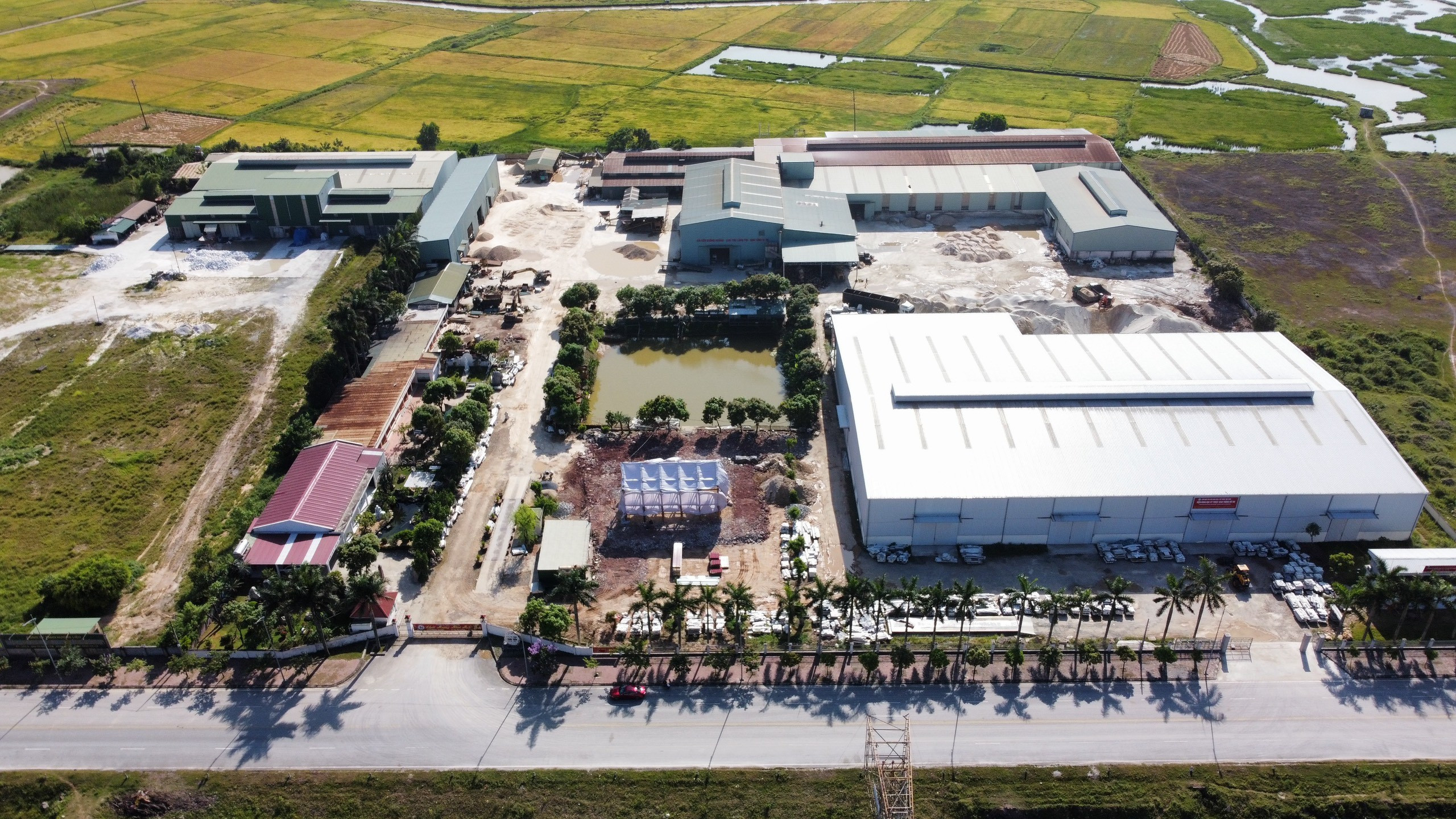
Chau Tien Co., Ltd. was established nearly 20 years ago, formerly a facility processing ultra-fine limestone powder (CaCO3). In 2017, the company officially began production with a production line for limestone powder and silica stone products. The input material is pebbles with a silica content of over 99%. The company's products include two lines: white silica stone powder (5 sizes from 0.1 mm to 5 mm) used as raw material for marble pressing plants, floor lining for steelmaking furnaces in steel mills, and also collects stone dust from the grinding process to mix into steelmaking materials. Despite the high-risk working environment, this company does not conduct environmental monitoring, occupational health examinations, or periodic health check-ups for its workers.
“In 2017, this company changed its technology. The first change that poses a risk of silicosis is the stone material – the raw material for the production line. They switched from low-silica stones to high-silica stones,” Mr. Tho said, adding that, based on environmental monitoring results after the incident, there is sufficient evidence to assess that those working there, whether for a short or long period, are at risk.
According to Mr. Tho, there are cases where silicosis is only discovered 35 years later, yet it is still claimed to be an occupational disease caused by exposure in the workplace. It's not the case that if a worker is no longer employed, or if a worker has passed away after retirement, the occupational disease cannot be determined, nor can the employer's responsibility be determined. The responsibility for determining this lies with the investigation teams and state management agencies.
According to the Law on Occupational Safety and Health, the primary responsibility lies with the employer. The employer must bear the treatment costs and provide compensation. For employees who have full social insurance coverage, the insurance fund provides subsidies and support for insurance-related expenses as stipulated. However, if the enterprise does not fully enroll its employees in social insurance, all treatment costs must be borne by the employer. Failure to do so constitutes a violation of the law, not only causing serious consequences affecting the health and lives of employees, but also failing to fully pay benefits to employees who suffer accidents or occupational diseases.
According to Nguyen Anh Tho, Director of the Institute of Occupational Safety and Health, occupational diseases are currently not receiving as much attention as workplace accidents. Many occupational diseases lead to death after diagnosis, but information on clusters of cases is rarely reported fully and receives little media attention. Only the number of people affected, the number of people examined, and the number of people at risk are reported. This means that these figures do not fully reflect the severity of the situation. This has not yet prompted management and business owners to pay attention to the prevention of occupational diseases during the production process.
Tien Hung