

The melancholy song of the golden oriole has faded away.
(Baonghean.vn) - Many people were deeply saddened to learn that People's Artisan Hong Oanh passed away at the age of 70 after suffering a stroke late on February 13th.
Not only the people of Nghe An in the South, but also friends, colleagues, and audiences who loved the folk songs and poetry that she performed throughout the country feel a sense of loss, having lost a dedicated artist who devoted her life to contributing to and spreading folk culture.
People's Artist Hong Oanh, whose real name is Nguyen Thi Hong Vanh, hails from Thach Lien commune, Thach Ha district, Ha Tinh province. Born and raised in a family with a long tradition of practicing traditional Eastern medicine, she showed a talent for folk songs and music from a young age, growing up in a village rich in folk culture. Even as an adult, despite working in accounting and statistics, she maintained a special passion for folk songs and music. She memorized many ancient folk songs, the Tale of Kieu, and poetry, and gradually began composing her own poems using folk elements and traditional roots.
In 1989, she moved to the South, and her passion for singing and spreading folk culture to others blossomed. She participated in many clubs, bringing her songs, folk melodies, and traditional tunes to the people of Ho Chi Minh City and other southern provinces and cities.
In 2016, with the support of the Nghe Tinh Business Association in Ho Chi Minh City, she founded the Southern Nghe Tinh Folk Song Club (Vi and Giam style). Since then, she has led the club to participate in many major cultural and artistic programs of the Ho Chi Minh City government, television and radio programs of Ho Chi Minh City Television and Ho Chi Minh City Radio; participate in collecting folk cultural heritage, and collaborate with universities and educational institutions to organize poetry programs, folk song performances, and folk culture events.
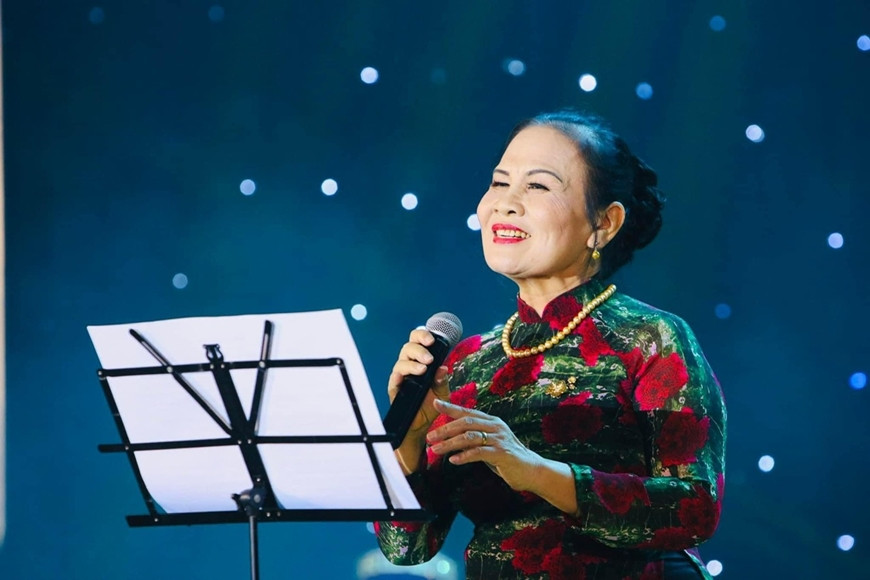
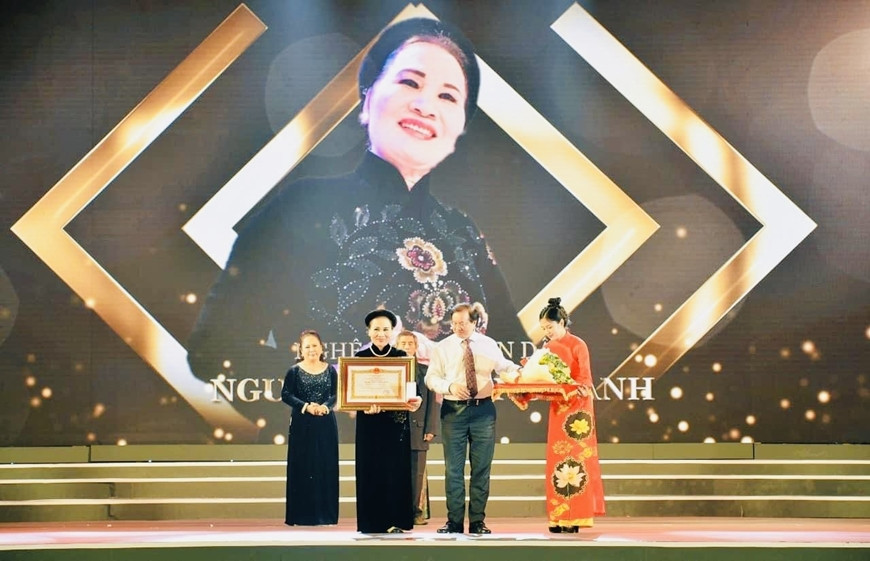
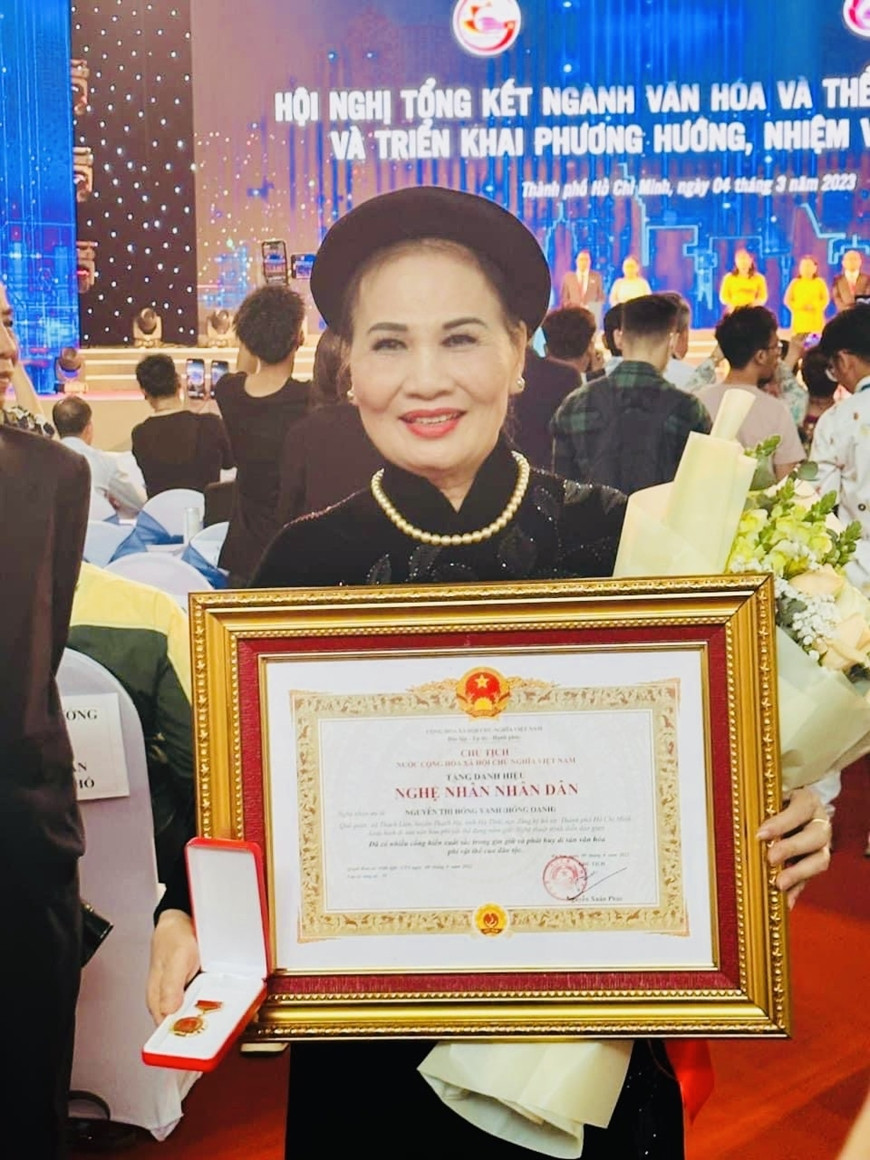
She organized the production of a CD of songs based on the Tale of Kieu, featuring styles from the three regions of Vietnam (North, Central, and South); published four poetry collections, one book on festivals, and compiled the 2,000-page poetry collection "The Road to Nghe An," containing approximately 1,800 poems by over 600 prominent authors from Nghe An and Ha Tinh provinces. For her tireless contributions, based on a recommendation from the Ho Chi Minh City People's Committee, on March 4, 2022, Meritorious Artisan Nguyen Hong Oanh was awarded the title of People's Artisan by the President of Vietnam.
In addition, she has received numerous commendations and awards from various ministries, departments, localities, and the Vietnam Federation of UNESCO Associations... for her outstanding achievements in creating, performing, researching, and preserving folk cultural forms.
People's Artist Hong Oanh recited and sang throughout her youth until she learned she could no longer sing after a sudden stroke on the Lunar New Year of 2024. She lived that life with passion, enthusiasm, and dedication to folk culture.
In numerous conversations, People's Artist Hong Oanh shared that folk culture is not only a valuable asset but also a gold mine, an invaluable treasure of the Vietnamese nation and of all humanity. It is no coincidence that UNESCO inscribed 15 traditional folk cultural forms of Vietnam as Intangible Cultural Heritage of Humanity. As long as culture remains, so too must it be preserved, promoted, and spread so that young people understand and appreciate these forms of folk culture even more.
Her concerns are very valid, especially for those who, like her, are passionate about and dedicate their lives to folk culture. In today's flat, multimedia world, with its influx of new cultural forms imported from abroad, many people are becoming indifferent or forgetting traditional folk art forms such as Ví, Giặm, Ca Trù, Chòi, Cải Lương, and Quan Họ...
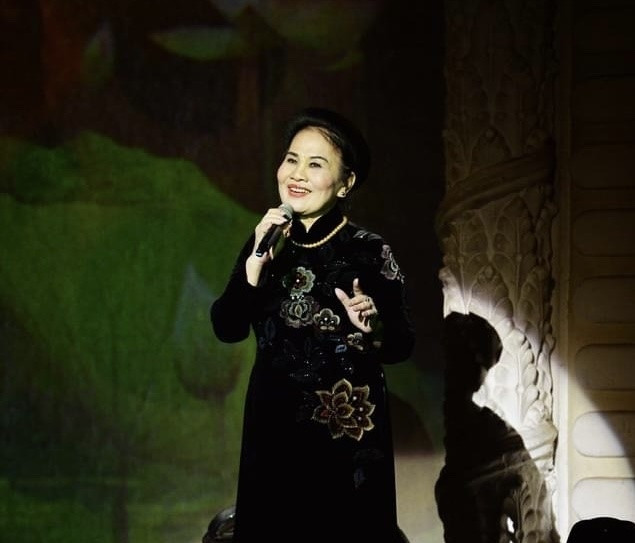
People's Artist Hong Oanh always lives sincerely and simply, yearning to rediscover ancient folk cultural heritage, especially the "vi" and "giam" folk music traditions, and has a strong desire to spread traditional music and cultural heritage. Whether the cultural and artistic programs are large or small, in Ho Chi Minh City or in many provinces and cities across the country, despite her advanced age and having suffered a stroke once, she always enthusiastically participates whenever invited.
Whenever we sat down to chat with her, I and those around me would fall silent, listening intently as she spoke about the values of the folk music heritage of Ví, Giặm, Ca Trù, the Tale of Kiều, and other forms of folk culture... Wherever she spoke, she would hum and sing, as if to illustrate her points, creating a strangely captivating and alluring effect.
Before Tet, in our conversation, she shared her desire to organize a workshop focusing on promoting folk culture among young people. She wanted to collaborate with various educational institutions to bring more programs and lectures on folk culture in a lively and accessible way, so that young people could see the profound and immense value of folk culture and traditions passed down from their ancestors throughout the nation's history. Her dreams and aspirations were many, but that path will soon be incomplete without her, like a nightingale's song fading in the spring, leaving behind much sorrow for those who were passionate about the melodies of folk songs and traditional folk culture.