

Nghe An province is short of more than 5,000 healthcare workers.
On the afternoon of July 10th, continuing the program of the 21st session, the Nghe An Provincial People's Council, 18th term, 2021-2026, held discussions in the assembly hall.
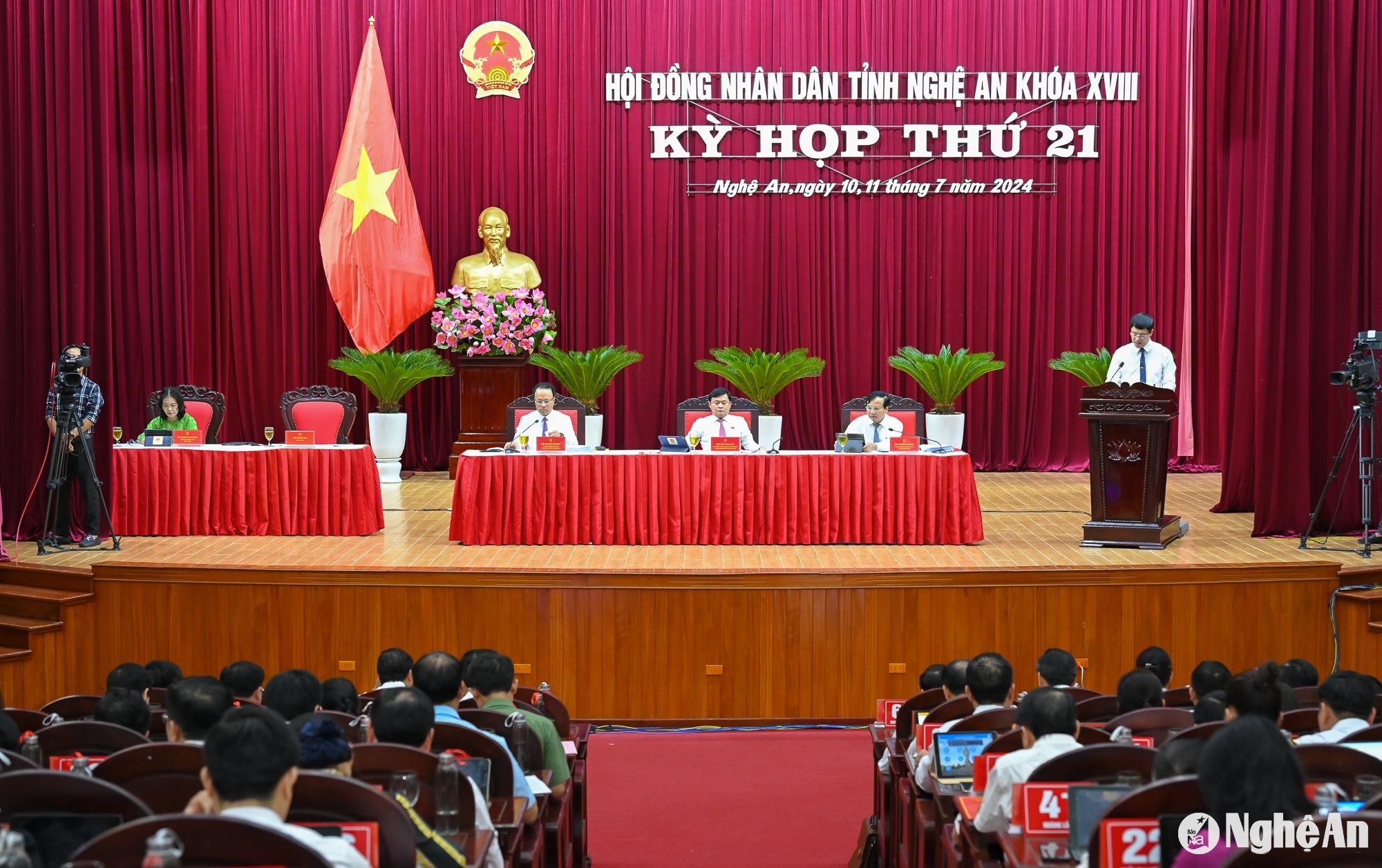
Responding to the opinions of provincial People's Council delegates, the Director of the Nghe An Department of Health, Nguyen Thi Hong Hoa, stated that the general shortage of medical personnel at all levels, especially the shortage of highly qualified medical personnel at the grassroots level, is a reality, a challenge, and a difficulty for the health sector.
This puts pressure on the task of protecting and caring for people's health to meet the requirements of the new situation, with an increase in 6 out of 11 infectious diseases, as well as an increase in the number of people visiting medical facilities in the first six months of this year compared to the same period last year.
According to the Director of the Nghe An Department of Health: To meet the healthcare needs of the people, the plan was for 14,651 hospital beds at all medical facilities (both public and private) throughout the province, but the actual number has reached 18,584 beds, an increase of 3,933 beds compared to the plan, equivalent to a 120% increase.
In accordance with the regulations, which stipulate that each hospital bed must have at least 1.2 personnel as required by Circular 03 of the Ministry of Health, the Nghe An Health Department is currently lacking approximately over 5,000 personnel in the examination, treatment, and healthcare sector.
Specifically, autonomous hospitals in groups 1 and 2 are short of approximately 3,800 personnel. Autonomous hospitals in groups 3 and 4 (primarily health centers, health stations, and some specialized hospitals) are short of 1,448 personnel; however, these primary healthcare units are still required to reduce their annual staffing quotas, creating pressure on the healthcare workforce, especially at the grassroots level.
Furthermore, since 2020, a significant number of healthcare workers have left the public sector, with 350 people, including 160 doctors, moving out of public healthcare facilities.
"Currently, the actual workforce in the health sector is 19,426 people, of which the public sector accounts for 72.3%; the private sector accounts for 27.7%," the Director of the Department of Health said.
Of the 460 commune-level health stations, 360 have full-time doctors; in the remaining 100 communes, 70 have had doctors transferred from the health center on a temporary basis, and 19 retired doctors have been re-contracted. The remaining 30 health stations currently have no doctors, and the health sector has to use general practitioners to perform medical examinations and treatment.
The Director of the Department of Health stated that the workforce has not met the needs for medical examination and treatment, especially the development of advanced and specialized techniques at the provincial level, as well as the requirements for improving the quality of medical examination and treatment at the grassroots level.
However, Nghe An is currently facing difficulties in recruiting and attracting human resources in the healthcare sector, despite the province's preferential policies. In 2023 alone, the province provided over 10 billion VND in support for training and recruitment, including 34 cases of recruitment and 253 schools benefiting from training policies.
In this context, the leaders of the Nghe An Health Department stated that they have partnered with five universities to train nurses and doctors for hospitals.
For autonomous units, the sector encourages allocating resources from their autonomous budget to support healthcare personnel at the unit in pursuing further education, in addition to the provincial policy.
However, in the long term, a fundamental solution is needed. The Director of the Department of Health proposed that Party committees and authorities at all levels continue to pay attention to helping the health sector ensure resources; in particular, agreeing with the opinion of the provincial People's Council representatives that a new policy should be issued to replace the old one in order to attract human resources to work in the province.