

Proposal to regulate the collection of tolls for using expressways.
The Ministry of Transport is drafting a Decree regulating the collection of tolls for the use of expressways.
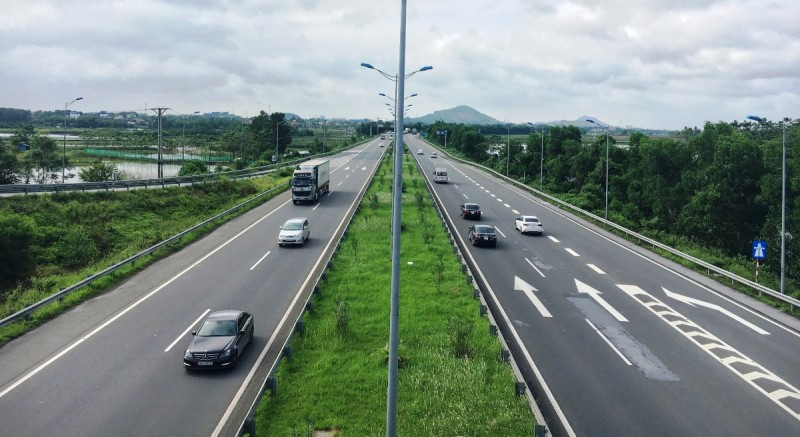
This draft proposes regulations on toll collection for vehicles traveling on expressways owned by the public, with the State acting as the representative owner and directly managing and operating them.
Conditions for implementing highway toll collection.
The draft clearly states that expressways owned by the entire population, with the State acting as the representative owner and directly managing and operating them, will be subject to toll collection, including:
1. The highway must meet the following conditions:
- Designed and constructed in accordance with technical regulations and standards for highways and other relevant technical regulations and standards;
- Complete the handover and put it into operation in accordance with the Road Law, the regulations of the law on construction, and other relevant legal regulations.
2. For expressways whose investment policies were approved before the effective date of the Road Law, if they are put into operation but do not fully meet the requirements stipulated in Clause 1, Article 45 and Clause 2, Article 47 of the Road Law, toll collection will be implemented upon completion of the construction and installation of toll station infrastructure, software systems, and equipment for toll collection; public service facilities at rest stops located along the expressway as approved by competent state agencies; and technical infrastructure and technological equipment for traffic management and operation.
When will the toll collection for the highway be implemented?
According to the draft, based on socio-economic conditions and the need to manage expressways that meet the prescribed conditions, the agency assigned to manage the assets shall develop a plan for exploiting the assets of the toll-collecting expressways and submit it to the competent authority for approval in accordance with the law on public assets and specialized laws.
The timing of toll collection, the toll routes, and the toll rates are specifically determined in the asset exploitation plan approved by the competent authority.
5 groups of people subject to fees
According to the draft, the subjects liable for highway tolls are vehicles traveling on highways owned by the State, which are directly managed and operated by the State as the representative owner. These subjects are divided into five groups as follows:
- Group 1 includes the following types of vehicles: Vehicles with fewer than 12 seats, trucks with a load capacity of less than 2 tons; and public passenger transport buses.
- Group 2 includes the following types of vehicles: Vehicles with 12 to 30 seats; trucks with a load capacity of 2 tons to less than 4 tons;
- Group 3 includes the following types of vehicles: Vehicles with 31 seats or more; trucks with a load capacity from 4 tons to less than 10 tons;
- Group 4 includes the following types of vehicles: Trucks with a load capacity from 10 tons to under 18 tons; 20-foot container trucks;
- Group 5 includes the following types of vehicles: Trucks with a load capacity of 18 tons or more; vehicles carrying 40-foot containers.
The draft clearly states that organizations and individuals who own, use, or manage vehicles subject to the expressway toll fee as stipulated above must pay the expressway toll fee, except for cases that are exempt from the fee.
Those exempt from fees
According to the draft, the following categories of people are exempt from paying tolls when traveling on expressways where the State is the representative owner and directly manages and operates:
1. Ambulance.
2. Fire truck.
3. Specialized vehicles serving national defense include vehicles with license plates: Red background, white embossed letters and numbers, equipped with specialized equipment for national defense (including: tanker trucks, crane trucks, vehicles transporting armed forces on marches, understood as passenger cars with 12 or more seats, covered transport vehicles with seats installed in the cargo area, control vehicles, military inspection vehicles, specialized vehicles for transporting prisoners, rescue vehicles, satellite communication vehicles, and other specialized vehicles serving national defense).
4. Specialized vehicles for security purposes include vehicles belonging to the Ministry of Public Security, provincial and city police, and district and county police:
- Traffic police patrol cars have the following characteristics: A rotating light is mounted on the roof of the car, and the words "TRAFFIC POLICE" are printed on both sides of the car.
- The 113 police car has the words "POLICE 113" printed on both sides of the vehicle;
- The riot police car has the words "RIOT POLICE" printed on both sides of the vehicle;
- Vehicles of military, police, and prosecutorial forces on urgent duty shall use one of the priority signals as prescribed by law in cases of urgent duty;
- The vehicle is a covered truck with seats inside the cargo area, used to transport police officers on duty;
- Specialized vehicles for transporting prisoners, and rescue vehicles, must be fitted with identification badges in accordance with the law on specialized vehicles.
5. Specialized vehicles for funeral services, including:
- Vehicles with specialized structures for funeral services (including: hearses, refrigerated trucks for storing and transporting corpses);
- Vehicles involved in funeral services (including: passenger vehicles accompanying the hearse, trucks carrying flowers, vehicles for carrying portraits) are vehicles used solely for funeral activities and have vehicle registration certificates in the name of the funeral service provider. The funeral service provider must submit a written commitment to the electronic payment service provider stating that these vehicles will only be used for funeral activities (specifying the number of vehicles and license plates for each type).
6. The convoy was escorted by traffic police vehicles.
7. Vehicles belonging to the police and defense forces use nationwide road toll tickets.
The amount of toll, the fee for using the highway.
According to the draft, the amount of highway toll payable will be determined based on the type of vehicle, the actual distance traveled (km), and the corresponding fee for each type of vehicle (VND/km).
The proposed toll rates for vehicles traveling on expressways owned by the State, directly managed and operated by the State under the purview of the Ministry of Transport (management and operation) are as follows:
Unit: VND/vehicle.km
| Group | Vehicles subject to fees | Level 1 | Level 2 |
| 1 | Vehicles with fewer than 12 seats, trucks with a load capacity of less than 2 tons; public passenger transport buses; | 1,300 | 900 |
| 2 | Vehicles with 12 to 30 seats; trucks with a load capacity of 2 tons to less than 4 tons; | 1,950 | 1,350 |
| 3 | Vehicles with 31 seats or more; trucks with a load capacity from 4 tons to less than 10 tons; | 2,600 | 1,800 |
| 4 | Trucks with a load capacity of 10 tons to under 18 tons; vehicles carrying 20-foot containers; | 3,250 | 2,250 |
| 5 | Trucks with a load capacity of 18 tons or more; vehicles carrying 40-foot containers. | 5,200 | 3,600 |
The toll rates for vehicles traveling on expressways owned by the State, directly managed and operated by the State as the representative owner, and within the jurisdiction of the locality (managed and operated by the Provincial People's Committee) are determined by the Provincial People's Council.
Based on the above-mentioned fee rates, the applicable fees for each expressway route and section will be specifically determined in the Asset Exploitation Plan approved by the competent authority.