

Things you didn't know about the song "Thanh Chương Invites You to Visit!"
The song "Thanh Chuong Invites You to Visit" was created after the historic flood of 1978. Initially, it received much praise and much criticism. Those who praised it considered it a folk song, easy to sing, with smooth lyrics that moved and touched the deep, genuine, and simple feelings of the people in a remote, isolated area… Those who criticized it said: There are so many other good, delicious, and beautiful things, why bring out pickled vegetables and salted eggplant to display in public?
Phan Hong Truong, a veteran and war invalid from the anti-American war, wrote many songs from the early 1970s. Returning to his hometown, he immersed himself in the mass cultural movement. When writing "Thanh Chuong Invites You to Visit," he was still eating millet and supplementing his income by painting scrolls, couplets, and the character for longevity to "support his songwriting."
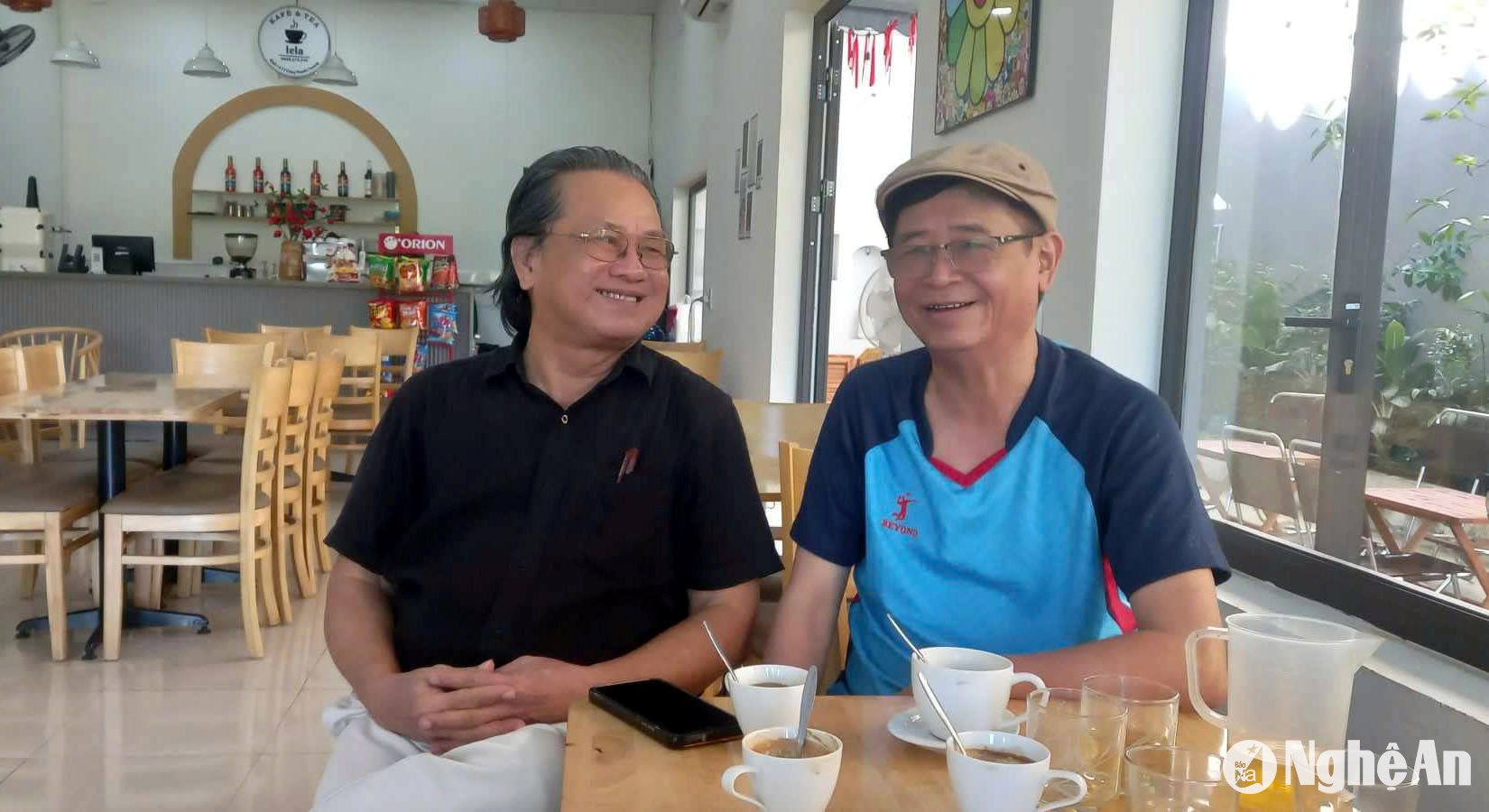
In 1979, at a meeting at the home of poet Vo Thanh An, attended by Nguyen Trong Tao, Pham Tien Duat, and many overseas Vietnamese, Hong Truong enthusiastically sang "Ngai Ngoi Chi"... Everyone was moved. Vo Thanh An embraced him and said: "Hong Truong - you are Thanh Chuong!" The stage name Phan Thanh Chuong originated from that moment. We found it rare to find a district with such a polite and sincere "country musician," romantic yet warm-hearted, rebellious yet meticulous, elegant yet rustic... His works, like grains of rice and potatoes, are familiar yet deeply imbued with the soul of the countryside: "My Mother's House Has a Picture of Uncle Ho," "Village Mat," "Voice of the Homeland," "With the Homeland," "Singing About My Friends," "Love Song of the Giang River," "The Sound of the Zither on Champa Land,"...
For over 40 years, that song has remained vibrant and alive. In Hanoi, Saigon, Da Lat, and beyond, people sing "Thanh Chuong invites you to visit." Singers and listeners are sometimes overcome with emotion, their eyes welling up with tears for their homeland, embracing each other and passionately shouting: "Even far away, I will always remember the saying: 'The land of Thanh Chuong is known for its salty pickled vegetables and sour pickled eggplant,'"... Not only do people from Thanh Chuong consider it the "District Anthem," but many people from Nghe An also sing it enthusiastically, as it seems that every region of Nghe An has its own image reflected in it. Those in the countryside sing "ngai ngoi chi..." to welcome, call, and make friends; those far from home sing "the old song that only remains in memory" with a heartfelt, choked-up feeling for the past of Thanh Chuong and Nghe An.

Mr. Ngo Duc Tien, originally from Yen Thanh, believes that writing about a small, specific region is increasingly difficult. Some localities have invited many famous musicians and singers to compose district anthems without success. "Thanh Chuong Invites You to Visit" is a unique case. It's not only popularized by people from Thanh Chuong and Nghe An, but also by people from other places. Whenever the song is sung, people see their homeland and village reflected in it – "the land holds meaning for those far away, the land is heavy with the affection of home." Though not boisterous or grandiose, it touches the deepest wellspring of love for one's homeland and country...
When it comes to music, I'm an outsider. But it must be said that when writing this song, the author had romantic premonitions about the future. "The land of Thanh La at night is flooded with electric lights" actually refers to the fact that at that time, Thanh Linh commune (formerly Thanh La) received a generator from a program sponsored by the former Soviet Union. It would run from around 7 PM to 10 PM. And even then, electricity only shone during harvest season and holidays at the warehouses (the centers of the villages at that time), but each time there was electricity, the whole commune was bustling with activity. Dung – the district center at that time, not yet recognized as a town – also usually only had electricity around 9 or 10 PM. "The factories and construction sites springing up…" were just a few tea drying factories of the Hanh Lam, Ngoc Lam, and Thanh Mai farms; the rest was still "On the dry fields, in the deep fields / Husband plows, wife plants, the buffalo pulls the harrow…".
Along with the changes in the country, Thanh Chuong district has made significant progress. Not long ago, "Homeland is a road paved with boots," but now most roads are cemented or asphalted. In 1992, there were only 800 meters of road, but now there are over 450 kilometers of asphalt roads. The area that once had 36 ferry crossings now only has 5. The Dung Bridge, Ro Bridge, Thanh Duc Bridge, and soon the Do Cung Bridge connect the two banks of the Lam River. Hundreds of bridges, large and small, have broken the old, isolated situation. Products from tea, cassava, acacia, oranges, and chicken (including fermented bamboo shoots!) have been transported to the South and North in recent years. The lives of the people have also improved considerably…
In this development, there was state investment in major projects such as the Ho Chi Minh Highway, the road to Thanh Thuy Border Gate, roads 46B and 46C, and the road from the district center to the resettlement area… And it can also be said: Along with the exchanges and invitations from district leaders of various periods, following that song, many investors who are sons and daughters of the homeland, such as Nguyen Minh Hong, Vo Van Hong, Nguyen Canh Son, Nguyen Canh Hong, Vo Van Minh... with their programs, projects, and generous hearts, have turned their attention to this poor homeland that was once loyal and steadfast to the revolution. In these exchanges, connections, and inaugurations of projects, the song "Thanh Chuong invites you to visit" is sung again as an expression, an introduction, a token of gratitude, and a heartfelt invitation…
However, being a border district far from growth centers, its economy remains primarily agricultural and forestry-based; industry and services are underdeveloped, and Thanh Chuong remains a poor district.
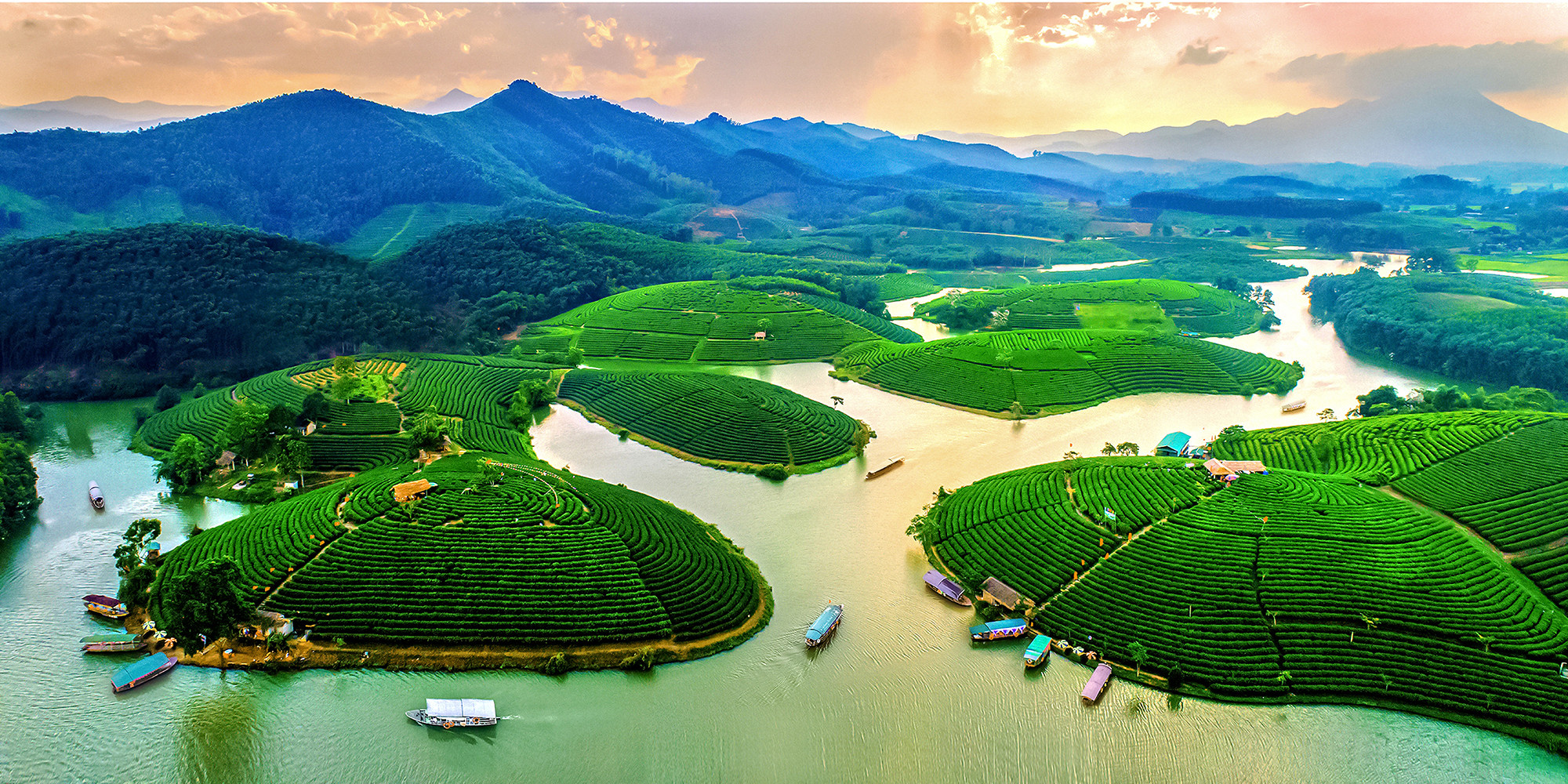
With 4,500 hectares of tea plantations, there is already a high-quality tea processing plant project for export; over 20,000 hectares of acacia plantations have on-site processing plants, eliminating the need to transport materials hundreds of kilometers away. The ABC garment factory in Thanh Tien commune, TAAD in Thanh Khe commune, Matsuoka garment factory in Thanh Lien commune, Thanh Huong and Thanh Tung biomass pellet factories, Thanh Thuy high-quality tea processing plant... 267 small businesses are already operating, providing employment for thousands of workers in the area. A promising future awaits!
As a district with a large land area and a large population of nearly 250,000, the people of Thanh Chuong still yearn for more small and medium-sized factories and enterprises to create jobs, gradually fostering new ways of working with a collaborative model in agriculture, and increasing income right in their homeland. The people of Thanh Chuong still sing, "Why haven't you come home, my love?" They sing to remember a not-so-distant past. They sing to connect, to learn, and to strive for success as "new business opportunities have opened up new horizons."