

Driving tips when encountering steep mountain passes.
Driving on mountain roads with sharp turns and blind spots is a major challenge for drivers, even those with years of experience.
Therefore, when driving on mountain roads, drivers need to master driving techniques, concentrate on observing their surroundings, and remain calm to handle any unexpected situations that may arise.
Experience driving on mountain roads with an automatic transmission.
Climb the mountain pass safely.
When climbing a mountain pass in an automatic transmission (AT) vehicle, the driver only needs to leave it in D (drive). The ECU will then automatically calculate and shift to the appropriate gear based on the throttle position and speed.
Descending the mountain pass safely
When descending a hill, the vehicle will tend to accelerate rapidly due to inertia. Therefore, drivers should avoid constantly applying the brakes, as this puts excessive pressure on the braking system, causing overheating, brake failure, or even complete brake failure. Instead, you should use engine braking to safely control your speed.
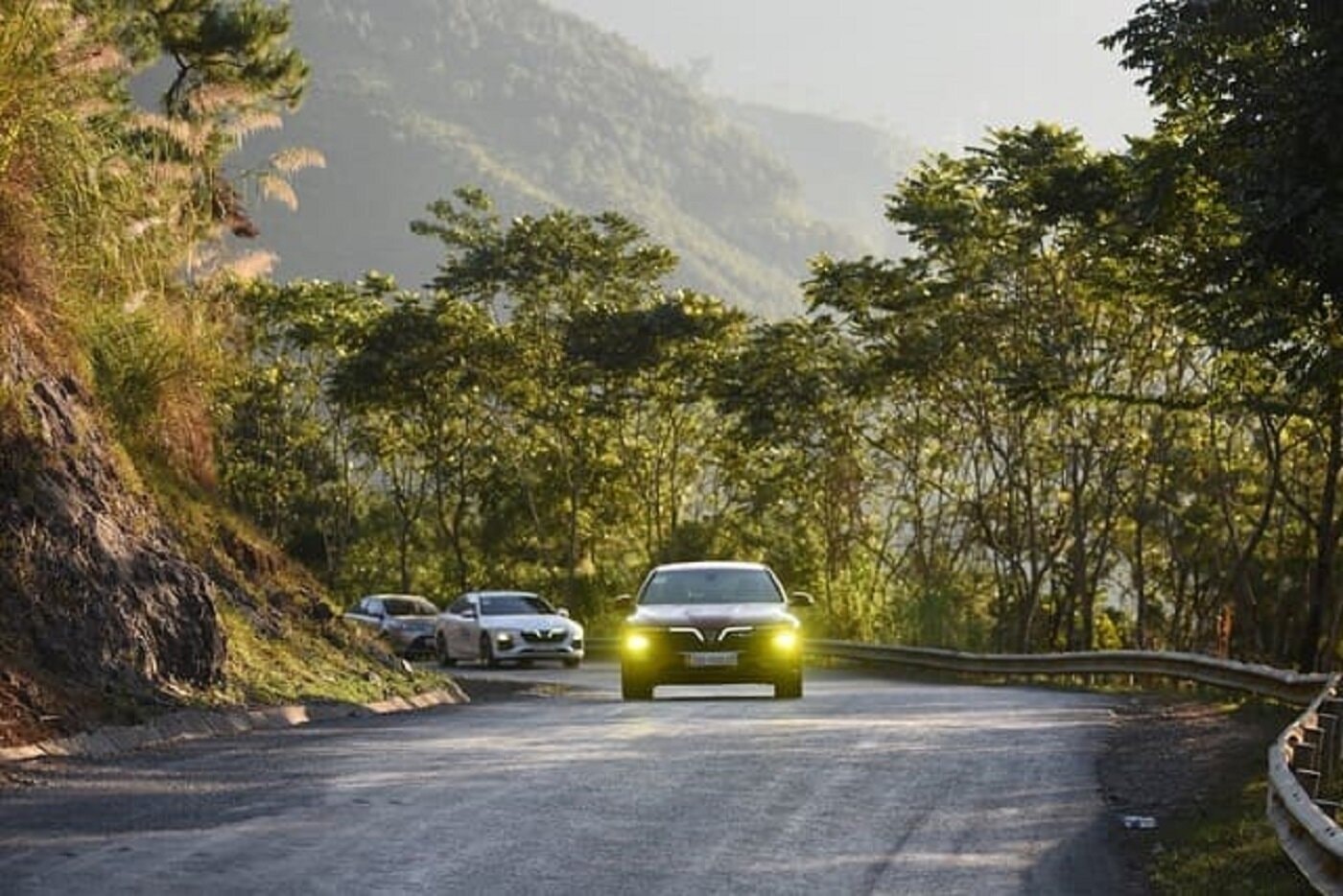
First, the driver needs to switch to manual mode, to D3, L2, or M. Once shifted, if the car is still accelerating rapidly, the driver should downshift to D2, L, or M again. After selecting the appropriate gear, the driver can maintain a speed of 40-50 km/h without needing to constantly apply the brakes.
Continuous uphill/downhill
When driving on mountain roads with many steep uphill and downhill sections, you should choose engine braking. To avoid having to shift gears repeatedly, drivers can apply the formula "use the same gear going down as going up".
Experience driving on mountain roads with a manual transmission car.
When the car climbs the mountain pass
When climbing a mountain pass in a manual transmission (MT) vehicle, you need to shift to a lower gear to increase traction. Depending on the slope of the pass, you can adjust the gear accordingly to suit the climbing conditions.
In addition, drivers need to coordinate the clutch, throttle, and gears smoothly to maintain momentum without overloading the engine. You need to adjust the engine speed to suit the vehicle's power and load (usually above 2,000 rpm but below 3,000 rpm).
When the car goes downhill
When descending a mountain pass, you need to use engine braking and follow the principle of "use the same gear going down as going up." If the vehicle's speed downhill remains high, continue shifting to a lower gear. When descending a mountain pass, if you encounter a less steep section and the vehicle slows down, the driver should depress the clutch to allow the vehicle to coast for a short distance, then release the clutch to use engine braking.
Things to keep in mind for safe driving on mountain roads.
- Check your vehicle's fuel and safety systems: There are usually very few fuel stations on mountain roads, so before driving, you need to check if your vehicle has enough fuel. In addition, you should also carefully check your vehicle's safety systems such as brakes, tires, lights, electrical system, oil, etc. If there are any unusual signs, take your vehicle for maintenance promptly.
- Follow the rules for going uphill and downhill: Before going uphill, drivers should stop the vehicle to allow the engine to cool down. Then, let the vehicle idle, turn on the heater, and do not open the radiator cap.
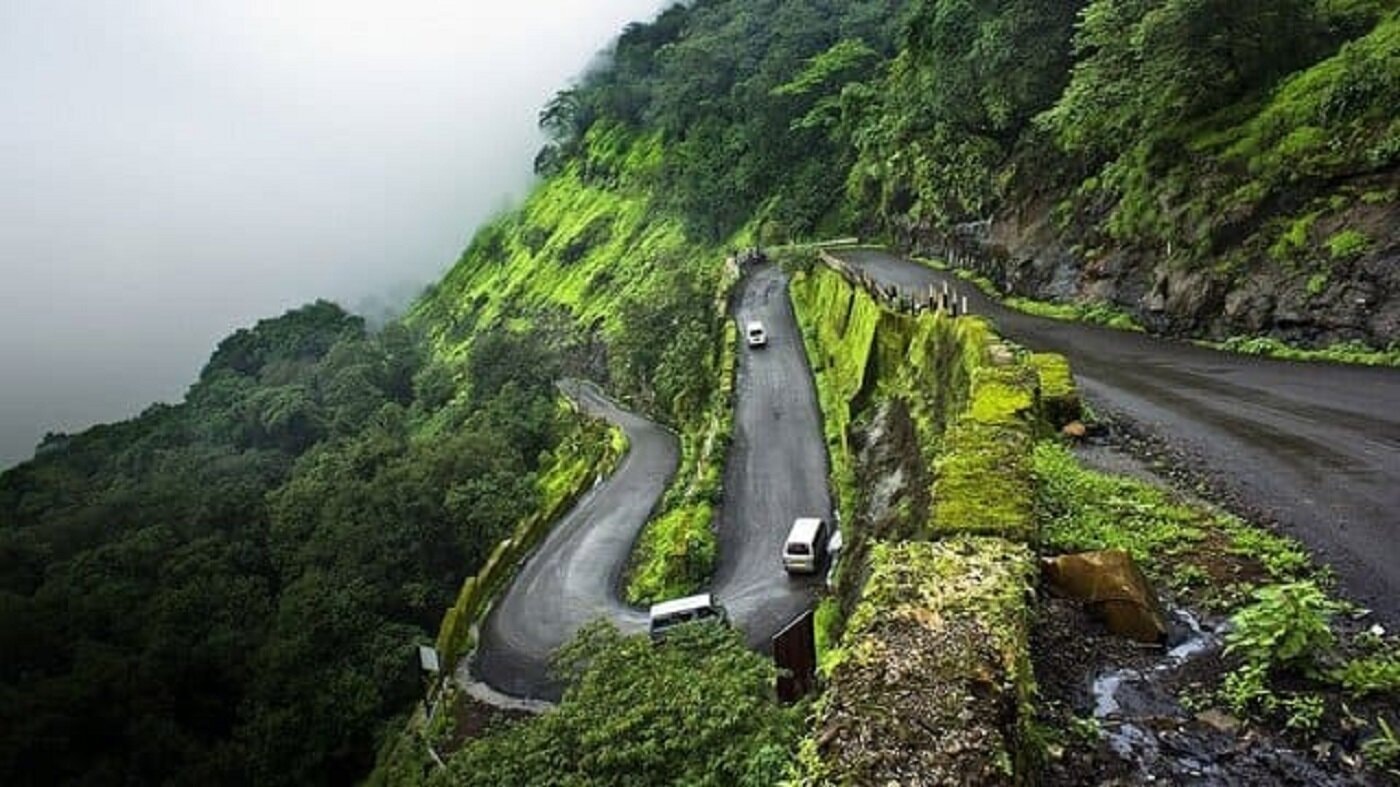
When climbing mountain passes, drivers should maintain an appropriate speed, concentrate on driving, observe road signs, and slow down when navigating curves. Drivers can also apply the general rule of "use the same gear going uphill as going downhill," and for safety, should avoid continuous braking.
- Not staying close to the lane markings.
When driving, drivers must stay in the correct lane. However, on narrow, winding mountain roads with a deep ravine on one side and a cliff on the other, you should not drive too close to the lane divider. The reason is that driving too close to the lane divider can create dangerous head-on situations, especially when cornering or during heavy rain or fog, as the road becomes slippery and visibility is limited. There will be no way to react in time, and the likelihood of a collision with oncoming vehicles is very high.
A safe way to drive a car on mountain roads is to leave enough space between yourself and the lane markings to react to unexpected situations.
- Maintain a safe distance and yield to other vehicles: Mountain passes are often narrow, so drivers need to prioritize yielding to other vehicles to avoid congestion and collisions. You should only overtake when it is safe to do so and determine the time to return to your lane after overtaking.
Drivers also need to pay special attention to maintaining a safe distance from the vehicle in front, especially large vehicles such as trucks and container trucks.
- Drive slowly and observe carefully when cornering: Statistics show that most accidents while driving on mountain roads occur on curves. The main causes are driver carelessness, lack of observation, exceeding the speed limit, encroaching on other lanes, reckless overtaking, etc., when cornering.
To avoid unfortunate accidents, when approaching a curve, drivers need to slow down, observe their surroundings, check their convex mirrors, and honk their horns to signal other vehicles. The curve should be smooth, not encroaching on the opposite lane, and not hugging the center line too closely.
- Do not stop or park in the middle of mountain passes: Mountain passes are very narrow and there is no place for vehicles to park, and this is prohibited by law. Therefore, if drivers illegally park their vehicles in the middle of the road, even if they park neatly on the shoulder, it can still endanger themselves and cause accidents for other vehicles.
According to experienced drivers, when driving on mountain roads, you are only allowed to stop or park in emergency situations and must turn on your warning lights or horn, keep at least 50 meters away from obstacles, or try to drive to a designated rest stop.
- Bring plenty of water and take frequent rest stops: When traveling on mountain passes, breaking the journey into smaller segments will give drivers time to rest and allow the engine to cool down. Additionally, you should prepare water to stay alert and focused while driving, avoiding fatigue and motion sickness due to unfamiliarity with the new route and altitude.
- Pay attention to danger signs.
When driving, drivers need to pay special attention to the warning signs placed on the road by the authorities. This helps drivers proactively control unexpected situations, calmly handle them, and ensure the safety of their journey.
Before driving through the mountain pass, drivers should carefully check the following factors:
Check your tire pressure and wear. If your car tires are more than 5-6 years old and worn, you should replace them to ensure a safe journey.
Inspect the brakes, braking system, brake pads, brake fluid, etc. If you notice any unusual signs such as: squeaking brakes, heavy brakes, or a low brake pedal, you need to take your car for inspection and maintenance.
Check your windshield wipers, as they clean the windshield and ensure clear visibility for the driver. Therefore, before driving on mountain passes, you should check your wipers and replace them if they are damaged.
Check your fuel level, as gas stations are scarce along mountain passes. Therefore, it's best to fill up your tank before starting your journey.