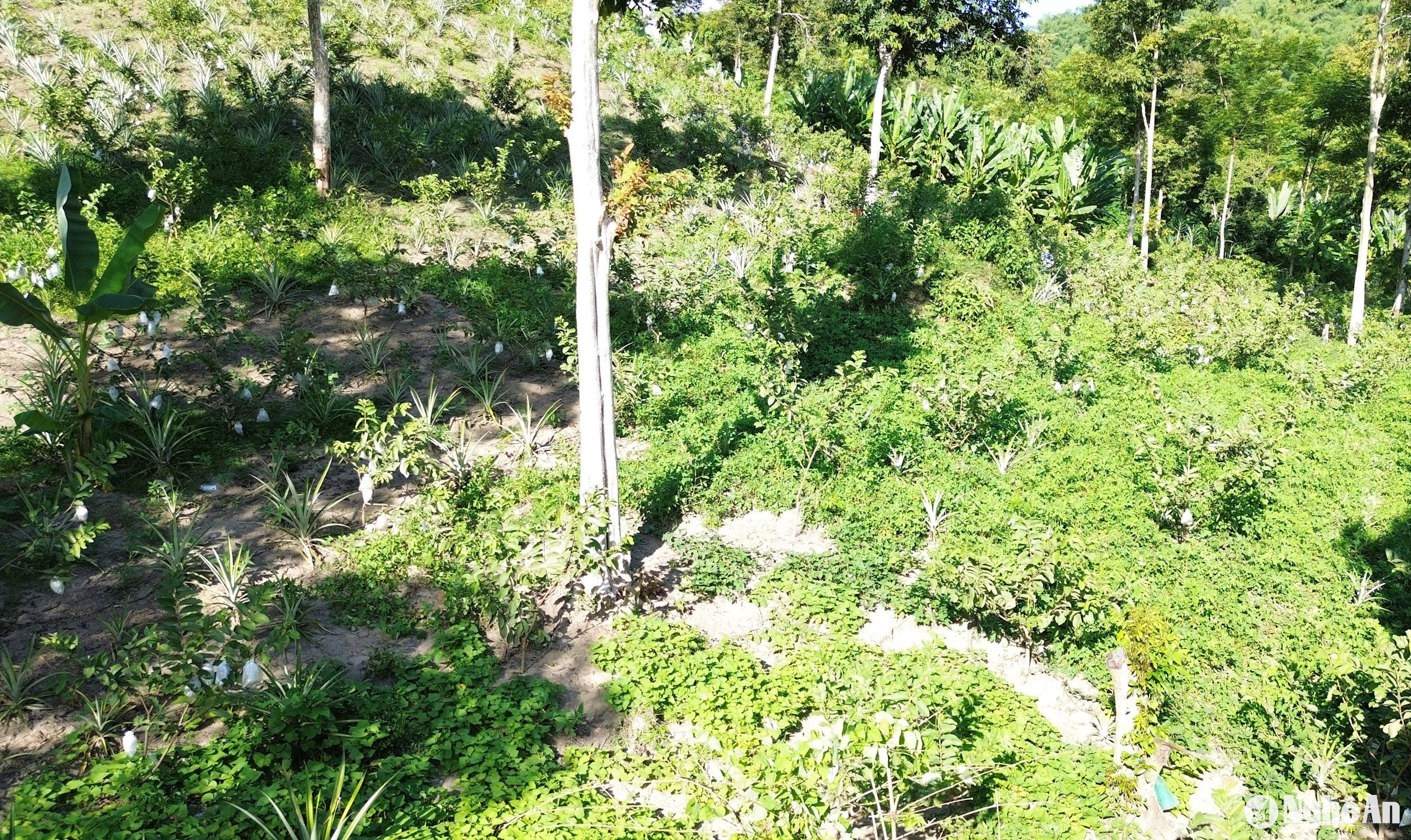
Taiwanese pear guavas find their way to Xoóng Con.
Nearly two years ago, the family of Mr. Ngan Van Mao, a Thai ethnic minority household in Xoong Con village, Luu Kien commune (Tuong Duong district), implemented a model of growing Taiwanese pear guava, and they are now harvesting it.
"Seeing is believing," so we made our way to this guava orchard in mid-August. Before us were hundreds of guava trees taller than a person, with peanut plants and other vegetables growing underneath. Despite the intense heat, the entire guava orchard on the mountainside remained lush and green, thanks to a system of plastic pipes installed to pump water from streams and springs for irrigation and care.
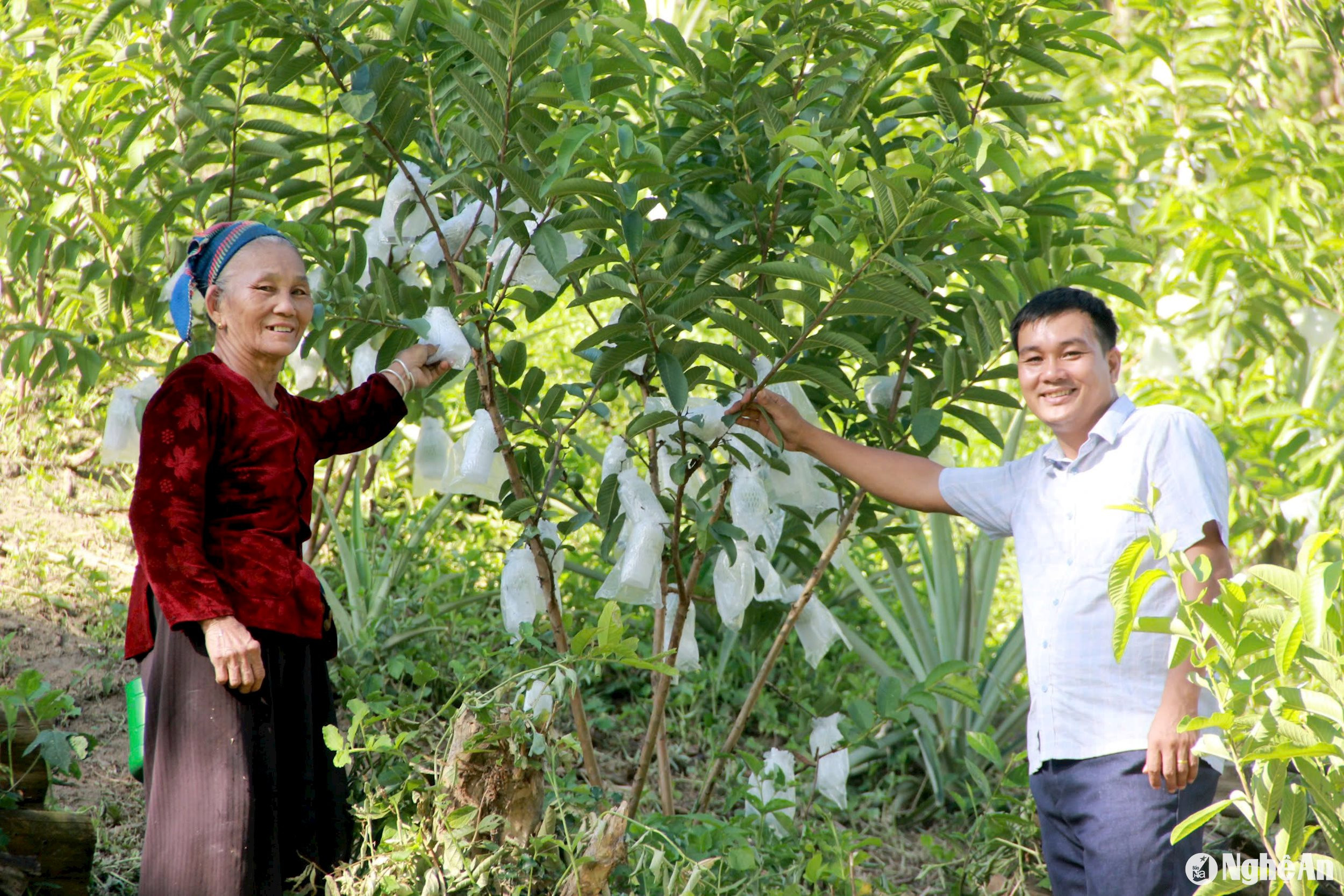
Ms. Luong Thi Mai, mother of Mr. Ngan Van Mao, is tending to her guava orchard. Ms. Mai said that, being of the Thai ethnic group, her children were born into a purely agricultural family, and life was hard from a young age. As they grew up, they also relied on the orchards and forests, but the hilly land was unsuitable for growing anything, yielding low productivity, and their lives did not improve.
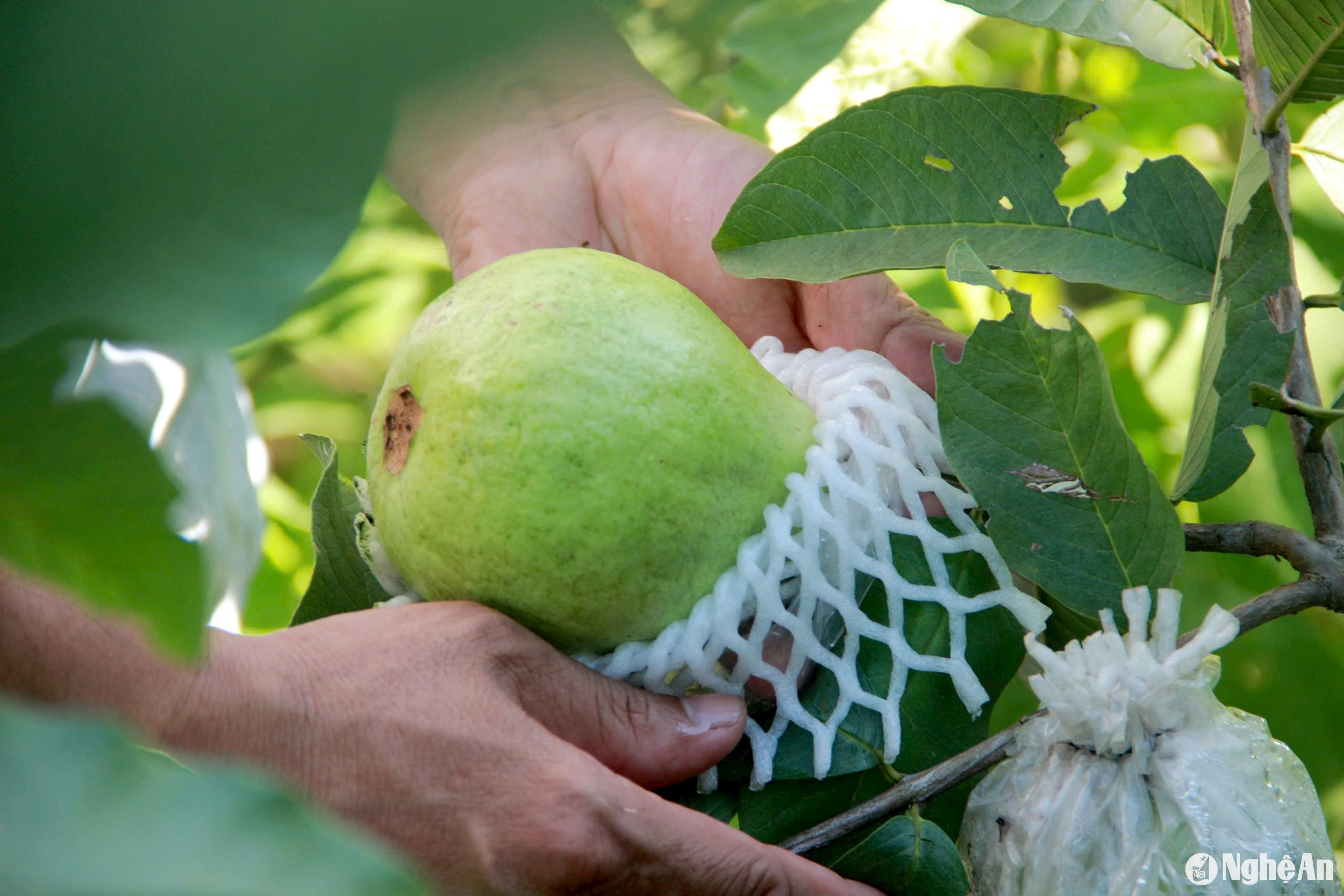
“These guava trees are bearing fruit for the first time this year, and each fruit is wrapped in a mesh bag to prevent insect infestation. The guavas are large, round, with a shiny, taut skin, and very crunchy. These past few days, my children have been harvesting guavas to sell. Some days, traders come right to our farm to buy them at prices ranging from 20,000 to 25,000 VND per kilogram,” Mrs. Mai proudly shared.
Mr. Chu Van Hung, Vice Chairman of the People's Committee of Luu Kien commune, said: "The locality is striving to achieve the goal of becoming a new rural commune, so we hope to have new business models for people to learn from and follow."
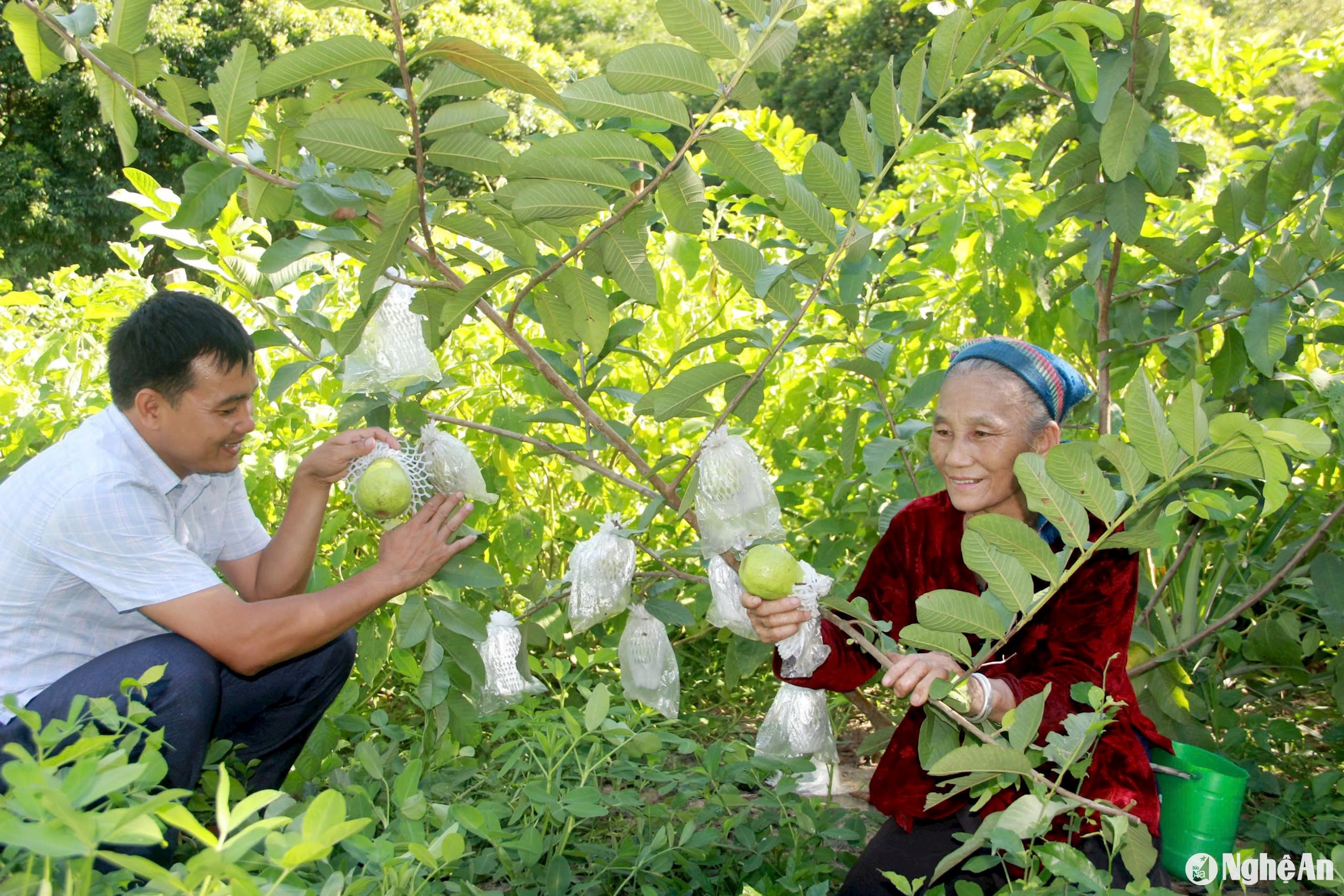
In early 2023, the commune organized a field trip for Mr. Ngan Van Mao and his wife, along with several other households, to visit fruit tree cultivation models in other localities. After that trip, Mr. and Mrs. Mao decided to implement a model of growing Taiwanese pear guava on their family's hillside land.
Seeing this, Mr. Chu Van Hung personally surveyed and guided the family in implementing the model. Accordingly, the model received support from the commune in the form of 600 guava saplings, fertilizer, and a plastic pipe system for irrigation. After nearly two years of care, 100% of the saplings have survived and developed well, and are now bearing fruit.
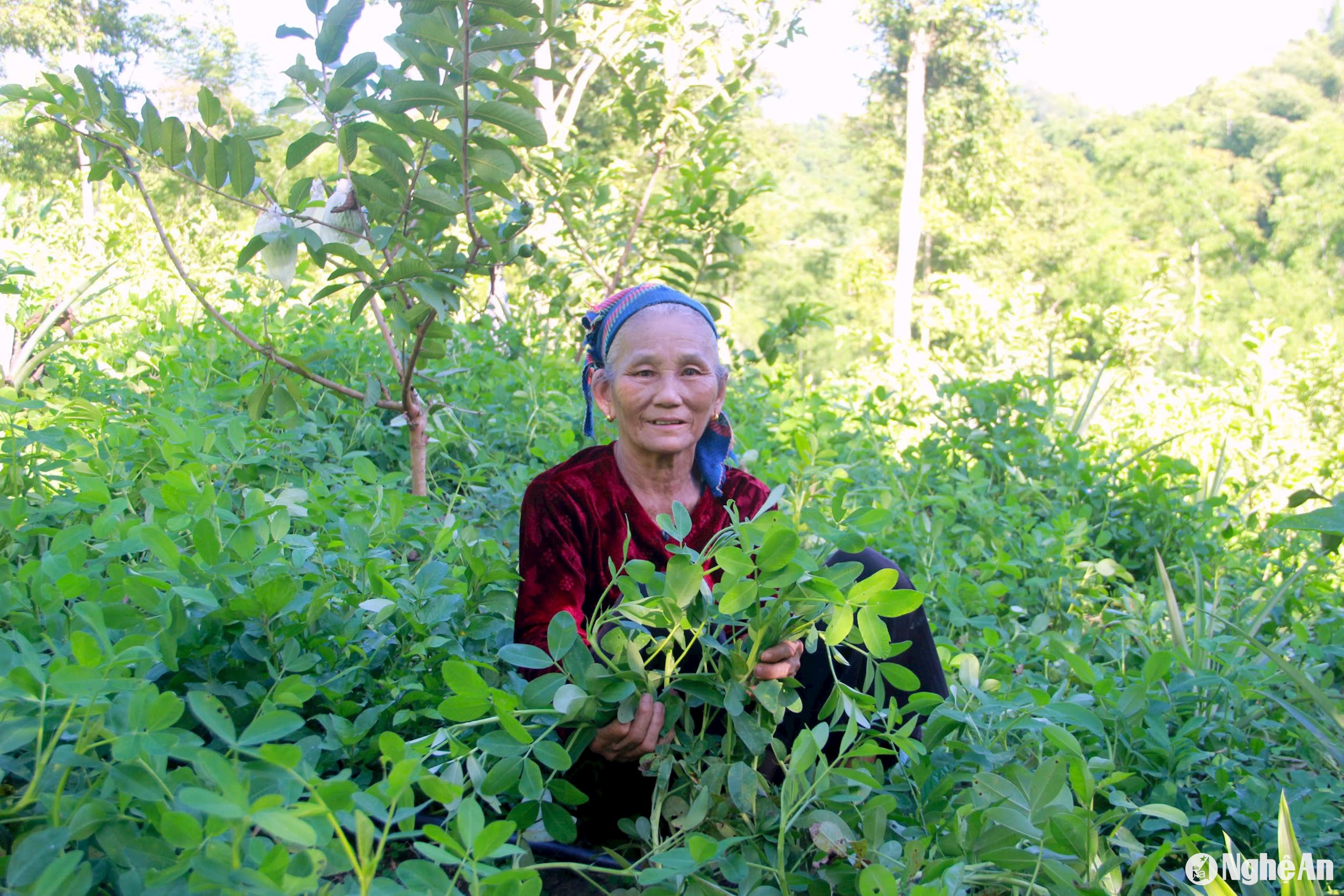
Observations show that, in addition to guava trees, Mr. Ngan Van Mao's family has also expanded the area for growing pineapples around the guava orchard. Under the guava trees, they also intercrop peanuts, beans, and some other vegetables.
Ms. Luong Thi Mai confided: "As someone who regularly watches television, I've seen people planting short-term crops under fruit trees, which brings in income. Therefore, I told my children to apply this practice of intercropping short-term crops under guava trees. This not only provides additional income to 'support long-term growth' but also helps retain moisture in the soil and limit weed growth."
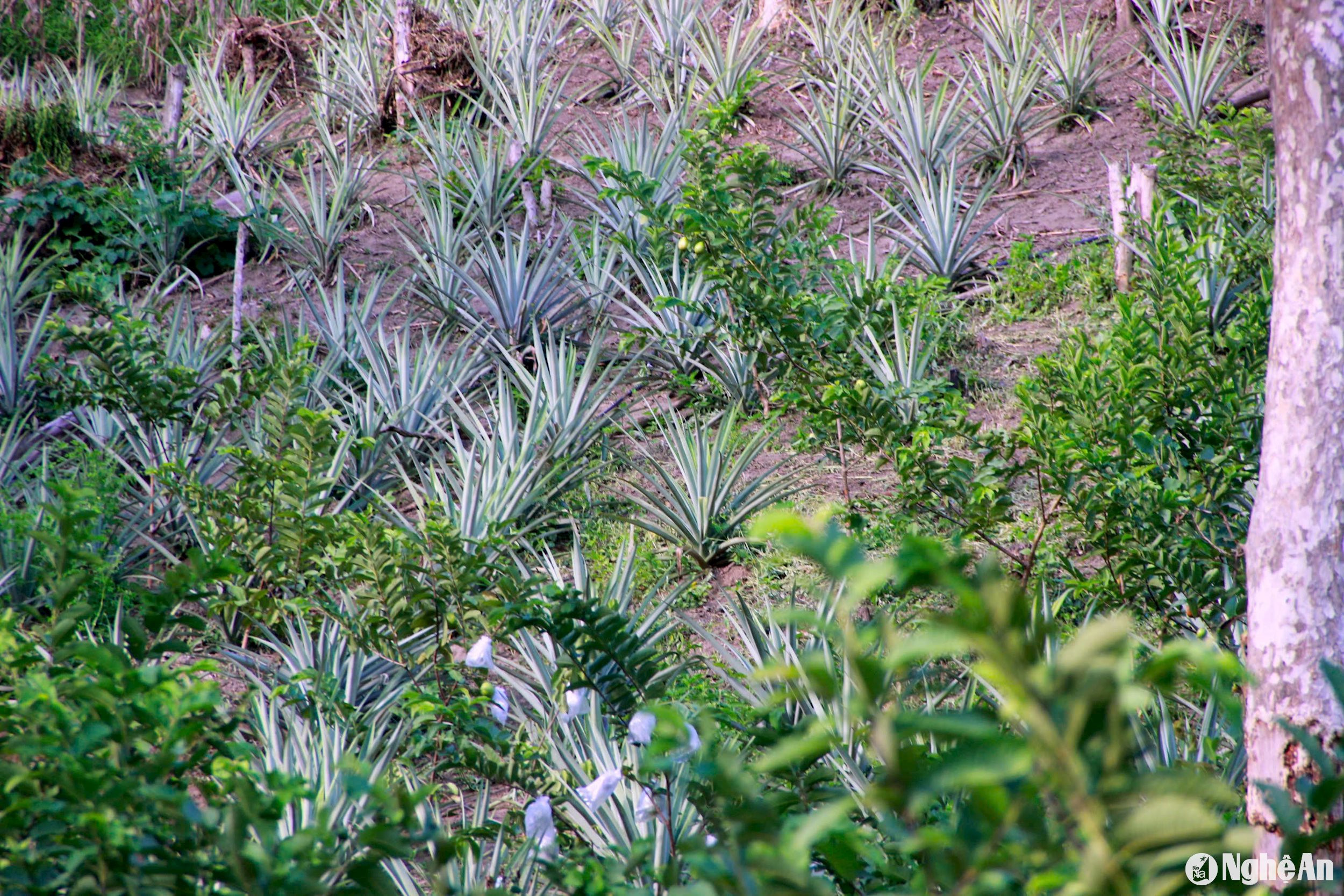
According to Mr. Chu Van Hung, Vice Chairman of the People's Committee of Luu Kien commune, the Ngan Van Mao farming family is a diligent and hardworking Thai ethnic household that boldly converted unproductive hillside land to guava cultivation, bringing in high income and creating motivation for other households to follow suit.
Growing Taiwanese pear guava requires diligence and considerable effort. To achieve high-quality guavas, it's necessary to regularly loosen the soil around the base of the tree to promote root development. Simultaneously, pruning the lower branches and leaves is essential for good air circulation. When fruiting begins, each fruit should be individually wrapped in plastic to protect it from insects, pests, fungi, and weather conditions, while also ensuring a more attractive color.