

'The leading force' in Chà Lấu village
“The head of Chà Lấu village? – He’s the ‘leading figure’ among the village officials in our commune, dynamic, creative, and daring to think and act…”, Comrade Sầm Văn Thành, Secretary of the Party Committee of Nậm Giải border commune, said this when we inquired about Vi Văn Kỳ, born in 1989 – a model of successful economic development selected to present at the 2024 Congress of Ethnic Minorities Representatives of Quế Phong district.
Determined to become wealthy in their homeland.
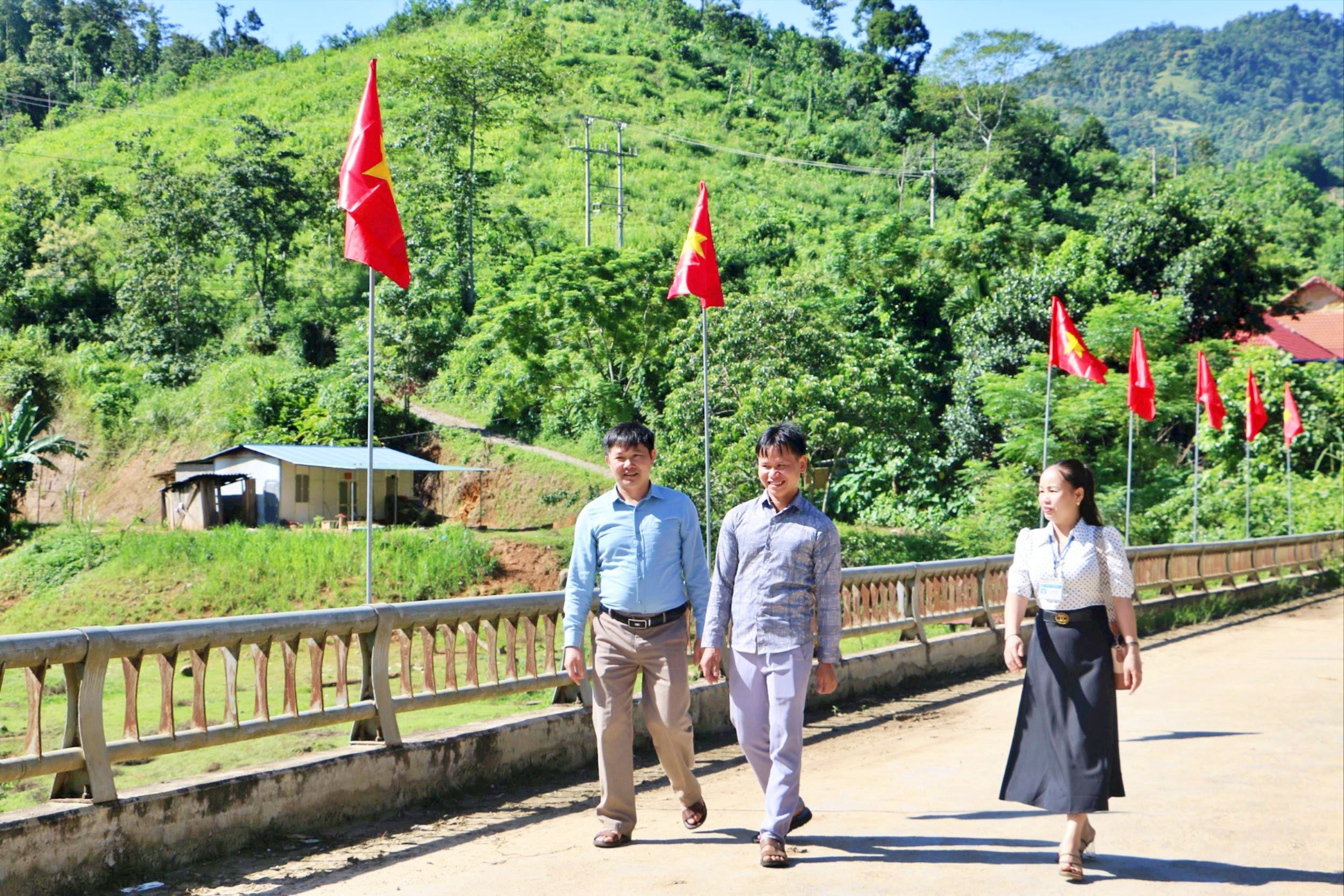
Visiting Vi Van Ky's spacious stilt house near noon, under the scorching sun, I still saw the young village chief running back and forth, urging the completion of the flag-lined path in the area of the village bridge.
Apparently, this is a project to celebrate National Day on September 2nd.
.jpg)
Taking the opportunity to give visitors a tour of the village's facilities, Vi Van Ky, the "leader" of Cha Lau village, also shared his story of establishing his career and his connection to community and village affairs in his hometown.
Born and raised in a village beside the Nam Giai River, sometimes calm like a silk ribbon, sometimes raging with floodwaters, after finishing high school, Vi Van Ky, a young man of the Thai ethnic group, did not go far away to work like his peers but chose to stay in his village to develop his family's economy based on the potential and strengths of the locality.
As a young man with many ambitions, at the age of 18, Ky had the honor of joining the Party. At that time, he was the youngest Party member in Cha Lau village and was the village's Youth Union Secretary. Later, he was trusted by the villagers and elected as the village head at the young age of 25.
Understanding that people in the highlands are still hesitant to embrace new things, needing to "see and hear" before believing and following, young "leader" Vi Van Ky always sets an example in developing household economies; at the same time, he works closely with the Party branch and village management board to propagate and encourage people to expand production and actively transform the structure of crops and livestock to improve the quality and productivity of products.
He himself began his entrepreneurial journey by learning from experience, applying scientific and technical knowledge, and accessing loans to invest in building a comprehensive livestock farm that is constantly expanding in scale. From just a few animals, the family of village head Vi Van Ky now owns 30 buffaloes and cows raised in the Huoi Ot area, 10 goats, and several hundred black chickens.
.jpg)
With the advantage of youth, he independently researched through the internet and participated in numerous training courses on livestock farming techniques that do not use growth hormones to minimize disease outbreaks. At the same time, he proactively cultivated clean grasses (elephant grass, jellyfish grass, lemongrass, giant tea grass, etc.) to use as animal feed, resulting in the healthy development of his family's livestock.
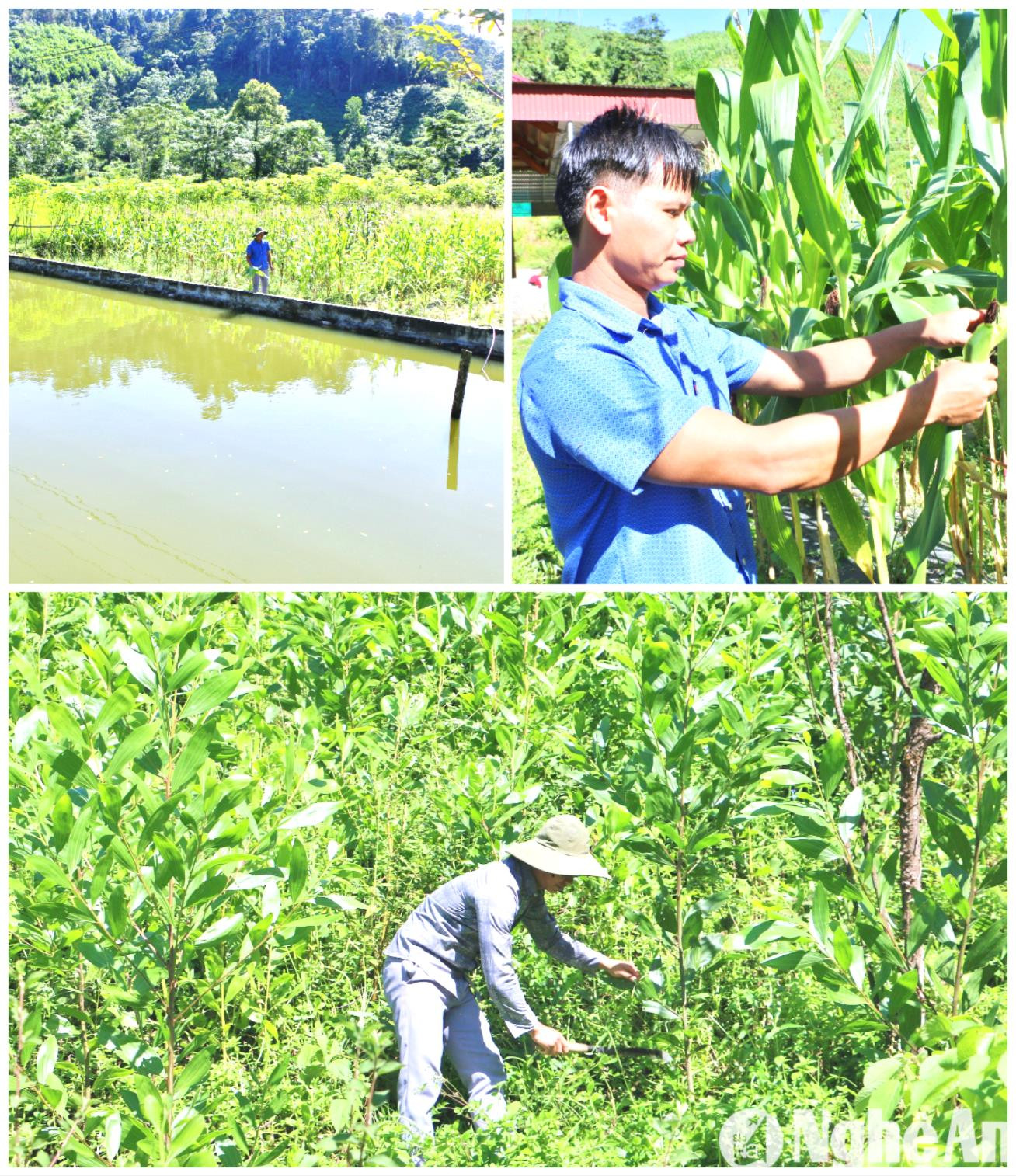
Alongside livestock farming, with 6 hectares of forest land, Vi Van Ky's family focuses on planting acacia trees interspersed with 800 cinnamon trees, providing a stable source of income.
In addition, with his youthful energy and daring spirit, the head of Chà Lấu village, Vi Văn Kỳ, boldly converted over 800 square meters of low-yield rice land to intercropping of vegetables and watermelons to suit the local weather conditions.
In the summer, when the sun is strong, he grows red watermelons; then he plants a crop of corn near Tet (Lunar New Year), and when the weather turns cold, he switches to growing vegetables (cabbage, kohlrabi, cauliflower, mustard greens...).
He also invested in installing a modern automatic irrigation system for growing watermelons and vegetables; and dug a pond to raise carp and tilapia... After deducting expenses, he earns more than 150 million VND per year.
.jpg)
Following the local green economic development orientation, in 2023, Village Head Vi Van Ky boldly registered to build a model garden for the new rural development program. With efforts to change the irrigation system, improve soil quality, and create a rational plan, his family's garden has now been recognized as meeting the standards.
In early 2024, with a 30 million VND grant from the District Party Committee's Mass Mobilization Department, Village Head Vi Van Ky pioneered the investment in building enclosures to pilot the raising of spotted deer. To date, the deer herd is adapting and developing well.
.jpg)
After researching the market and realizing that the native black chicken breed was popular, Village Head Vi Van Ky boldly took the initiative to establish and lead the first black chicken farming association in Cha Lau village. With a scale of 3 households, each raising over 300 chickens (the breeding stock was provided by the Provincial Farmers' Association), they have now sold nearly 900 chickens in one batch, which have been very well received by consumers.
Income from farming and livestock breeding has helped the family of Village Head Vi Van Ky expand their operations, invest in reproduction, build spacious houses, and even buy expensive cars to meet their living needs.
.jpg)
"The most important thing is to build a sustainable livestock farming model through product quality, environmental hygiene, and constantly learning techniques and experiences to apply them appropriately to practical conditions, especially in disease prevention and control. In addition, actively using social media to introduce and promote products ensures a stable market for crops and livestock," shared Mr. Vi Van Ky.
Dedicated to serving the people and the community.
Despite being busy with economic development, Vi Van Ky, the Deputy Secretary of the Party branch and Head of Cha Lau village, does not neglect "people's affairs and village matters." He is present, directs, and supports all major and minor tasks in the village.
Anyone who wants to learn about farming and livestock raising will receive his dedicated guidance.
.jpg)
Chà Lấu has 57 households and 241 inhabitants. Currently, many villagers have followed the village head's example in livestock farming and reforestation. The entire village now has 60 hectares of acacia trees, with each household having an average of 3-4 hectares.
The villagers have also boldly invested in large-scale livestock farming instead of the small-scale farming they did before. The entire village now has 220 buffaloes and cows, with a few households raising more than 20 buffaloes and cows.
In 2022, four households in Cha Lau village escaped poverty, and in 2023, three more households escaped poverty, including two households who voluntarily submitted applications to be removed from the poverty list: Mr. Ha Van Hoach and Mr. Loc Van Vinh.
.jpg)
Besides actively promoting and encouraging people to proactively develop the economy and overcome poverty, the Deputy Secretary of the Party Branch and Head of the village, Vi Van Ky, together with the Party branch and the village management board, has implemented "skillful people mobilization," thereby harnessing the people's strength to build a new rural area. To date, the people have contributed more than 800 square meters of land.2Land, 500 man-days of labor, and 75 million VND were contributed to the construction of new rural areas.
In 2023 alone, the Chà Lấu village completed 210 meters of concrete paving on branch roads, installed 20 streetlights, and erected a permanent flagpole at Khe Một bridge. Simultaneously, the villagers contributed labor to level the ground and lay foundations for prefabricated houses supported by the Ministry of Public Security for six disadvantaged households in the village.
.jpg)
Discussing future plans, Vi Van Ky, the "leader" of Cha Lau village, expressed his concern: "To sustainably eradicate poverty and retain labor in the locality, we need stable economic models with linkages along the commodity chain. Therefore, I am nurturing the idea of investing in egg incubators to serve the livestock farming needs of the people, thereby expanding the scale of professional livestock farming associations in the area."
.jpeg)