

Medicinal uses of male papaya flowers
Papaya is a well-known medicinal plant used worldwide to treat a number of ailments such as malaria, inflammation, and skin infections. The male papaya flower is also a medicinal herb with many health benefits.
Papaya trees have three basic sexes: female, male, and hermaphrodite. The sex of a papaya tree cannot be determined by looking at the seed or seedling. A papaya tree needs to be about 0.6-1.5m tall before flowering and at which point its sex can be determined.
Male papaya trees are characterized by their long, drooping, numerous, slender flower clusters that lack stamens.
Papaya trees have many medicinal uses.
Papaya (Carica papayaPapaya (or papaya) is a herbaceous plant belonging to the Caricaceae family. All parts of the plant, such as the fruit, roots, stem, seeds, leaves, and flowers, are used extensively to treat various diseases.
Papaya flowers are small, yellow, funnel-shaped, and grow singly or in clusters in the leaf axils. Since ancient times, they have been used to treat coughs, bronchitis, asthma, and colds. The papaya tree is valuable as a medicine due to the natural metabolites in its leaves, bark, and branches that possess anti-tumor and insecticidal properties.
The entire plant is being used to produce plant biomass that can be used to develop anti-cancer drugs. The plant is also used as a natural pesticide; its high content of natural defense compounds makes it resistant to insect and pest infestations.
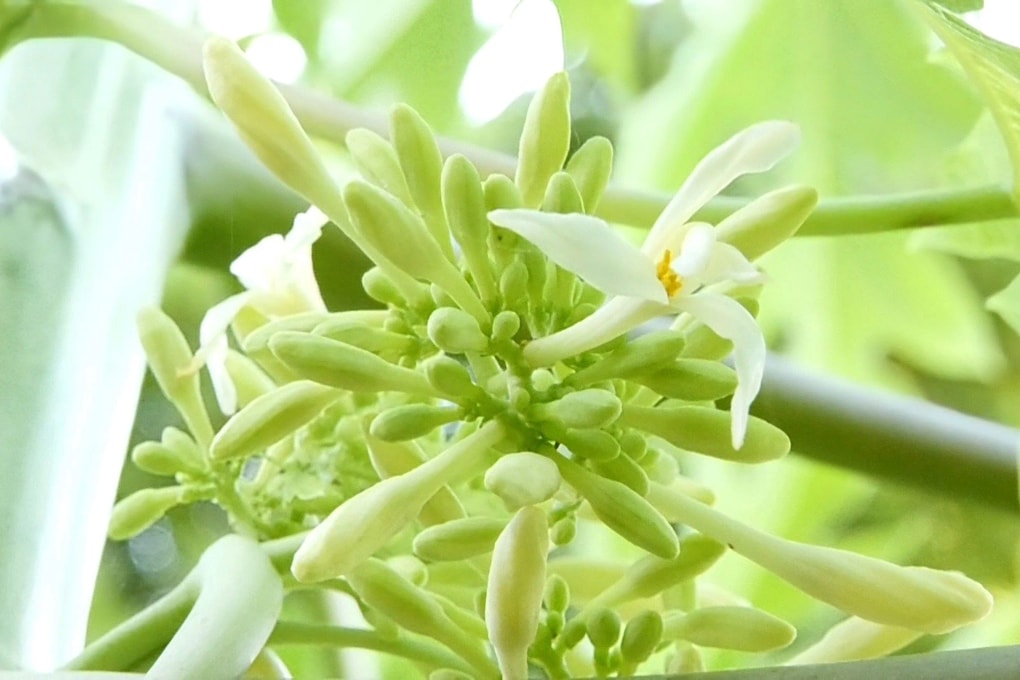
Consuming papaya flowers may help the body neutralize free radicals. Photo: Ngoc Thoa
Papaya flowers (usually male papaya flowers) may prevent cancer, improve digestion and appetite, and alleviate cardiovascular and respiratory problems. The tannins, flavonoids, and antioxidants in papaya flowers have been previously described as having the effect of removing free radicals from the body.
Consuming papaya flowers helps the body neutralize free radicals and regulate the immune system.
Benefits of papaya flowers
Papaya flowers are also used in many traditional therapies to treat malaria, jaundice, joint pain, coughs, colds, fevers, and viral infections. Therefore, analyzing the phytochemical components of papaya flowers traditionally used to treat various ailments is essential.
In the present study, secondary metabolites such as alkaloids, flavonoids, saponins, steroids, and tannins were found in various papaya flower extracts. Alkaloids are a type of nitrogenous compound, and over 10,000 alkaloids are known to be produced by plants.
Approximately 8,000 flavonoids have been reported from various plant species. They play important roles in stimulating, protecting, flavoring, and pigmentation. Flavonoids possess anti-allergic, anti-cancer, liver-protective, anti-diabetic, antibacterial, anti-inflammatory, and antiviral properties.
Saponins are a large group of glycosides with foaming properties. Saponins are known to possess antibacterial, antimalarial, antiallergic, antidiabetic, insecticidal, and anti-inflammatory properties.
Tannins are complexes of polyphenolic compounds synthesized by plants. Tannins have also been reported to possess antioxidant, antibacterial, antiviral, antitumor, and anti-inflammatory activities.
The presence of all these compounds in papaya flowers highlights their importance in treating a wide variety of ailments. Ethnic communities have been aware of the health benefits of papaya flowers as they are using them in many traditional medicine preparations.
Papaya flowers also contain vitamins such as thiamine (B1), riboflavin (B2), niacin (B3), ascorbic acid (C) and minerals such as calcium, magnesium, manganese, zinc, copper, cadmium, cobalt, lead, iron, potassium and sodium.
Antioxidant effects
Most diseases related to the accumulation of free radicals in humans can be avoided by regularly consuming fruits and vegetables.
In recent years, regularly supplementing a diet rich in antioxidants has been strongly encouraged. This is because the phenols and polyphenols they contain play a crucial role in long-term health and reduce the risk of chronic and degenerative diseases.
Research shows that papaya flower extract exhibits strong antioxidant activity. This is a potential medicinal herb that could be used daily as a vegetable or herbal tea.
Antibacterial effect
Several studies have reported antimicrobial activity in papaya plants, including flowers, leaves, and seeds, against various bacterial strains.Staphylococcus aureus,Pseudomonas aeruginosa, Streptococcus pneumoniaeandE. coli.
Cancer prevention effects
Cancer is the leading cause of death worldwide. A diet rich in fruits and vegetables packed with antioxidants significantly reduces the risk of developing many types of cancer.
Plants contain numerous phytochemicals with various bioactive properties, including antioxidant, anti-inflammatory, and anticancer effects. One such beneficial herb is the male papaya flower. Studies have shown that the stem of the male papaya flower contains high levels of antioxidants.
Research shows that the hexane extract of male papaya flowers has good anti-cancer effects against breast cancer and may inhibit the growth of colon cancer cells.
Overall, research on the antioxidant and anticancer potential of hexane extracts from male papaya flowers can conclude that papaya flowers are an excellent source of antioxidants and a promising potential source of anticancer agents.
These findings suggest the medicinal value of male papaya flowers in combating and preventing cancer.
Furthermore, there are currently no studies on the safety of male papaya flowers. Therefore, caution should be exercised when using them for children under 3 years old and pregnant women.