

Policy-based credit supports students in Nghe An province to attend school.
Policy-based credit has supported tens of thousands of poor students in Nghe An province to attend school over the years.
Supporting students to go to school.
With the spirit of ensuring that students from disadvantaged backgrounds do not have to drop out of school, the Social Policy Bank, Nghe An Branch, has provided capital to the people, bringing educational opportunities to tens of thousands of poor students.
One early autumn day, we visited the family of Mr. Nguyen Chuong Thi, born in 1963, a member of the savings and loan group in Luong Thien hamlet, Hien Son commune, Do Luong district. In their spacious, tidy house shaded by fruit trees, we listened to the couple share their story of overcoming difficulties to raise their children and provide them with an education.
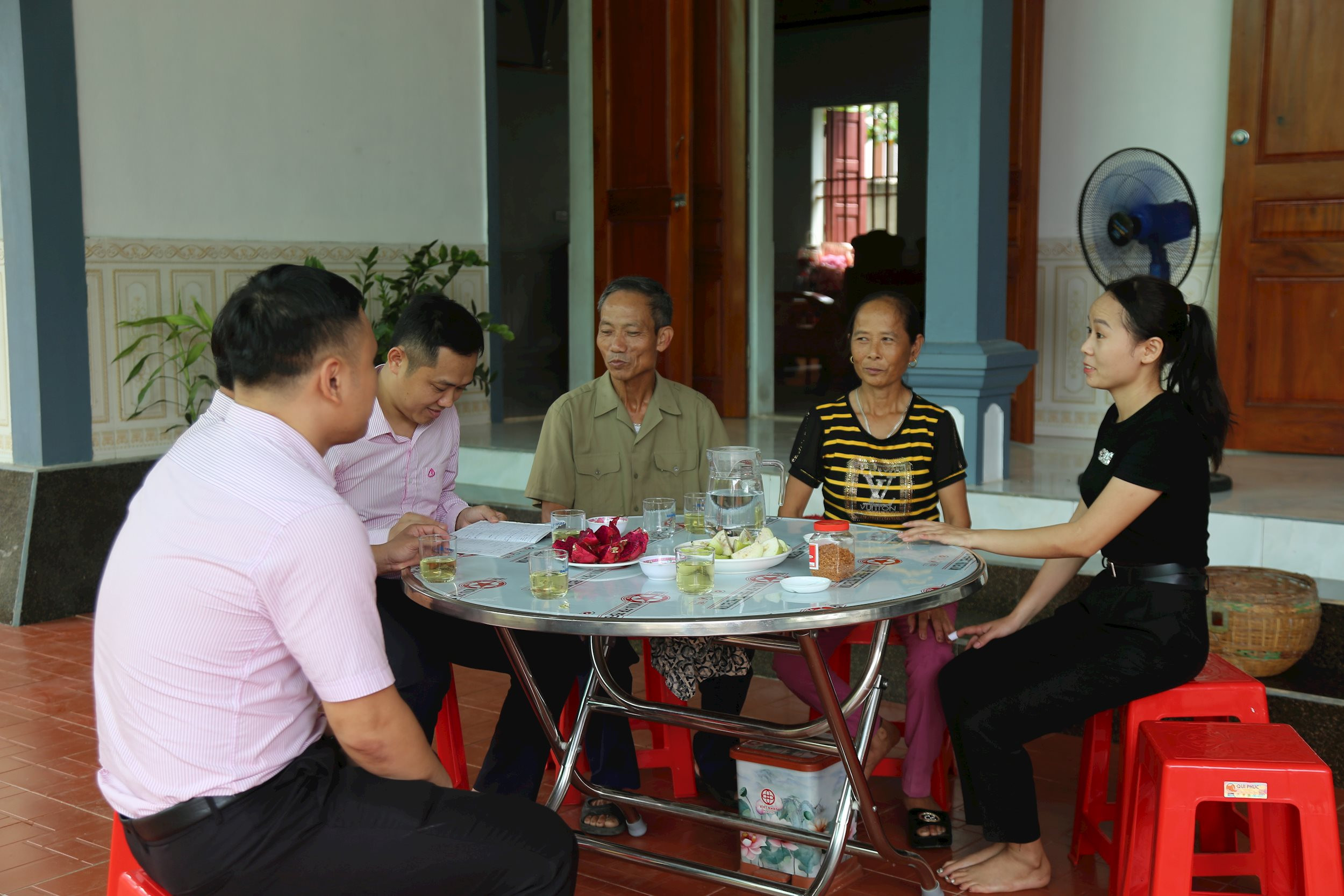
Ten years ago, Mr. Nguyen Chuong Thi's family, consisting of five children of school age, faced immense hardship. Their main source of income came from farming and livestock; they had no other source of income, and meals were often meager. Because of these difficulties, their eldest child, after graduating from high school, packed their bags and left to work as a laborer to make ends meet. Then, thanks to the Party and State's policies on preferential loans for the poor and those eligible for social welfare, especially student loans, the family was able to secure loans for four of their children to complete their education. Now, all five of his children have achieved success, and the family's economic situation has improved, lifting them out of poverty.
Mr. Thi shared: In 2011, his second child, Nguyen Thi Huyen Khanh, passed the entrance exam to Vinh Medical University. Thinking, "Our family's finances are difficult, where would we get the money to pay for our child's education?", but with encouragement and consideration from the neighborhood's savings and loan group, the family boldly borrowed funds from the Social Policy Bank's student loan program to invest in their child's education. In 2015, his third child, Nguyen Thi Hanh, passed the entrance exam to Vinh Teacher Training College, early childhood education department. In 2017, his fourth child, Nguyen Thi Truong, passed the entrance exam to the Logistics Academy; and in 2019, his fifth child, Nguyen Thi Khanh, passed the entrance exam to Da Nang University of Medicine and Pharmacy.
Thanks to access to loans from the Student Loan Program, the children were able to go to school and pursue their dreams, easing the family's worries about educational expenses and reducing the burden on their lives. Today, all of Mr. Thi's children have grown up and have stable jobs.
Not only did Mr. Thi's family receive loans from the Student Loan Program, but in 2016, they also borrowed 30 million VND from the Social Policy Bank of Do Luong district under the near-poor household loan program. In 2022, they received another loan of 20 million VND from the clean water and sanitation loan program to drill a well and upgrade/repair their toilet. “Currently, my family has repaid all debts from the near-poor household loan program, the clean water and sanitation program, and the Student Loan Program, totaling over 300 million VND for four children. We are now gradually repaying the remaining debt, with over 140 million VND still outstanding. From a poor family, thanks to the policies of the Party and the State, we have escaped poverty, and my children have been able to go to school and pursue their dreams,” Mr. Nguyen Chuong Thi expressed.
Do Luong is a region with a strong tradition of valuing education, with tens of thousands of students and pupils currently studying throughout the district. Over the past 10 years (2014-2024), the Do Luong District Branch of the Vietnam Bank for Social Policies (VBSP) has disbursed 110 billion VND to 3,782 disadvantaged students and pupils to help them cover their educational expenses; on average, each student or pupil borrowed 29.07 million VND. The total outstanding loan balance as of August 31, 2024, reached 40.283 billion VND for 750 households, with an average outstanding loan balance of 53.7 million VND per household.
Mr. Le Quang Hieu - Director of the Social Policy Bank of Do Luong District
Nghe An province has the highest outstanding debt for student loan programs nationwide. Many districts in the province have large outstanding debts, such as Yen Thanh (55.6 billion VND), Thanh Chuong (43 billion VND), Do Luong (40 billion VND), Vinh (39 billion VND), and Dien Chau (39 billion VND)...
The effectiveness of policy-based credit for students.
To ensure that no student has to drop out of school due to lack of tuition fees, from an initial loan amount of only 800,000 VND, on March 23, 2022, the Prime Minister issued Decision No. 5/2022/QD-TTg amending and supplementing Decision 157/2007/QD-TTg dated September 27, 2007 on credit for students. Accordingly, the maximum loan amount for the student loan program was increased to 4 million VND/month, meeting the minimum cost of living and studying for students.
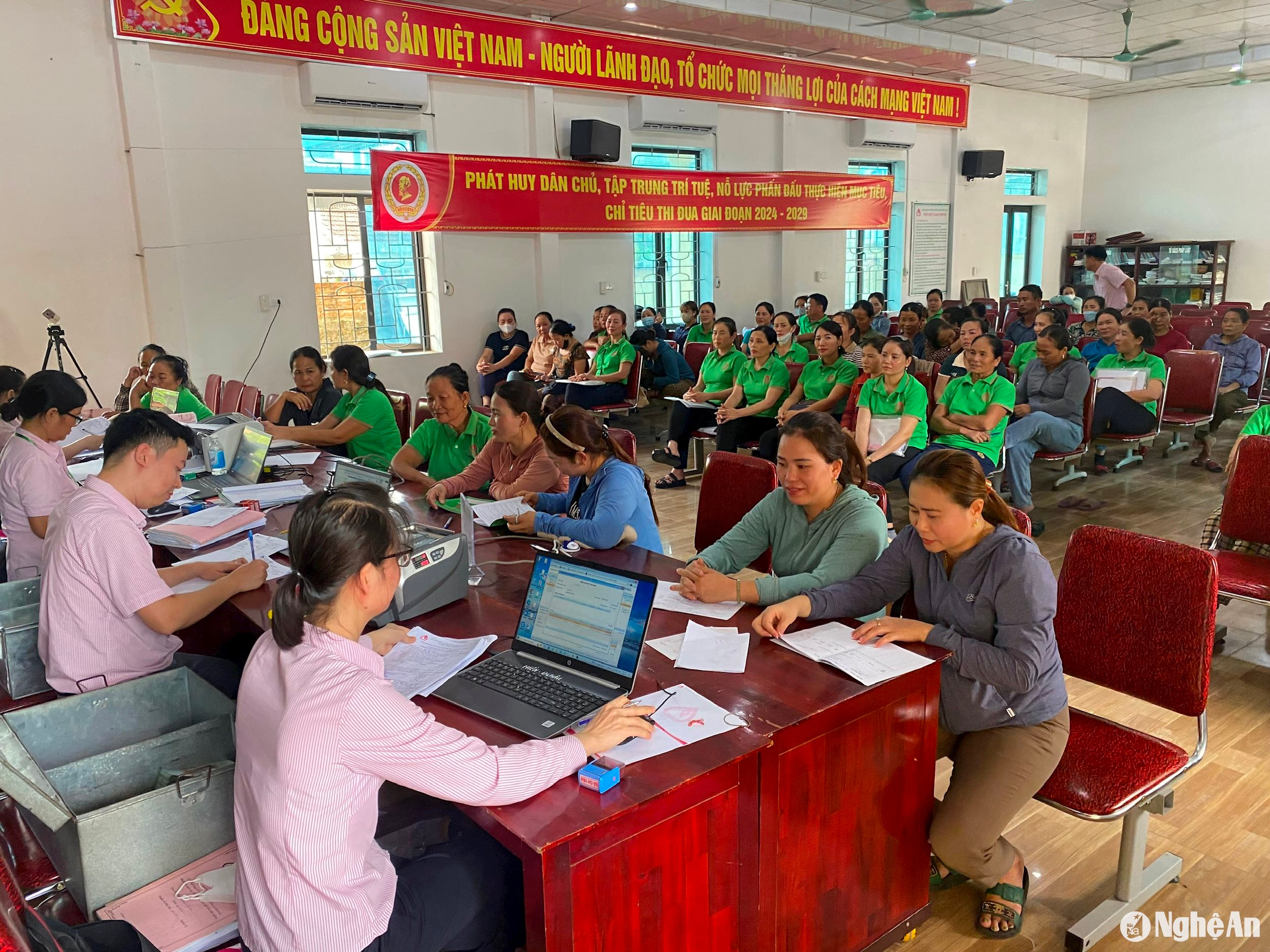
The Party and State's policy of providing loans to students from disadvantaged backgrounds has truly been a lifeline for poor students, demonstrating the superiority of the socialist system in education and training. According to reports, from 2014 to 2024, preferential credit funds provided capital to 742,060 poor households and policy beneficiaries in Nghe An province. This included assisting 18,918 students from poor, near-poor, and financially disadvantaged families due to objective reasons, ensuring no student had to drop out due to lack of tuition fees. Furthermore, during the Covid-19 pandemic, 10,866 students received financial support to purchase computers and online learning equipment.
Specifically, from the beginning of 2024 to the present, loans from the student loan program have amounted to 76 billion VND, an increase of 31 billion VND compared to 2023. It is projected that this will increase by another 54 billion VND by the end of the year (bringing the total for 2024 to approximately 85 billion VND).
Many families shared that the regulation stipulating that students only have to repay the principal and interest for the first time 12 months after completing their course, with principal repaid in installments every 6 months and interest paid monthly, helps reduce the pressure on borrowers in repaying the bank. During the loan period for their children's education, many families saved up to repay the principal at the commune's transaction point and paid interest, depositing savings through the Savings and Loan Group on a regular monthly basis. The students themselves also understood the significance of this loan, so after graduation, they helped their families repay the bank.
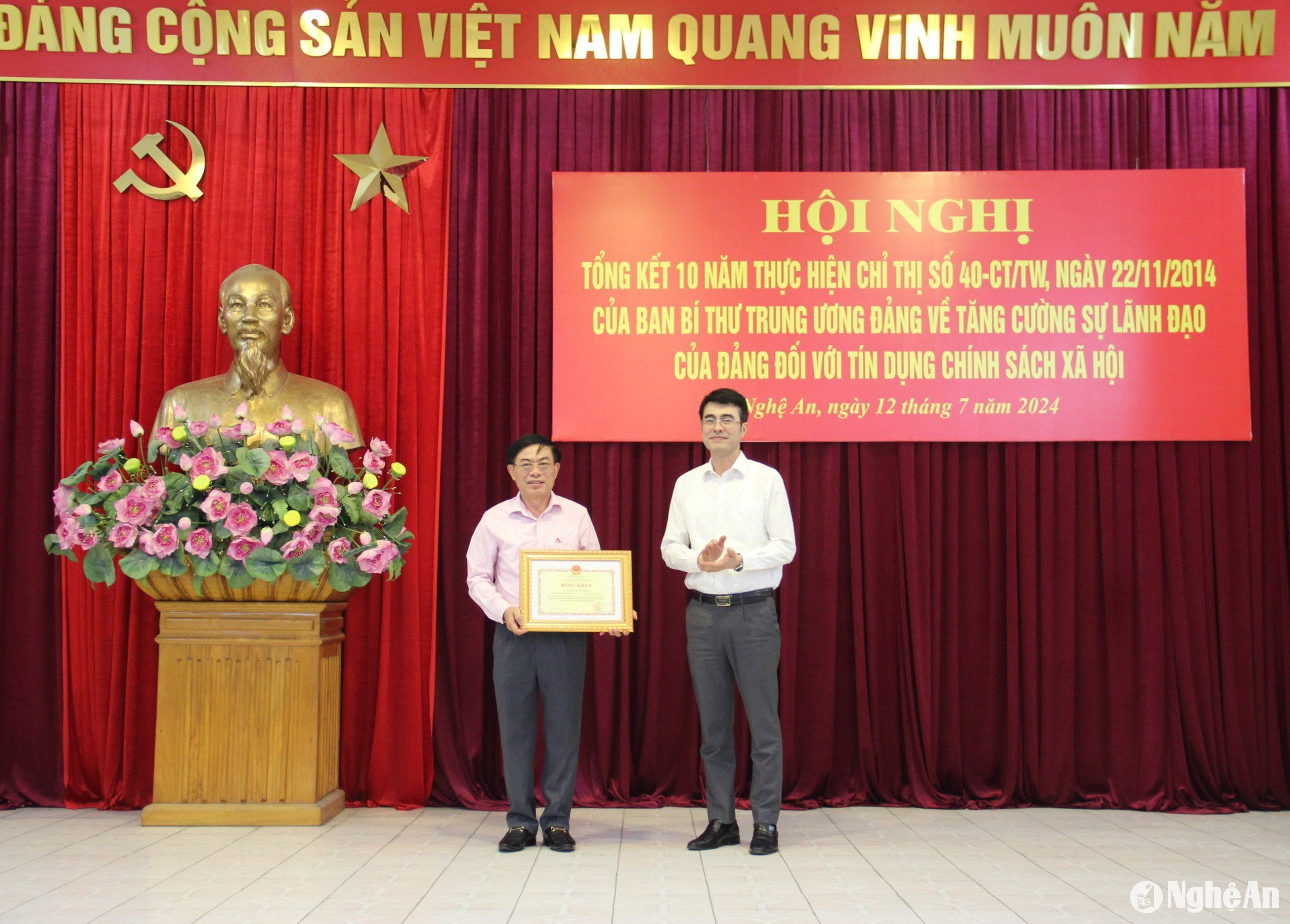
Mr. Tran Khac Hung, Director of the Provincial Social Policy Bank, stated: Student loans demonstrate profound social significance, affirming the preferential policies of the Party and Government, and have garnered high consensus from the community. The program has made a significant contribution to the policy of developing, training, and improving the quality of human resources serving the country's industrialization and modernization. This is a highly socialized policy credit program involving many levels, sectors, organizations, and individuals from the central to local levels in mobilizing capital, organizing lending, recovering, and managing debt. To ensure the program continues to be highly effective, authorities at all levels need to regularly review and promptly update the list of poor and near-poor households, thereby establishing a basis for rigorously verifying that eligible families receive student loans, thus maximizing the program's positive value.