

China threatens retaliation against the Netherlands and Japan in the semiconductor chip war.
The semiconductor chip war is becoming increasingly complex and fierce as China threatens to retaliate against restrictions imposed by the Netherlands and Japan. These moves not only affect the semiconductor industry but could also have serious consequences for the global economy.
Tensions escalated when Dutch Prime Minister Dick Schoof announced that he might not renew the license for ASML, the world's leading chip manufacturing equipment supplier, meaning China would face a serious shortage of essential equipment and maintenance services for its chip manufacturing industry.
ASML, with its advanced ultraviolet lithography machines, is key to producing the most modern chips. A shortage of this equipment would severely cripple China's semiconductor industry and exacerbate trade tensions between major powers. Experts believe this decision could profoundly alter the landscape of technological competition in the coming years.
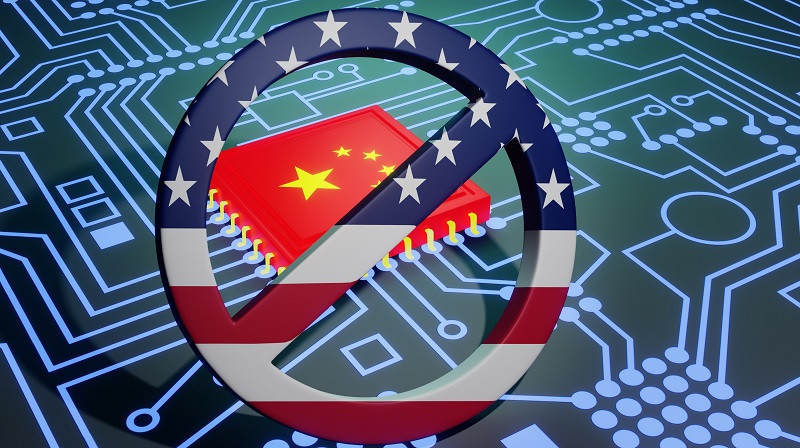
Chinese state media and officials have issued stern warnings, threatening retaliatory actions against the Netherlands and Japan if they comply with U.S. demands to tighten controls on chip exports.
The Global Times, the mouthpiece of the Chinese Communist Party, issued a stern warning, asserting that if the Netherlands complies with the US demand to cease providing maintenance services for high-end deep ultraviolet (DUV) lithography machines in China, Beijing will take corresponding countermeasures, such as imposing trade restrictions or seeking alternative suppliers and reassessing cooperation with the Netherlands in relevant areas.
This warning comes after Bloomberg reported on August 29th that the Dutch Prime Minister may not renew some of ASML's licenses to maintain and supply spare parts in China when they expire at the end of this year.
According to reliable sources, the Dutch government has decided to restrict the export of ASML's advanced DUV lithography machines to China under increasing pressure from the United States. This decision is expected to have significant implications for China's semiconductor industry.
US-China trade tensions continue to escalate as the Biden administration is reportedly considering implementing the Foreign Direct Product Regulation (FDPR) to tighten controls on technology exports to China. This would mean other countries could face restrictions on exporting products using US technology to the Chinese market.
The Dutch Prime Minister stated in an interview with Reuters on August 30th: “We are conducting active and comprehensive negotiations, always putting ASML’s long-term economic interests first. Careful consideration of potential risks and ensuring economic benefits is crucial in this process. ASML plays a core role in the Dutch creative industry, and protecting the company’s global position is our top priority.”
However, the Netherlands is not alone in facing increasing pressure. According to a Bloomberg report, Japanese companies are also under pressure from China. Beijing has warned Tokyo that it will take retaliatory action if Japan tightens controls on chip exports.
Executives at automaker Toyota Motor have expressed deep concern to the Japanese government about the possibility of China restricting the supply of rare earth minerals, which are crucial inputs for the automotive industry. Toyota said this move could cause serious disruptions to the company's global supply chain.
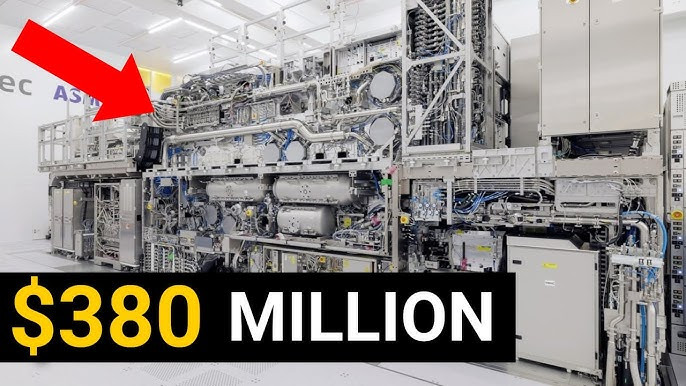
Since the beginning of this year, the Dutch government has officially banned the export of ASML's most advanced DUV lithography systems, including the NXT-2000i, NXT-2050i, NXT-2100i series and their successors, to the Chinese market.
Despite the Netherlands' export ban, the market for chip manufacturing machinery remains flawed. Chinese companies can easily acquire similar systems from third-party markets, making it difficult for ASML to refuse maintenance and spare parts services.
In late July, media outlets reported that the Biden administration would expand the scope of the FDPR, first introduced in 1959 to regulate US technology transactions, by the end of August this year.
These sources suggest that the Washington administration may use the FDPR to prevent China from purchasing high-bandwidth memory (HBM) chips manufactured in South Korea and chip manufacturing equipment from the Netherlands and Japan through locations such as Israel, Singapore, Malaysia, and Taiwan. However, the US has not yet announced these restrictions.
Since last year, the Washington administration has urged the Dutch government to restrict maintenance services provided by ASML to its Chinese customers. This restriction could target at least five advanced DUV lithography machines in China.
Chinese state media and commentators say the impact of the restrictions on China's chip industry will be enormous because the affected machines are crucial for producing 7-nanometer semiconductor chips.
Regarding this issue, Jiefu, an IT writer in Chongqing, said: “If ASML stops providing maintenance and components to China, some DUV lithography machines may have to be taken out of service from next year. This would be a lose-lose situation for both the Chinese semiconductor industry and ASML.”
The Global Times stated in a commentary published on September 1st that: “This is a strategic move by Washington to continue its aggression against China and hinder its development. This move will exacerbate the already deep rifts in China-US and China-Netherlands relations, increasing global geopolitical instability.”
The Amsterdam government is currently carefully considering the potential economic benefits and risks of restricting exports to China. This decision puts the Netherlands in a difficult position, having to weigh immediate economic benefits against diplomatic pressure from major partners. These moves demonstrate that the US policy of containment towards China has created widespread ripple effects, forcing many countries to make difficult choices.
Former Taiwanese Ambassador to New Zealand, Dale Jieh Wen-chieh, issued a serious warning about the possibility of the US further tightening sanctions on China's semiconductor industry. He suggested that the US could force ASML to stop repairing high-end DUV lithography machines in China, thanks to US control over ultraviolet technology, an essential component in these machines.
Dale Jieh Wen-chieh emphasized that, with these limitations, SMIC – one of China's leading semiconductor manufacturers – will face significant difficulties in maintaining its advanced chip production capacity, especially for the 7-nanometer chips that Huawei desperately needs.
However, a commentator in Hunan (China) expressed optimism about the future of the Chinese chip industry. He argued that people shouldn't worry too much because Chinese chip manufacturers will eventually find a way to obtain the necessary components and fix the advanced DUV lithography technology, just as Russia can still buy American chips through various unofficial channels.