
Checking the 'health' of Ben Thuy 1 Bridge
Due to the strong river current, the Road Management Area 2 had to hire experts and divers using flashlights and underwater cameras to take photos and videos for archiving. The inspection process showed that the bridge connecting Nghe An and Ha Tinh provinces is still safe.
On September 17th, Mr. Nguyen Duc Dung, Deputy Director of Road Management Area 2 (Vietnam Road Administration), stated that the unit had recently coordinated with relevant agencies to conduct inspections.Ben Thuy 1 BridgeThe bridge spans the Lam River and is located on National Highway 1A (connecting Ha Tinh and Nghe An provinces). "This is a regular task for our unit, especially during the rainy and stormy season. Besides Ben Thuy 1 Bridge, we also inspect many other bridges in the area," Mr. Dung said.
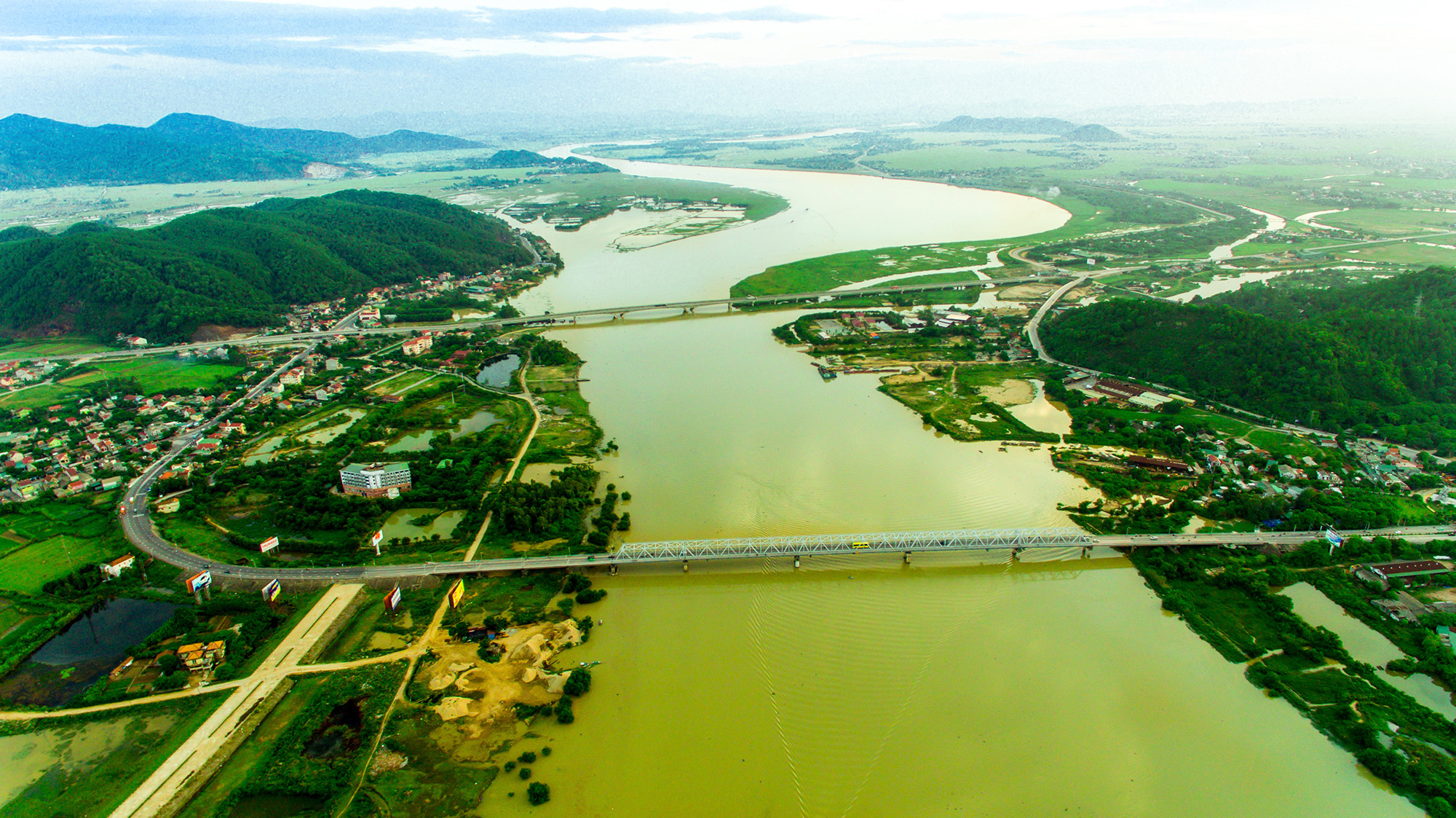
Ben Thuy 1 Bridge, put into operation in 1990, experiences high traffic volume, while the Lam River below has a very strong flood current. Ben Thuy 1 Bridge is 630.5m long, 12m wide, and has 13 spans. Over its long period of use, the bridge has undergone numerous repairs.
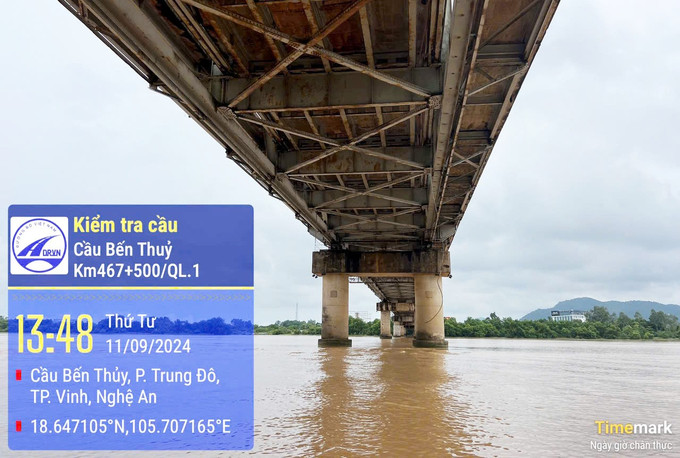
According to the head of Road Management Area 2, the bridge has been inspected for riverbed erosion, localized erosion of the abutments and piers, and for damage to the foundation of the piers, the connection of piles to the foundation, and pile damage. In addition, the specialized agency also inspected the condition of the intermediate section between the abutments and piers, the span structure, and other load-bearing structures.
Due to the strong river current, the Road Management Area 2 had to hire experts and divers using flashlights and underwater cameras to take photos and videos for archiving. The inspection process showed that Ben Thuy 1 Bridge is still safe.
"However, to accurately determine the extent of corrosion and deterioration of the bridge, we need to rely on bridge and road construction experts to assess and evaluate it in order to develop a remedial plan," Mr. Dung said.
According to Mr. Dung, the Ben Thuy 1 bridge has a similar structure to the Phong Chau bridge. The bridge's steel piles previously showed signs of corrosion, and its location is in a tidal zone. Therefore, the unit has requested the BOT branch of the Vinh City bypass (belonging to Cienco 4 Group, which operates, manages, and maintains the bridge) to develop a plan and estimate the cost for a comprehensive inspection and safety assessment of the bridge, as well as propose a plan for repairing and reinforcing the bridge, and report to the Vietnam Road Administration before September 25th.
"In the coming period, we will continue to direct relevant units to conduct inspections of all bridges along the route located in areas frequently affected by erosion and changes in water flow, such as: areas with sand mining upstream and downstream of the bridge; areas directly affected by flood releases from hydroelectric dams; and mountainous areas prone to flash floods and landslides. After surveying and measuring, and comparing the findings with the completion documents, the bridge management units will propose solutions if they detect structural damage to the bridge's piers, piles, pile connections, or unusual erosion compared to the original condition," he added.
Following the collapse of Phong Chau Bridge (Phu Tho province), to ensure traffic safety and structural safety, on September 12th, the Vietnam Road Administration sent a document to the Departments of Transport of the provinces affected by Typhoon Yagi and related units, requesting them to urgently organize and implement a review, inspection, and safety assessment of bridge structures under their management.
The subjects of review and inspection are large bridges; bridges with special structures; sea bridges; weak bridges; bridges with insufficient drainage capacity; bridges that were built a long time ago; bridges affected by erosion; bridges over rivers and streams with altered flow or affected by material extraction; bridges with incidents (affected by floods; floating trees; collisions, drifting, or entanglement of watercraft and structures; etc.); bridges with shallow foundations/driven pile foundations; bridges that have been/are damaged or are likely to be damaged... Particular attention should be paid to the structure of bridge abutments and piers and other structures easily affected by changes in flow, erosion, material extraction, floods, collisions, drifting, or entanglement of watercraft.
The Vietnam Road Administration requires that minor damages be detected and repaired promptly to prevent further damage affecting other structural elements of the bridge. During the review and inspection process, if any emergency situation affecting the safety of the structure is detected, immediate corrective measures must be taken and reported to the competent authority to ensure the safety of the structure and traffic. After completing this review and inspection, a report should be submitted to the competent authority requesting immediate and long-term solutions to address the causes affecting the safety of the bridge.
Tien Hung