

What awaits teenage users on Instagram?
On September 17th, Instagram announced the rollout of a new feature designed to protect millions of teenagers by automatically switching accounts to private mode and restricting inappropriate content.
Following the leak of a series of internal Facebook (now Meta) documents to the public in 2021, which exposed the social media platform prioritizing profit over user safety, especially that of teenagers, this data leak sparked a strong wave of protests not only against Facebook but also across other social media platforms like Instagram.
Nearly three years after that event, the social media platform Instagram has finally taken positive steps to mitigate the risks that young users may face, such as cyberbullying and exposure to inappropriate content. Switching teenagers' accounts to private mode is one of the key steps taken to protect them from the negative impacts of social media.

The new restrictions aren't limited to content moderation; they also encourage parental involvement. Instagram will automatically apply a "teen account" setting to all users under 18, meaning parents can easily monitor their children's activity on the platform.
Users aged 16 to 17 have the right to adjust some settings themselves, but for those aged 13 to 15, any changes require parental consent. This helps ensure that teenagers have a safer and healthier online environment.
The new "teen account" settings build upon more than 30 parental monitoring tools that parent company Meta has deployed in recent years, such as "take a break" reminders and restrictions on "age-inappropriate" content like posts about eating disorders.
Despite previous updates, the company continues to face criticism for placing too much responsibility for safety in the hands of parents and, in some cases, teenagers themselves. Over-reliance on the initiative of teenagers and parents in using monitoring tools is one of the biggest limitations currently.
Pressure on Meta to do more to protect teenagers has increased after a new Facebook employee, Arturo Bejar, became a whistleblower, testifying at a Senate subcommittee hearing last November that senior Meta executives, including CEO Mark Zuckerberg, had ignored warnings for years about the harm to teenagers on the company's platform.
Legal documents from recent lawsuits have exposed serious allegations against Mark Zuckerberg. He is accused of repeatedly obstructing initiatives aimed at protecting the rights of young people on the platform.
Evidence suggests that Zuckerberg prioritized profit over the safety of young users, clearly demonstrated by Meta's deliberate maintenance of accounts belonging to children under 13, a violation of its terms of service, and its tolerance of child sexual predators operating on the platform.
At a Senate hearing last January, when faced with sharp questions from senators about the negative impact of social media on teenagers, Mark Zuckerberg officially apologized to the families who had been hurt by his platform.
Meta says the recent updates focus on addressing parents' top concerns about who their children are interacting with online, what kind of content they are exposed to, and whether their time on social media is being used productively.
The "teen accounts" update will automatically set all user accounts under 18, whether new or old, to private. This means only those the user has accepted as friends will be able to see their posts and personal information.
Additionally, messaging settings will be tightened to ensure teenagers only receive messages from people they're connected with. To further enhance security, Instagram will also limit tagging and mentioning teenagers in photos and comments, only allowing those they follow to do so.
Additionally, teenagers will be subject to Instagram's most restrictive content control settings. This change limits the types of "sensitive" content teenagers can see on their Explore page and in their Reels, such as posts advertising cosmetic procedures.
Teenage users will also receive time-limit reminders, urging them to leave after spending 1 hour on the app each day. And the app will default to "sleep mode," muting notifications and sending automatic replies to direct messages from 10 PM to 7 AM.
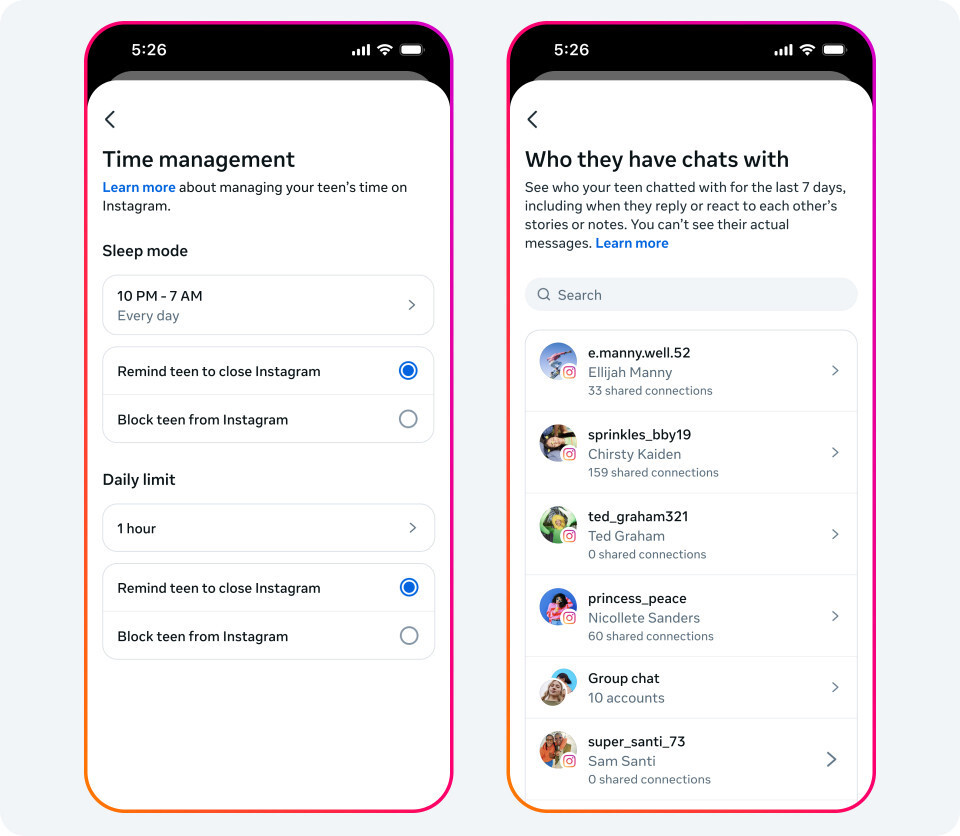
This app will also add new features to parental monitoring tools, allowing parents to see which accounts their children have recently messaged, set daily Instagram usage limits for their children, block them from using Instagram at night or during specific times, and see the topics their children have chosen to view content on the app.
Meta is actively applying artificial intelligence to detect and prevent age-related fraud. Specifically, Meta's AI system analyzes a range of data, including interaction behavior, posted content, and personal information, to identify teenage accounts that may have misrepresented their age.
Meta shared that the newly launched features are the result of extensive consultation from various sources. The safety advisory board, comprising leading online safety experts and independent organizations, played a strategic advisory role and provided insightful perspectives on potential risks.
In addition, input from a group of youth advisors, along with direct feedback from teenagers, parents, and government officials, helped Meta gain a better understanding of the real needs and concerns of its users.
The new changes will be rolled out first in the US, UK, Canada, and Australia within the next 60 days. The selection of these countries as starting points was based on several factors, including platform usage levels, child protection regulations, and user diversity.
Following the initial testing phase, Meta plans to expand the rollout of the new features to other countries globally throughout this year and next, ensuring that all teenagers benefit from these improvements.