

Will the US be at a disadvantage in a nuclear arms race with major powers?
Expert Jeffrey Lewis cited a recent article in Foreign Affairs by Robert O'Brien – President Trump's national security advisor from 2019-2021 – who emphasized that Washington must test new nuclear weapons "in the real world" rather than "using computer models" to "maintain a technical and quantitative advantage" over the nuclear arsenals of Russia and China.
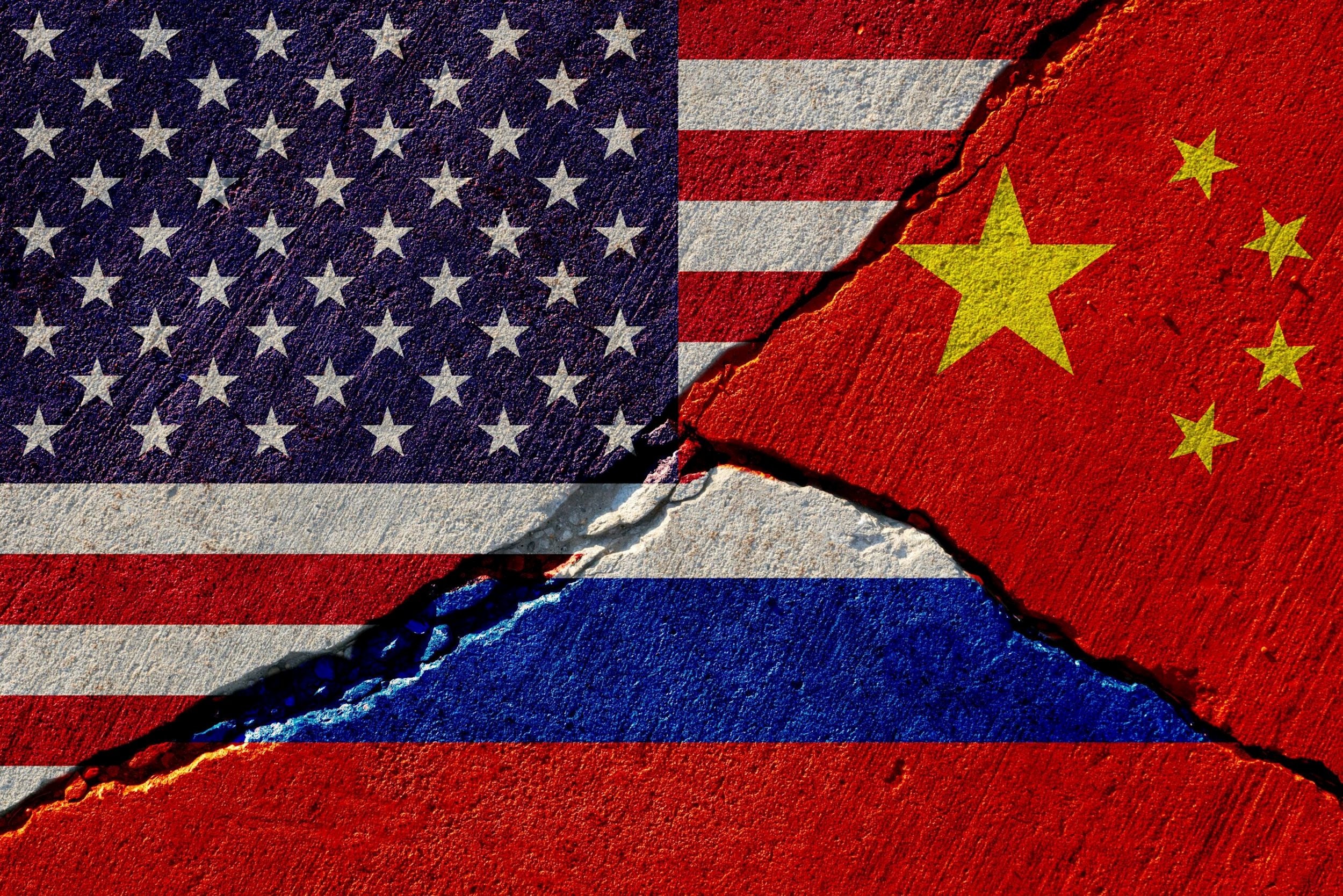
According to a report by the Russian news agency TASS on July 30, Jeffrey Lewis, a professor at the Middlebury Institute of International Studies in Monterey, stated in an opinion piece in Foreign Affairs magazine that the United States will lose the nuclear race if it continues nuclear testing because Russia and China will quickly catch up.
Expert Lewis cautiously warned: "Make no mistake: Resuming nuclear weapons testing would be detrimental to the United States."
According to the expert, those who might serve in the new Washington administration if Republican presidential candidate Donald Trump is re-elected "will once again bring up the futile idea of the U.S. continuing to test nuclear weapons."
Lewis was referring to a recent article in Foreign Affairs by Robert O'Brien, Trump's national security adviser from 2019 to 2021, who emphasized that Washington must test new nuclear weapons "in the real world" rather than "using computer models" to "maintain a technical and quantitative advantage" over the nuclear arsenals of Russia and China.
This expert believes that such a development could lead to Moscow and Beijing also resuming nuclear testing. According to him, Russia and China would benefit more from such a situation than the United States.
Lewis added: "Furthermore, new or emerging nuclear-armed nations – such as Iran or Saudi Arabia – would feel no obligation to conduct test launches. As a result, America's adversaries possessing nuclear weapons would have even greater capabilities."
According to TASS, the US stopped nuclear testing in 1992. This decision was made by the administration of President George W. Bush.
In 1996, 187 countries signed the Comprehensive Nuclear Test Ban Treaty (CTBT); however, the treaty never came into effect because it was not ratified by eight of the 44 countries that possessed nuclear weapons or the means to produce them, including the United States.
On November 2, 2023, Russian President Vladimir Putin signed a law revoking Moscow's ratification of the CTBT. Kremlin spokesman Dmitry Peskov emphasized that this does not mean Russia is planning to conduct nuclear tests.
On the same day, July 30, in a report published by the RAND Corporation research group, the US Defense Strategy Commission stated that Washington cannot compete with Moscow and Beijing alone.
"The U.S. cannot compete with China, Russia, and their partners alone – and certainly cannot win a war that way," the report states.
The committee stressed that the U.S. needs to strengthen its allies. "Alliances are not a panacea, but the structure of U.S. forces must take into account the forces and commitments of its allies," the report noted.
According to this document, the Russia-China partnership has only recently deepened and expanded.
"This new alignment of nations opposed to U.S. interests creates a real risk, if not a possibility, that conflict anywhere could escalate into a multi-front or global war," the report added.