

A piece of handmade paper...
What future awaits dó paper? This is a concern for many artisans in Nghi Phong commune, Nghi Loc district. While acknowledging that its decline is inevitable in the context of societal development, efforts to salvage and preserve it are crucial to prevent the cultural and historical value of this ancient craft from disappearing.
What future awaits dó paper? This is a concern for many artisans in Nghi Phong commune, Nghi Loc district. While acknowledging that its decline is inevitable in the context of societal development, efforts to salvage and preserve it are crucial to prevent the cultural and historical value of this ancient craft from disappearing.
Do paper on the alluvial land
No one knows exactly when the dó paper making craft of Phong Phú village, Nghi Phong commune, originated. All I know is that the elderly villagers, who grew up with me, skillfully peeled the bark of the niệt tree, and the process of making dó paper from this tree is deeply ingrained in their memories. “Many years ago, when searching for answers about the history of the dó paper making village, people interviewed the oldest person in the village – Mrs. Sửu. At that time, she was 100 years old, still incredibly sharp-minded, and could even eat peanut candy. But she didn't have an answer either; she only knew that the craft had been around for a very long time,” said Mrs. Vương Thị Loan (born in 1966), one of the few remaining villagers still practicing the craft.
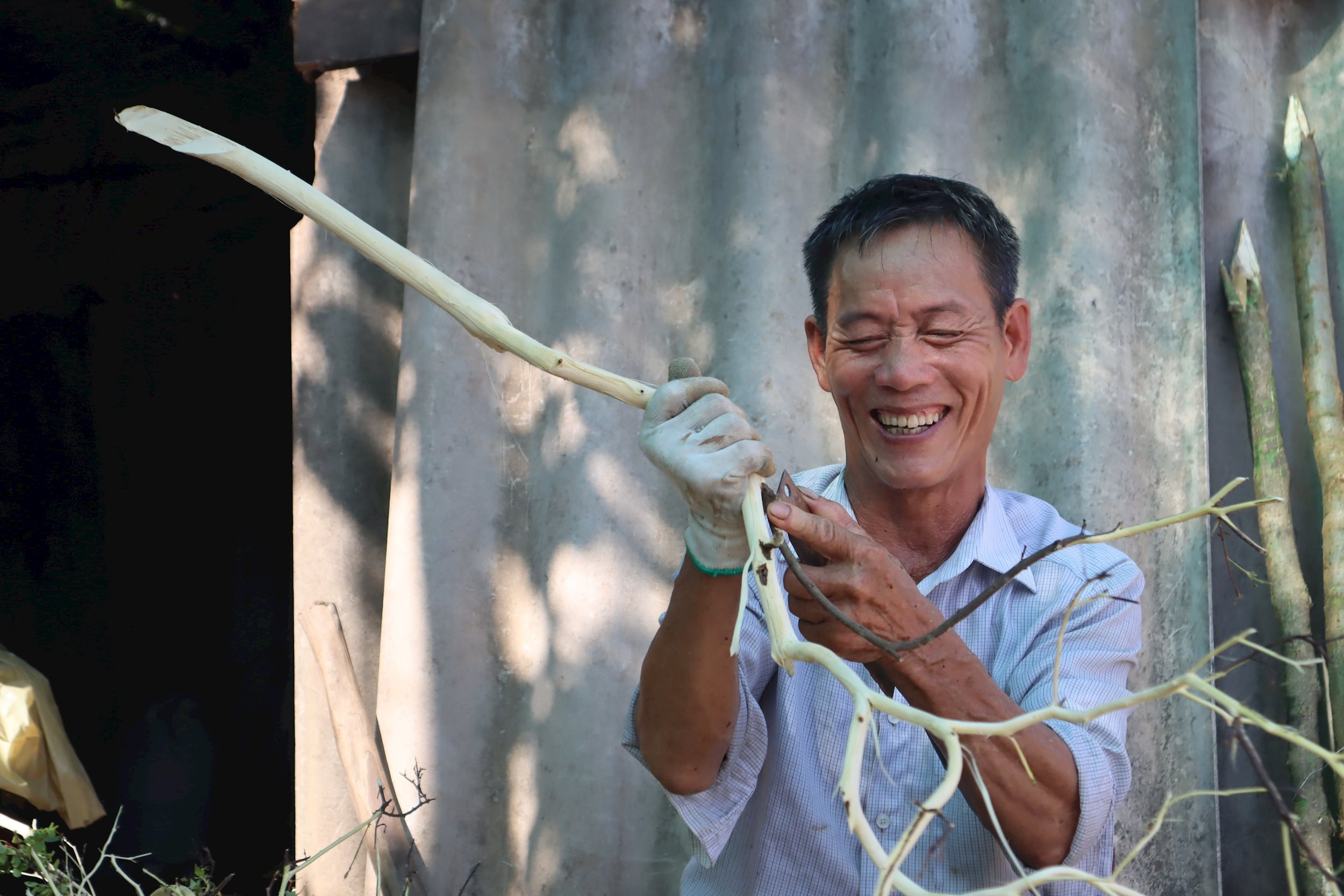
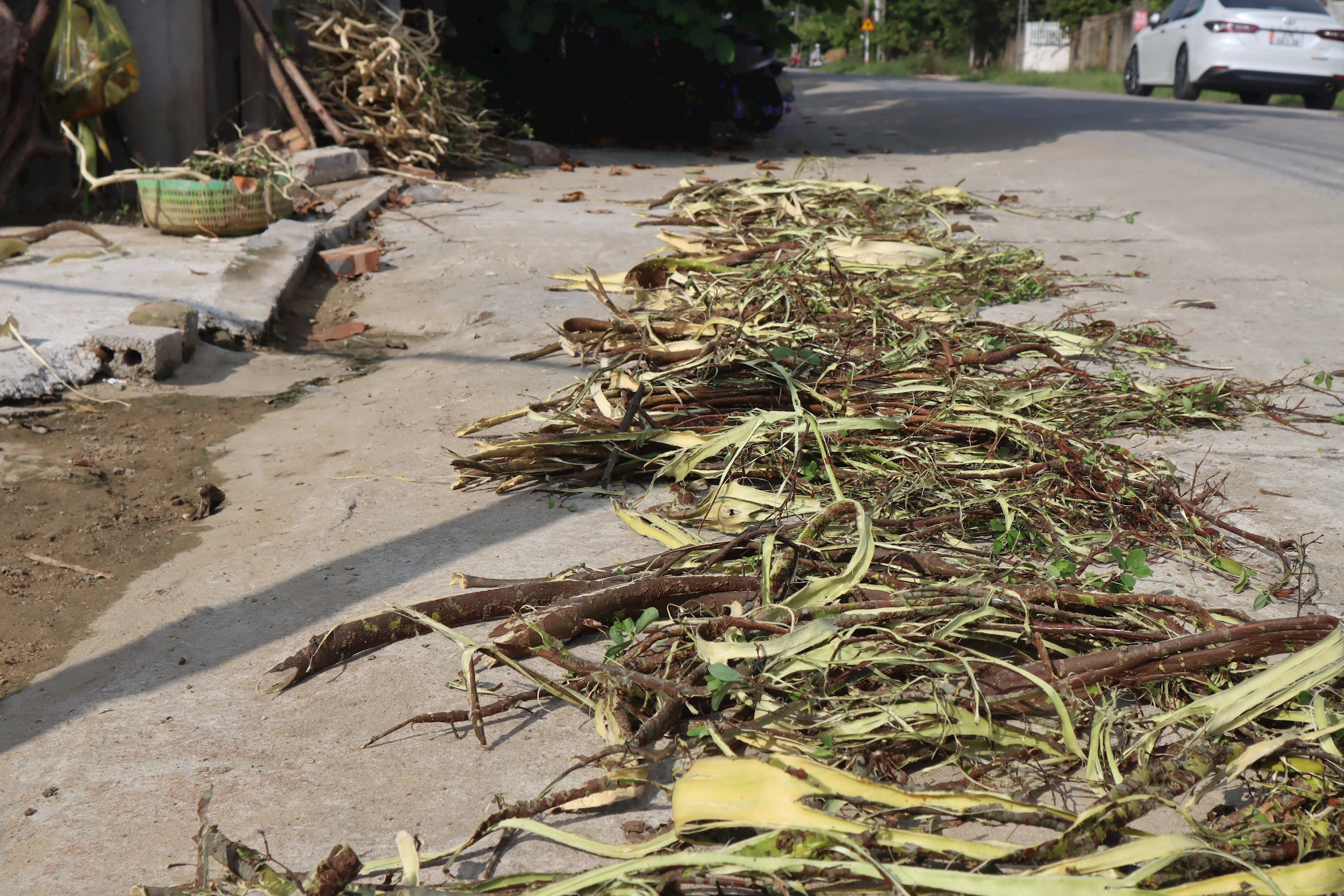
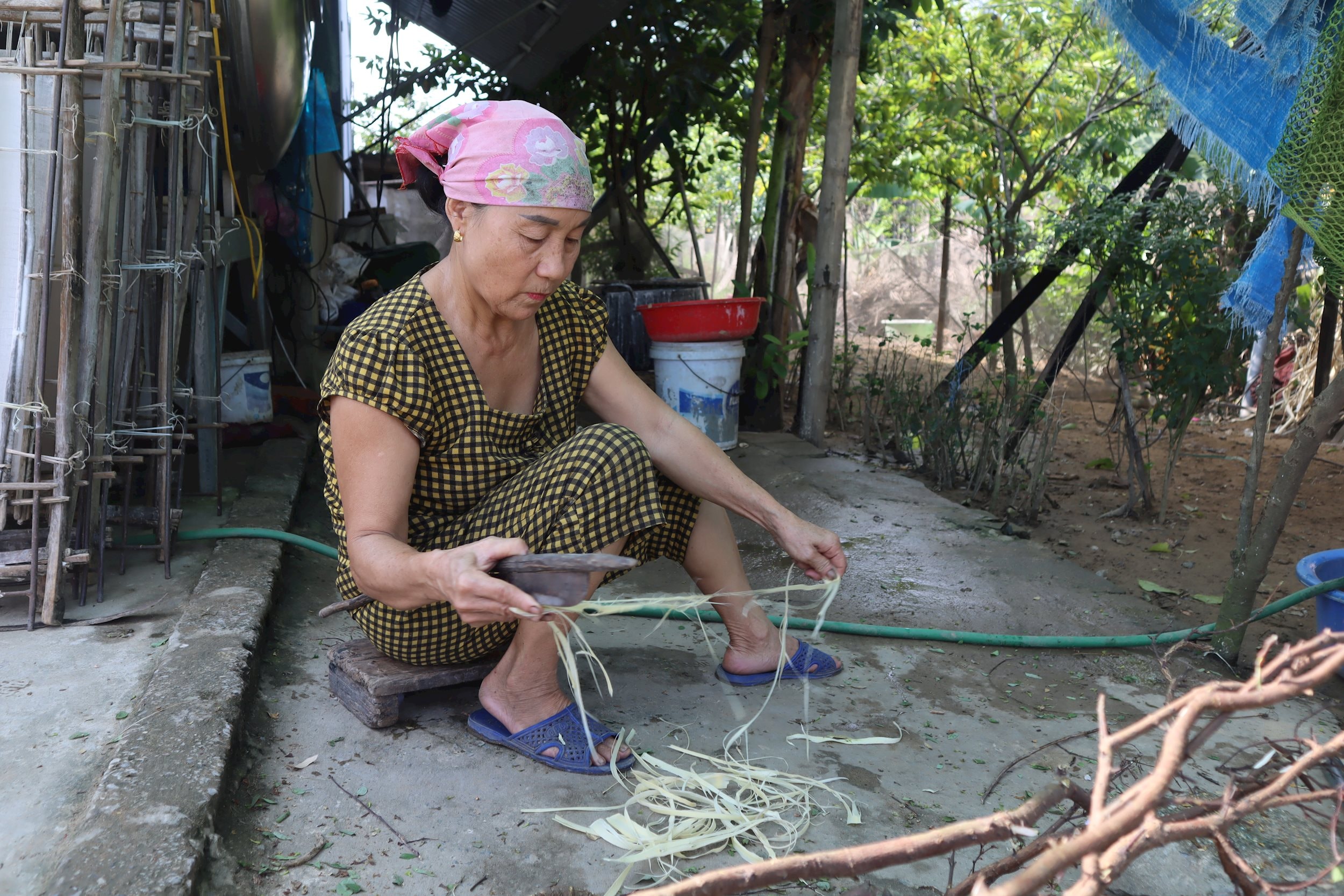
The bark of the *Niệt* tree, used to make *Dó* paper, is harvested by locals from fields, mountains, or purchased from the districts of Diễn Châu, Quỳnh Lưu, and some districts in Hà Tĩnh province. After peeling the bark from the tree and scraping off the outer layer, it is thinly sliced like paper, kneaded with lime water, squeezed dry, and thoroughly cooked. After cooking, the bark is soaked for a day under running water and then pounded into a fine powder. This must be done by hand to ensure the desired flexibility and toughness. Finally, the paper-making process begins. When making *Dó* paper, the *Niệt* bark mixture is scooped onto a mold, shaken back and forth to distribute the mixture evenly. Water and *Bìm Bìm* tree sap flow through a sieve, and the dried powder forms a sheet of paper. The finished *Dó* paper is thin, light, tough, and has an opaque white color. This type of paper is favored because it can last for a hundred years without rotting thanks to the *Dó* fibers' ability to absorb and release moisture well.
To save time and increase productivity, those who make dó paper must know how to adjust their work schedule according to the weather. On rainy days, they work on the paper-making process, and on sunny days, they dry the paper. "On dry days, we dry the paper; on rainy days, we scrape the fibers. If we have enough raw materials, we can almost produce year-round. However, because raw materials are becoming increasingly scarce, we usually only dry one batch every 4-5 days. The job isn't physically demanding, but because of the hard work involved..."handmade"Therefore, it requires diligence, hard work, and skillful hands," shared Mr. Nguyen Van Ha (born in 1960).
During the process of making dó paper, many villagers have tried applying various methods to improve and innovate the product. “Before, dó paper wasn't as white as it is now; it was a much darker brownish color. There was a time when Mrs. Tuyet (a villager) made much brighter, more beautiful white paper. Traders rushed to buy the white paper, and we had no brown paper left. No one knew how Mrs. Tuyet made such beautiful batches of paper. It wasn't until Mrs. Tuyet became old and frail and could no longer produce, that we approached her to ask for her secret, and she revealed it. Many people also tried grinding the raw materials instead of pounding them by hand, but the final product was crumbly and unusable. And the more I worked, the more I realized how ingenious our ancestors were in devising the method of making dó paper; the basic ingredients cannot be added or subtracted,” Mr. Ha further shared.
As the only locality in Nghe An province producing handmade Do paper, Phong Phu Do paper-making village was recognized as a provincial-level craft village in December 2007. However, shortly after the recognition, for various reasons, the villagers abandoned the craft en masse, with only about 20 households continuing. Since then, only 5 households remain, and only 3 households still produce paper consistently.
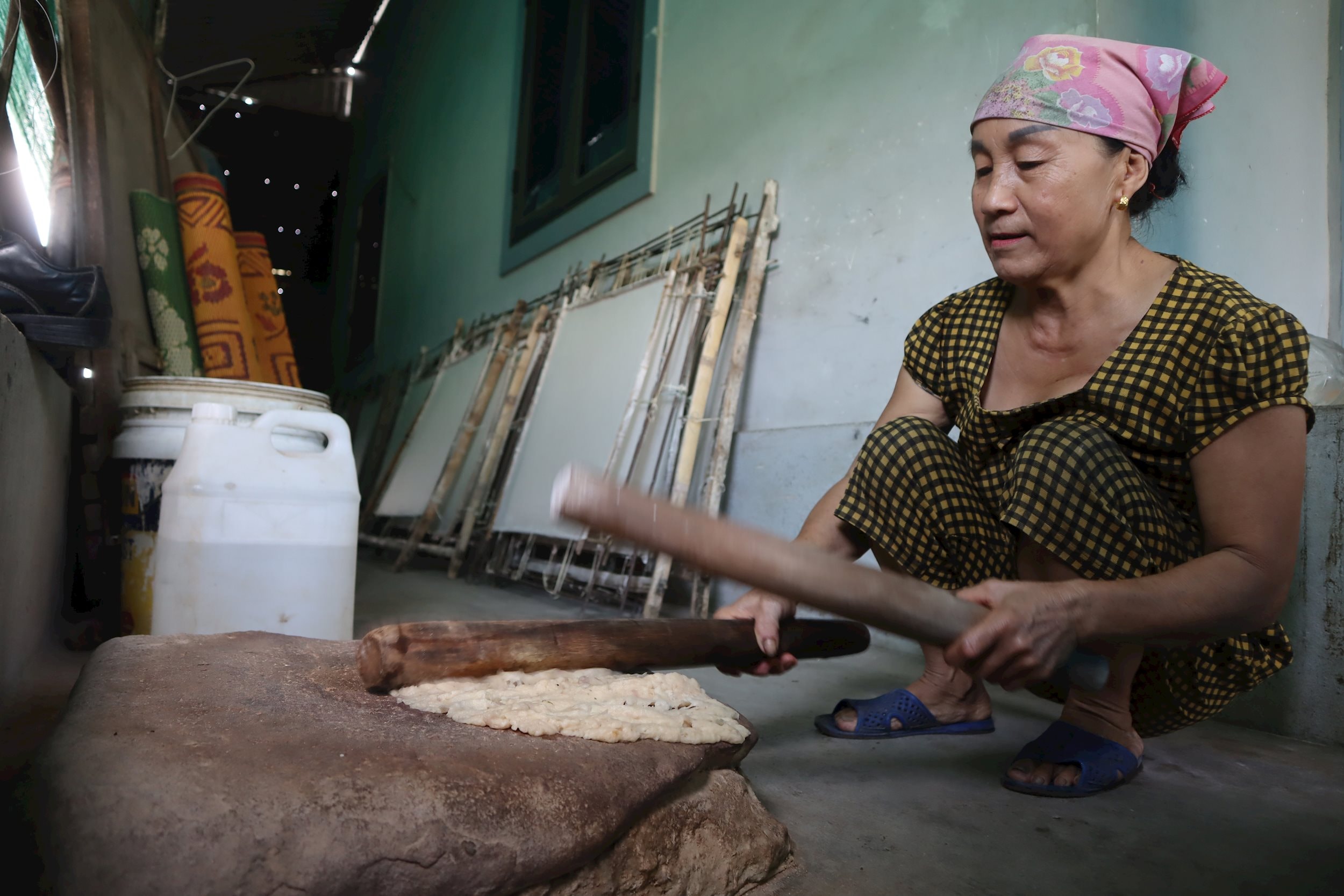
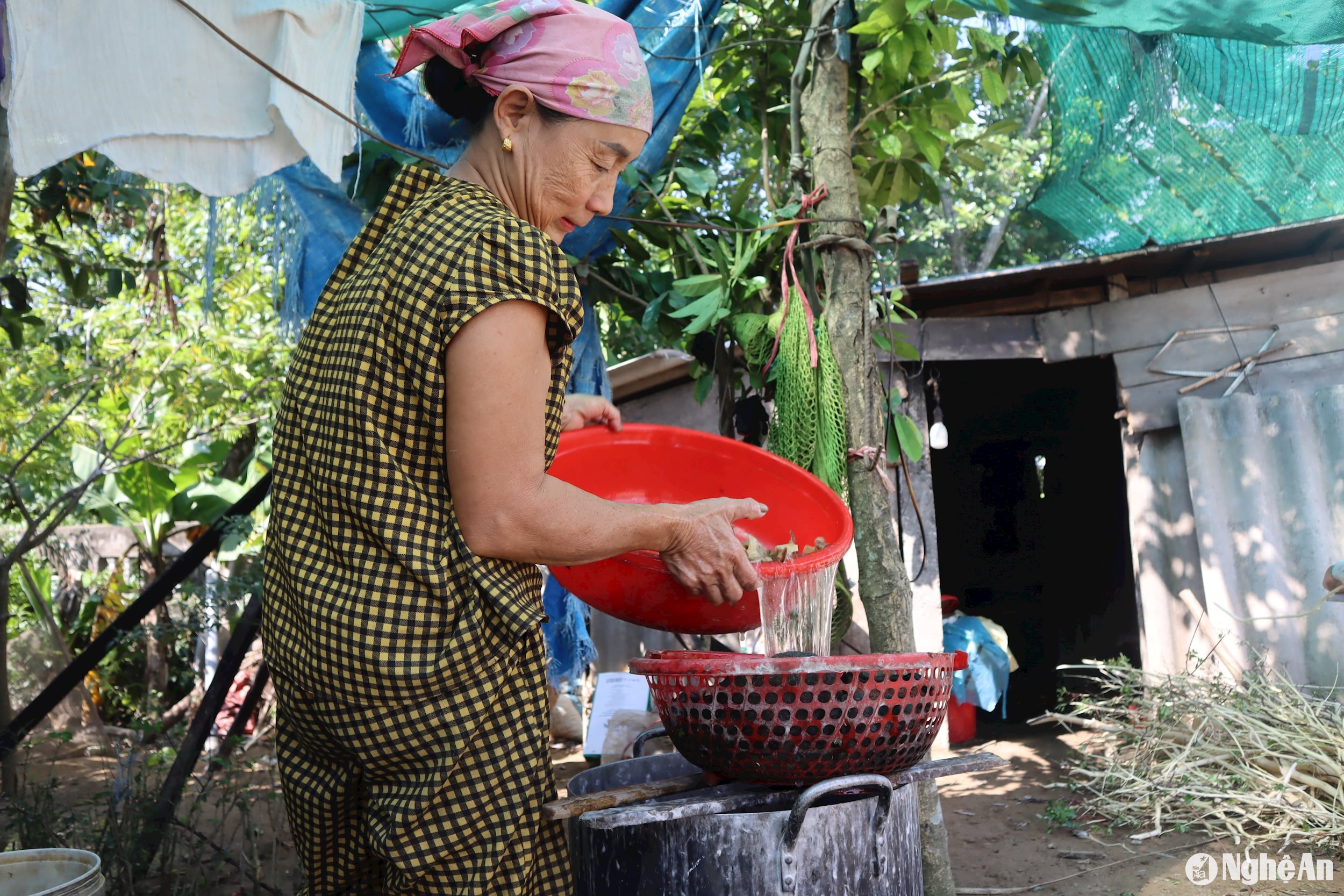
Having worked in Nghi Phong commune for over a year now, Mr. Nguyen Cong Anh - Chairman of the People's Committee of the commune - said: "Previously, when I was working at the People's Committee of Nghi Loc district, my impression of Nghi Phong commune was the saying 'Nghi Phong is a poor commune with a large area of barren land...'. 'Barren land' means sandy soil, unsuitable for production or cultivation. However, the commune's land area is twice as large as surrounding communes, and the people's strengths lie in developing traditional crafts, such as producing vermicelli, rattan and bamboo weaving, and papermaking."
Where does the traditional Vietnamese dó paper go?
In recent years, after the replanning of Vinh City, Nghi Phong has become the core area, with land prices and the pace of industrial transformation accelerating rapidly. The area where agarwood trees used to grow is gone, and the niet tree is gradually disappearing.
“Similar to the rattan and bamboo weaving craft, when the raw materials are gone and other job opportunities become more diverse, many people abandon the craft. Only those who truly want to stay will maintain the craft by sourcing materials from other places, and most of them are elderly. This change is inevitable and very difficult to preserve,” Mr. Nguyen Cong Anh shared.
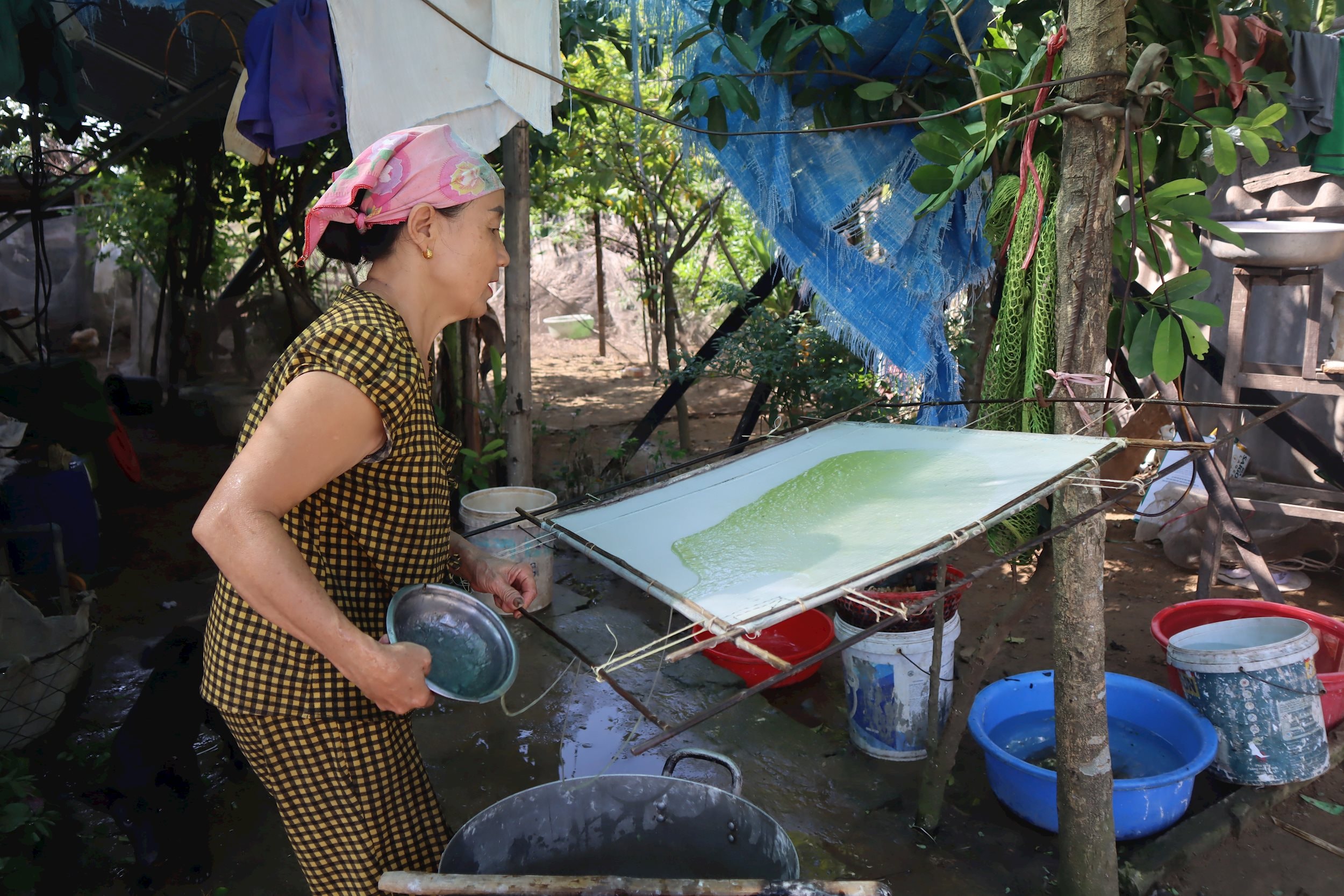
We visited Nghi Phong village, known for its traditional Vietnamese dó paper, on a beautiful sunny day. About 20 years ago, under such weather conditions, you would see stacks of pristine white dó paper drying in gardens and along dirt roads everywhere in Phong Phu village. But now, of the hundreds of households that used to make dó paper, only three remain. The once vast stacks of dó paper now sit modestly in yards or on the sidewalks of concrete village lanes. The dó paper produced is now mainly used for wrapping fish, with only occasional large orders for incense sticks, handmade fans, kites, and other crafts.
"I have four children, but none of them followed in my footsteps. My only daughter, who knows how to do it, lives far away. The other two families in the village who still practice this craft are also elderly. Perhaps, when our generation passes away, we will take this craft with us to the afterlife..." - Mrs. Loan smiled.
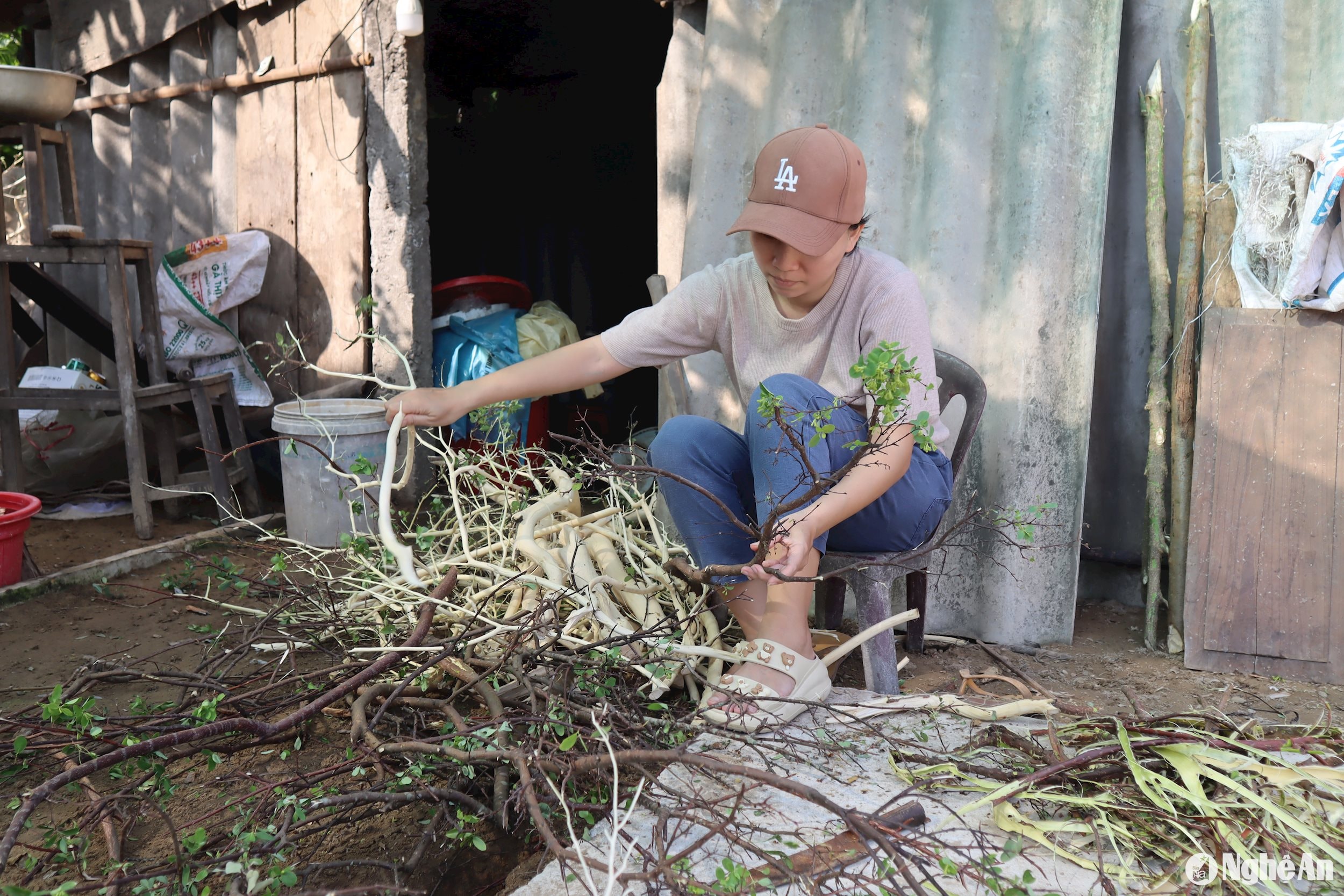
“It’s not that people are turning their backs on dó paper. In recent years, some customers have come to us to learn the craft and want to spread it. We’ve participated in sharing sessions organized by the Nghe An Museum and some private organizations. Even a Korean person came to our house, learned the craft, bought frames, and took the paper back to their country. They even asked us to experiment with many different dó paper designs; they were very creative and beautiful. We are willing to share, we have no intention of keeping it to ourselves, we only hope that this precious craft of our ancestors will not disappear,” Mr. Ha shared.
In many places, the craft of making dó paper is preserved and developed into an experiential activity serving tourism. Furthermore, with creativity and aesthetic sense, dó paper is used to create works of art and is widely applied in the production of souvenirs. This also represents a promising direction for dó paper.traditionalin the future. Hopefully, that future will be very near.