

The lingering taste of millet porridge - a simple, rustic treat from the countryside.
Sa Nam Market in Nam Dan town is not only famous for its "three-row rice cake with beef that's incredibly delicious," but also for a rustic and tasty local delicacy: millet porridge.
Millet is a drought-tolerant grain, suitable for dry paddy fields or alluvial soil along rivers. In the past, people in the districts of Nam Dan, Thanh Chuong, Hung Nguyen, etc., cultivated it.planting milletIn late spring, farmers begin sowing millet seeds in the fields and gardens. When the millet plants are about a handspan tall, they are pulled up and transplanted. Millet is planted in rows or intercropped with peanuts, potatoes, etc.
During the millet planting season, after heavy rains, the rural market sells a lot of millet seeds. The seeds are tied into bundles like rice seedlings. Those who don't sow millet themselves can simply buy a few bundles at the market. Millet plants grow quickly; after a few weeks in the field, they are lush and green, reaching a height of over a meter.
Yellow millet, also known as foxtail millet, is favored by local people because it produces large, long ears of millet. During the millet harvest season, the fields and meadows are covered in a golden hue, with heavy, laden ears of millet bending like fishing rods. Farmers often cut the millet ears, tie them into bunches, and hang them on poles to dry in the sun.
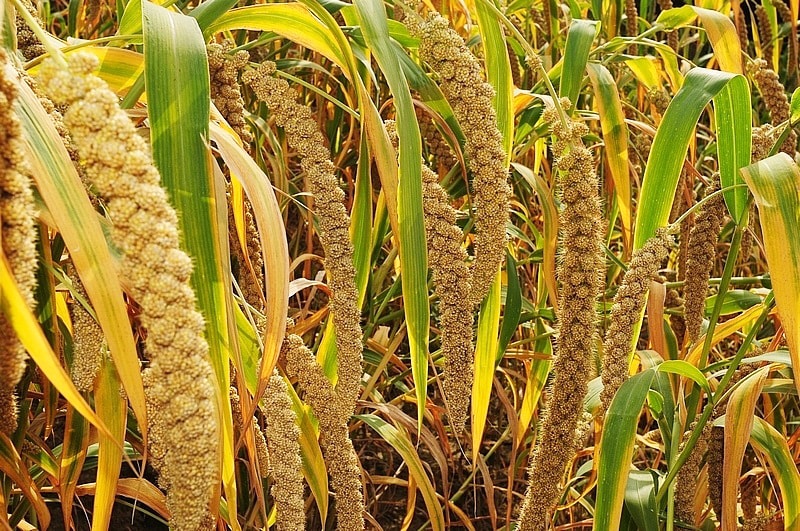
Making millet porridge requires quite a laborious process of pounding the millet grains. Usually, during the leisurely days of the third lunar month, when farming is slow, families would bring out the millet to pound. The millet is placed in a stone mortar and pounded with a pestle, just like pounding rice. When the people standing at the mortar tire their legs and the helpers scrape with their hands, the millet grains finally shed their husks. Each batch of millet must be pounded, sifted, winnowed, and winnowed many times to be clean. The millet grains are tiny, golden yellow like fish roe, but when cooked, they become a delicious and favorite dish.
People in Nghe An often use millet to make porridge and sweet soup. Millet sweet soup, made from millet with mung beans, sugar, or molasses, is a luxury dish only prepared on special occasions and anniversaries. Millet porridge is a common dish, used to stave off hunger during times of rice scarcity. From family meals, millet porridge is now sold in markets and at traditional festivals as a specialty.
No one knows exactly when millet porridge first appeared in markets, but since ancient times, rural markets in the province have had stalls selling it. Small markets have one or two vendors, while larger markets have three or four. Millet porridge has been modified into many varieties such as yellow millet porridge, mung bean millet porridge, and bean and stem millet porridge… but it is always served with rice crackers. The crispy, fragrant rice crackers, combined with the rich, creamy millet and beans, create a rustic and appealing dish for many.
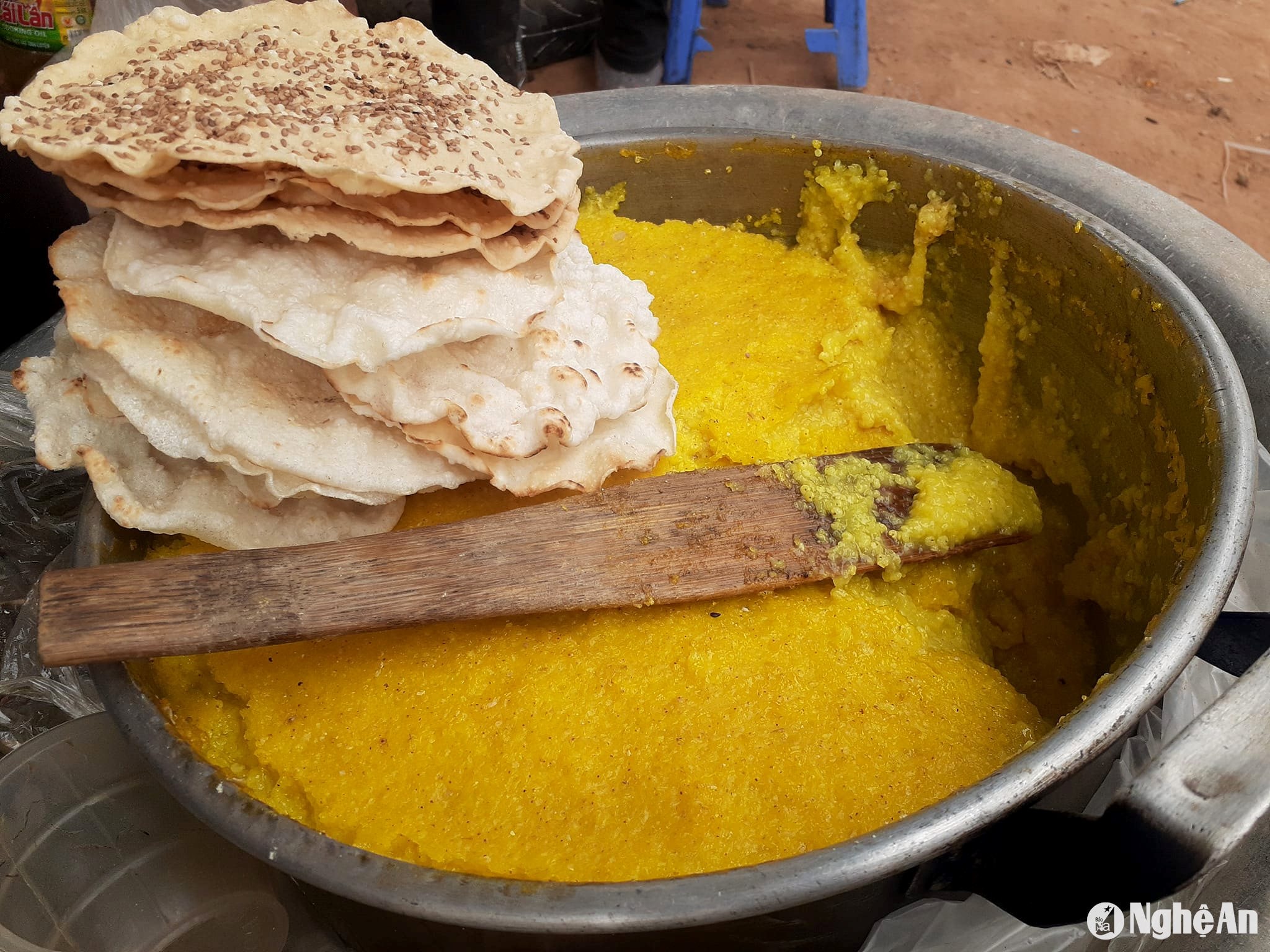
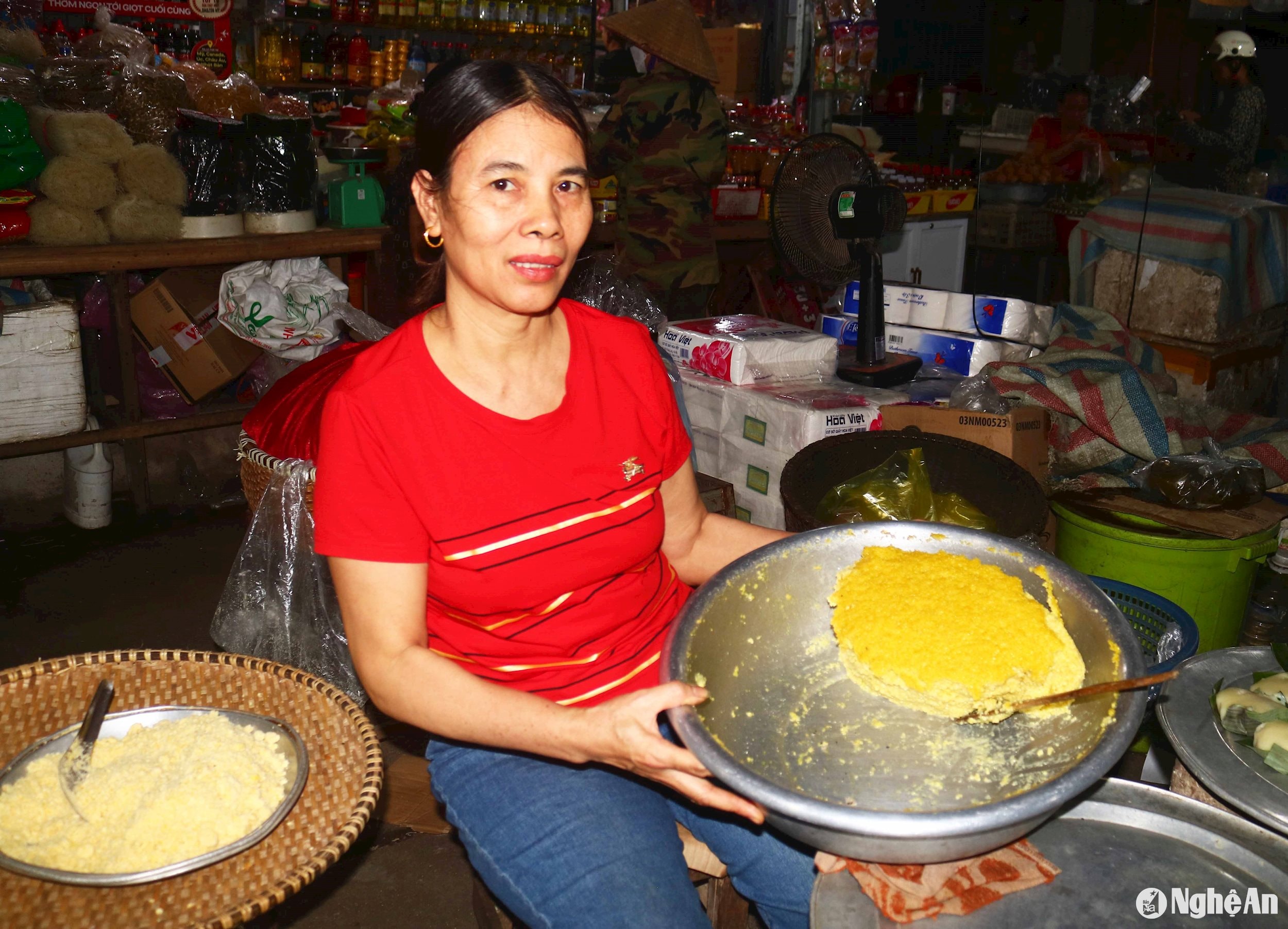
At Sa Nam market, when millet porridge is in high demand, there are 3-4 vendors, such as Mrs. An Tam, Mrs. Sam Thuat, Mrs. Minh De… Mrs. Minh De, whose real name is Phan Thi Nuoi (85 years old), residing in Nam Bac Son block, Nam Dan town, is probably the longest-serving millet porridge vendor at Sa Nam market.
Mrs. Minh recounted that she got married at 18 and, after moving to her husband's home, started selling millet porridge. Even when her contemporaries retired from the market trade, she continued to maintain the traditional millet porridge business alone. For over 60 years, this profession has helped her raise her children to adulthood.

According to Ms. Minh, selling millet porridge is very hard work, requiring late nights and early mornings, with the most arduous task being pounding the millet. Preparing a meal of porridge for personal consumption is quite simple, but cooking it professionally for sale means pounding the millet until your legs ache every day.
Back then, a stone mortar and an iron-clad pestle were placed at the gable end of her small family home. After returning from the market and having lunch, she would begin pounding millet, often working all night. When her children grew up and could operate the mortar, helping her pound millet, her work became less strenuous. Besides pounding millet, she also had to grind beans, stew beans, make rice paper, and fan the rice cakes… many steps in the process.
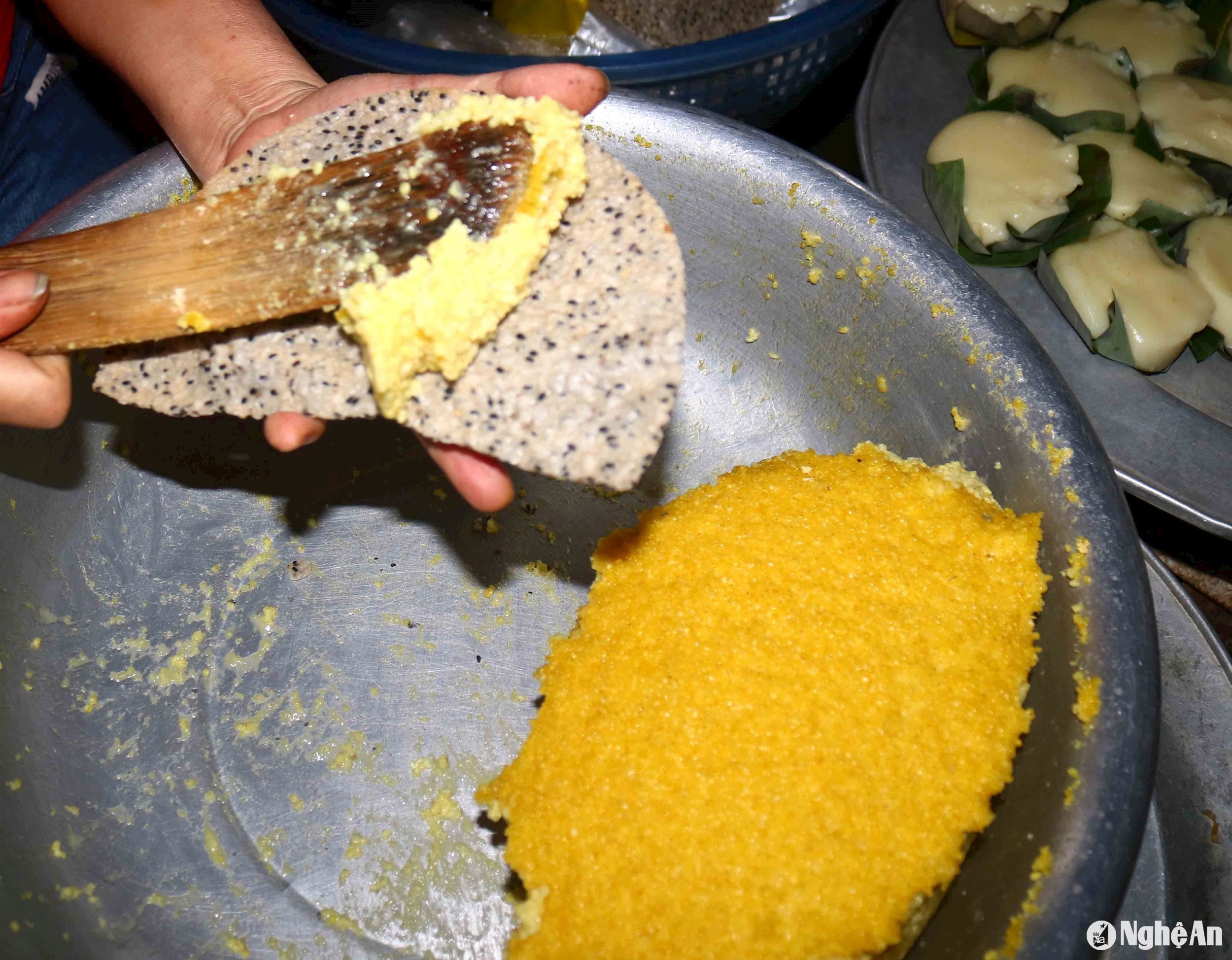
Ms. Minh believes that cooking millet porridge isn't difficult, as the ingredients are just millet, lime water, and salt. However, to cook a delicious, thick, chewy, and fragrant pot of porridge, one needs technique and experience, from weighing the millet and measuring the water to adjusting the heat and salt levels.
She usually buys millet at Phuong Market (Thanh Chuong) for her business because "the millet there is of good quality." Each market day she only cooks 2-2.5 kg of millet, but she has to wake up at 3 am to cook the millet and stew the beans. She mainly sells at Sa Nam Market, but occasionally carries millet to Cau Market (Kim Lien), Sao Market (Nam Giang), Vac Market (Nam Linh), or Con Market (Thanh Chuong).
They leave early and return at noon, trudging along on their shoulders, carrying a large pot of millet and a basin of beans on one end, and a smaller pot of millet and a basket of rice crackers on the other. The people of Thanh Chuong like to eat millet cooked with beans, so when they go to Con Ba market, they only cook one pot of mixed millet and beans, not simmering mung beans. They also don't carry rice crackers because they are plentiful and cheap there.
Mrs. Minh's rice crackers with millet and mung bean filling are famously delicious, selling out quickly at every market day. "In this profession, you have to maintain credibility, cook well, keep it clean, and sell at a reasonable price; everyone who goes to the market likes to buy from me," Mrs. Minh said.
Her most memorable experience selling millet porridge was cooking it as a specialty dish for a district tourism conference. That day, there were so many guests that she and her daughter had to cook dozens of kilograms of millet to meet the demand, and everyone praised how delicious it was.
She was the only millet porridge vendor at Sa Nam market who had passed on her trade to her children. Two years ago, when the Covid-19 pandemic broke out, her relatives prevented her from going to the market anymore, forcing her to stop selling at the age of 83. However, her daughter, who married and moved to Ha Long Hamlet, Nam Dan town, and used to help her sell millet porridge, has continued her mother's old profession. Now, when people go to Sa Nam market, they no longer see the kind-faced, cheerful old woman selling millet porridge from years ago, but they still vividly remember her image and the pot of millet porridge, along with all the cherished memories.
Ms. Tran Thi Huong, the daughter of the woman who sells rice porridge right in her mother's old spot, shared: "Currently, I'm the only one selling millet porridge at Sa Nam market. Customers who come to buy millet still talk about my mother a lot."
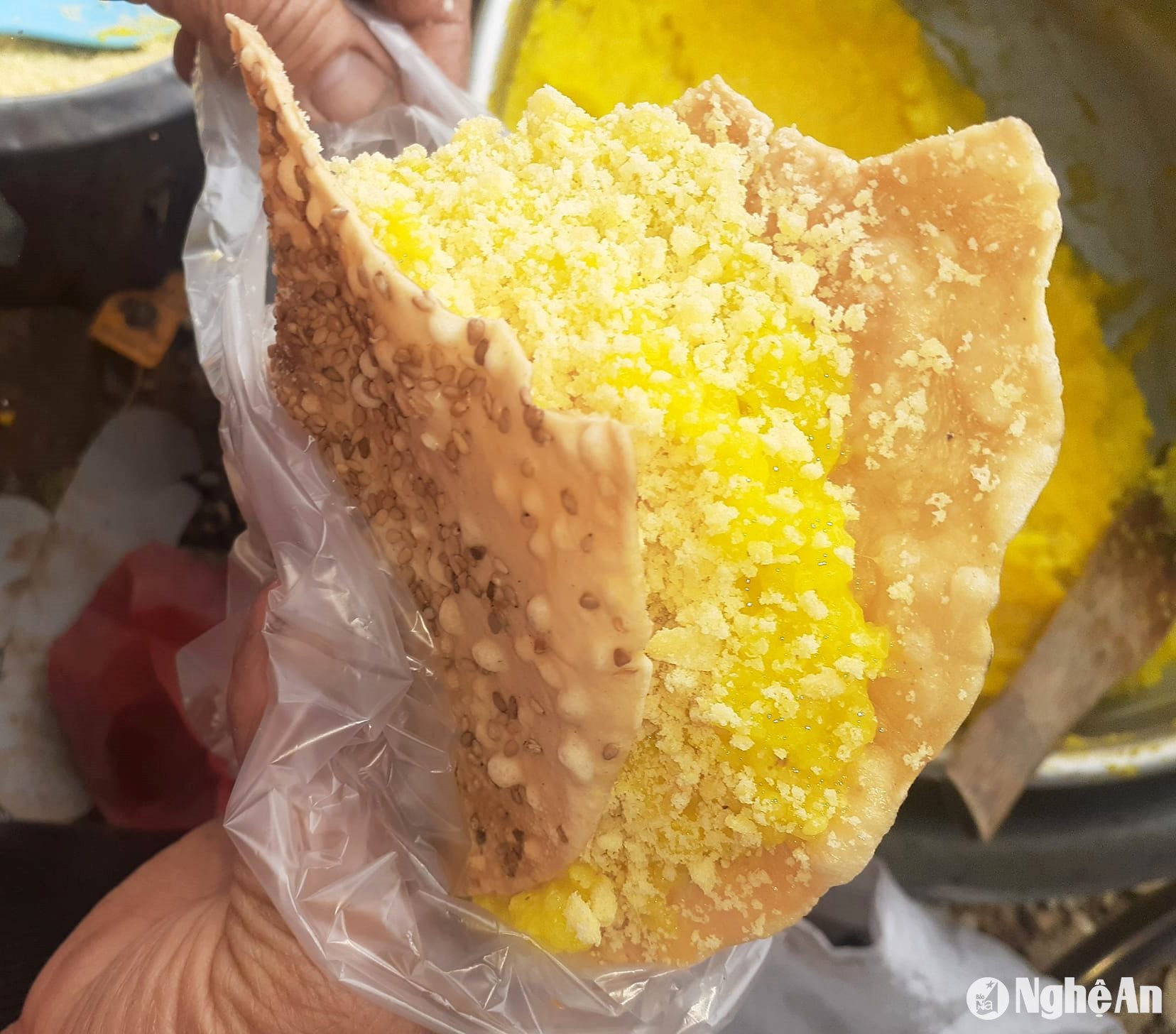
Millet porridge doesn't seem to taste as good as it used to. According to locals at the market, the purebred foxtail millet that our people used to grow, with its small grains but thick, fragrant porridge, has disappeared. Nowadays, most localities in the province no longer grow millet; the main source is imported from China, a high-yield variety with large grains that cooks into a mushy, bland porridge. Mung beans are also imported from afar.
Furthermore, the rice crackers commonly used to wrap millet porridge are mostly machine-made and lack the crispness and aroma of handmade sesame rice crackers, fanned over charcoal. Perhaps that's why millet porridge in rural markets in Nghe An province, including Sa Nam market, is no longer as appealing as it used to be.
What everyone in the profession notices is that cooking and selling millet porridge is not as strenuous or difficult as it used to be, because the millet and beans are milled and cleaned by machine, so all you have to do is pour them into the pot.
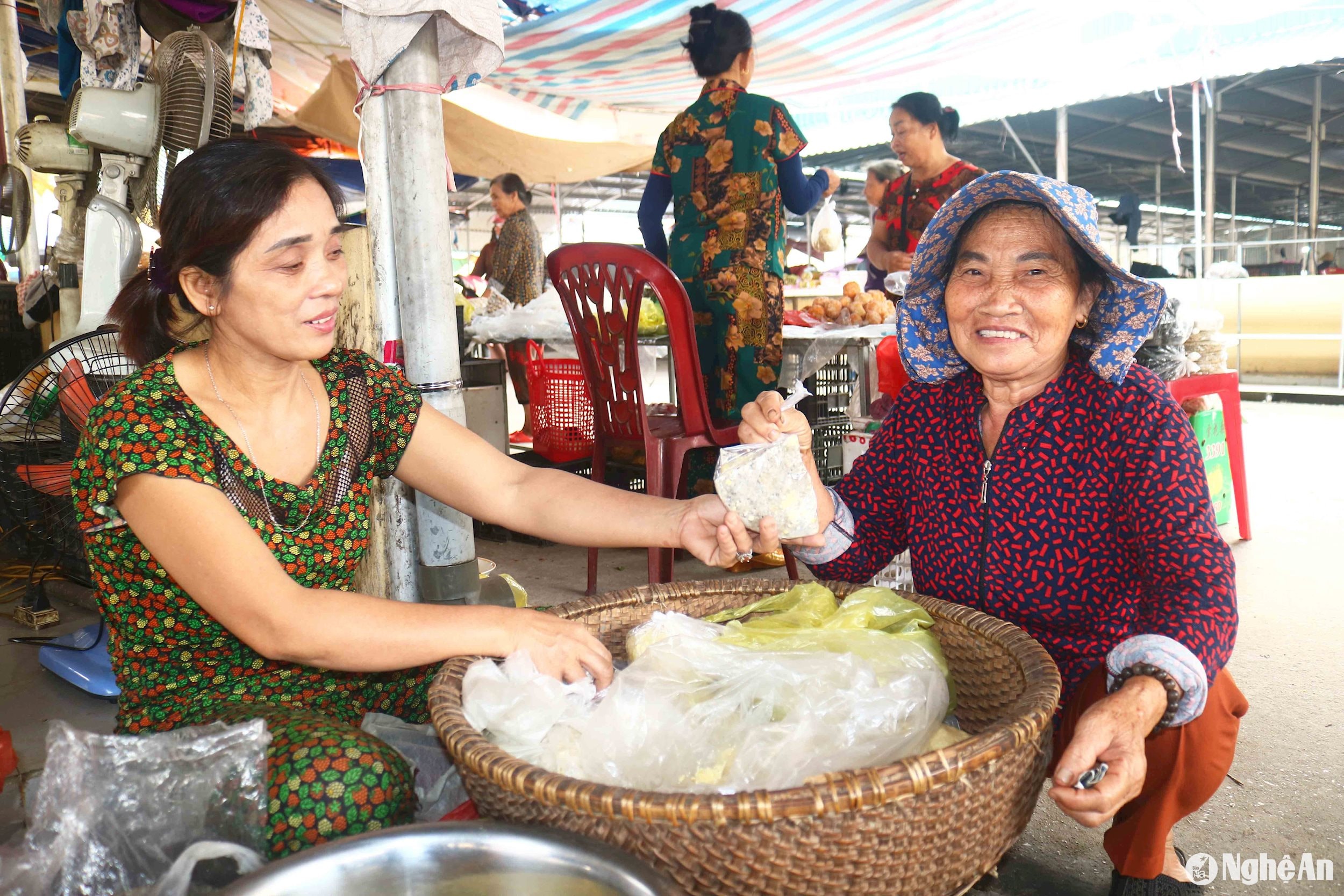
Nevertheless, young people still buy millet porridge at the market out of curiosity about this traditional "half porridge, half cake" dish. Older people strolling through the market looking for millet porridge are mostly doing so out of nostalgia for the famous millet-filled rice crackers of yesteryear.
For those who live far from home, millet porridge has become a part of their memories. Seeing images of millet porridge on social media evokes a longing for home, a yearning to return to a time filled with cherished memories.