

Why do many new cars no longer come equipped with a fuel cap?
Many new car models are being designed without traditional fuel tank caps, aiming for greater fuel efficiency and user-friendliness.
Nowadays, car manufacturers are gradually removing some features from new car models, such as spare tires and, more recently, the fuel cap (the traditional removable cap).
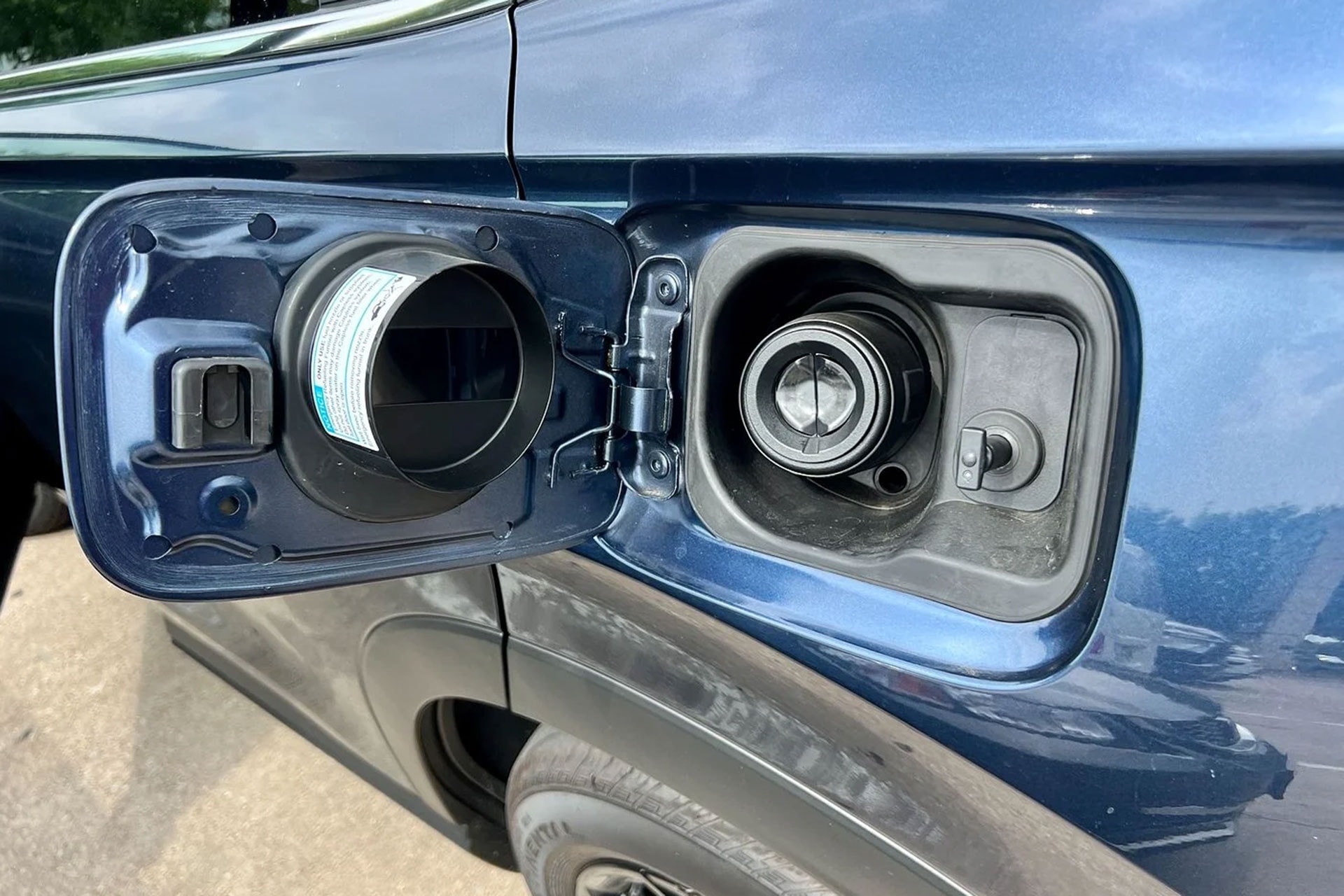
Instead of needing a separate cap to screw onto the neck of the tank and seal it, the manufacturer designed the fuel tank with a spring-loaded cap that automatically closes.
Ford was a pioneer in using a capless fuel tank as standard on its 7-seater SUV, the Ford Explorer, in 2009. The company subsequently adopted this design on other models such as the F-150, Flex, and Lincoln MKS.
Currently, several automakers in the US have begun removing the traditional fuel cap on their newly launched models, such as General Motors with the Chevrolet Blazer, Chevrolet Malibu, GMC Sierra, and Cadillac Escalade, and Honda with the Civic, CR-V Hybrid, and Passport.
So, how does removing the traditional fuel cap benefit car users?
Advantages: Convenient, quick, and clean refueling process.
First, automakers found that switching to traditional fuel tanks without removable caps was more convenient for users.
With a fuel tank featuring a spring-loaded cap that automatically closes, drivers simply open the fuel cap cover and attach the pump nozzle to fill it up. Since there's no separate cap to remove and reattach, drivers save time and effort when refueling.
Additionally, according to MotoRad, by eliminating the traditional fuel cap, automakers can create a more secure seal around the fuel system, reducing the likelihood of leaks when refueling.
Another advantage of vehicles without traditional fuel tank caps is that it's harder for thieves to steal fuel. This is because the new fuel tank design lacks a one-way valve mechanism, making it nearly impossible to siphon fuel out of the vehicle using a hose.
Furthermore, one of the obvious advantages is that drivers don't have to worry about getting gasoline on their hands when refueling at gas pumps, and it also helps minimize the risk of drivers forgetting the fuel cap at the gas station or on the roof of their car.
Disadvantage: Dirt can easily get inside when refueling.
Although traditional capless fuel tanks are convenient, they also have a few drawbacks.
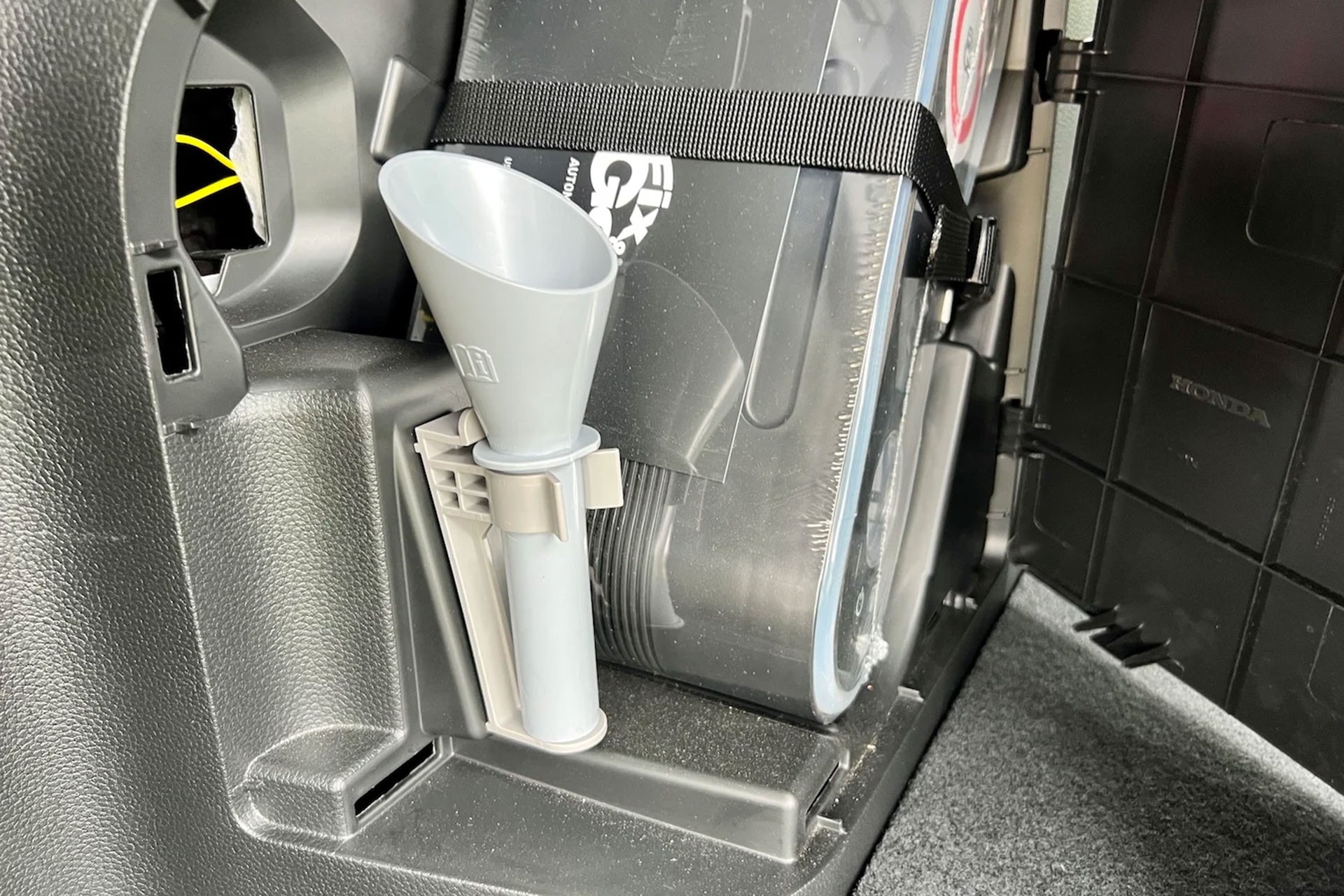
For example, when needing to siphon fuel from their vehicle in an emergency, due to the one-way valve mechanism, drivers cannot do this using a regular siphon. They must use a specialized funnel (provided by the car manufacturer). In this case, the funnel left in the trunk will still carry the smell of gasoline into the car.

Some drivers who frequently drive on dirt roads complain that dust accumulates on the fuel tank and easily falls into it as soon as they attach the pump nozzle. They may also notice a stronger gasoline smell when refueling, and in some cases, this strong smell can cause side effects such as headaches and dizziness.