

Preventing individuals with mental health issues from committing crimes.
In recent years, Nghe An province has seen numerous crimes committed by mentally ill individuals. The victims are not only family members but also neighbors, and even complete strangers with no prior animosity towards them. However, managing these individuals remains a challenging problem for local authorities and law enforcement agencies.
Haunting incidents
More than 10 months have passed, but Mr. Nguyen Xuan Hieu (born in 1956), residing in Vinh Tan ward, Vinh City, is still in shock after being repeatedly attacked by his neighbor with a hammer. With injuries amounting to 60% of his body, after more than 20 days in the hospital, Mr. Hieu was discharged but with a large indentation on his head.
The perpetrator of the incident was Nguyen Dac Nhat (born in 1988), Mr. Hieu's long-time neighbor. Having a history of mental illness, Nhat felt frustrated and irritated upon hearing Mr. Hieu's motorbike engine, leading him to commit the crime. Because he is mentally ill and has limited cognitive abilities and control over his actions, Nguyen Dac Nhat was sentenced to 5 years in prison.
.jpg)
Although he will have to live with his injuries for the rest of his life, Mr. Hieu's biggest worry now is the day the defendant returns after serving his sentence: "There was no animosity between my family and Nhat; on the contrary, we occasionally gave him rice and vegetables to eat. At the time of the incident, my family knew Nhat was not financially well-off, so we didn't demand any compensation. However, now my family is worried that after Nhat returns from prison, there will be conflict with my family."
Nearly two years have passed since the tragic murder, but the people of Nghia Thai commune (Tan Ky district) still cannot forget the cries for help from the victims of the attack on their neighbors, which resulted in one death and three injuries. The perpetrator was Luong Van Thao (born in 1983), residing in Nghia Thai commune, Tan Ky district. Thao has a history of mental illness since 2019. However, during his life, Thao did not take his medication, causing emotional and behavioral disorders that led to the heartbreaking incident.

These are just two of many incidents caused by individuals suffering from mental disorders.
According to records at the Provincial Psychiatric Hospital in 2023, the hospital had to provide and copy records related to 57 patients under its management to the police. In the first six months of 2024, this number was 21 patients.
Currently, according to the World Health Organization's classification of diseases, there are more than 300 disease codes for mental and behavioral disorders. Some common mental illnesses include schizophrenia, depression, anxiety, adolescent behavioral disorders, dementia, and alcoholism. However, the majority of patients managed and treated in the community in Nghe An province are primarily diagnosed with schizophrenia and epilepsy.
Accordingly, in the province, the number of schizophrenia patients receiving treatment in the community currently exceeds 7,000, and the number of epilepsy patients exceeds 3,000, mainly concentrated in localities such as Yen Thanh, Dien Chau, Quynh Luu, Thanh Chuong… Most of these patients will be examined, diagnosed, and prescribed medication at the provincial level, then transferred to local health centers and health stations for monitoring, management, and medication dispensing.
Difficulties in management
To facilitate effective support and rehabilitation for individuals with mental health issues, Nghe An province has implemented numerous projects and policies to provide financial assistance for medication in community-based treatment. Specifically, in 2024, the province allocated 1.3 billion VND to the community mental health care program. Upon returning to the community, individuals with mental health problems will be managed at local health centers, receive medication twice a month, and their families will receive guidance on medication use. Although policies and support for individuals with mental health issues are in place, various objective factors contribute to the potential increase in crime within the community.
The main reasons are limited public awareness, coupled with a lack of skills and treatment methods among family members. Some families neglect managing their patients, leading to relapses and worsening conditions. Furthermore, some families in remote areas believe that these cases are caused by demonic possession, and instead of medication, they perform exorcism rituals. In addition, some cases of spontaneous mental illness, even with medical records, are not treated with medication due to fear of stigma, causing the condition to deteriorate further.
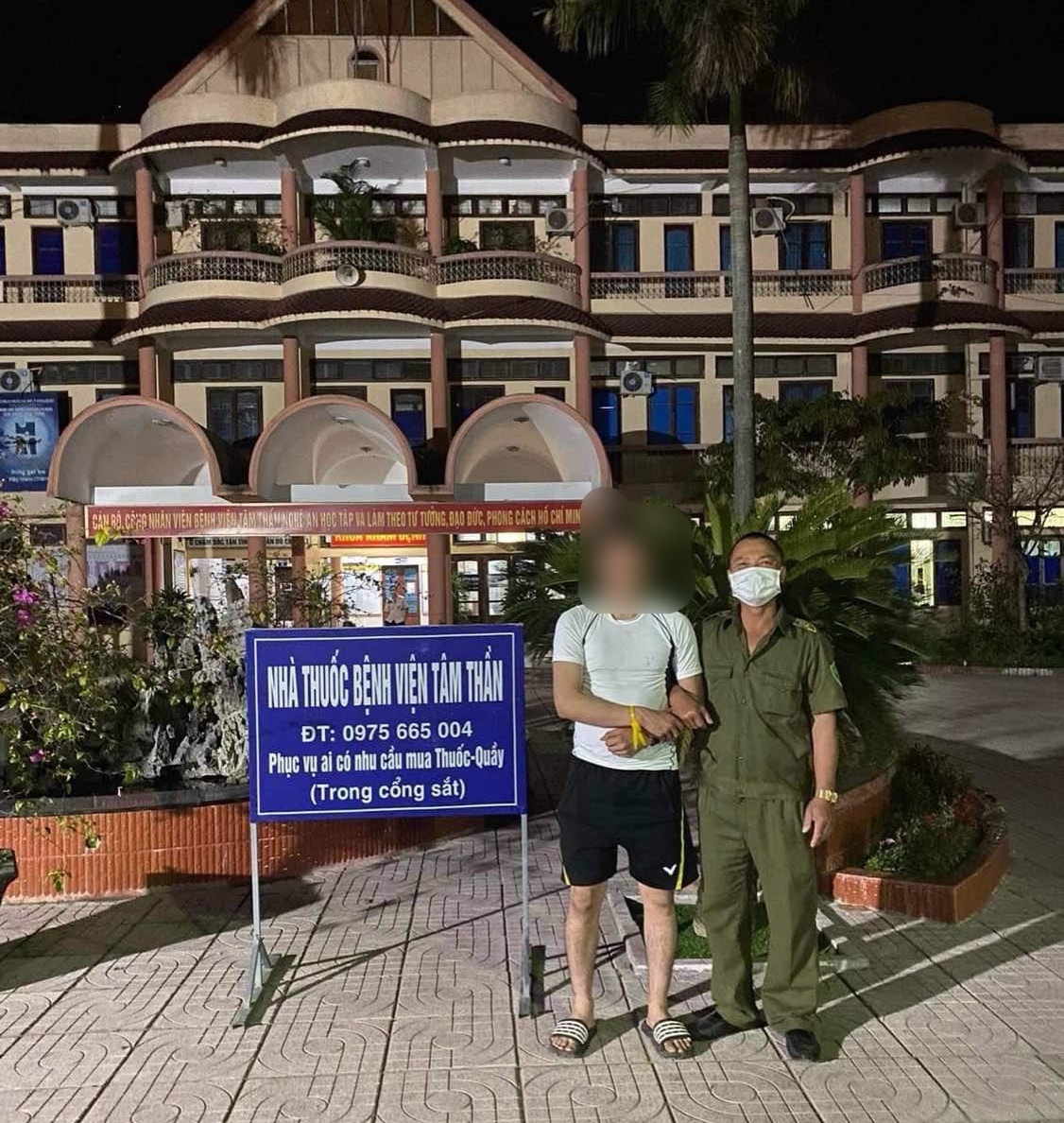
Dr. Tran Ngoc Linh, Head of the Referral Department at Nghe An Provincial Psychiatric Hospital, stated: "For schizophrenic patients managed in the community, regular medication can stabilize their condition in 80-85% of cases. However, for many illnesses, not taking medication can easily lead to relapses, causing negative emotions such as screaming, destruction, and even harming those around them. For example, in the case in Tan Ky district, the individual had a mental health record but was not eligible for medication under the prescribed code. Furthermore, the family did not seek timely treatment, leading to the tragic incident."
In Lang Thanh commune, Yen Thanh district, more than 30 mentally ill patients are being managed in the community. The majority of monitoring and management is done by the local authorities through paperwork, while most of the work to prevent potential harm from these patients is left to their families and local security forces.
According to Major Dang Thanh Hoa, Head of Lang Thanh Commune Police: In reality, the management of individuals exhibiting mental health symptoms in the locality is still lax, lacking close coordination between local authorities, relevant departments, and the families of those with mental health issues. Therefore, preventive measures are not implemented before individuals with mental health symptoms engage in behaviors.illegal behaviorFurthermore, for severely mentally ill patients, seeking treatment at medical facilities depends on the family's voluntary decision, but due to high treatment costs and difficulties in transportation, most of these patients continue to live freely at home.
Discussing this issue, Dr. Nguyen Trong Hai, a lawyer and Director of Trong Hai & Associates Law Firm, stated: “Currently, there is no legal document stipulating that individuals or agencies are responsible for taking mentally ill individuals to treatment facilities when the patient has not committed a crime. This mandatory treatment only applies within the scope of criminal proceedings, that is, when there are consequences from a violation of the law. If the family does not cooperate in preventing the risk of the person's illness worsening, it can easily lead to tragic incidents. This is also a potential danger to society.”
To overcome these shortcomings and to effectively manage, treat, and support mentally ill individuals, thereby contributing to the prevention of crimes and legal violations committed by them, the joint efforts of the entire community and society are needed. Furthermore, local authorities and relevant agencies should support families and individuals exhibiting mental health symptoms in monitoring and providing timely treatment to prevent the occurrence of illegal activities and avoid unfortunate consequences.