

Mobile coffee shops - an emerging business model in Nghe An.
Recently, the "takeaway coffee" business model has boomed in Nghe An. Its speed, convenience, and affordability have helped this service attract customers...
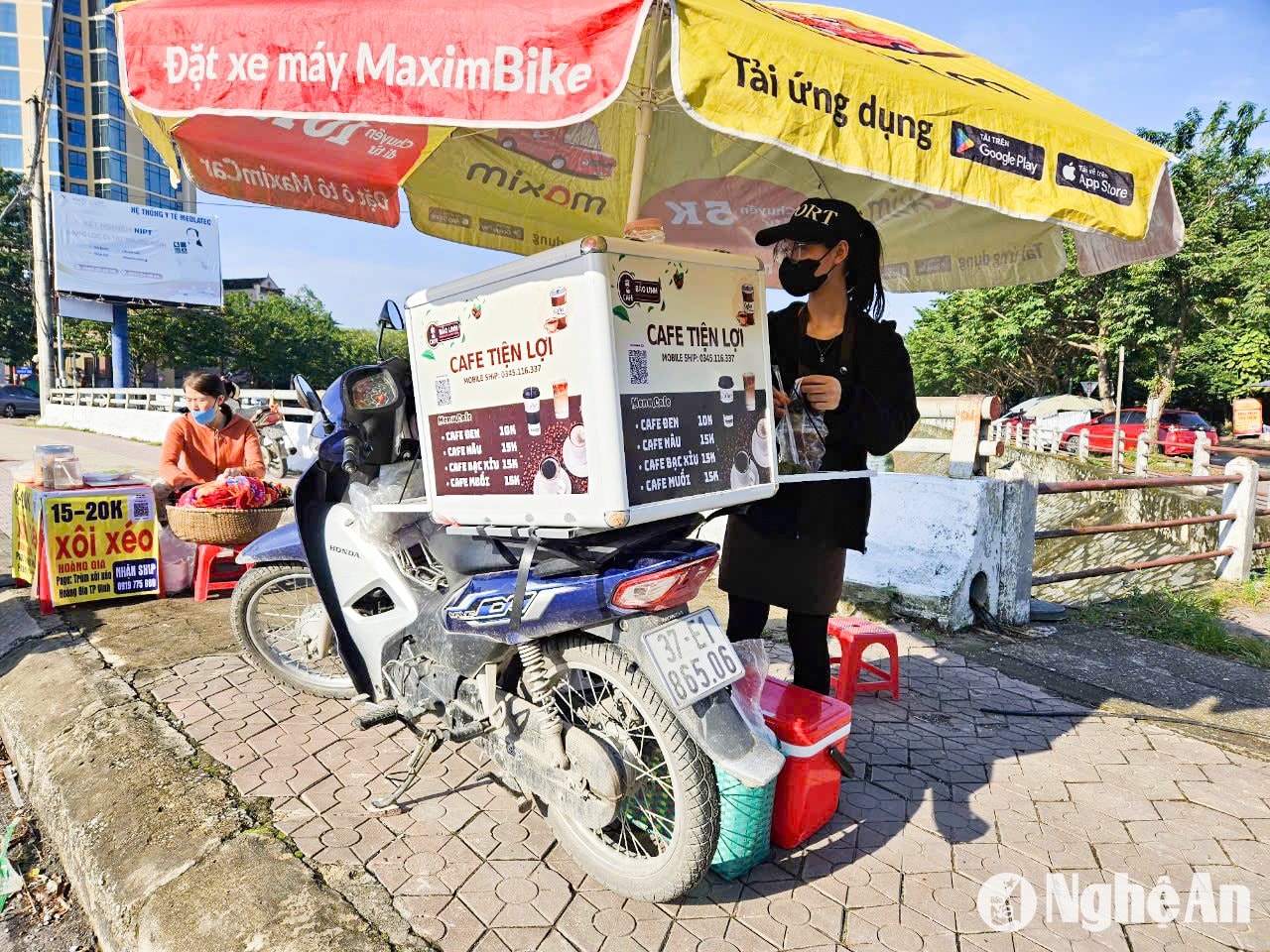
Born in 2005 in Thanh Xuan commune (Thanh Chuong district), Le Thi Hoai is currently a student at Vinh University. To earn money for living expenses while studying away from home, Hoai chose to start a takeaway coffee business. Every day, on her motorbike, Hoai carries a cooler of ice, a few bottles of pre-made coffee from home, plastic cups, and some simple brewing equipment.
According to Hoai, after learning how to make coffee through trial and error, she decided to sell takeaway coffee. “The initial investment was only about five to seven hundred thousand dong to buy some simple equipment. I only studied for one afternoon, so I sell from 6:30 am to 9:00 am. On busy days, I sell 40-50 cups, on slow days, 10-30 cups. After deducting expenses, I earn 150,000-200,000 dong. Most importantly, I have control over my time,” Hoai said.
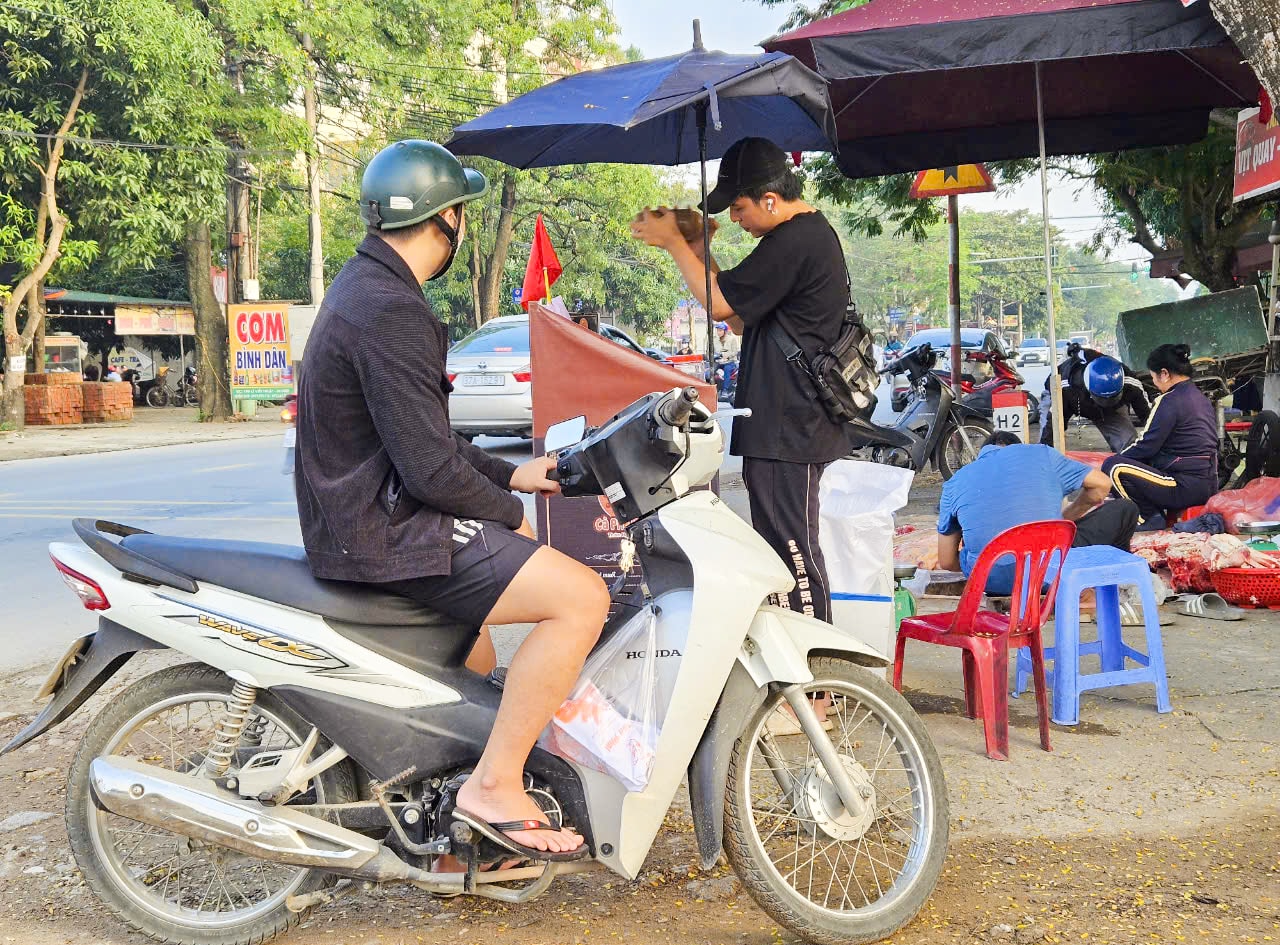
Hoài's selling locations aren't fixed; she usually stops at each place for about 30 minutes before moving on to another location, mostly in busy areas with high foot traffic.
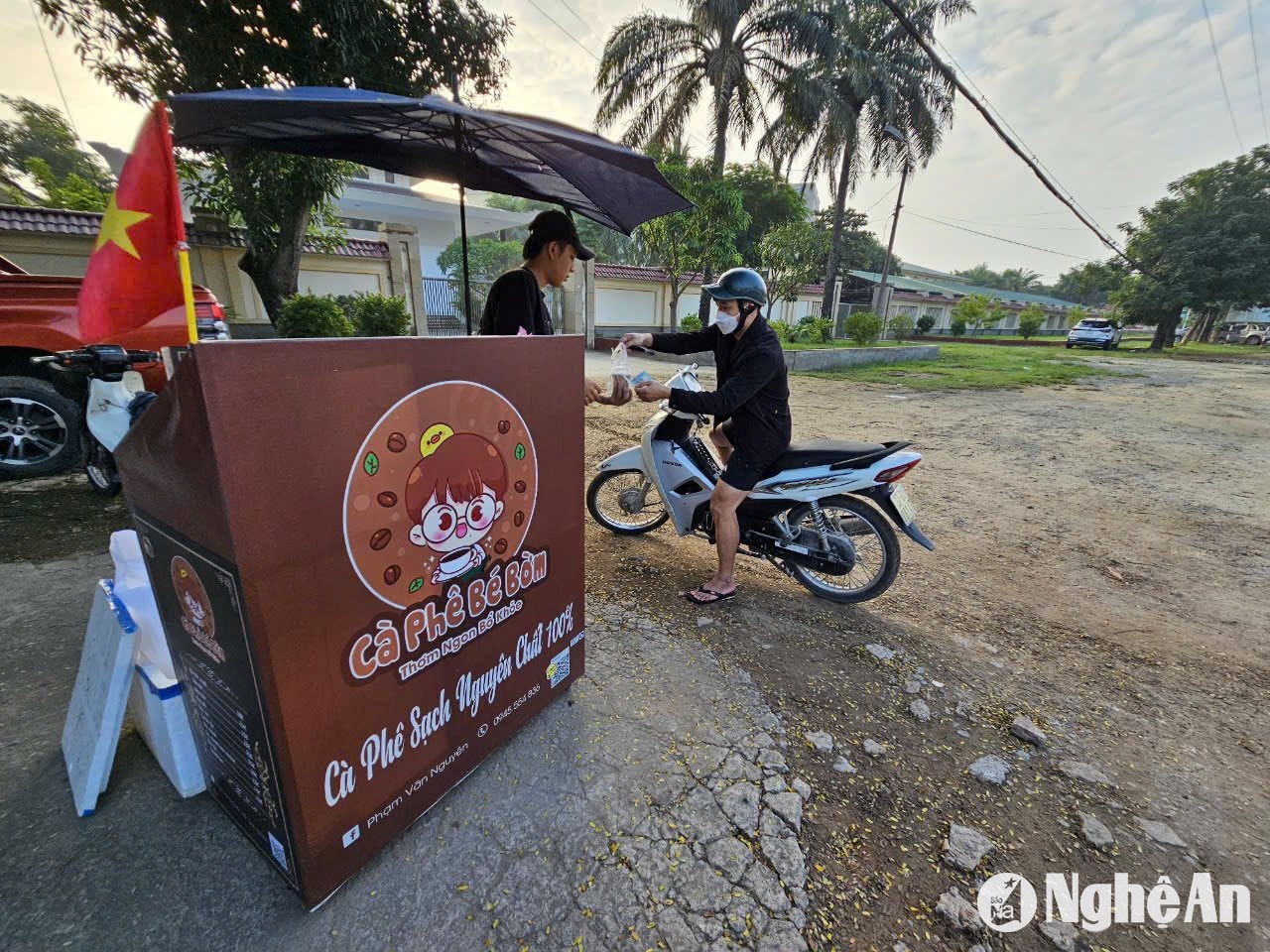
Meanwhile, Phan Van Nguyen, a young man from Hung Loc commune (Vinh city), chose to start his business selling takeaway coffee. With just a simple pushcart, decorated with eye-catching posters and a diverse menu, Nguyen pushes his cart to the gate of Military Hospital 4 every day to sell coffee and other drinks.
Nguyen's customers are mainly laborers, small traders at Coi Market, and passersby. "Compared to opening a shop, a mobile coffee cart is more convenient because there are no costs for renting space, tables, chairs, or decorations, and it's easier to attract customers if the product is of good quality. After nearly half a year in business, I earn 12-15 million VND per month," Nguyen said.
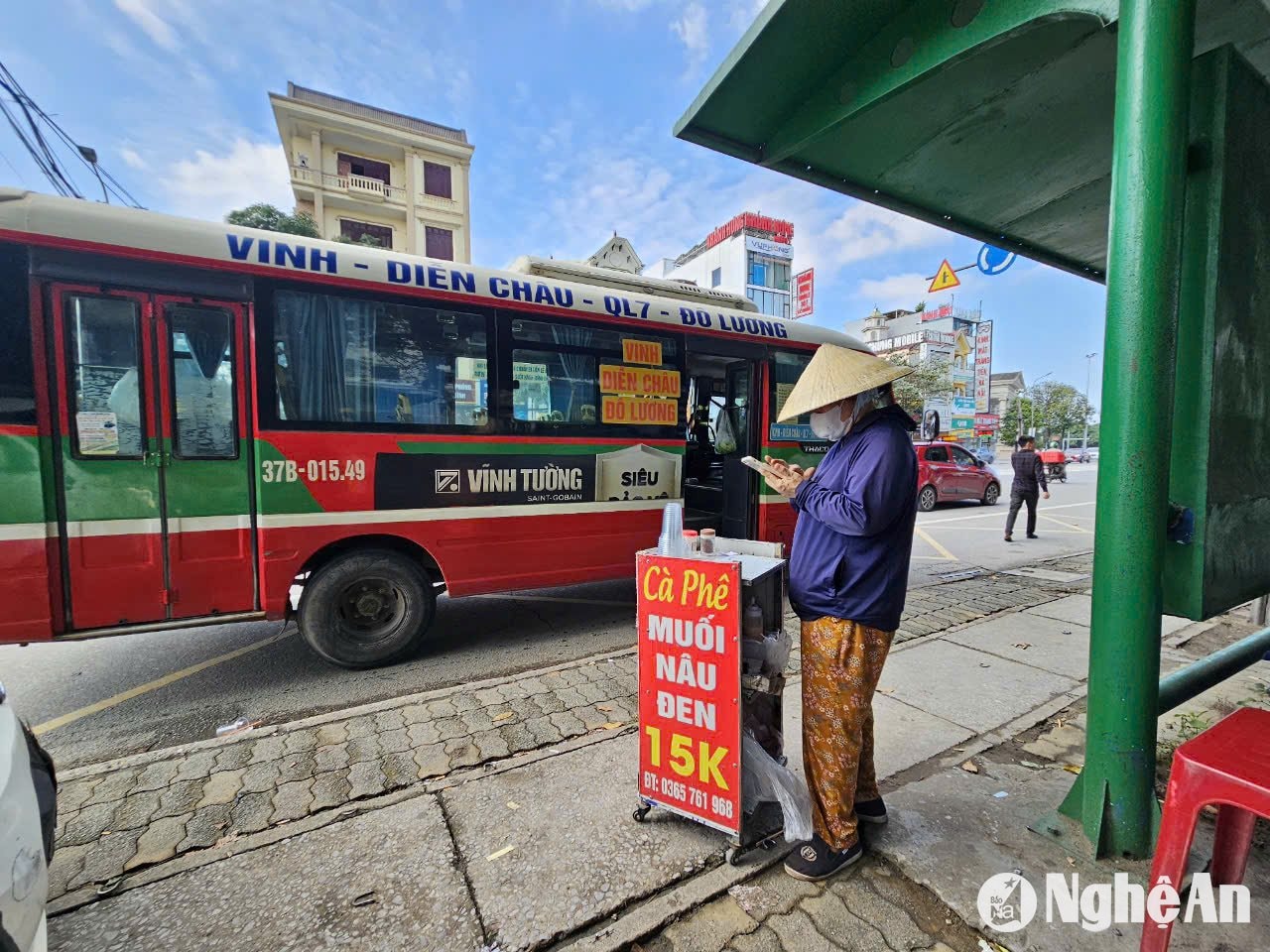
Nguyen Thi Lieu, now 50 years old, used to work as a cleaner at a government agency. After retiring, she chose to start a mobile coffee business. With just a small shelf, a thermos of pre-made coffee from home, a few bottles of ingredients, and paper cups, she sells coffee daily at a bus stop on Nguyen Du Street (Vinh City). Her customers are bus passengers, motorbike and taxi drivers waiting for customers, or people waiting for buses to send goods.
"Each cup of coffee costs only 10,000-15,000 VND, so it's affordable for everyone. Selling them sporadically each day, I can earn 120,000-150,000 VND, which helps supplement my meager pension," Ms. Lieu said.
As life becomes more modern and developed, coffee-drinking habits are also changing. Instead of going to a cafe, struggling to find parking, waiting for the coffee to be brewed, and sipping it, many people choose to buy coffee to take to work and enjoy it there.
The menus at mobile coffee carts are relatively simple, featuring popular coffee types such as black coffee, brown coffee, salted coffee, and iced coffee with condensed milk. Prices are usually much cheaper than in shops, averaging 13-15 thousand VND per cup, due to the lack of overhead costs such as rent, furniture, and staff salaries.

Furthermore, this service attracts customers because of its speed and convenience; customers only need to stop for 5 minutes to receive their drinks. Receiving a cup of salted coffee for 15,000 VND, Mr. Tran Huu Trung – a customer – said: “Fast, convenient, cheap, and most importantly, suitable for busy people like me, this is a useful service. Just stopping for 5 minutes gets you a drink, no waiting, and the price is only half that of going to large coffee shops.”
Currently, in Vinh City and the centers of districts and towns, along the roads leading to industrial zones in the province, there are many mobile coffee and beverage carts. This is considered a new and unique business model with the outstanding advantages of low capital investment, flexible location mobility, and easy access to a wide range of customers. With these advantages, this business model has been and is being chosen by many young people to start their own businesses. However, this business model also faces difficulties such as: bad weather, customer concerns about food safety and hygiene, and the lack of fixed hours and locations, which sometimes leads to the loss of existing customers, etc.
.jpg)
The takeaway coffee business model, originating from Italy, began to penetrate the Vietnamese market in the early 2000s. However, at that time, this business model was not highly regarded and was not very popular. In recent years, especially after the Covid-19 pandemic, consumer habits and needs have changed significantly, leading to a boom in this model. In Nghe An province, in the last two years, takeaway coffee businesses have emerged as a popular startup trend among young people.