
Comrade Phan Đình Đồng (1911-2001)
Phan Đình Đồng was born on October 10, 1911, his aliases were Lân and Tấn, and his hometown was Lương Giai village (now part of Nam Tân commune, Nam Đàn district, Nghệ An province).
Phan Đình Đồng was the eldest son of Phan Đình Du, a scholar who worked as a teacher (died in 1953), and Nguyễn Thị Lý, a farmer and petty trader (died in 1948). The family had a tradition of compassion and helping the needy, and had been settled in Lương Giai village for generations.
The village of Luong Giai was originally a fishing village on the banks of the Lam River that was later moved inland. In the old days, arable land was scarce, rent was high, and taxes were exorbitant, with endless forced labor and miscellaneous services, making life extremely difficult for the people. Many didn't even have a decent piece of cloth to cover themselves. As a child, Phan Dinh Dong often witnessed French customs officers raiding the village to confiscate "illegal" liquor. If they found any house with liquor, they would arrest the owner and confiscate their property! Meanwhile, French Ty and Fonterra wines were freely traded, and the French even forced local communities to buy them.
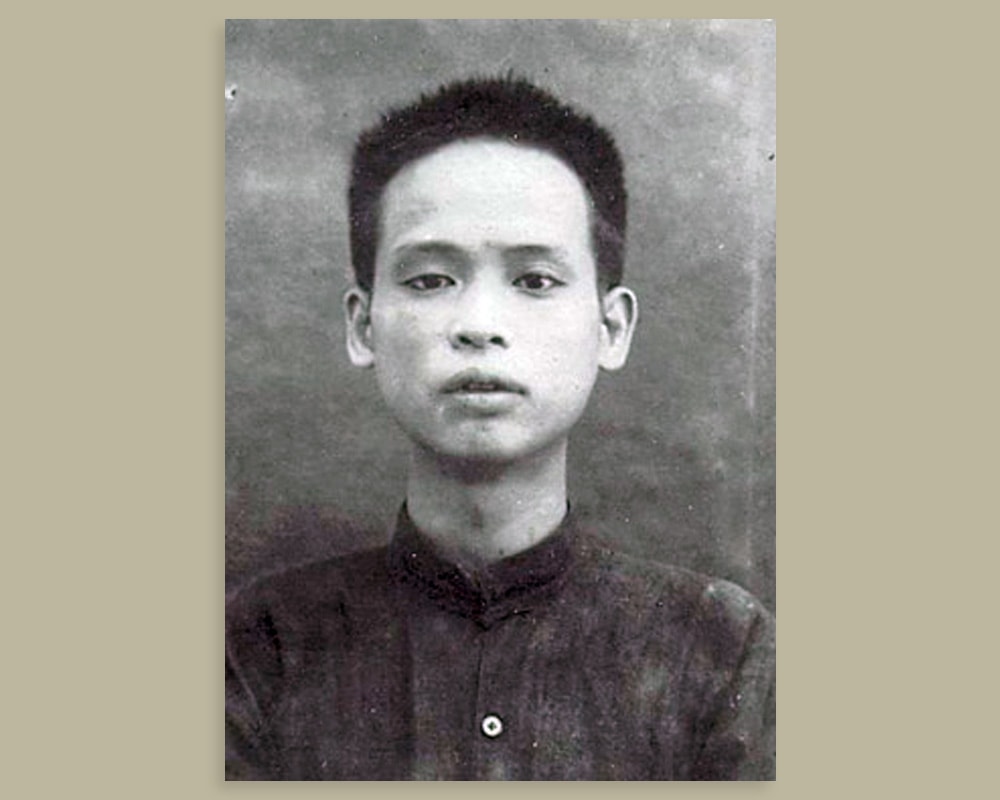
Having witnessed numerous instances of oppression and exploitation by the feudal imperialists against his relatives and villagers, Phan Đình Đồng soon developed a subtle resistance to an unjust society. His hometown was located in the Nam Đàn region, a land of "spiritual and talented people," a place with magnificent scenery that the ancients had praised:
Entering the Dunshan Mountain sword formation
The Lam Pho Cave's regulations and flags
Rough translation: Trees lining the Dun mountain stand like spears.
Sails returning to Lam Pho resemble unfurled flags.
(Poem by Hoang Phan Thai - a patriotic intellectual from Nghi Loc district)
Nam Dan is a land of culture and history, home to many famous scholars such as: Thám hoa (Third-ranked scholar) Nguyen Duc Dat, Giải nguyên (First-ranked scholar) Phan Boi Chau, Phó bảng (Third-ranked scholar) Nguyen Sinh Sac… In the past, during the time of Mai Thuc Loan (722-726), Van An citadel in Sa Nam was once the capital of An Nam, after Mai Hac De and his army drove the Tang invaders out of our country.
The Vạn An citadel was separated from Phan Đình Đồng's hometown by only a stretch of the Lam River. At that time, many fierce battles fought by Mai Thúc Loan's rebel army against the Tang invaders took place on both banks of the Lam River, from Vạn Rú (Khánh Sơn) to Mount Voi (Nam Tân, his hometown).
During the Văn Thân movement, Nam Đàn and Thanh Chương were important areas of operation for the Trần Tấn-Đặng Như Mai rebel army, with the Giáp Tuất uprising of 1874.
While still a student at the Franco-Vietnamese Elementary School in Nam Dan, Phan Dinh Dong already had some understanding of his homeland and felt proud of his ancestors' traditions. In 1925, when Phan Boi Chau returned from China and was granted amnesty due to the strong nationwide struggle, Phan Dinh Dong, only 14 years old, understood the immense prestige of Phan Boi Chau in the nation. When Phan Boi Chau stopped to visit his home in Dan Nhiem, Nam Dan (on his way to Hue), Phan Dinh Dong was fortunate enough to accompany his father to visit him. The encounter left a deep impression on him.
In 1926-1927, Phan Đình Đồng attended the memorial service for Phan Chu Trinh and read many eulogies, which expressed the fervent patriotism of the people. These eulogies, along with patriotic poems and writings by Phan Bội Châu, the Đông Kinh Nghĩa Thục school, and other progressive books and newspapers, awakened and heightened the patriotism of the young Phan Đình Đồng. He and his friends Lê Công Cánh and Nguyễn Xuân formed a reading group.
The two poems recited by the group reading newspapers and books were "Life" and "Death".
Living
Living foolishly, what's the point of being born, standing in a cramped space in life.
Living like a tiger in Europe or America, huh!
Living as a slave to others
Live in ignorance so they can laugh at you.
Life is full of dreams of fame and fortune, but it never comes.
Live only for wealth and luxury, not for the world.
A life of slavery is not worth living.
Living foolishly, what's the point of being born, standing in a cramped space in this world.
Die
To die for the country, to die for the people.
Death will free a man from all his debts.
Died during the Eastern Zhou period of the Seven Kingdoms.
To die for the Western Han during the Three Kingdoms period.
To die like Hung Dao, one's soul becomes a saint.
Dying like Queen Trung, her spirit was divine.
The old man of Tay Ho may die, but his reputation will not.
To die for the country, to die for the people.
(According to Phan Đình Đồng's memoir "In Juvenile Prison," Thanh Niên Publishing House, 1965, pp. 106-107.)
At the age of 16, while studying at the Franco-Vietnamese school, Phan Đình Đồng of Nam Đàn often discussed his aspirations to go abroad with his friends, but he had not yet found a way or a means of communication. Shortly after, Lê Công Cánh left Phan Đình Đồng and the group of newspaper readers, following Phan Huỳnh (Phan Huỳnh was the eldest son of Phan Bội Châu) to work as a secretary for Phan Bội Châu. At the end of 1929, Cánh returned, recounting many interesting stories from the ancient capital of Huế and about "The Old Man of Bến Ngự".
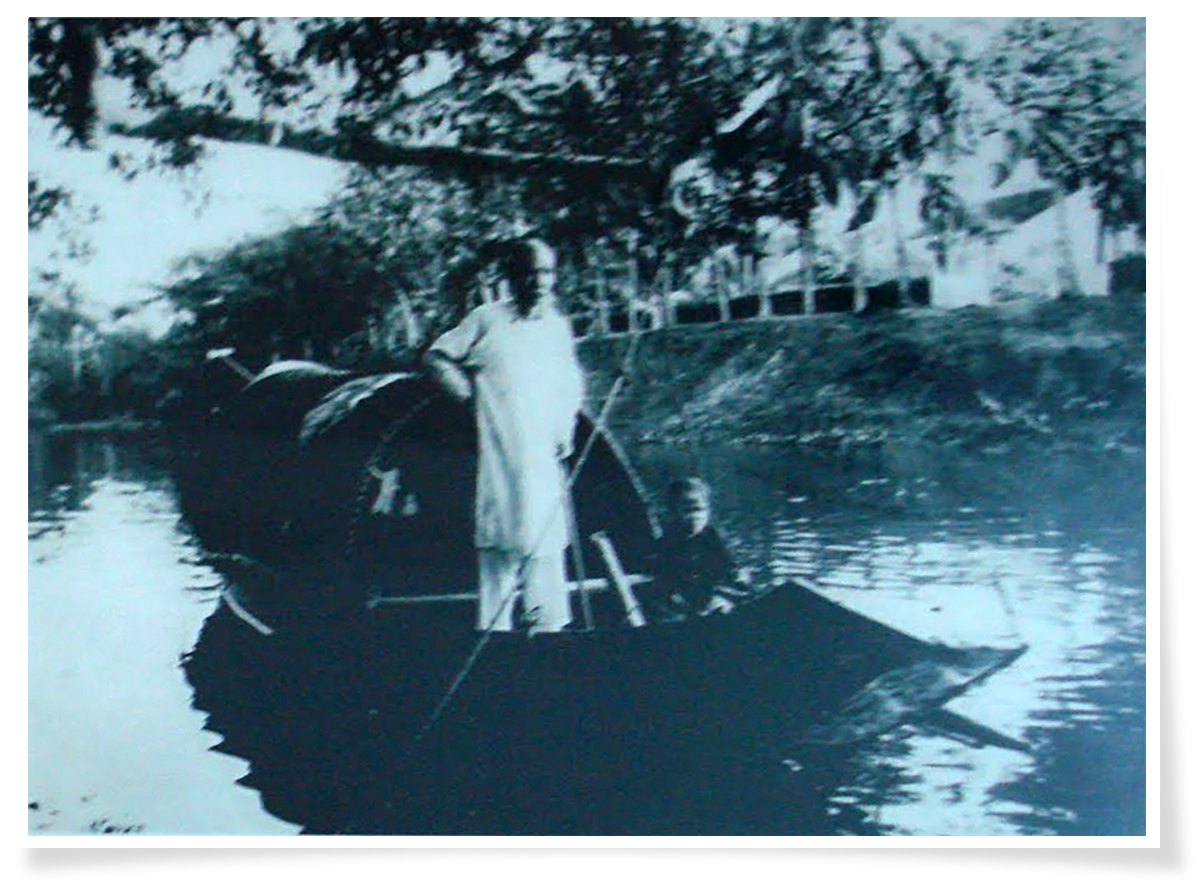
Summer arrived, and the Prime exam was approaching. Phan Đình Đồng's parents hoped that one day their son would pass and become a civil servant, thus improving the family's life. However, driven by youthful ambition, Phan Đình Đồng abandoned his studies and exams, secretly boarded a ship to Huế, sought out Phan Bội Châu, and asked to be his secretary. Initially, he was delighted and proud to be received daily by a great man of his time. But then life took a different turn. Phan Đình Đồng recounted: “In early 1930, while I was in Huế, I received news that the revolutionary movement was rising in my hometown. Leaflets and red flags appeared everywhere. Meanwhile, I continued my daily life on the boat with Mr. Phan, studying Chinese characters. One day, as I stepped onto the boat moored at Ngự wharf, Mr. Phan, with a cheerful expression, told me to take paper and pen and write down a poem he had just finished composing, titled "Night Boat, Impromptu Scene":
A floating boat
The year is gloomy and the moon is dark.
The rooster crows vaguely at dawn.
Quyen said summer is coming soon.
The rain blew as the horse-drawn carriage sped along.
The wind blew the tattered hat away.
This guy is too carefree.
Three cups of tea and they snored loudly.
After copying the poem, I sat down to reread it. While humming along, I suddenly felt sad and thoughtful. The poem seemed to reproach people like me for being indifferent and not caring about the fate of the country. I began to feel disillusioned with my quiet life, spending my days wandering around on the boat, reciting lines like: "...Who wears the robe, in drunken dreams...". I longed to join the revolution, to be involved in the activities. At that moment, I received a letter from Mr. Canh. He said my family was very worried about me and that I should return home. I arranged my affairs, said goodbye to Mr. Phan, and went back to Nghe An..."
When Phan Đình Đồng returned from Huế (April 1930), the workers' and peasants' struggle movement in the province and in Nam Đàn district was developing very strongly. He and his friend Lê Công Cánh visited Đặng Chánh Kỷ, a progressive teacher. Đặng Chánh Kỷ advised him to find a way to contact the revolution and not return to Huế to work as a secretary for Phan. Having been given a copy of the secretly circulated newspaper "Lao Khổ" by Nguyễn Sỹ Diệu, Phan Đình Đồng understood many important things he had never known before. He contacted Nguyễn Đình Diên and Vương Thúc Xuân, and they enlightened him and assigned him the task of distributing leaflets in preparation for International Workers' Day on May 1, 1930. Distributing leaflets at that time was very dangerous, but Phan Đình Đồng, undeterred by the darkness and rain, risked his life by posting leaflets on the gate of the Nam Đàn district office. The next morning, returning to the places where the leaflets had been posted, he saw that they were still there and many curious people had gathered to read them. Overjoyed, he read them aloud for everyone to hear.
Later, he was assigned by the Party to work in printing (printing documents). This work often had to be done in a closed room, and on hot, humid days it was very uncomfortable. Sometimes they had to wrap mats with leaves, cover it with a lid, and light a candle to print. The printing equipment was very rudimentary: the printing table was a plate of boiled and cooled stone, the stencil was written with thick purple ink, the letters were written in reverse, and then pressed onto the stone surface. Each stencil could print forty to fifty pages. With such manual means, the Party's propaganda materials (sometimes even entire books like "The Diary of a Shipwreck" by XYZ - Nguyen Ai Quoc) were secretly delivered to the grassroots Party branches by the female couriers.
After working in printing for a while, Phan Dinh Dong was assigned by the Party to do propaganda work right in his hometown. He started by spreading propaganda among the reading group, and then, like an oil stain, gradually expanded to include young people, women, teachers, and students…
On August 1, 1930, Phan Đình Đồng was admitted to the Communist Party of Vietnam (along with four other comrades). He was then appointed Secretary of the Thanh Đàm (Nam Tân) Party branch. In August 1930, the revolutionary movement in both Nghệ An and Hà Tĩnh provinces was surging, especially in Thanh Chương and Nam Đàn districts. Phan Đình Đồng and his branch worked day and night, organizing self-defense forces, building organizations, and countering the enemy's schemes and tactics. In the final days of August, the work intensified in preparation for a large-scale demonstration throughout the district.
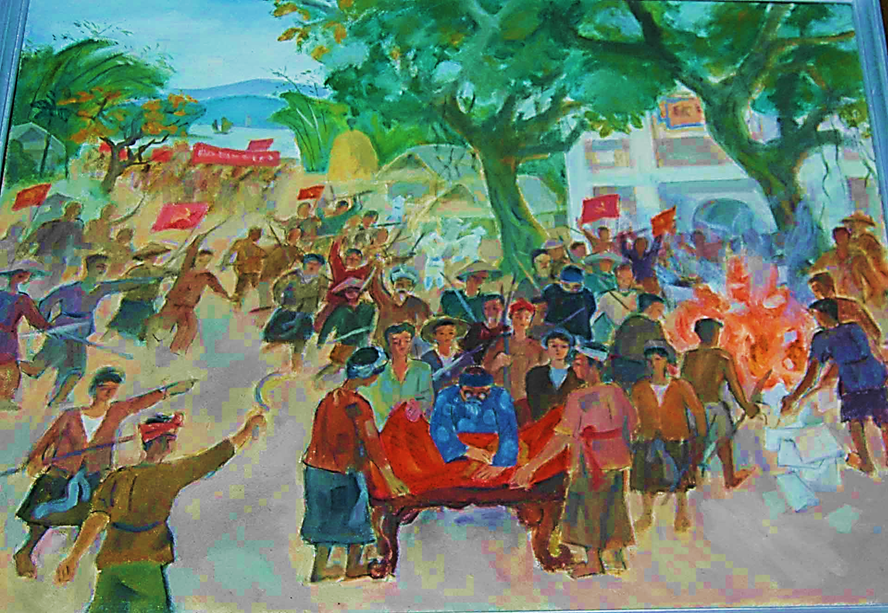
On the morning of August 30, 1930, Phan Đình Đồng joined the throng of approximately 3,000 farmers from all four districts of the county who marched to Sa Nam town. The protesters lined up in rows, accompanied by self-defense forces armed with rudimentary weapons such as sticks and spears. The district chief attempted to ride his bicycle to the provincial capital to report the incident but was stopped by the Red Guard. Meanwhile, the masses stormed the district office, burning archived documents, breaking into the prison to free prisoners, and destroying the French-owned liquor agency. Representatives of the protesters presented the people's demands to Lê Khắc Tưởng, forcing him to accept and sign the people's demands, which included a promise: "The district chief of Nam Đàn, from now on, shall not harass the people."
Following the two historic demonstrations on August 30th and September 1st, 1930, Nam Dan, along with Thanh Chuong, formed the Village Agricultural Committees (Soviet village administrations), and subsequently, Soviet administrations were established in villages in other districts of both Nghe An and Ha Tinh provinces.
Forged in the intense struggle in his homeland, Phan Đình Đồng, a patriotic young man, became a Communist Party member, a branch secretary, and by September 1930, the Secretary of the Nam Đàn District Party Committee.(According to "Draft History of the Nam Dan Party Committee", Volume 1, Nghe Tinh Publishing House, 1990, p. 58).
In late September 1930, Phan Đình Đồng was assigned by his superiors to the Propaganda and Mobilization Committee of the Provincial Party Committee. In October 1930, at the first Congress of the Nghe An Provincial Party Committee in Dong Xuan village (Xuan Lieu commune, Nam Dan district, now Xuan Truong commune, Thanh Chuong district), Phan Đình Đồng was elected as one of the seven members of the first Provincial Party Committee. He was assigned to oversee Party building and mass movements in Yen Thanh and Dien Chau districts.
At that time (early 1931), the French colonialists and the Southern Dynasty were carrying out a brutal crackdown, but the Party organization and mass organizations continued to develop. As a young, educated, enthusiastic, and morally upright provincial Party committee member, Phan Đình Đồng was appointed by the Provincial Party Committee as the Secretary of the Communist Youth League Committee of Nghệ An province. This was a great honor and a very heavy responsibility at a time when the enemy was carrying out a fierce crackdown.
After the Provincial Committee of the Communist Youth League was established, young people in the province enthusiastically joined the League, with the largest number in Nam Dan, where the Provincial League Secretary Phan Dinh Dong directly led the movement. According to statistics recorded by Leader Nguyen Ai Quoc in his "Letter to the Central Executive Committee of the Indochinese Communist Party" on April 20, 1931, the number of Communist Youth League members in Nam Dan reached a record high of 641, followed by Thanh Chuong with 78 members and Anh Son with 35 members (Ho Chi Minh Complete Works, Volume 2, National Political Publishing House, 1995).
The recruitment of new members at that time was conducted very cautiously and strictly. Young people who were not yet Party members or had not participated in any revolutionary organization were tested even more before being admitted. The admission ceremony also had to be kept secret; the Party branch was divided into many small groups, each with 5 or 6 members. Members in each group only knew their comrades in the same group, rarely knowing members in other groups.
The Youth Union also had the responsibility of organizing and recruiting children into the Young Pioneers organization. Phan Đình Đồng, the first Secretary of the Nghệ An Provincial Youth Union, recounted: “…Ten young children, no older than 15, would line up in rows every afternoon, carrying rattan whips on their shoulders, marching around the village, singing revolutionary songs. These marches fueled the revolutionary spirit. They also helped adults with guarding and maintaining security and order. Whenever soldiers were on the road, the whole village knew immediately. Cadres had enough time to hide documents and evade capture, while the people could prepare to counter them. Thanks to this, many cadres escaped the enemy's clutches and the movement was preserved. That merit belongs to the Young Pioneers. The local gentry disliked these “Little Communists.” In later acts of terror, many Young Pioneers were arrested and beaten. The “Young Pioneers” and “Children's Salvation” organizations later continued the patriotic tradition of the Young Pioneers at that time. In the glorious history of the Youth Union, we cannot fail to mention the revolutionary organizations of these children.” "I was like this during that period..." (Memoirs of Phan Dinh Dong, op. cit., p. 120)
During the time Phan Đình Đồng held the position of Secretary of the Nghe An Communist Youth Union, the French colonialists and their collaborators carried out a brutal and savage campaign. There were mass graves (such as in Ngũ Phúc, Võ Liệt, Thanh Chương). Thousands of communist fighters, from the Provincial Party Committee to the local branches, were arrested and imprisoned. In June 1931, while working in the Nhạn Tháp area (now Hồng Long commune), Phan Đình Đồng was captured by the enemy. Several soldiers tied his hands and took him to the Xuân La outpost. They were searching for clues related to the assassination of two men: Chief Thiệp and Village Head Đông in Lương Giai village, Nam Đàn. Therefore, they tortured him very cruelly. They tied his elbows, hung him from a beam, and occasionally lowered him down to beat him severely, asking, "Where did you put your gun and printing press?" Phan Đình Đồng steadfastly refused to reveal his identity and concealed his real name, calling himself An. The squad leader ordered his soldiers to dig a hole, then dragged the prisoner to the edge of the hole, pointing a pistol at him and threatening to shoot if he didn't confess. The man remained steadfast, refusing to reveal anything. The soldiers then dragged him back, tied him to a bamboo pole, and buried him in the middle of the fort's courtyard.
Three days passed, and despite his small stature, Phan Dinh Dong remained conscious after enduring the brutal torture inflicted by the cruel oppressors. On the fourth day, the district chief of Nam Dan arrived at the station and discovered that the prisoner's real name was Dong, not An. They then took him to the Vinh Secret Police headquarters. There, they were even more cruel, not only beating him but also starving him for nine days. Fortunately, some fellow prisoners secretly brought him food, saving a portion of their meals each day. Only on the tenth day were they allowed him a prison meal, fearing he would starve to death. Finally, they imprisoned him in Vinh prison. Appointed by his fellow prisoners as a prison warden, he organized prison life, assigning cleaning staff, tidying up living quarters, and caring for sick prisoners. During some of the prison's uprisings, when the warden terrorized them, the prisoners surrounded Phan Dinh Dong, shielding him from the beatings. Once, the spy Otavi slammed a huge bunch of keys into his comrade's face, causing blood to gush out, even into his mouth…
After being detained in the province for a while, they brought the prisoner back to Nam Dan district for questioning about an assassination attempt. At that time, during the revolutionary downturn, spontaneous acts of violence were common, especially the assassination of local officials, mandarins, and French colonial commanders. These acts of violence were very detrimental, as they gave the enemy a pretext to intensify their terror tactics.
One thing that deeply saddened Phan Đình Đồng was witnessing the tragic death of his close friend, Lê Công Cánh, upon returning to the district prison. Cánh was nothing but skin and bones, yet he still had to chop wood. Exhausted, he was sitting and catching his breath when a secret agent struck him with a large piece of wood. That afternoon, he died.
At the end of 1931, the Southern Court of Nghe An sentenced Phan Dinh Dong to 9 years in prison. He was only 20 years old at the time. A profound sadness filled his heart, knowing that his youth would be wasted in that dreadful prison…
But news from outside leaked in, indicating that red flags and leaflets were still appearing in many places in the province, which awakened him. He said to himself: "So the Party still exists. In nine years, I will still not be 30 years old. Life is still long, and I can still do many things" (Memoirs of Phan Dinh Dong, op. cit., p. 124).
On the night of December 31, 1931, Phan Đình Đồng was taken to Kon Tum prison for exile. On that trip, Nghe An province alone had 20 political prisoners, including Ho Tung Mau. Many of them were very young, only 17 or 18 years old.
Arriving at Kon Tum prison the day before, the new prisoners were immediately sent to build roads. Phan Đình Đồng and his fellow prisoners took the opportunity to inform the older prisoners, who had long been uninformed, about the situation outside the prison. In this prison, Phan Đình Đồng participated in struggles against the harsh regime. Although these struggles achieved initial successes, the forced labor remained extremely arduous and demanding.
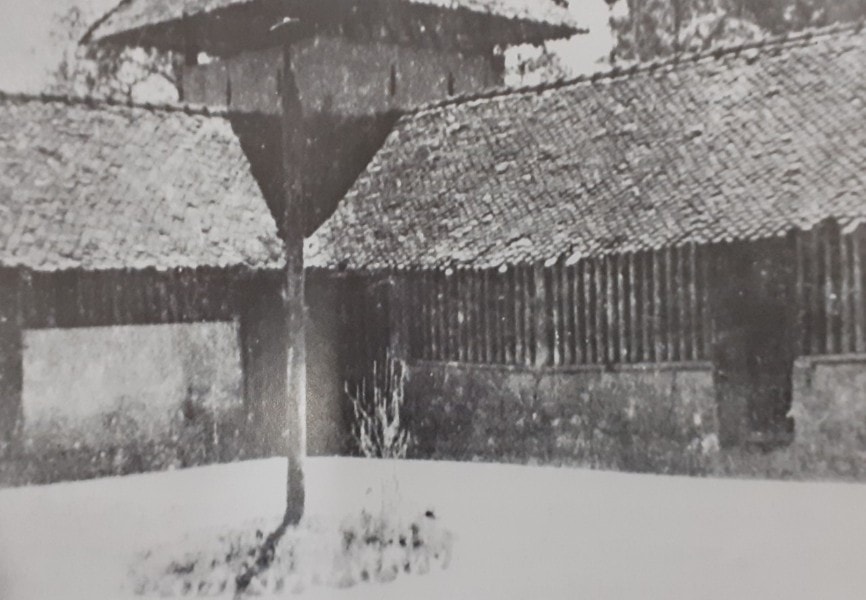
Despite the harsh conditions in prison, Phan Đình Đồng maintained the spirit and will of a communist fighter. He actively helped many fellow prisoners learn the national language, participated in a poetry group, and was one of the leading members of the prison struggle.
In early 1933, Phan Đình Đồng was transferred to Buôn Ma Thuột prison along with Hồ Tùng Mậu and other comrades. There, he joined the prison's Party cell training committee alongside Phan Đăng Lưu, Hồ Tùng Mậu, Nguyễn Duy Trinh, and others. Buôn Ma Thuột prison was also notorious as a "hell on earth" with its medieval-style imprisonment and torture. However, the communist fighters still maintained a rich spiritual life. Within the prison, there were French classes taught by Phan Đăng Lưu, who was both a student and a teacher, and Chinese language classes led by Hồ Tùng Mậu. Particularly noteworthy were the very interesting cultural performances. Participating in these wholesome and beneficial activities, Phan Đình Đồng felt his strength increased, enabling him to overcome the terrible challenges of prison.
In early 1936, Phan Đình Đồng was introduced to the prison warden by Phan Đăng Lưu for an office job. This was around the time Phan Đăng Lưu was about to be released. Because Phan Đăng Lưu had worked in an office for so long, he intended to give Phan Đình Đồng the key to the secret information of the prison guards. However, when Phan Đăng Lưu met with the prison warden to introduce him, the warden did not hire Phan Đình Đồng for the office job but instead transferred him to the hospital…
In June 1936, Phan Đình Đồng was released from prison during the period when the French Popular Front government came to power.
In 1940, Phan Đình Đồng managed to contact a few comrades (such as Nguyễn Thị Mậu and Comrade Chín), but they were later captured by the enemy. During the pre-insurrection period, Phan Đình Đồng made contact with Nguyễn Duy Lợi.Tran Van CungNguyen Xuan Linh. The history of the Nam Dan Party Committee recorded: “On May 15, 1945, comrades Nguyen Xuan Linh in Xuan La (Xuan Lam) and Phan Dinh Dong in Thanh Dam (Nam Dan), who were Party members who had held important positions during the revolutionary movement of 1930-1931, joined forces with political prisoners from the two provinces residing in Vinh to establish the Inter-Provincial Viet Minh Mobilization Committee of Nghe-Tinh to gather forces for unified action and prepare for the uprising to seize power. Upon receiving the assignment from the Inter-Provincial Viet Minh Mobilization Committee, Comrade Phan Dinh Dong returned to Nam Dan to build a Viet Minh base in the district (History of the Communist Party Committee of Nam Dan District…Nghe Tinh Publishing House 1990).
In a short period of time, Phan Đình Đồng gathered veteran party members and former political prisoners to propagate the influence of the Viet Minh and build a base in villages and communes. By around June 1945, Viet Minh bases had been established in almost all areas of the district.
After Japan's unconditional surrender to the Allies (August 13, 1945), upon receiving the order for the uprising from the inter-provincial Viet Minh, Phan Dinh Dong directed the district-level Viet Minh to organize a district-wide cadre conference at Luong Giai communal house (Nam Tan), electing the Uprising Committee and the Provisional Revolutionary Committee. On August 16, 1945 (History of the Communist Party Committee of Nam Dan District…Nghe Tinh Publishing House 1990), the Viet Minh in Thanh Thuy commune led the people to successfully seize power. This was the earliest successful uprising in the province. Phan Dinh Dong made a significant contribution to this achievement.
On the morning of August 23, 1945, tens of thousands of people marched in demonstrations, with drums beating and flags flying, into the district capital in Sa Nam town, successfully seizing power. A provisional revolutionary committee of the district was established, with Mr. Vuong Tu Hue as its chairman. More than a month later, Mr. Hue resigned, and Phan Dinh Dong became the chairman of the provisional revolutionary government appointed on the day of the uprising. Comrade Phan Dinh Dong, the head of the Viet Minh in the district, was appointed the first chairman of the People's Revolutionary Committee of Nam Dan district.
At that time, our fledgling government was facing many challenges such as famine, illiteracy, and foreign invasion. At the end of September 1945, ten thousand Kuomintang troops, commanded by Division Commander Khau Binh Thuong, marched from Hanoi into Nghe An (to disarm Japanese troops on orders from the Allied forces). A Kuomintang unit was stationed in Nam Dan. Chairman Phan Dinh Dong promptly arranged for propaganda and explanation among the people, closely monitoring the activities of the Kuomintang troops. As a result, no unfortunate incidents occurred in Nam Dan.
From August 1946 to the end of 1949, Phan Đình Đồng was a member of the Nam Đàn District Party Committee and Head of the District Information Department. From 1950 to 1952, he was transferred by the province to work at the Thanh Chương and Anh Sơn Information Departments, serving as a provincial information officer.
Originally a Party printing officer since 1930, during the resistance against the French, Phan Đình Đồng had the initiative to create lithographic printing ink and organize lithographic printing under conditions of limited printing facilities. He was responsible for the first newspaper in the province, assisting the Propaganda Department and other propaganda offices in organizing lithographic printing.
Thanks to his outstanding achievements during the period 1950-1952, he was commended by the Province and awarded a Certificate of Merit at the Congress of the Unified Viet Minh and Lien Viet Fronts of Nghe An Province (1951); he was also commended and elected as an Emulation Fighter by the Nghe An Provincial Propaganda Department. In 1953, he was assigned by his superiors to work on "mobilizing the masses to thoroughly fight for rent reduction and interest reduction" in Hop Chau commune (Nghi Loc). In 1954, he worked in the Nghe An Civilian Labor Union serving the 1953-1954 Winter-Spring Campaign and the Dien Bien Phu Campaign. Afterwards, he participated in guiding a training course for transportation cadres organized by Military Region IV.
After peace was restored (July 1954), Phan Đình Đồng resumed his propaganda work in the province, serving in the Propaganda Committee and actively participating in efforts to counter the enemy's attempts to entice and coerce Catholic people to migrate to the South.
From 1956 to 1959, he continued working in propaganda and education in the province. After receiving cultural training at the Nghe An Labor High School, he was appointed Deputy Head of the Nghe An Provincial Party Committee's History Research Committee (1961) until his retirement (1965). During his time at the Provincial Party Committee, he achieved significant accomplishments in the formation of the Nghe An Provincial Party Committee's History Research Committee (established in 1963) and made substantial contributions to the collection and translation (from French) of many important documents.
Locally, he has upheld the qualities of a veteran revolutionary soldier, participating in many social activities, regularly attending Party meetings, and setting a good example in complying with all policies, laws, and regulations of the Party and the State.
As someone who participated in revolutionary activities from the age of 19, and who was a member of the first Provincial Party Committee, holding high positions such as the first Secretary of the Provincial Communist Youth League, the first Chairman of the People's Committee of Nam Dan district, and Secretary of the Nam Dan District Party Committee, Phan Dinh Dong always maintained a humble, amiable, and respectful attitude towards everyone, from young to old. He lived a simple, frugal, and exemplary life in all social activities. He is a shining communist role model for the younger generation to emulate.
Comrade Phan Đình Đồng passed away on April 25, 2001, at the age of 90. He was awarded the 70-Year Party Membership Badge by the Party and the State; the Third-Class Resistance Against France Medal; the Third-Class Resistance Against America Medal; and the Second-Class Independence Medal.
Bui Ngoc Tam