

Comrade Nguyen Thi Quang Thai (1915-1944)
Nguyen Thi Quang Thai is a shining example for many generations to come, embodying the character and morality of a dedicated revolutionary fighter who strived and sacrificed for the cause of national liberation.
Nguyen Thi Quang Thai was born in 1915 at house number 132 Marechal Foch (now Quang Trung ward), Vinh city, Nghe An province. Her father was Nguyen Huy Binh, from Nhan Chinh village (now Thanh Xuan district), Hanoi. Her mother was Do Thi Tho, from Duc Tung commune, Duc Tho district, Ha Tinh province. Because her father was a railway official, the family had to move from place to place with him. Her mother worked as a small trader to help her father raise seven children.
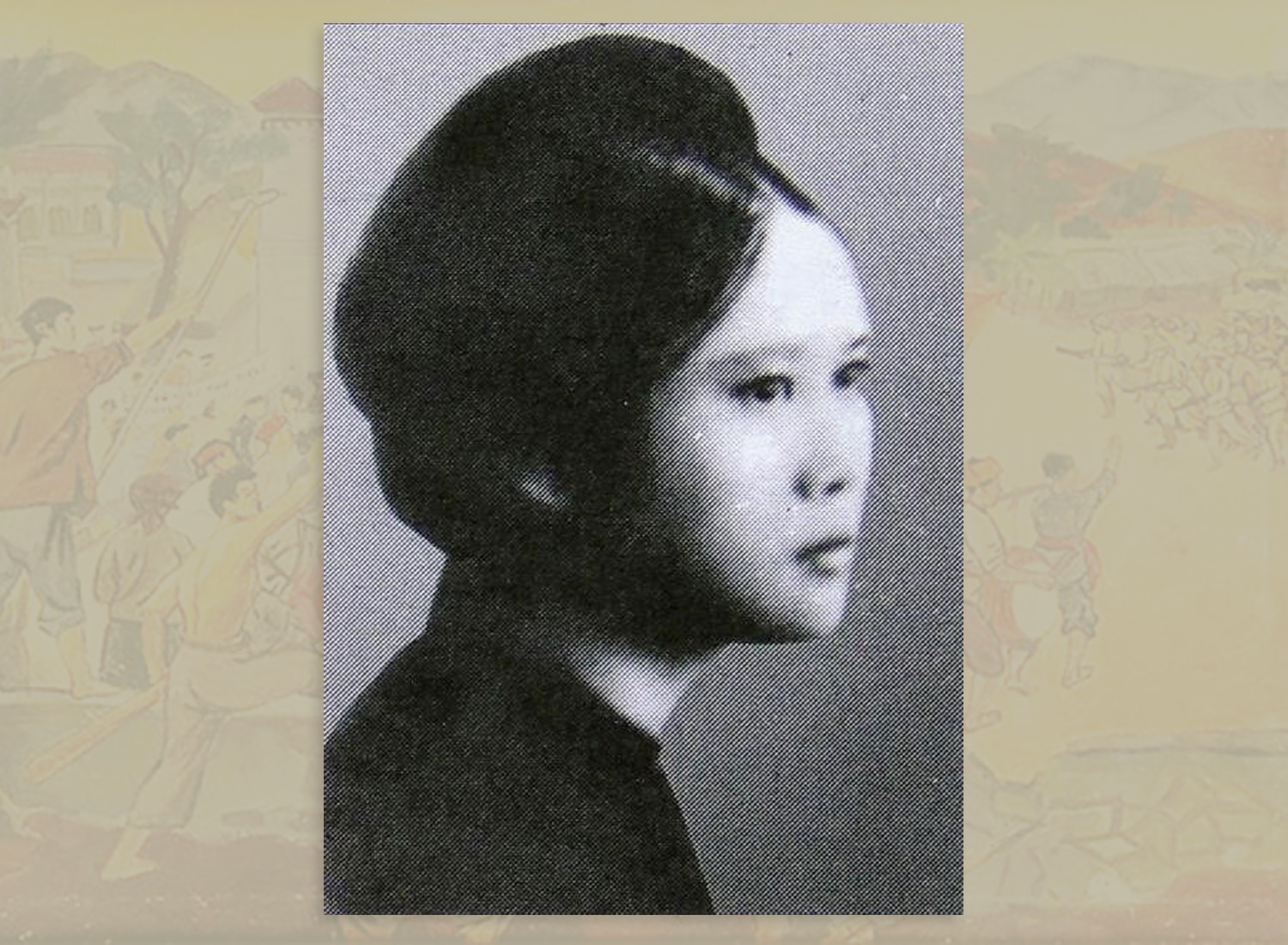
Nguyen Thi Quang Thai had an older sister, Nguyen Thi Minh Khai, who was 5 years older. In 1927,Nguyen Thi Minh KhaiHaving been enlightened by revolutionary ideals by teacher Ha Huy Tap, she was admitted to the Hung Nam Association and elected to the Executive Committee of the Hung Nam Association's Grand Organization, in charge of women's affairs. After finishing primary school, Minh Khai stayed at home to help her mother sell fabric at Vinh market and participated in patriotic activities in Vinh city. Nguyen Thi Quang Thai was soon guided onto the revolutionary path by Nguyen Thi Minh Khai.
In 1929, after graduating from primary school in Vinh, Quang Thai was sent by her family to study at Dong Khanh Girls' School in Hue. There, she enthusiastically participated in the student struggle movement under the leadership of the Tan Viet Party, tasked with developing the "red girls' group."Vo Nguyen GiapHe was working at "Quan Hai Publishing House" (a publishing house sponsored by the Tan Viet General Headquarters), editing for the newspaper "Tieng Dan" (edited by Mr. Huynh Thuc Khang), and was the one who directly assigned tasks to Quang Thai. The two frequently met to discuss organizational matters.
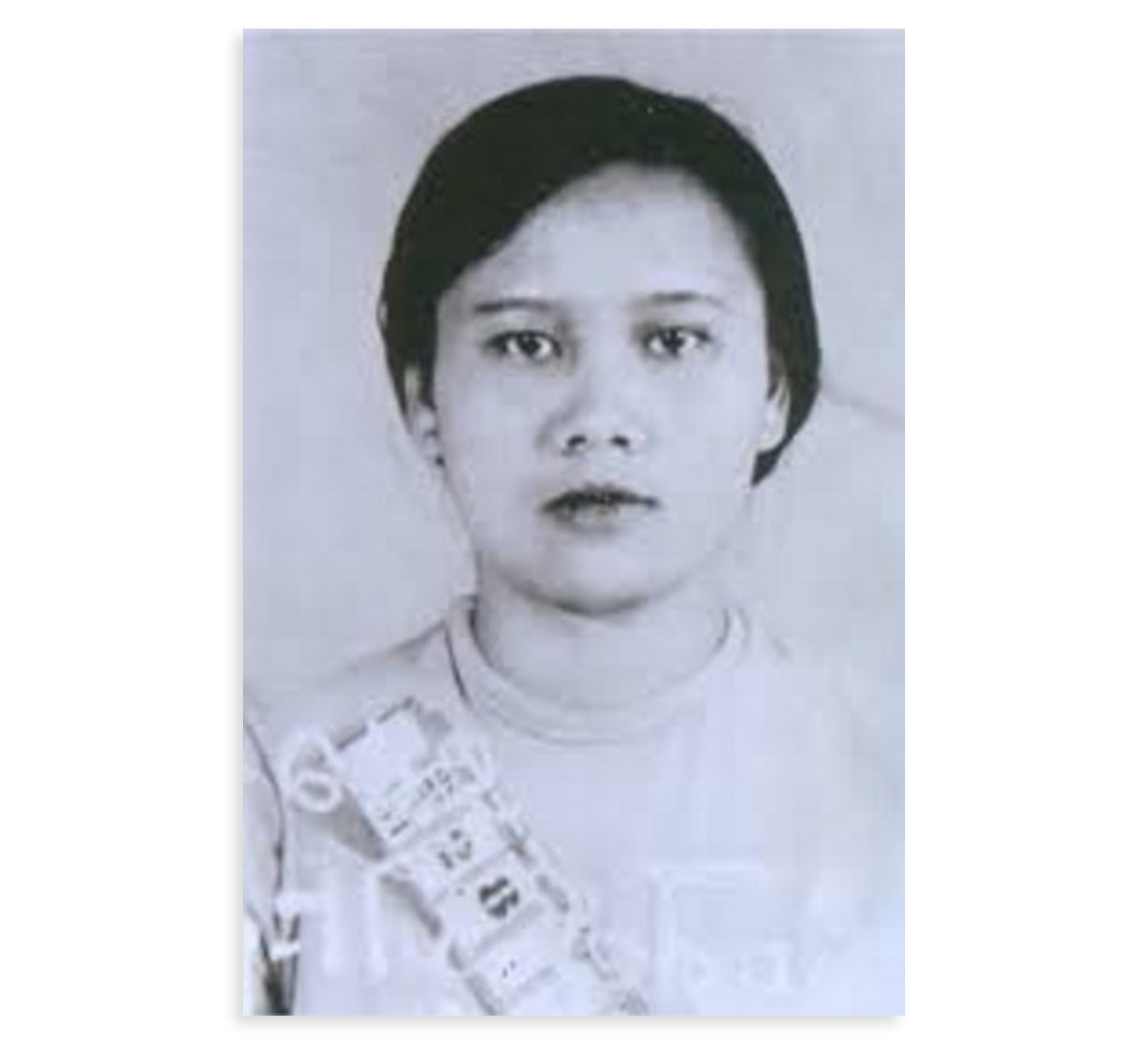
In 1931, upon discovering Nguyen Thi Quang Thai's patriotic activities, the French colonial authorities arrested her. Imprisoned in Thua Phu prison, at only 16 years old, she demonstrated an indomitable spirit through her words in prison: "Personne ne vous desnonce, ne desnoncez personne" (No one will denounce you, so don't denounce anyone) and her spirited poem, which spread throughout Thua Phu prison.
...Determined to sacrifice themselves, regardless of death.
Strive with all your might, even if it means losing your head.
When will the proletarian flag be raised?
My soul smiles in the nine springs.
Around the same time, Comrade Vo Nguyen Giap was also arrested and imprisoned in Thua Phu prison, sentenced to two years for writing articles promoting Marxism in the newspaper "Tieng Dan" (Voice of the People). While passing by the women's prison, Vo Nguyen Giap recognized Quang Thai, who was also imprisoned there.
In late 1931, Quang Thai, along with many other Tan Viet cadres such as Vo Nguyen Giap, Vo Thuan Nho, and Dang Thai Mai, were released early due to the French Red Cross's campaign demanding the release of political prisoners. She was expelled from Hue and placed under house arrest. Upon returning to Vinh, she helped her mother sell goods at the market and participated in revolutionary activities.
After his release from prison, Vo Nguyen Giap and Quang Thai met frequently. Their love was nurtured by their shared ideals and the hardships they had faced together.
On September 28, 1935, the couple's wedding was held in Vinh. After the wedding, they moved to Hanoi to live and continue their revolutionary activities. Nguyen Thi Quang Thai passed the entrance exam to Hanoi Medical University with excellent results, but she was expelled for participating in revolutionary activities among students. When the National Language Propagation Association was established, she directly participated in building the Association, propagating, mobilizing, and organizing classes.
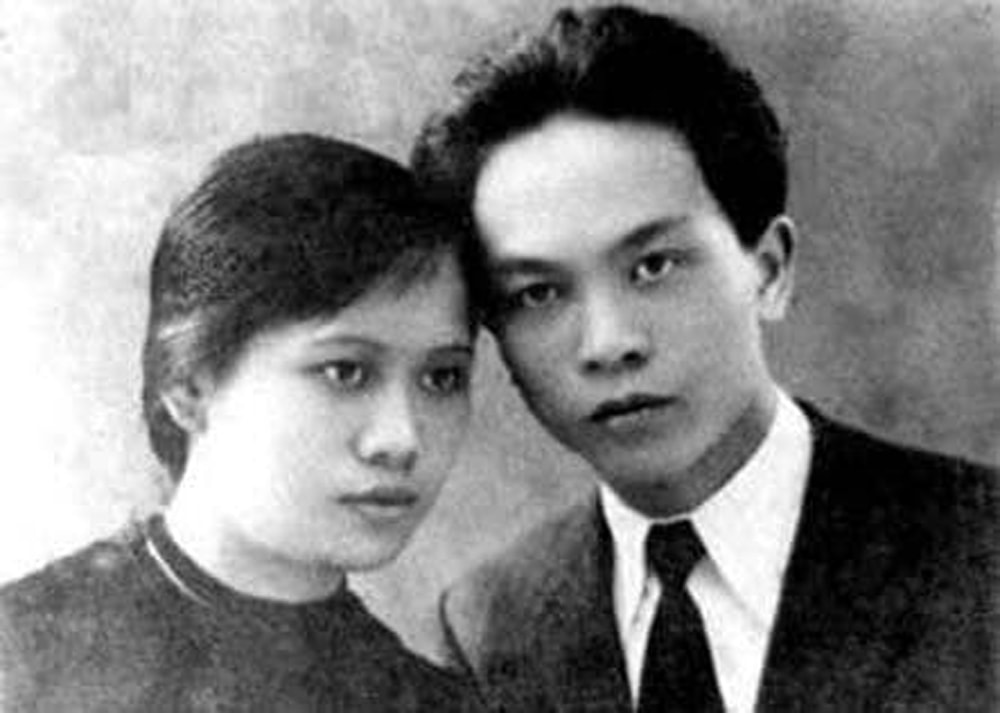
With the outbreak of World War II in early 1940, the French colonialists intensified their terror and repression of the revolutionary movement in their colonies, especially in Vietnam. The activities of our Party had to retreat into secrecy. At the Party's request, Comrade Vo Nguyen Giap was sent to China to work with Comrade Pham Van Dong. At this time, their eldest daughter, Vo Hong Anh, was too young for Quang Thai to accompany them on their secret mission as planned. She encouraged her husband: "This is a great opportunity. If the higher authorities want you to leave, you should be determined. My daughter and I can manage on our own. When she's a little older, I'll send her to her grandparents to raise her, and I'll go later." This encouragement gave Comrade Vo Nguyen Giap the strength to leave. Later, he confided to his daughter Hong Anh: "If you and your mother hadn't been so resolute and instilled in me such faith and strength, I probably wouldn't have been able to leave you both."
Due to the need to maintain secrecy, the couple arranged to meet at 5 p.m. (early May 1940) on Co Ngu Street (now Thanh Nien Street in Hanoi). During their brief farewell, Quang Thai, cradling their daughter Hong Anh, who was less than a year old, urged her husband to take good care of his health, be careful in his clandestine activities, and find a way to let their family know. Comrade Vo Nguyen Giap never imagined that this would be their last farewell.
After her husband left, she sent her children to live with her mother-in-law in Quang Binh so she could focus on revolutionary activities. She was a liaison officer for the Central Committee of the Party. In 1941, the French colonialists held a military court trial of Nguyen Thi Minh Khai in Saigon. Quang Thai went to Saigon to hire a lawyer to defend her and tried every way to visit Minh Khai in prison.
Nguyen Thi Minh Khai was sentenced to death. Before her death, she wrote a letter to encourage her parents and advise her siblings: "Strive to study hard so that you can become worthy members of society."
Upon returning to Vinh, Quang Thai stayed at her mother's house to continue her revolutionary activities. The French colonialists constantly monitored her and those entering and leaving the house. On June 1, 1942, they raided the house, arresting a revolutionary cadre and also capturing her. The Hanoi High Court sentenced her to 16 years in prison and detained her at Hoa Lo Prison. There, despite being subjected to brutal torture in an attempt to uncover her contact with Comrade Hoang Van Thu (a Standing Committee member of the Central Committee of the Indochinese Communist Party), she remained unyielding. She cared for, encouraged, and organized education, teaching French to her fellow women and comrades, resolutely fighting to the end against the harsh prison regime and the oppression of prisoners.
In late 1943, a typhoid epidemic broke out in Hoa Lo Prison. Armed with the knowledge she had acquired during her short time at medical school, she wholeheartedly cared for the patients, undeterred by the danger. Knowing she had contracted the disease and was unlikely to survive, she asked her mother-in-law to bring Hong Anh to see her one last time. The two of them traveled by train, but had to turn back halfway due to bombing of the railway.
Thanks to the fierce struggle of all the political prisoners in Hoa Lo Prison, the prison guards finally transferred her to the "Lam Phuc Hospital" (Robin Hospital, now Bach Mai Hospital) for treatment. However, due to her extremely weak condition, she passed away on January 29, 1944, at the young age of 29, just as the revolution was about to succeed.
Although the funeral of Nguyen Thi Quang Thai was simple, held in secrecy and under difficult circumstances, it was very thoughtful. She rests peacefully in a small cemetery in Tuong Mai village, Hanoi. Some time after the liberation of South Vietnam, her remains were moved to Mai Dich Cemetery by the Central Party Office.
After going to China to meet with leader Nguyen Ai Quoc, Comrade Vo Nguyen Giap received the task of building a revolutionary base in Cao Bang - Bac Giang - Lang Son and developing the Vietnam People's Army. Due to the need for secrecy, it wasn't until mid-April 1945, during the Northern Revolutionary Military Conference in Hiep Hoa district (Bac Giang province), that Comrade Vo Nguyen Giap learned of Quang Thai's death. He was stunned and couldn't believe it was true.
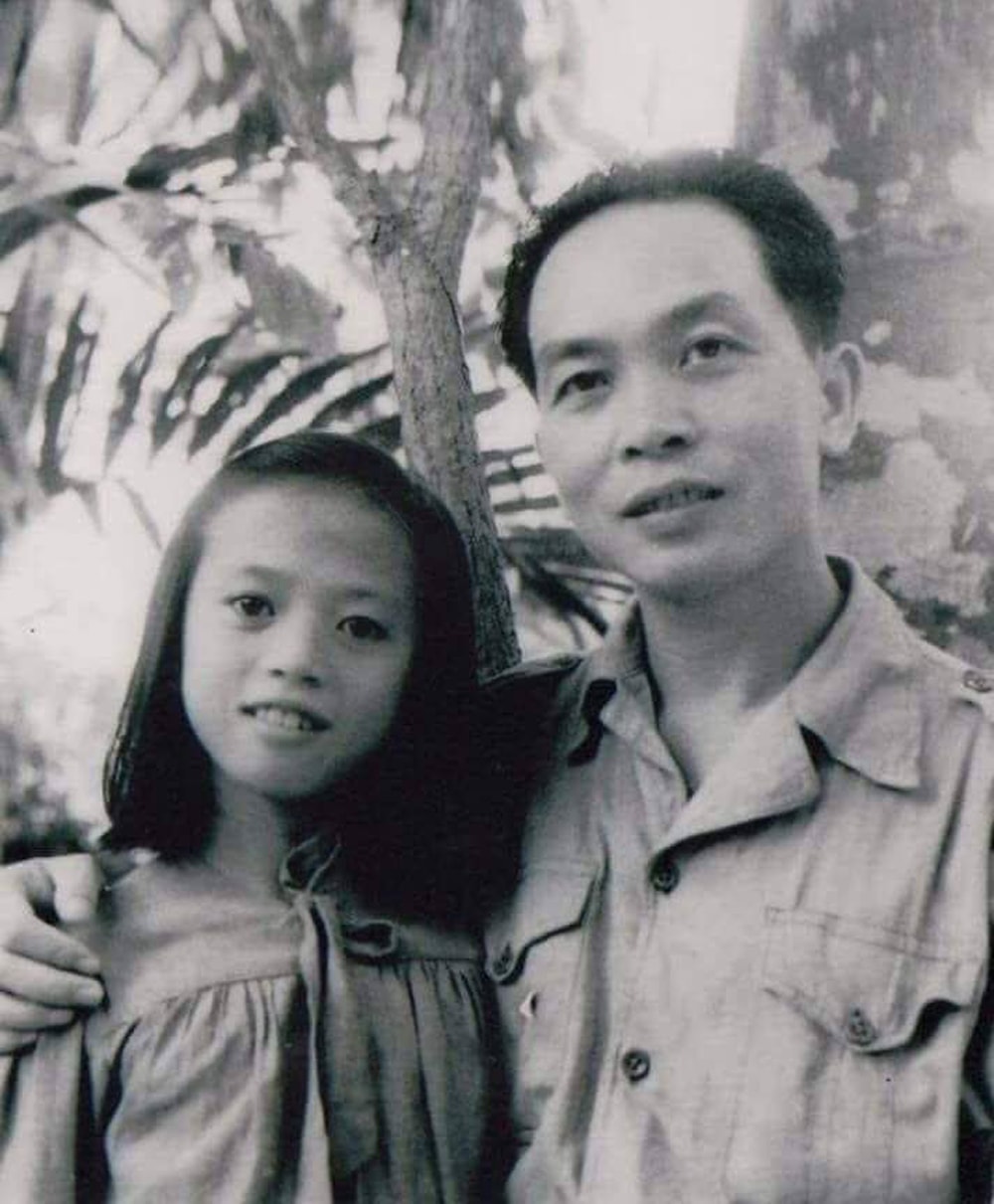
Vo Hong Anh's daughter was cared for by her paternal grandparents in Quang Binh. She only imagined Quang Thai's mother through the stories told by her grandparents and father. Not disappointing her parents, she graduated from the Physics Department of Lomonosov Moscow State University (in 1965), successfully defended her doctoral thesis in Mathematics and Physics (in 1982), and became the first woman in Vietnamese physics to receive the Kovaleskaia Prize (in 1988).
Nguyen Thi Quang Thai is a shining example for many generations to come, embodying the character and morality of a dedicated revolutionary fighter who strived and sacrificed for the cause of national liberation.