

Many wild Puxailaileng ginseng plants have been found in Nghe An.
After a long period of fieldwork in the deep forests and high mountains, a team of officials from the Nghe An Department of Science and Technology found Puxailaileng ginseng in its natural habitat and brought it back for experimental cultivation in Tay Son commune (Ky Son district).
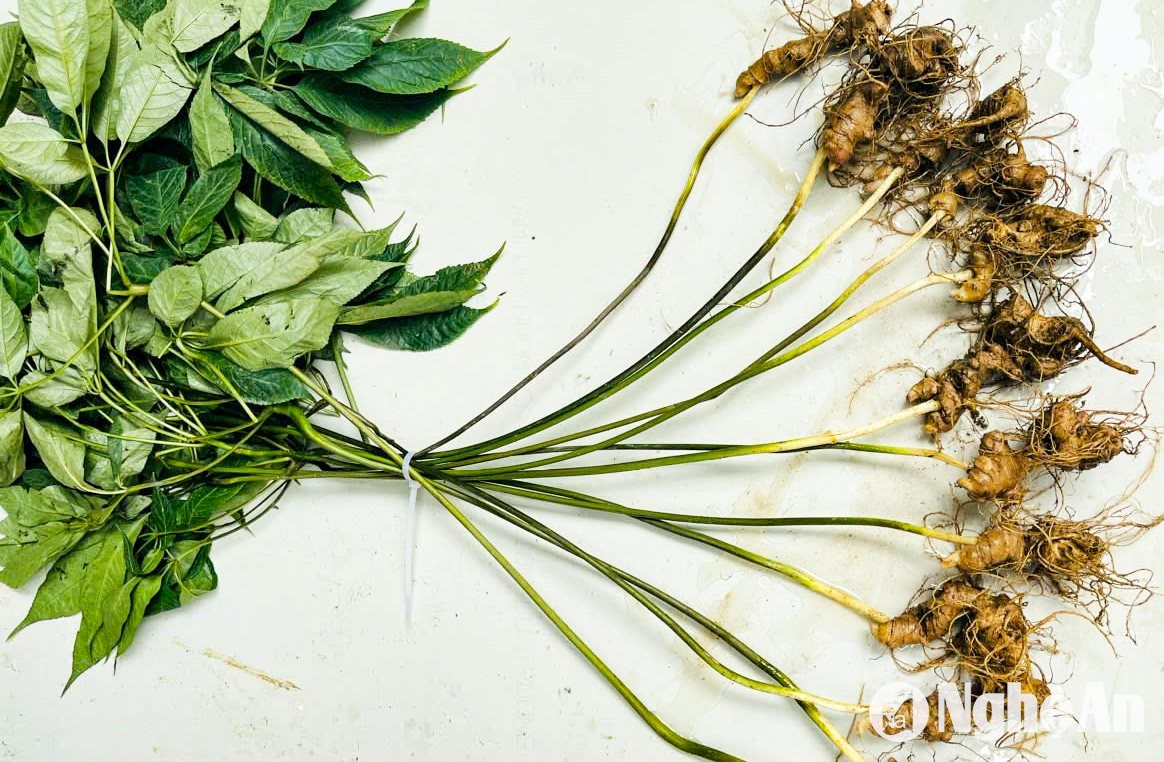
Puxailaileng ginseng is a rare and precious type of ginseng belonging to the Araliaceae family, found in the high mountains of Puxailaileng in the Truong Son mountain range, where forest cover exceeds 80%. Currently, Puxailaileng ginseng in the wild is becoming increasingly scarce and is facing the risk of extinction.
Therefore, the discovery of ginseng species belonging to the genus Panax in the high mountains of Puxailaileng in Nghe An province is of great scientific and practical significance. Immediately after finding this precious ginseng plant, samples were analyzed for their agrobiological characteristics, medicinal value, propagation methods, and cultivation techniques.
Analysis shows that the moisture content and free sugar content of the two Puxailaileng ginseng samples are higher than those of Ngoc Linh ginseng; Puxailaileng ginseng has relatively high levels of the saponin compounds Ginsenosid Rg1, Ginsenosid Rb1, and Majonosid R2. Currently, Puxailaileng ginseng is very rare in nature.
Previously, some of these plants were transferred to TH Group for cultivation in Ky Son. Therefore, the Department of Science and Technology needs to focus on researching the conservation, exploitation, and development of this rare genetic resource to develop this medicinal plant into a valuable medicinal herb of the mountainous region of Nghe An.
Mr. Nguyen Quy Linh, Director of the Nghe An Department of Science and Technology, said: "Puxailaileng ginseng grows on Puxailaileng mountain at an altitude of over 2,700m above sea level, and scientists have assessed its quality to be no less than Ngoc Linh ginseng in Quang Nam and Kon Tum."
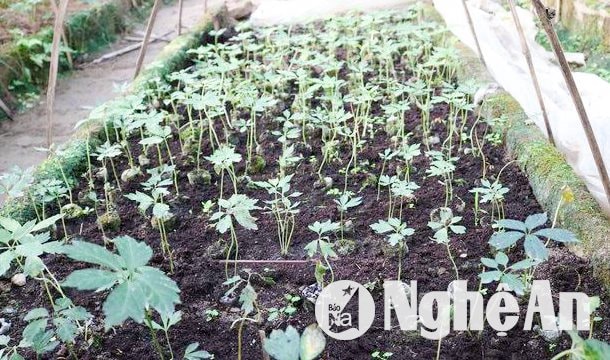
Puxailaileng ginseng can be propagated and thrive well if grown in areas with a cool temperate climate and at an altitude of 1,000m or more above sea level in Ky Son district. Currently, we are conducting trial plantings in Tay Son commune. In the near future, we will proceed with propagation through tissue culture.
Simultaneously, a smart farm system is being built in Thai Hoa town, and Puxailaileng ginseng is being grown in greenhouses. The goal is to assess the survival rate, growth and development potential, and active ingredient content of Puxailaileng ginseng, contributing to the conservation of the genetic resources of this rare and valuable medicinal plant.
According to the "Vietnam Ginseng Development Program to 2030, with a vision to 2045," Puxailaileng ginseng from Nghe An province is subject to conservation, cultivation, and experimental development. Also under this program, Nghe An is designated as a locality for establishing in-situ conservation areas and ex-situ collection gardens for Vietnamese ginseng genetic resources; building a database system for the conservation and development of genetic resources of Vietnamese ginseng species; and is one of the localities designated for cultivation and development of ginseng raw material areas.
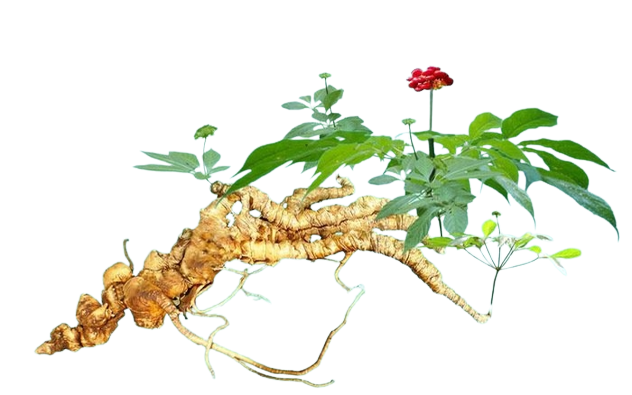
Morphological analysis of the ginseng plants shows that the collected ginseng samples are very similar to the Ngoc Linh ginseng (Panax vietnamensis). Puxailaileng ginseng has two stem forms: an upright, green or slightly purplish, small stem with a diameter of 4-8mm, usually dying annually; and a rhizome with a diameter of 1-2cm, growing horizontally on the soil surface or underground at a depth of 1-5cm, bearing many branch roots and tubers. The aerial stems bear leaves, and each leaf-bearing stem corresponds to a node (joint); the tuber is about 5-30mm long. The stem nodes grow in the same direction (unlike wild Panax which usually grows alternately). The plant sprouts new shoots and leaves from around November to March of the following year. Young plants have only a single leaf that does not fall off from the 1st to 3rd year, and only from the 4th year onwards do they develop 2-3 additional leaves. Trees 5 years and older produce simple umbel-shaped flowers growing beneath the upright leaves, with flower stalks 10-20cm long, possibly accompanied by 1-4 secondary umbels or a single flower below the main umbel. Each umbel contains 60-100 flowers. The fruits grow clustered in the center of the umbel, about 0.8-1cm long and 0.5-0.6cm wide.