

The 'double' benefits of livelihood support programs.
Supporting cattle breeding is one of the components of projects under the National Target Program for socio-economic development in ethnic minority and mountainous areas, and it is proving effective. Observations in Quy Hop and Que Phong districts show that this is a driving force helping poor and near-poor households rise to a better standard of living, contributing to increased effectiveness in poverty reduction and rural development in the localities.
Poverty reduction through livelihood support.
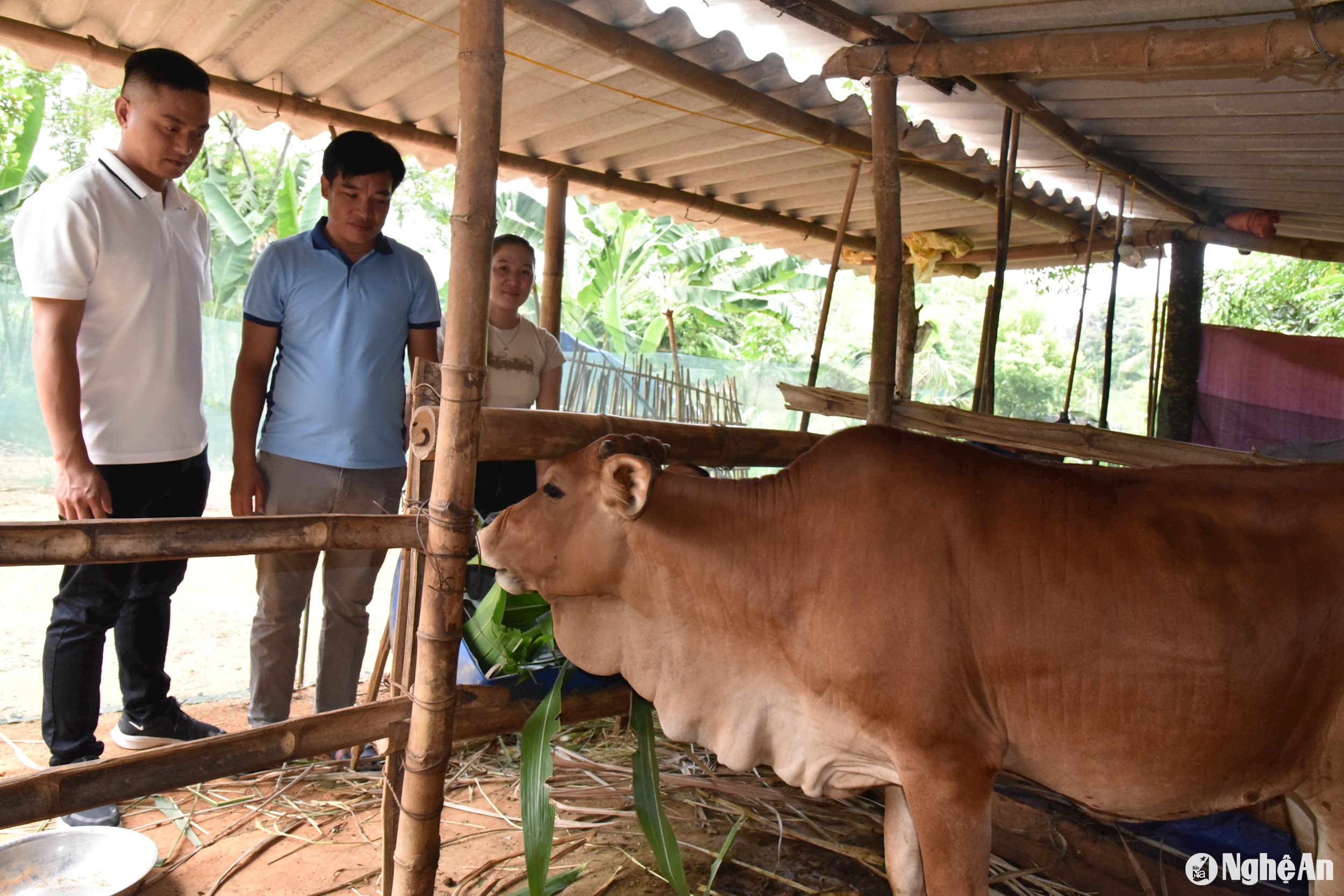
Visiting the home of Mr. Bui Van Dien in Con To hamlet, located right next to the main road of Ha Son commune (Quy Hop district), one of the households that received support in the form of breeding cows from the National Target Program for socio-economic development in ethnic minority and mountainous areas in 2023, it's easy to see the economic improvement of this family. Besides the fairly spacious house, the livestock area of Mr. Dien and his wife is also very clean and sturdy. The barn is used for fattening cows, so Mr. Dien invested in building feed troughs, a grass grinder, and even a plot of land for growing elephant grass near his house.
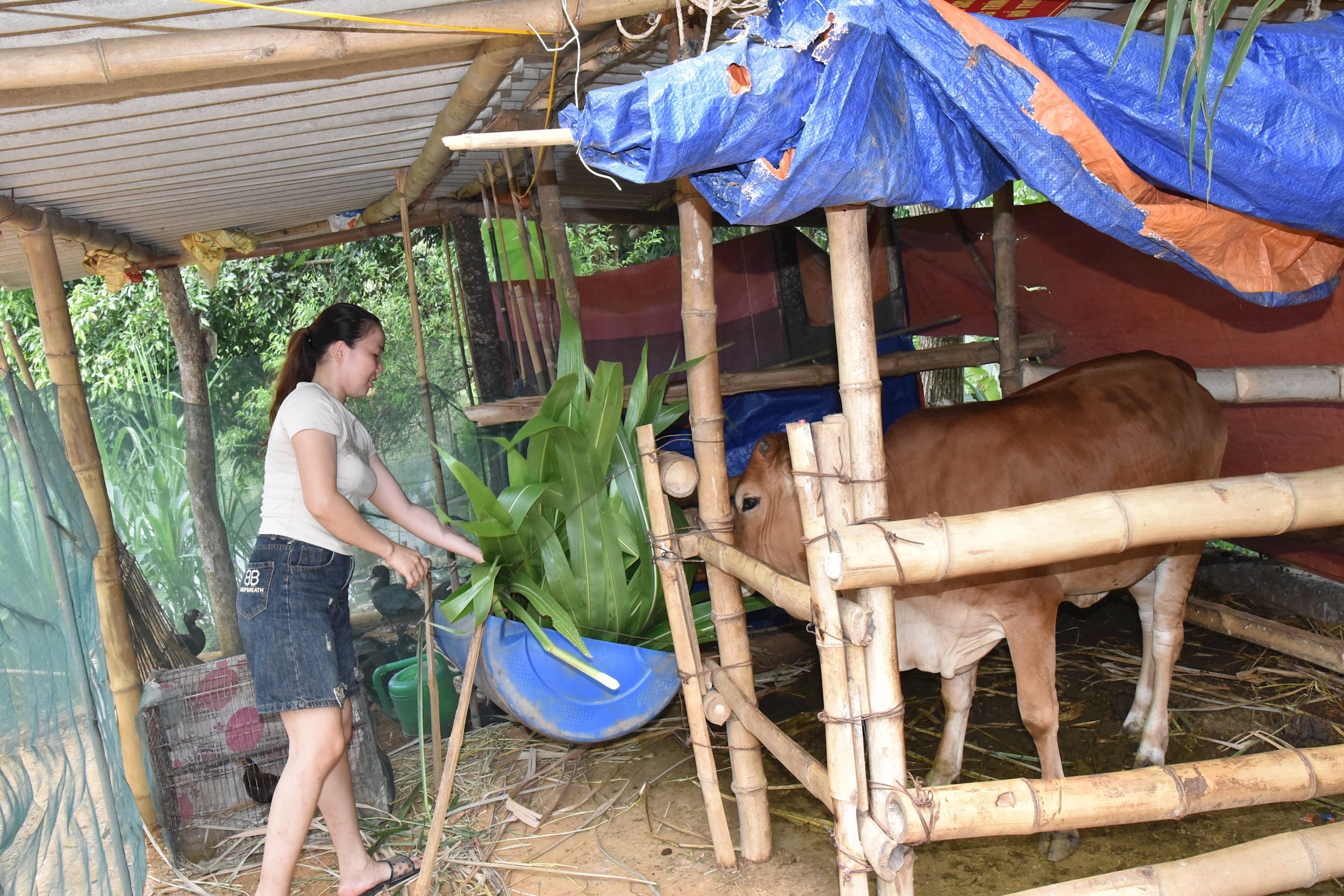
Mr. Bui Van Dien said: "Since receiving support in the form of breeding cows and planting elephant grass, our family has earned tens of millions of dong annually from the cows' reproduction. My wife and I are very excited and enthusiastic about working and producing."
Speaking further about the positive encouragement from the cattle breeding support program in Ha Son commune for poor and near-poor households, the head of Con To hamlet, Mr. Cao Van Trong, said that after two years of implementing the cattle breeding support program in Ha Son commune, 10 households in Con To hamlet alone have received cattle. Of these, 3 households have had their cattle reproduce, adding a new source of livelihood and creating motivation for people to continue raising livestock and developing their family economy.
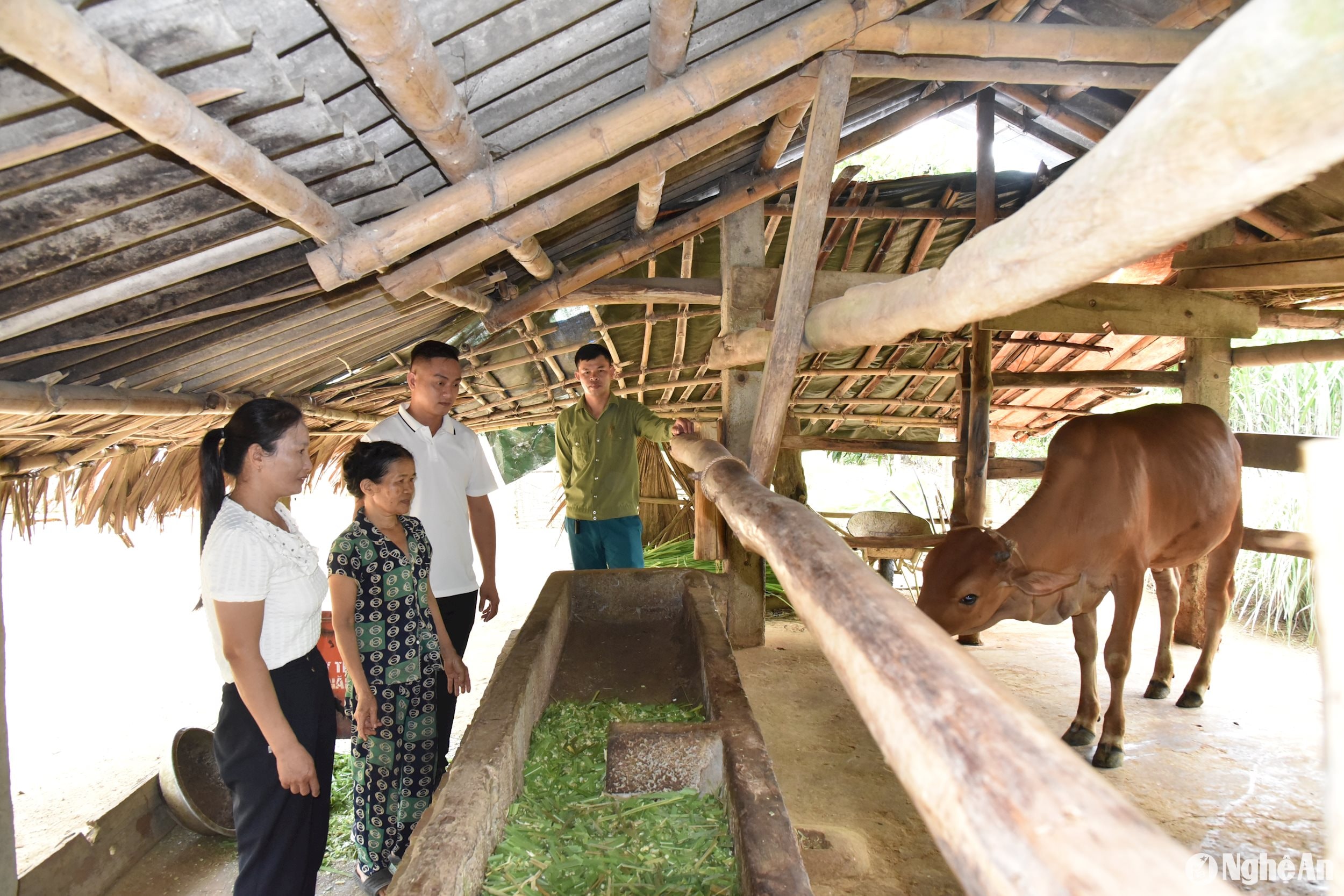
Similarly, in Xuan Son hamlet of Ha Son commune, Mr. Truong Xuan Tam, now over 70 years old, said that since he and his wife received a breeding cow as support at the beginning of 2024, it has given them and their daughter more motivation in life. All family members diligently care for their source of livelihood. The cow shed is located only a few hundred meters from their main house, yet there is almost no strange smell because it is cleaned regularly.
Mr. Truong Xuan Tam and his wife are both over 70 years old and currently live with their daughter, who is over 40. Mr. Tam's daughter came to live with her parents after her husband passed away; they have no children of her own.
“Before receiving the breeding cows, Mr. Tam and his wife and daughter's income depended solely on selling vegetables and fruits grown in their garden and raising a few chickens and two pigs. Since receiving the breeding cows, the family has planted elephant grass and utilized the vegetables and fruits they grow to fatten the livestock, so the cows are developing healthily and are about to give birth, providing another source of income for the family,” said Ms. Hoang Thi Lien, a veterinary officer in Ha Son commune.
Mr. Truong Van An, Chairman of the People's Committee of Ha Son commune, said that currently, 22.4% of households in Ha Son are still living in poverty. Although the poverty rate hasn't decreased significantly each year, thanks to support from national target programs, such as sub-projects supporting seedlings and livestock, dozens of households in the commune have gained new sources of livelihood and are gradually escaping poverty.
In Quy Hop district, from 2019 to 2024, the District People's Committee implemented a program to support production development and diversify livelihoods in 13 communes in Zone III and 7 communes in Zone I, encompassing 22 particularly disadvantaged villages and hamlets, providing over 7.5 billion VND to poor and near-poor households. With this funding, the district provided 464 local and crossbred female calves, and organized livestock training for over 500 households. As a result, the average added value per person per year in the entire district reached 49.19 million VND in 2023. The number of poor households decreased to 11.68%.
Maximizing the effectiveness of public investment capital.
Not only in Quy Hop, but also in Que Phong district, many positive changes have been made in socio-economic development thanks to support from national target programs. Implementing sub-projects to support production development in agriculture and diversify livelihoods, and develop poverty reduction models under the national target program for the period 2021-2025, in 2023 and early 2024, Que Phong district provided 806 cows, 420 pigs, 4,800 Quy ducks, and thousands of aquatic animal breeds and other crops to nearly 1,000 poor and near-poor households with a total value of approximately 11 billion VND.
Resolution No. 88/2019/QH14 dated November 18, 2019, of the National Assembly approved the overall plan for socio-economic development in ethnic minority and mountainous areas for the period 2021-2030, with a total implementation capital of at least VND 335,000 billion nationwide. The goal is to strive for an increase in the average income of ethnic minorities by at least twofold compared to 2020 by 2025; and to reduce the poverty rate among ethnic minorities by over 3% annually. Phase I (2021-2025) is further specified in Decision 1719/QĐ-TTg.

Nghe An province is implementing the first phase of the National Target Programs under Decision 1719 with 10 projects, 14 sub-projects, and 36 investment support contents. Eight departments and 12 districts and towns are assigned to lead, manage, and organize the implementation. The goal is to reduce the poverty rate by approximately 1-1.5% annually across the province and 2-3% in mountainous areas; the poverty rate in poor districts is targeted to decrease by 4-5% per year. Besides striving for rapid and sustainable poverty reduction, Nghe An aims for 80% of particularly disadvantaged villages in the western districts to achieve new rural standards and a 2-3% reduction in the poverty rate during the 2021-2025 period.
Discussing the results of implementing medium-term public investment programs and projects for national target programs in the province, Mr. Vi My Son - Deputy Head of the Provincial Ethnic Affairs Committee - said that the total planned development investment capital from the central budget for the 2021-2025 period allocated to local units for this program is over 2,649 billion VND. Of this amount, in 2022 and 2023, the Provincial People's Council allocated over 1,124 billion VND from the central budget. The Provincial People's Committee allocated over 1,124 billion VND to units and localities, reaching 99.98% of the plan assigned by the Provincial People's Council.
Nghe An is one of the first six provinces nationwide to issue a resolution of the Provincial People's Council on the plan for allocating public investment capital and the mechanism for mobilizing and integrating capital sources to implement the National Target Program for socio-economic development in ethnic minority and mountainous areas for the period 2021-2025. Thanks to this, localities and units have effectively utilized public investment capital, contributing to socio-economic development and the construction of new rural areas in mountainous districts, remote areas, and areas with special difficulties.