

What makes Russia's Oreshnik hypersonic missile so special?
President Putin asserted that the Oreshnik missile is "unsinkable".
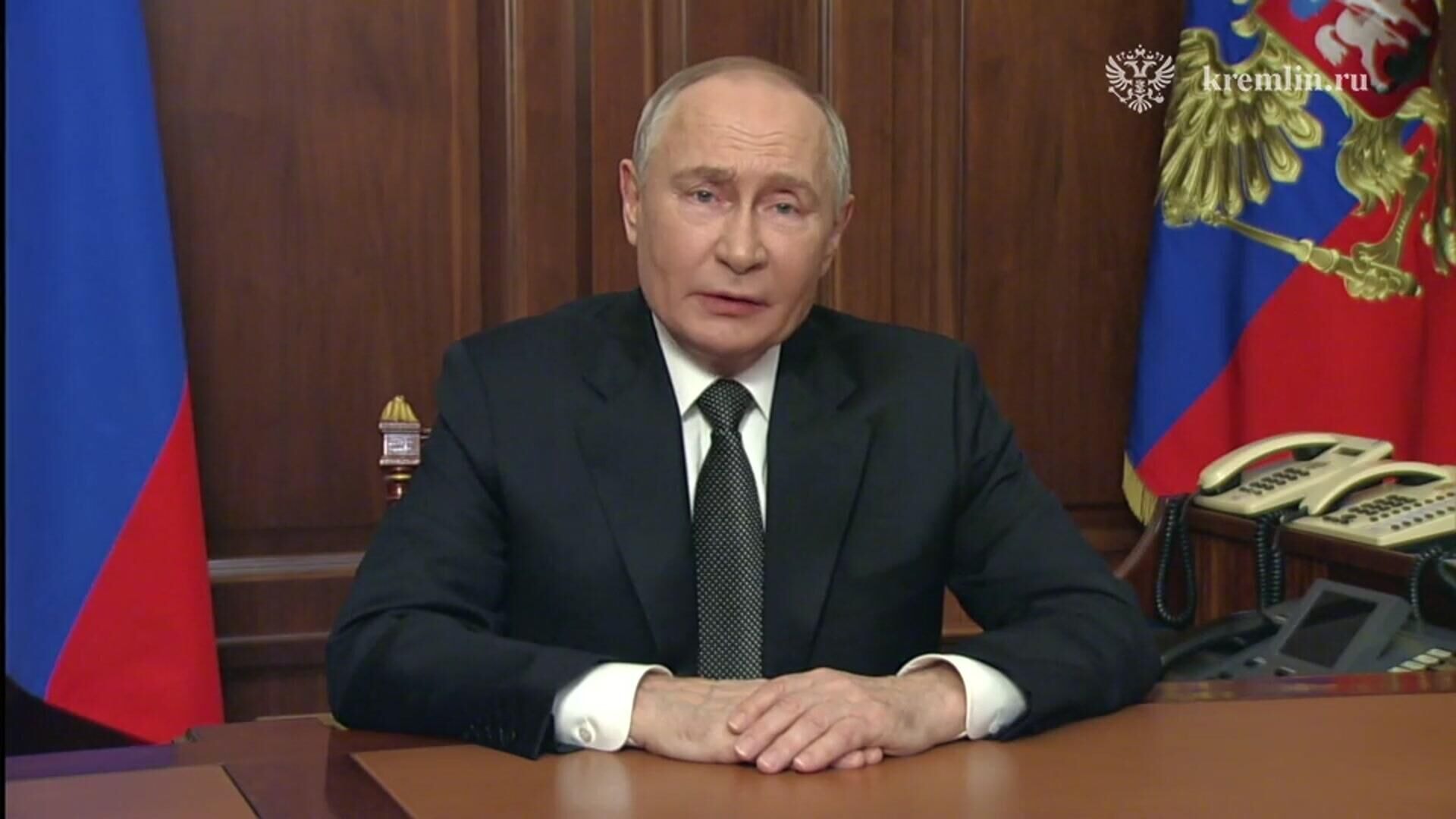
When publicly mentioning the Oreshnik for the first time, Russian President Vladimir Putin stated that it is a medium-range ballistic missile with a supersonic warhead. Its speed reaches 2-3 km/second, ensuring it can overcome any air defense and missile defense system.
Based on video of the Russian nighttime attack on a Ukrainian ammunition depot released online, the Oreshnik system appears to be equipped with multiple individually targetable warheads.
The Oreshnik has an average operational range of 1,000 to 5,500 km. Examples include the Soviet RSD-10 Pioneer mobile ground-based missile systems, and the promising RS-26 Rubezh – which will not be included in the State weapons program until 2027, due to the development of the Avangard hypersonic missile.
The highly maneuverable warhead of the RS-26 Rubezh flies at a speed of 6.7 km/s and constantly changes its trajectory during flight, making it impossible for air defense/missile defense systems like the US Patriot to intercept it, as this system is only capable of hitting targets at speeds of 3.5 km/s.
According to RIA Novosti, it can be assumed that the six warheads are the standard combat payload of the Oreshnik. The attack was carried out using inert warheads. Upon hitting the target, the Oreshnik's kinetic energy is sufficient to cause serious damage as the warheads enter the atmosphere at supersonic speeds. However, it is possible that missiles with penetrating warheads were used to destroy the enemy's underground communication systems.
The existence of Oreshnik was personally announced by President Putin. In 2018, Putin announced the Sarmat heavy intercontinental ballistic missile, the Burevestnik nuclear-powered cruise missile, the Poseidon long-range underwater drone, and the Avangard hypersonic complex. The Russian leader also emphasized that such weapons are uninterceptable.
There is no "formula" against the Oreshnik. The missile strikes targets at Mach 10 (equivalent to 2.5-3 km/second, as the Russian President mentioned). Modern air defense systems and US missile defense systems deployed in Europe "cannot intercept such missiles."
President Putin stated that Russia's renewed attack on one of the "largest and most well-known industrial complexes since the Soviet era," where Ukraine even today produces missile technology and other weapons, was a test of Moscow's new weapon.
The target the Russian leader referred to could be one of the pillars of Ukraine's military-industrial complex – the Yuzhmash plant in Dnepropetrovsk. Here, the Ukrainian authorities are attempting to implement their own ballistic missile program.
President Putin emphasized that the Oreshnik system is being tested in combat conditions in response to aggressive actions by NATO countries against Russia.
He said: "We will identify the targets to be destroyed during further testing of our newest missile systems based on the threats to the security of the Russian Federation."
President Putin added that Russia would proactively invite Ukrainian civilians and citizens of other friendly countries to leave areas that could be destroyed when Russia launches an offensive using systems like the Oreshnik. Putin stressed that for humanitarian reasons, this would be done openly and without fear of opposition from Kyiv.
Responding to Russia's move, Ukrainian President Volodymyr Zelensky criticized Ukraine's "respected partners" for their failure to react to Russia's retaliatory Oreshnik hypersonic missile attack.
"The world must react to this. Now there is no strong reaction from the world… Mr. Putin is testing you, dear partners… If there is no strong reaction to Russia’s actions, then they will think it’s easy to retaliate,” President Zelensky said on his Telegram channel.
Meanwhile, under a post by Russian Security Council Deputy Chairman Dmitry Medvedev on social media platform X, many citizens of Western countries left comments and apologized to Russia for the actions of their leaders following Russia's Oreshnik missile attack.
Alex Barnicoat wrote: “On behalf of the United Kingdom, we do not want war with you. We apologize on behalf of our government for not representing the vast majority of the British public.”
American users also criticized the current US government, complaining that it is doing everything it can to provoke Russia into using nuclear weapons.