

Germany closes the office of Russia's Channel One channel.
The German government has ordered the closure of the Russian Channel One office in the country. The television station said its staff have been asked to leave Berlin.
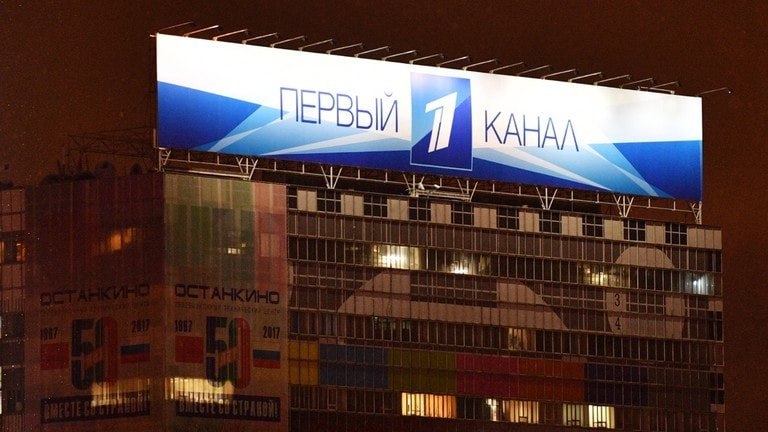
Specifically, according to RT, Channel One announced in a statement on November 27th that reporter Ivan Blagoy and cameraman Dmitry Volkov were asked to leave Berlin by early December. According to the television station, German authorities explained this decision by citing national security policy.
Channel One called the expulsion of its staff "a punishment for truth and professionalism." The station said Blagoy and Volkov "made themselves big enemies" through reporting on factual events in Ukraine, investigating the sabotage of the Nord Stream pipeline, and uncovering suspicious dealings of the German elite.
The station reported that German authorities announced the closure of the Berlin office on November 26.
According to Blagoy, this decision came after Channel One reported on the arrest of German citizen Nikolay Gaiduk by Russian security services. Gaiduk was arrested on suspicion of having been recruited by Ukrainian intelligence to smuggle improvised explosive devices into Russia's Kaliningrad region and sabotage gas facilities there.
Russian Foreign Ministry spokeswoman Maria Zakharova told TASS that Moscow would announce retaliatory measures for the closure of Channel One's office in Germany by the end of November 27.
The television station cited a document received from German authorities, which stated that “Channel One’s activities pose a direct and serious threat to public order and security in Germany and the EU, as they influence the formation of public opinion and decision-making in member states.”
The document also stated that, although Channel One's website has been blocked in Germany, the station's content remains "available on the Internet, distributed via Telegram channels, and continues to influence the Russian-speaking community in Germany."
“Russian media has promoted the decline of the West and the economic collapse of Europe. These messages and other far-right rhetoric have taken root among a large number of Russian speakers, undermining trust in German state structures, the EU, and influencing far-right groups in Germany,” the document further states, according to Channel One.
In late September, a couple in the German city of Karlsruhe were arrested on suspicion of broadcasting RT and other Russian television channels over the internet. They could face at least one year in prison if convicted of violating the Foreign Trade Act.
Most Russian media outlets were banned in the EU in March 2022 following the escalation of the conflict in Ukraine.