

Que Phong is strongly developing OCOP products.
Developing OCOP products for local specialties not only increases income for artisans but also contributes to promoting the image of the Que Phong border region to friends near and far.
Building products from existing potential.
Que Phong district is known as the "capital" of bamboo, which grows in vast forests in the communes of Thong Thu, Dong Van, Tien Phong, etc. Every year, the local ethnic people earn a considerable income from harvesting bamboo.
Taking advantage of the abundant supply of bamboo, some people in Que Phong district have created high-value woven products. Among them, the "5-compartment candy tray and fruit tray woven from bamboo" by Mr. Luong Van Mao, in Na Cong village, Muong Ngoc commune, is popular in the market and has participated in the OCOP (One Commune One Product) evaluation.
Mr. Luong Van Mao said that, noticing the increasing popularity of woven products among consumers and possessing the necessary skills, in 2022 he began producing items woven from rattan: lanterns, tissue boxes, rice steaming baskets, candy trays, fruit trays, etc. The products he made became more beautiful, and the number of items sold increased. The most impressive products were the 5-compartment candy tray and the fruit tray, which were not only popular in the district and province but also sought after by customers from other provinces through social media, websites, and trade fairs.

Each product made from bamboo is crafted from two main materials: bamboo fibers and mahogany wood, or other types of wood that are resistant to termites. The bamboo fibers are used for weaving, and the wood is used for the frame. All materials are dried and steamed to increase durability (bamboo must be at least two years old to be sufficiently mature and strong). Each finished product is then coated with PU paint to enhance its aesthetic appeal.
“The reason I chose the 5-compartment candy tray and the fruit platter to participate in the OCOP evaluation is because I noticed that most of these products on the market are made of plastic, ceramic, and glass… While the products woven from bamboo are environmentally friendly and reflect the cultural beauty of the western region of Nghe An province. Currently, bamboo is abundant locally, this approach creates jobs for many workers, and the market demand is good, so these products have further development potential,” Mr. Mao shared.
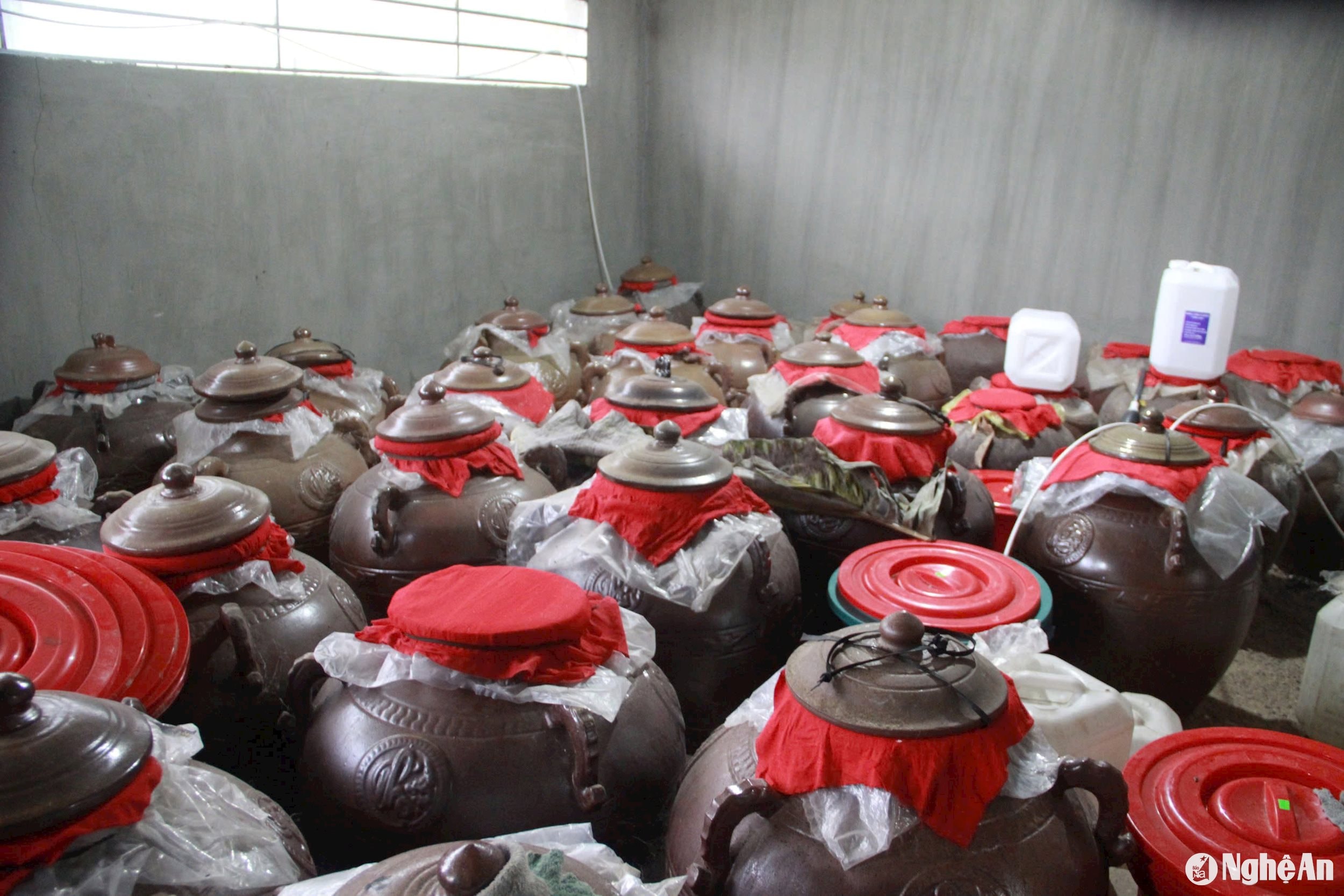
The ethnic minorities in Que Phong also utilize the potential of various leaves in the forest to make traditional medicine or process into yeast for making rice wine. The rice wine made with leaf yeast, distilled by the Thai people here, has a unique flavor. At the rice wine production facility of Ms. Lang Thi Giang in Tay Son Hamlet, Kim Son town, there are always dozens of earthenware jars containing finished rice wine.
Ms. Giang shared: "With the desire to create a safe wine product that meets customer needs, since the end of 2019, we have invested in building a factory to produce wine using a closed-loop, one-way process and building the Muong Quang herbal wine brand. At the same time, the wine is produced according to traditional recipes. The ingredients for brewing the wine are glutinous rice grown locally; the yeast is self-produced using various leaves gathered from the forest, dried, ground into powder, and mixed with glutinous rice flour. Muong Quang herbal wine became an OCOP product in 2021."
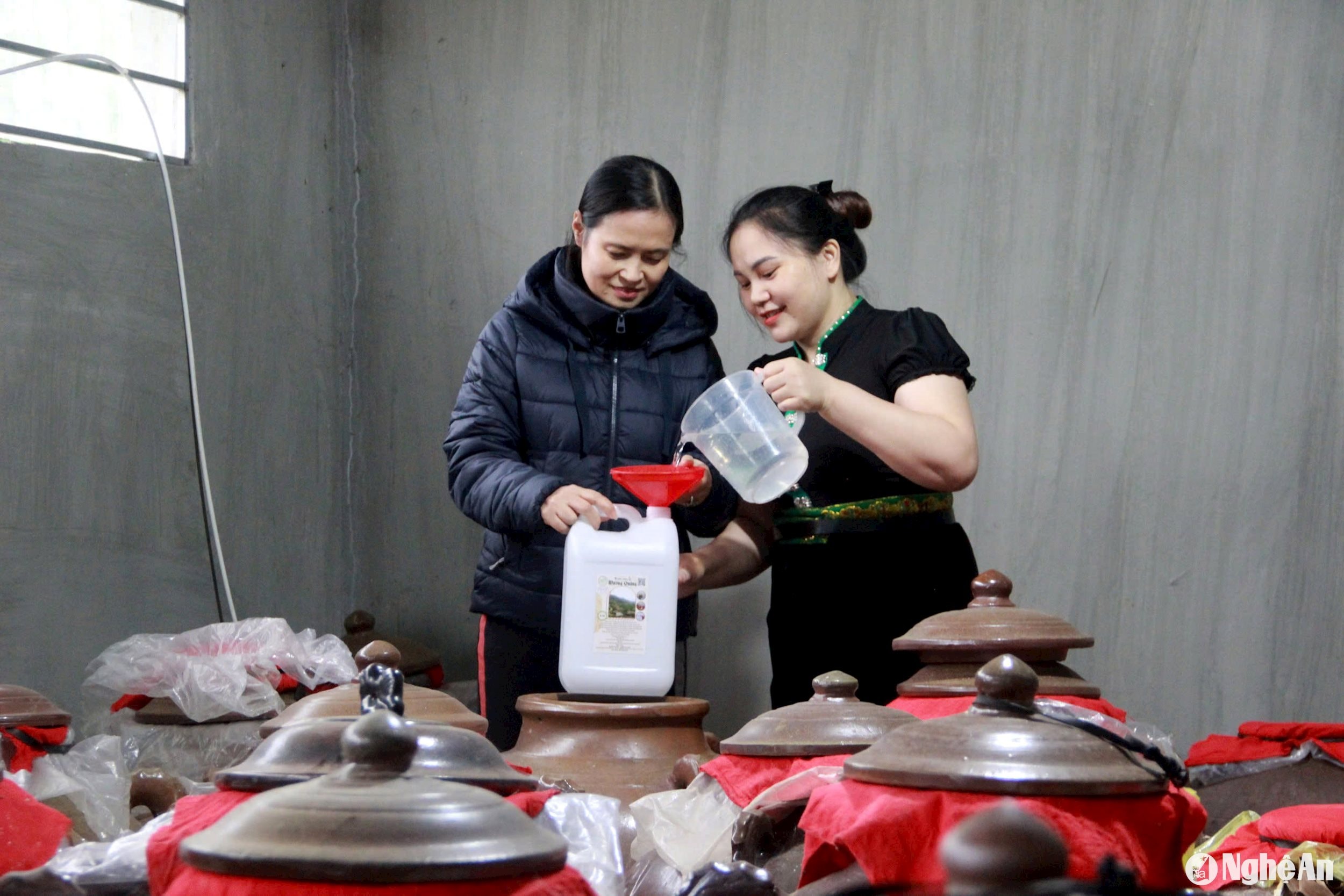
Besides using traditional brewing techniques, to optimize the process and improve product quality, Ms. Lang Thi Giang's herbal rice wine production facility has invested in modern equipment such as rice cookers and fermentation tanks.
Furthermore, another difference in the new technology used in the distillation process compared to traditional methods is the use of a detoxification machine. After distillation, the alcohol is passed through this machine to remove many harmful toxins such as aldehydes, methanol, and esters.
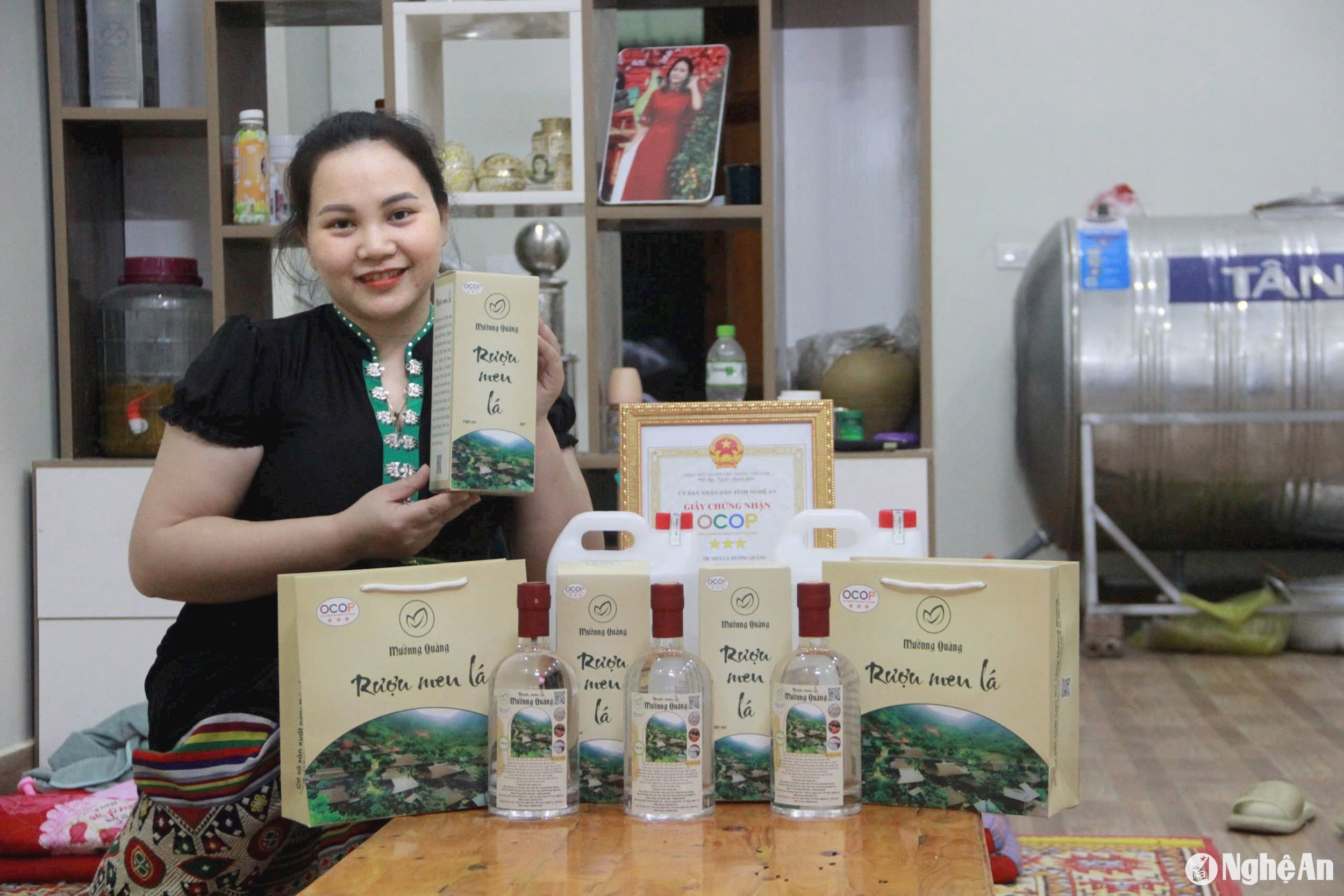
To build a brand in the market and create OCOP products, the facility also pays special attention to investing in packaging design and product appearance. Currently, the facility's herbal wine is bottled, fully labeled, traceable, and guaranteed to be food safe. On average, Ms. Lang Thi Giang's herbal wine production facility produces and sells around 10,000 liters of wine annually in many provinces and cities.
Continue to develop competitive products.
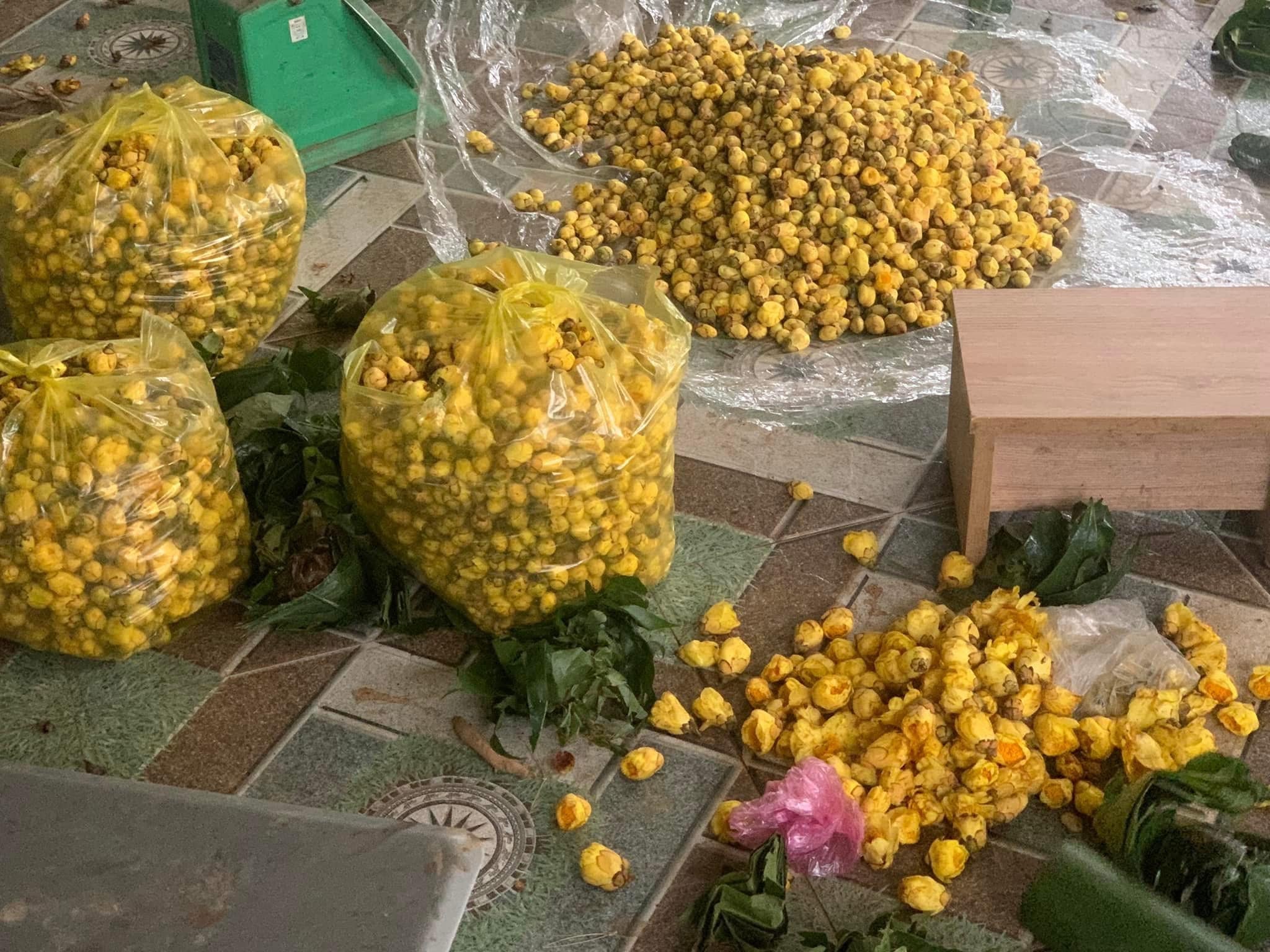
The border district of Que Phong has many advantages for developing OCOP products. These include specialties such as black pigs, Mong cattle, black chickens, Japonica rice, Khau Cay Noi sticky rice, yellow flower tea, Quy cinnamon, and Quy Muscovy ducks…
Mr. Nguyen Ba Hien, Head of the Agriculture and Rural Development Department of Que Phong district, said: In recent years, Que Phong has focused on implementing the "One Commune One Product" (OCOP) program. As of early December, the district has had 4 products that have achieved OCOP star status: Kim Son golden flower tea; Tien Phong rice wine; Muong Quang herbal wine; and Cuong Hoai sour meat. Que Phong's OCOP products have all established a reputation and brand in the market.
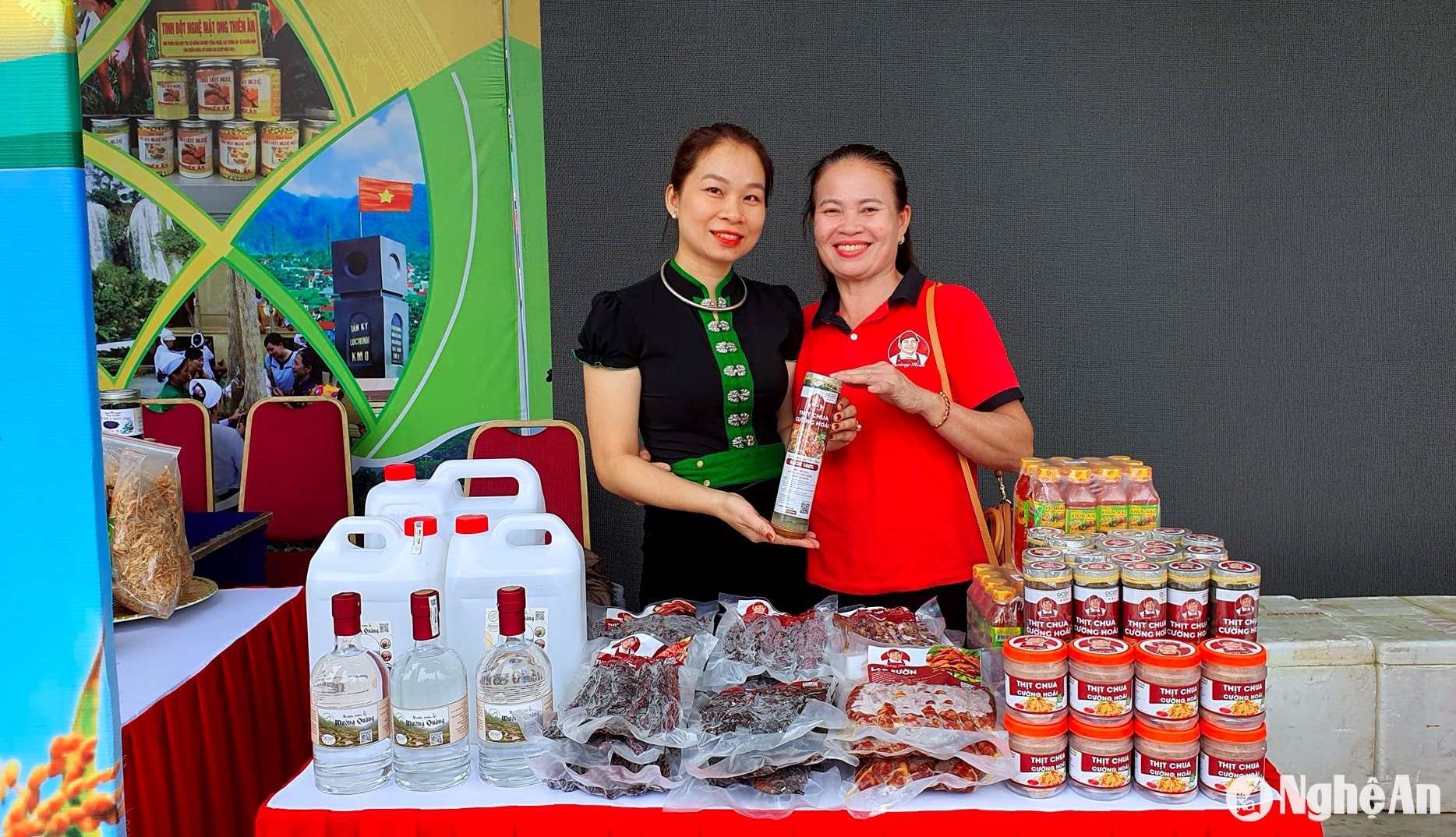
In the coming years, Que Phong will guide localities in developing several products, including Japonica rice in Tri Le and Nam Giai communes, and indigenous black chicken in some communes. Products such as golden flower tea and fermented pork have also demonstrated their advantages. OCOP products have proven effective not only in addressing product output for sustainable development and increasing income for producers, but also in promoting the image of the border region of Que Phong.
At the end of 2024, Que Phong district organized the OCOP (One Commune One Product) evaluation for 3 products: a 5-compartment candy tray; a fruit tray woven from bamboo fibers from Muong Ngoc commune; and bottled rice wine from Tien Phong commune.