
What awaits the EU in 2025?
The European Union team recently elected in Brussels will face significant challenges in 2025. Will they be able to overcome these challenges without a strong alliance between France and Germany?
According to DW, the three biggest challenges for the European Union (EU) in 2025 will revolve around the keywords: Ukraine, Russia, and Donald Trump.
The situation for this region is further exacerbated by internal problems such as a stagnant economy, high debt levels, and limited political capacity, particularly in Germany and France.
In other words, the outlook for the EU in 2025 is not very bright. So what awaits the new team in Brussels?
European Council President Antonio Costa and EU High Representative for Foreign Policy Kaja Kallas took office on December 1, 2024. Ursula von der Leyen remains in office, but her European Commission has been completely reorganized.
According to Steven Everts, Director of the European Union Institute for Security Studies, this new team at least offers an opportunity.
"Currently, a new leadership is taking over the EU," he said. "This is a time when we can rethink, adapt, and renew EU foreign policy."
ThehSupport Ukraine
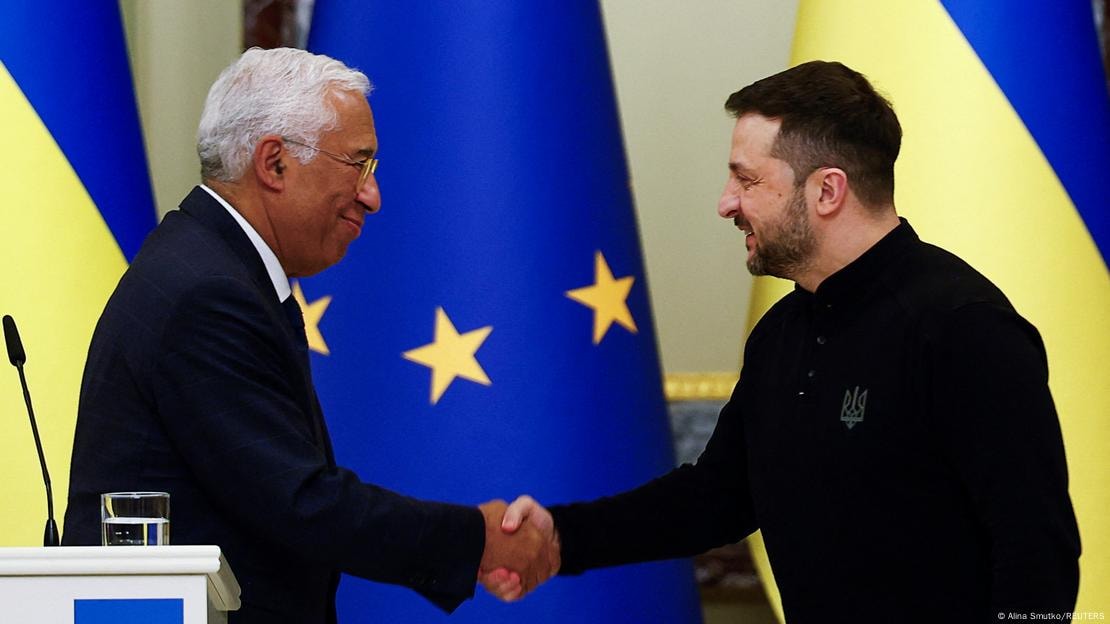
At the top of the EU's list of urgent tasks will likely remain financial and military aid to Ukraine in its conflict with Russia.
According to Western media, the EU plans to transfer 1.5 billion euros (equivalent to 1.6 billion USD) per month from the common budget to Kyiv's state treasury in 2025. In addition, there is a 50 billion euro loan from the G7 for Ukraine, "financed" from the profits of frozen Russian assets.
According to DW, large quantities of ammunition and weapons will also need to be funded by European countries to support Ukraine, a candidate for EU membership. However, this bill could increase further if US President Donald Trump carries out his threats to cut or cancel US aid to Ukraine.
To date, the United States has provided nearly half of the total aid to Ukraine.
According to EU diplomats, Brussels is experiencing tense speculation about the amount of money that may have to be spent.
"We'll have to wait and see. We're not really prepared to deal with Mr. Trump," an EU diplomat said during closed-door discussions.
RoomEU's chief
Beyond Ukraine, the EU will focus on defending itself against what it considers a threat – Russia – in 2025.
Andrius Kubilius, the EU's first Commissioner for Defence and Space, was not tasked with creating a European army, but rather with better coordinating the arms policies and procurement of EU member states.
Many EU countries have budgets too limited to quickly purchase more weapons or increase troop numbers. This pressure could intensify if Trump decides to cut U.S. spending on European defense and demand that European nations contribute more.
According to estimates by the Ifo Institute for Economic Research in Munich, Germany alone has a deficit of 230 billion euros in its medium-term defense budget. In Italy, the figure is 120 billion euros; in Spain, it is 80 billion euros.
Meanwhile, Germany's new Finance Minister, Jörg Kukies, quickly rejected the idea, proposed by some countries, of financing military spending through the EU's common debt.
Debt management
The year 2025 will require not only increased military spending but also investment in economic restructuring and climate-friendly economic support, as well as funding for reconstruction in Gaza, Lebanon, and Syria.
Former European Central Bank President Mario Draghi of Italy stressed the need for €800 billion in investment earlier this year in a dramatic report on the competitiveness of the EU economy. He also recommended additional borrowing to finance startups in order to attract private investors.
However, France and Italy are currently facing procedures related to deficits from the European Union. Spain may also soon join this group.
Although Germany remains below its EU debt limit, Berlin is not in a position to take financial action due to the upcoming federal elections in February 2025. Consequently, the future finance minister will not be able to present the federal budget for 2025 before spring or even summer.
Negotiations on Germany's new government will also delay the EU's new financial framework.
Trade policy
2025 could also be a challenging year in terms of trade policy.
A trade war with China over electric vehicles is looming. And a serious conflict could arise from the punitive tariffs that Trump wants to impose on Europe, China, Mexico, and Canada.
However, Valdis Dombrovskis, the EU's economic commissioner, was determined to remind the new US president and his advisors that they would be shooting themselves in the foot if they imposed tariffs.
“Trade wars are bad for nobody, Mr. Trump needs to learn that,” he said at an event hosted by the Centre for European Policy. “We need to show him the numbers. The fragmentation of the world economy will have consequences. Comprehensive tariffs could take away 7% of global GDP. Compare that to the 1930s when isolationism was prevalent,” he added, alluding to the global economic crisis of those years and the rise of Nazi Germany.
Meanwhile, a glimmer of hope emerged thanks to the trade agreement the EU signed with the South American Mercosur group in early December. However, this agreement still needs to be approved by EU institutions in 2025.
Maintain solidarity.
EU expert Janis Emmanouilidis from the Centre for European Policy is not optimistic about 2025. “The EU has always been the guarantor of compromise. But that ability has been lost,” he said at an event in Brussels in early December, alluding to the challenges facing the EU's foreign and military policies. “The EU is no longer the answer to many problems. Politics has become more nationalistic.”
According to him, many people, including those in the EU candidate countries in the Western Balkans, have lost hope that the 27-member bloc will actually keep its promises in the future.
"France and Germany are now needed to take the lead within the EU," he said.
However, France is now weakened by government crises, and Germany's ability to act is also limited due to the federal elections in February 2025.
Spain's minority government may still fail due to budgetary problems. Italy is led by a far-right government. Belgium and Austria have only interim governments, and the political situation in Romania remains uncertain.
Meanwhile, in the Netherlands, Hungary, and Slovakia, EU-skeptic leaders are in power.
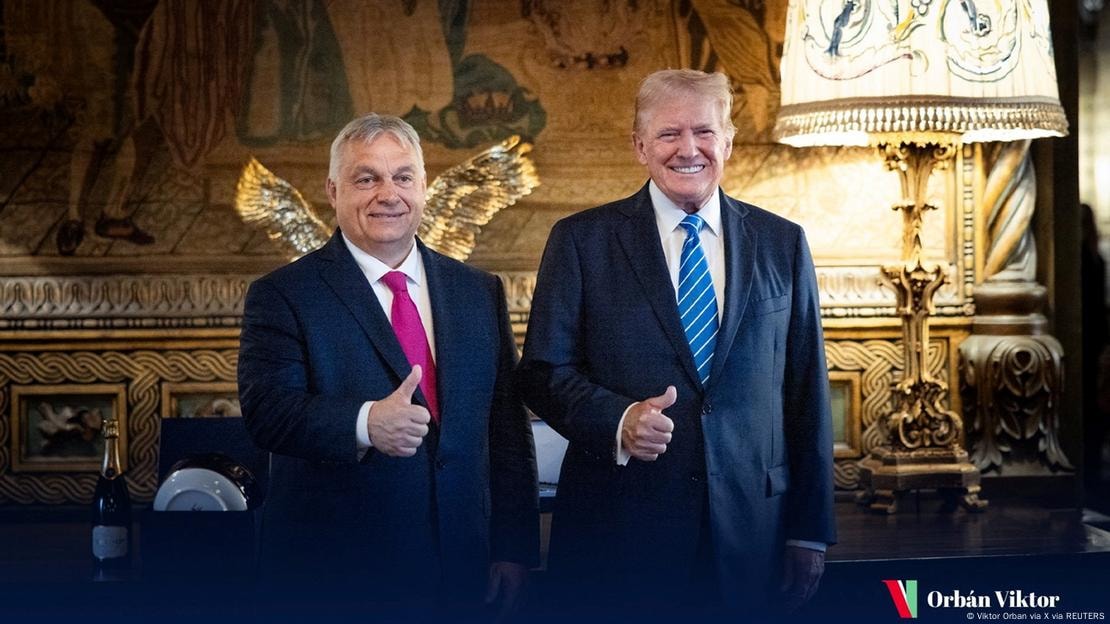
Hungarian Prime Minister Viktor Orban believes he made peace in Ukraine more possible by drawing closer to Russia during his country's presidency of the EU Council. He also looks forward to Trump's return to the White House.
So far, all that can be certain about 2025 is: At best, it will be a very exciting new year, and quite possibly a turbulent one for the EU.
Hoang Bach