

The bustling atmosphere of Hoang Ha drum-making village at the end of the year.
In the final days of the year, the atmosphere in Hoang Ha drum-making village becomes more vibrant and bustling, with many households working day and night to meet the increased demand for the Lunar New Year and the New Year's festival season.
With a history spanning hundreds of years, Hoang Ha drum-making village in Dien Hoang commune (Dien Chau district, Nghe An province) is unique in that the secrets of the craft are passed down only within the Nguyen family.
A very demanding profession
At 54 years old, Mr. Nguyen Dinh Cat has over 40 years of experience making drums. He confided, "Since I was a child, I helped my parents with all sorts of chores and learned the trade." Having pursued this profession for more than half his life, whenever asked, he enthusiastically recounts each step of the process, even sharing his methods and some secrets.
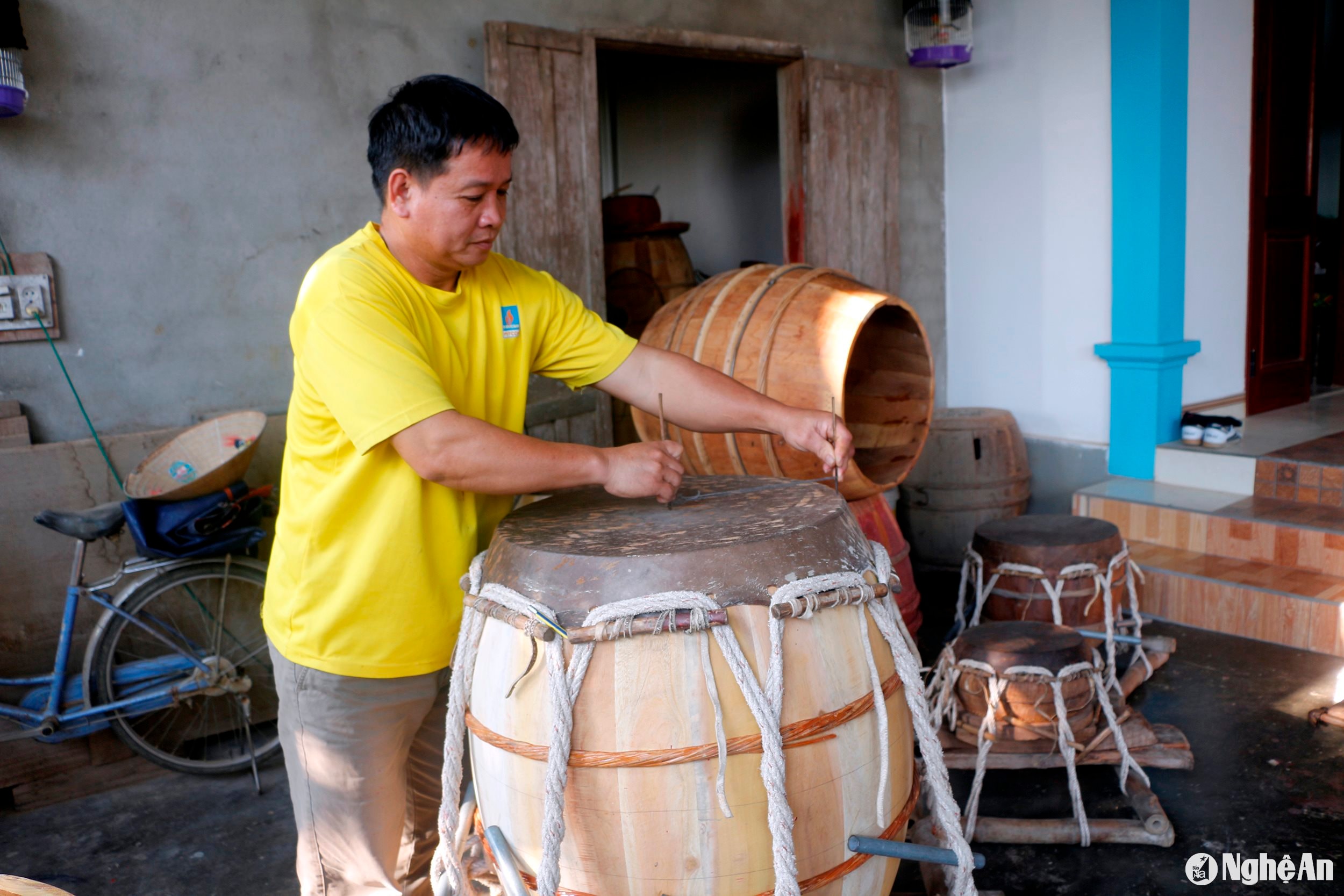
To make a beautiful drum with a resonant, rich sound, the wood used must be old jackfruit wood, at least 40 years old, and only the heartwood should be used so that the drum does not shrink, warp, or lose its sound; some people also use sapwood, but they sell it very cheaply.
“In the past, jackfruit wood was abundant and easy to buy, but now we have to order it in bulk and get it in batches because it’s very scarce, even in the mountainous districts. To create a resonant sound when played, the drumhead must be made from the hide of old buffalo or cows, at least 3-4 years old, mainly from Laotian cows or cows from high mountainous regions,” Mr. Nguyen Dinh Cat recounted.
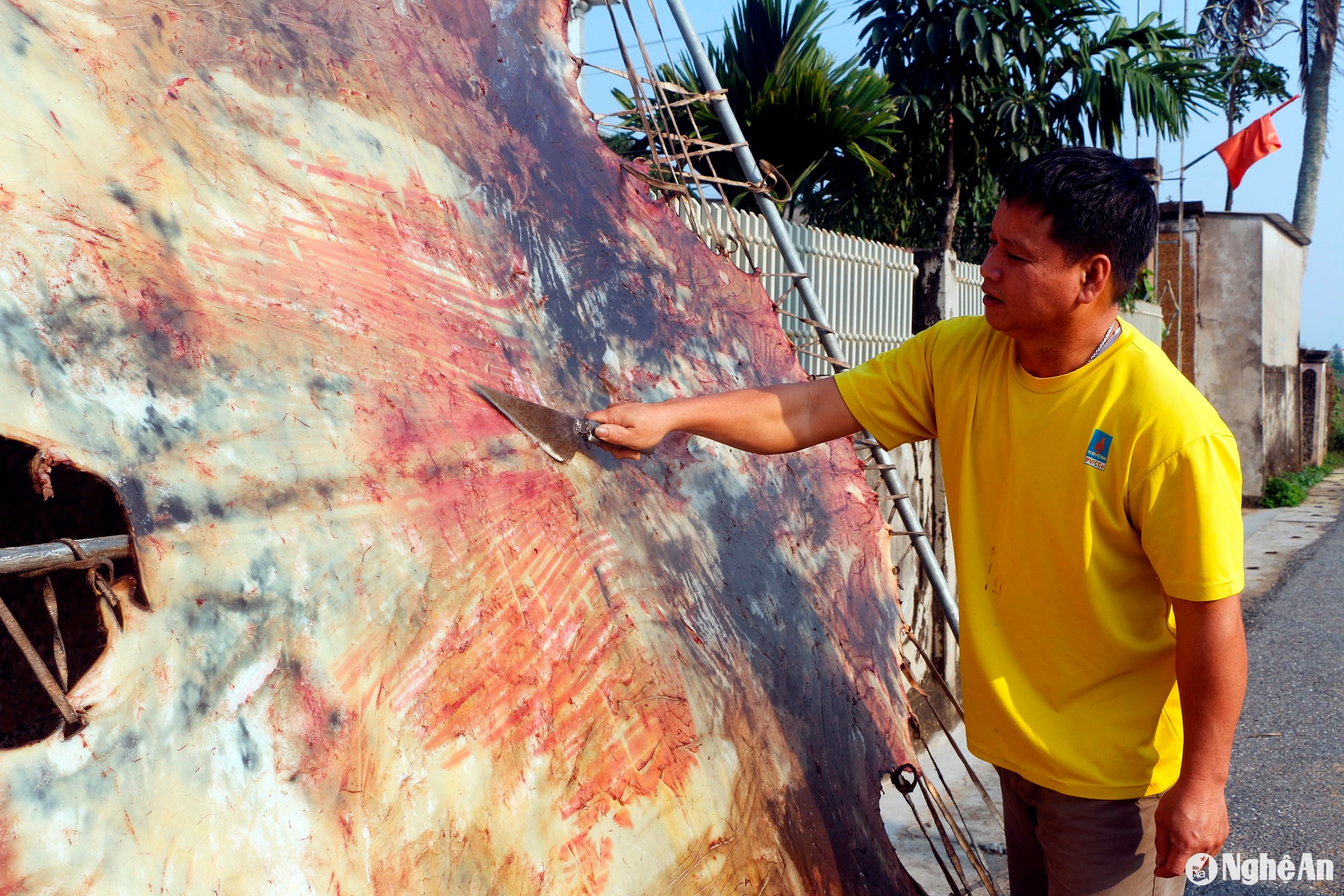
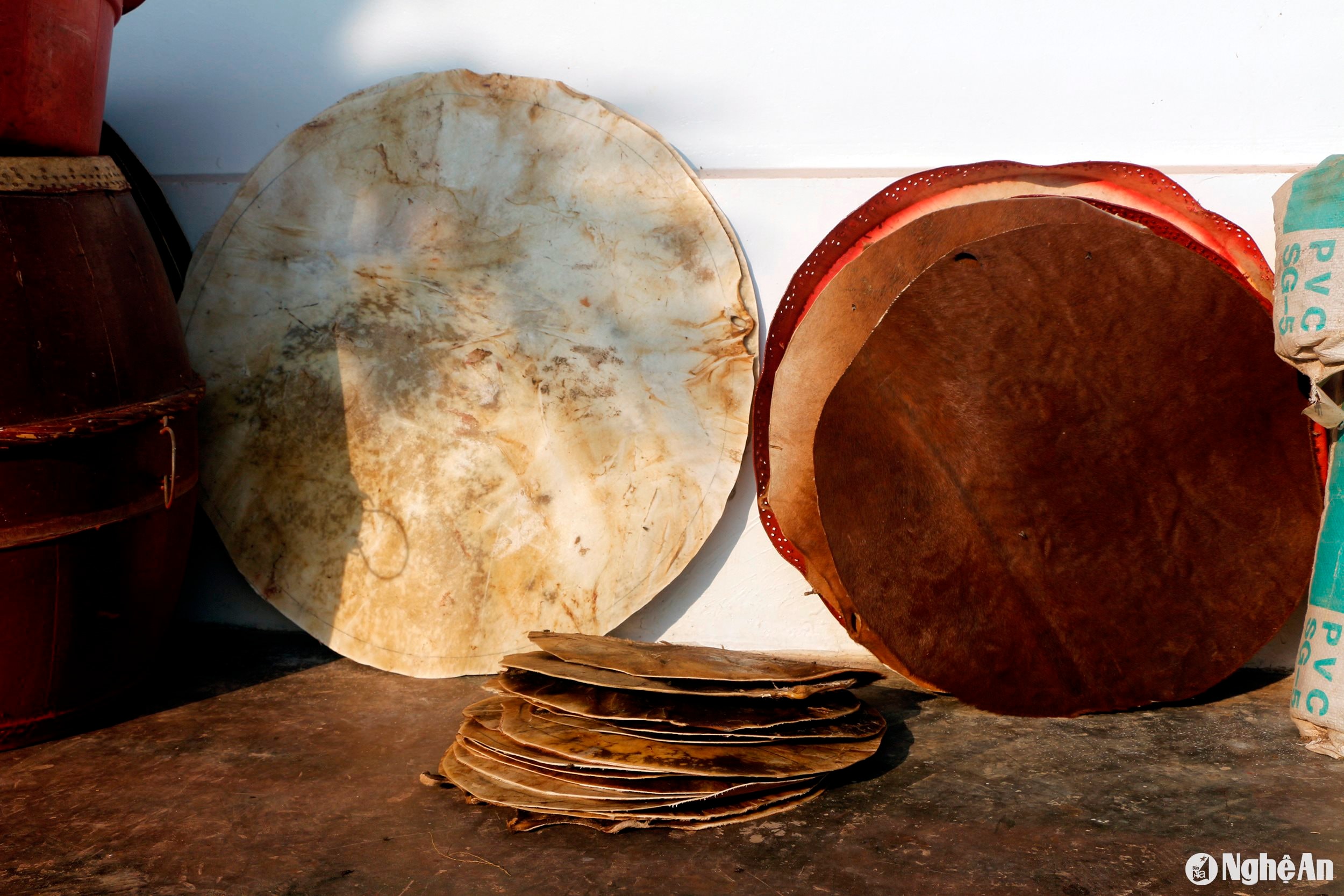
The cowhide, once purchased, is thoroughly washed and processed manually without any chemicals. It is thinly shaved, stretched on a bamboo frame, and sun-dried for 2-3 days. Then, it is moved to a shady area for 2-3 hours to soften before being stretched, shaved, measured, and cut to the size and shape of the drumhead.
These steps are done very carefully by the drum maker to avoid affecting the resonance of the drum's sound. The tensioning, adjustment, sound tuning, and mouthpiece must all be done correctly; otherwise, the drum will lose its sound and not produce any sound.
Of these steps, the most difficult is shaping the drumhead, which determines the sound quality and suitability for each type of drum. It requires experienced craftsmen to sense the appropriate thickness of the drumhead.
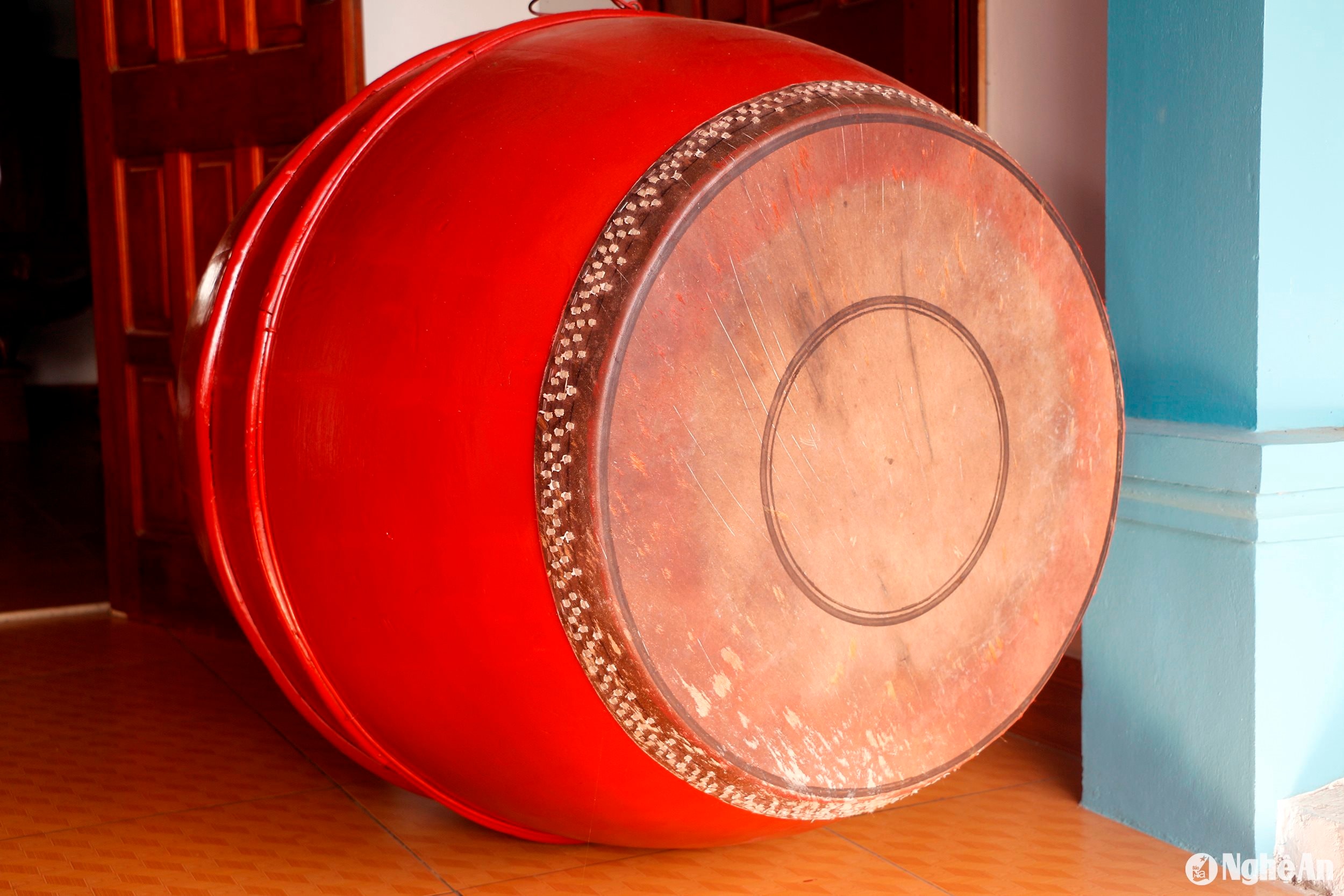
The drums produced in Hoang Ha village are rich and diverse, with over 10 types, ranging from large, medium to small drums. Within these, they are further divided into many categories, serving diverse needs from schools, temples, ancestral altars, and cultural events, including drums for traditional opera, dance, and music.
According to the craftsmen, the drum body is durable and can last for hundreds of years without breaking, but the drumhead usually only lasts 6-7 years before it punctures, so besides buying new ones, customers often send their drums in for repair.
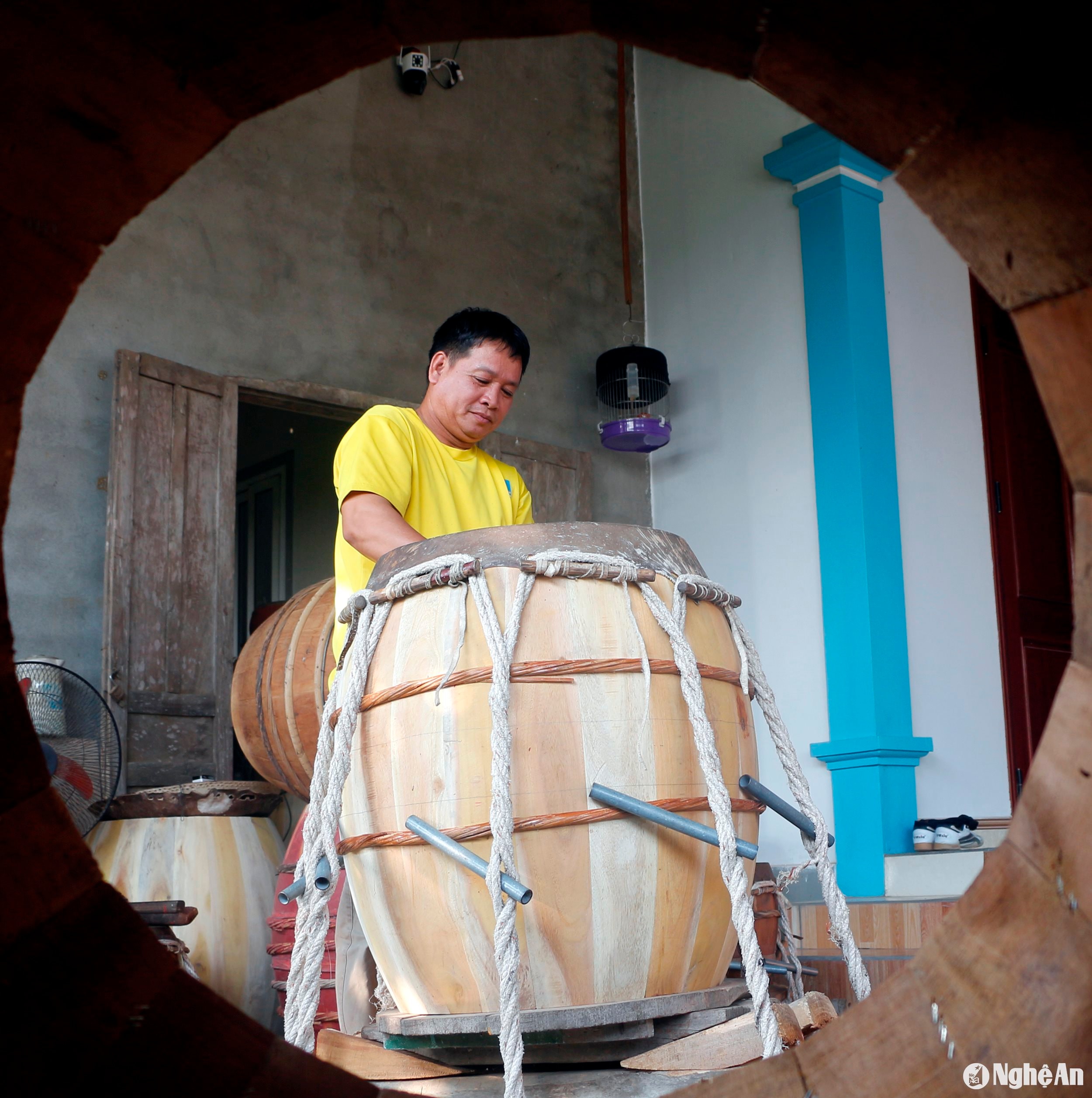
Currently, medium-sized drums cost 3 million VND each, while large, elaborately carved drums with dragons, phoenixes, and gilded patterns cost 7 million VND each. Smaller drums cost only a few hundred thousand VND each. However, the craftsmen of Hoang Ha drum-making village have also made large drums worth hundreds of millions of VND.
Mr. Cat recounted: "Once, a company specializing in the production and sale of wooden products in Yen Ly ordered a large drum to place in their company grounds, at a cost of 150 million dong. I had to hire several extra workers, and it still took four months to complete."
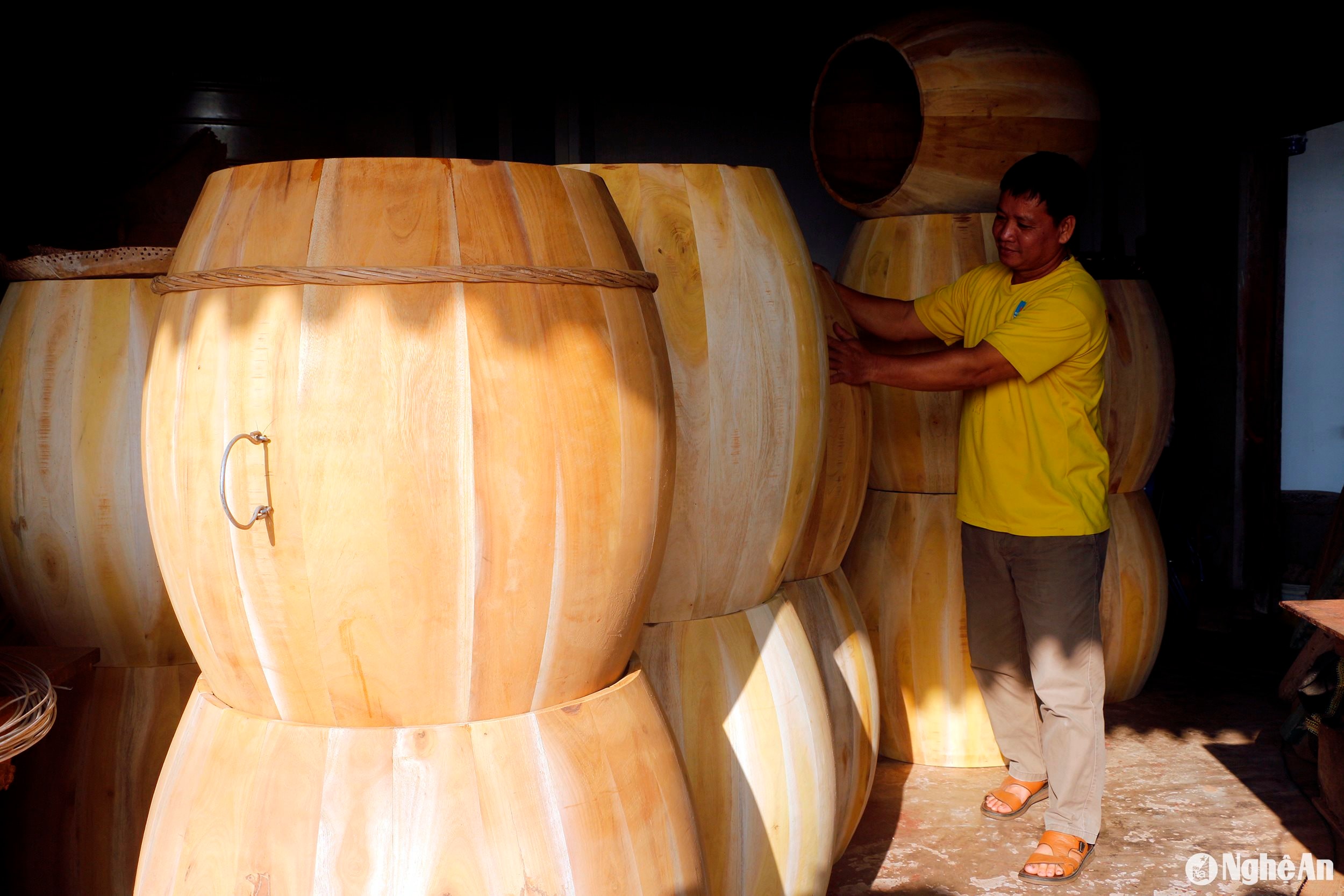
Concerns about preserving the craft
The drum-making craft in Dien Hoang has existed for hundreds of years. In the past, all stages were done manually; it would take a craftsman half a month to complete a large drum, and even smaller drums would take 5-7 days. From 2005-2006, with the introduction of band saws and planers, the production time was reduced to 4-5 days and the work was significantly easier. Currently, most households are fully equipped with band saws and assembly machines; however, some stages still require manual labor to produce drums with good sound.
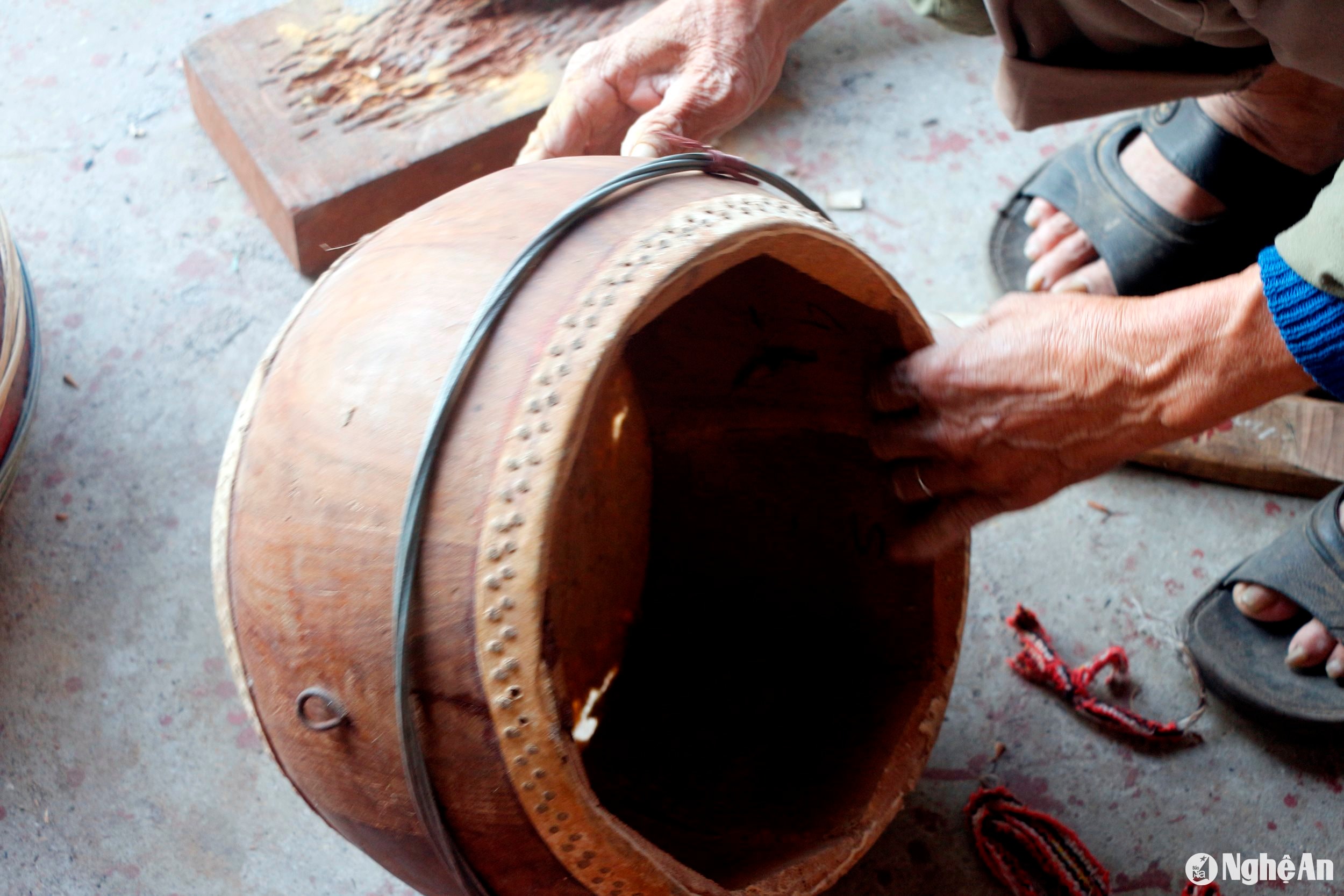
In the final days of the year, the drum-making village becomes more bustling and busy. "From now until the Lunar New Year is the main business season of the year, with high demand for Tet and the beginning of the year," said Mr. Nguyen Xuan Ky, 75 years old. None of his children followed the trade, all working far away, so normally he and his wife only make and sell 7-8 drums a month. But from the 11th lunar month, he has to "speed up" to make several dozen drums to meet customer demand. Because of his age, he has to ask his grandchildren to help with the larger drums.
It's not just his family, but other households engaged in the same trade as well. Mr. Nguyen Dinh Cat said that while he normally sells 7-8 drums per month, during this year-end period he sells 14-15 drums per month, and from the 12th lunar month to the 15th day of the 1st lunar month he sells 20-30 drums.
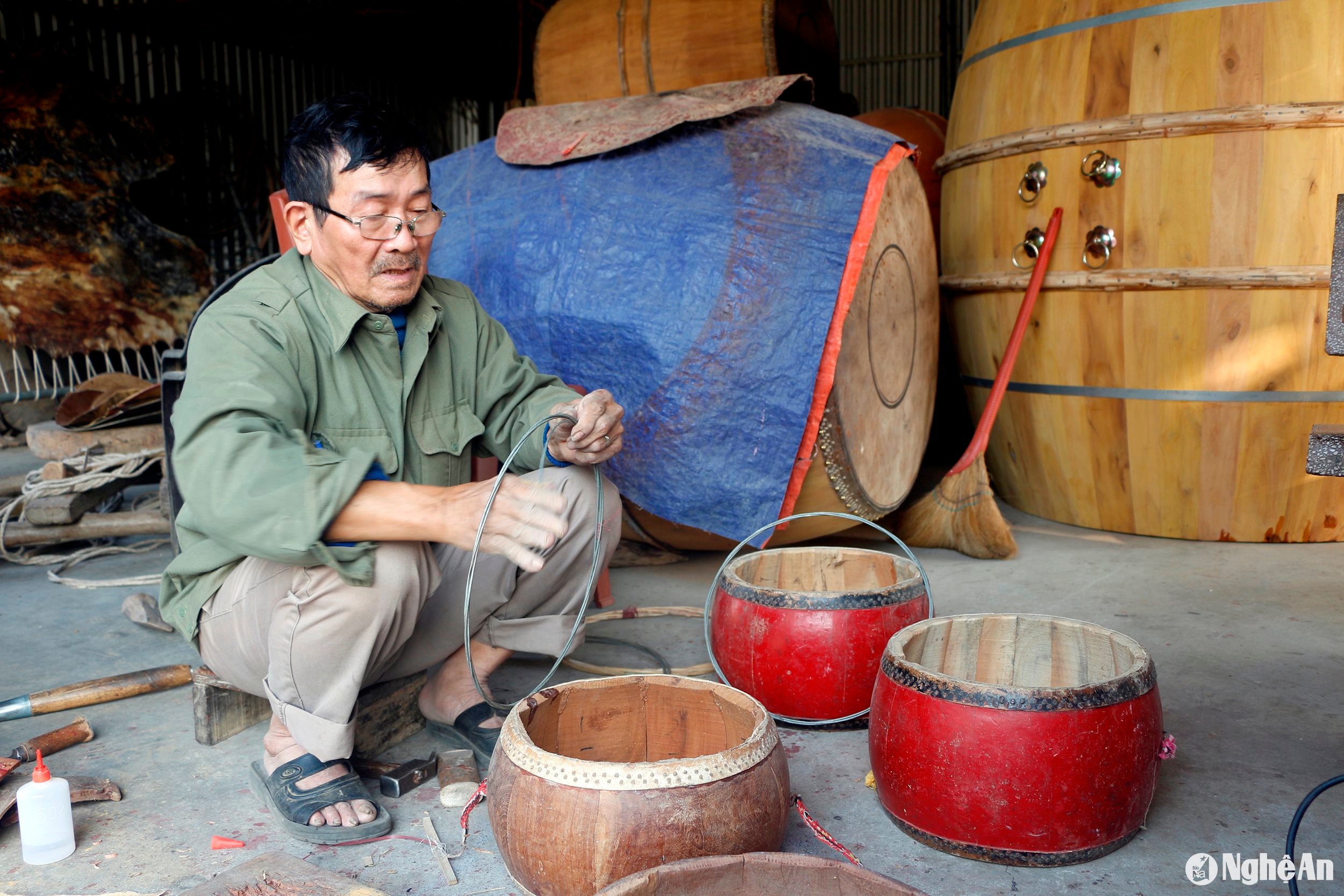
According to Mr. Ho Hoang, Vice Chairman of the People's Committee of Dien Hoang commune: "Not only are Hoang Ha drums sold within the province, but they are also consumed in Ha Tinh, Quang Binh, Thanh Hoa, southern provinces, and even exported to Laos. During its heyday, the village had over 30 households engaged in the craft, but now only 14 remain. While some only work seasonally and a few households have given up due to lack of development, those who have been practicing the craft for generations are still determined to maintain and develop this traditional profession."
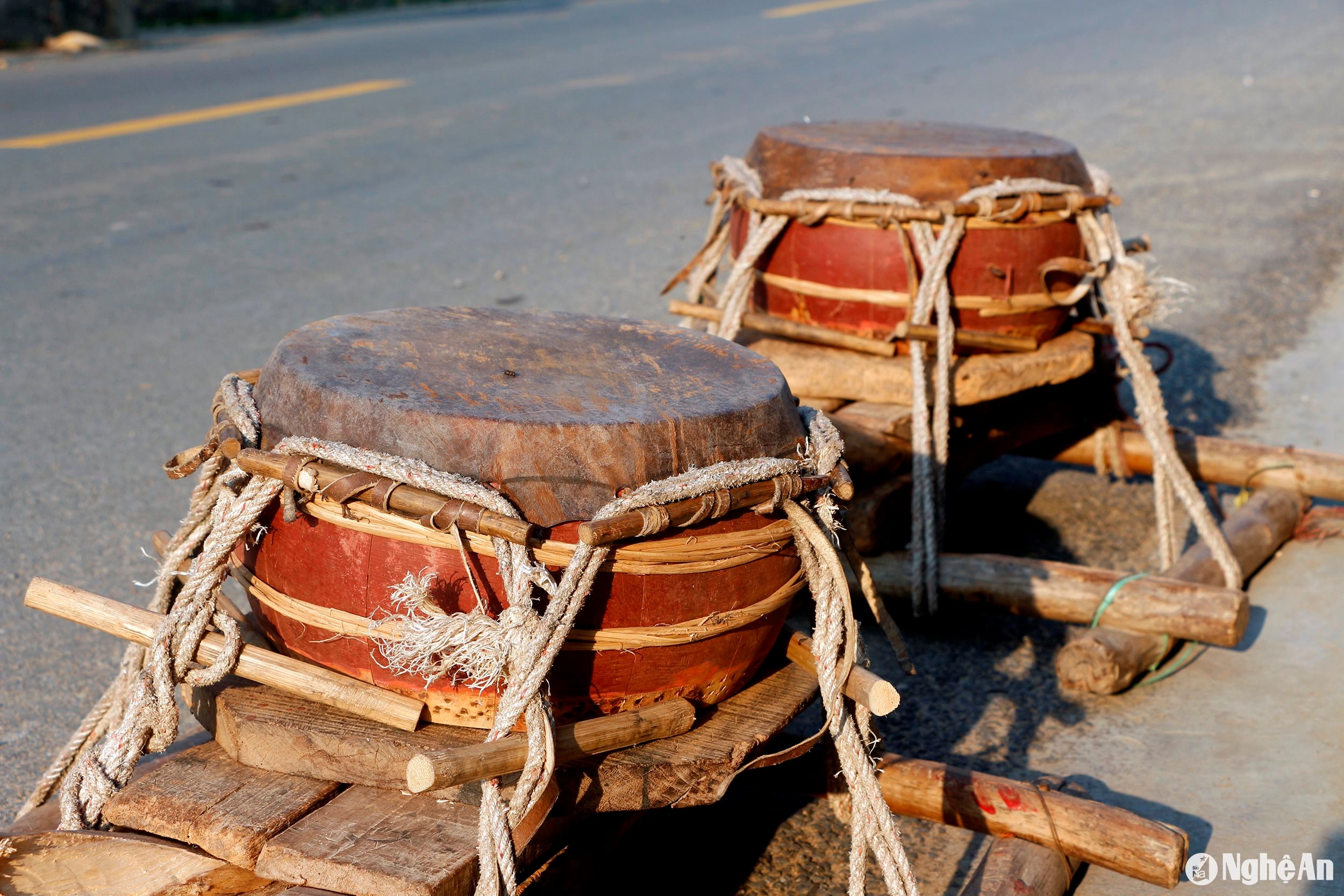
However, due to the long-standing unwritten "rule" against passing on the craft to outsiders, the drum-making profession has gradually declined and disappeared, especially since very few young people today follow their ancestors' traditional craft, instead going abroad to work in other, higher-paying professions.
“Not everyone can do it; it requires not only diligence but also skillful hands and genuine passion. According to stories passed down by our elders, several generations ago, two people passed the craft on to people from other places, and since then, no one in the family has been able to follow the trade. I don't know how true that is, but unlike other trades, no one in the village passes on their craft to outsiders,” Mr. Nguyen Xuan Ky shared.