

With low cattle prices, farmers are shifting to processing specialty buffalo meat.
Despite the peak shopping season in preparation for the Lunar New Year of the Year of the Snake, the market for buffalo and cattle remains sluggish as prices have not increased. Furthermore, cheaper imported buffalo and cattle have led traders to limit imports and shift towards processing them into dried meat.
Cattle and buffalo prices hit a record low.
In the days leading up to the Lunar New Year of the Year of the Snake (2015), in mountainous districts like Ky Son and Que Phong, ethnic minority communities began preparing for festive activities. Farmers and livestock breeders also started selling their products and preparing food for the holiday. Many families sold buffaloes, cows, pigs, and chickens to purchase supplies for the spring rituals and other festive gatherings.
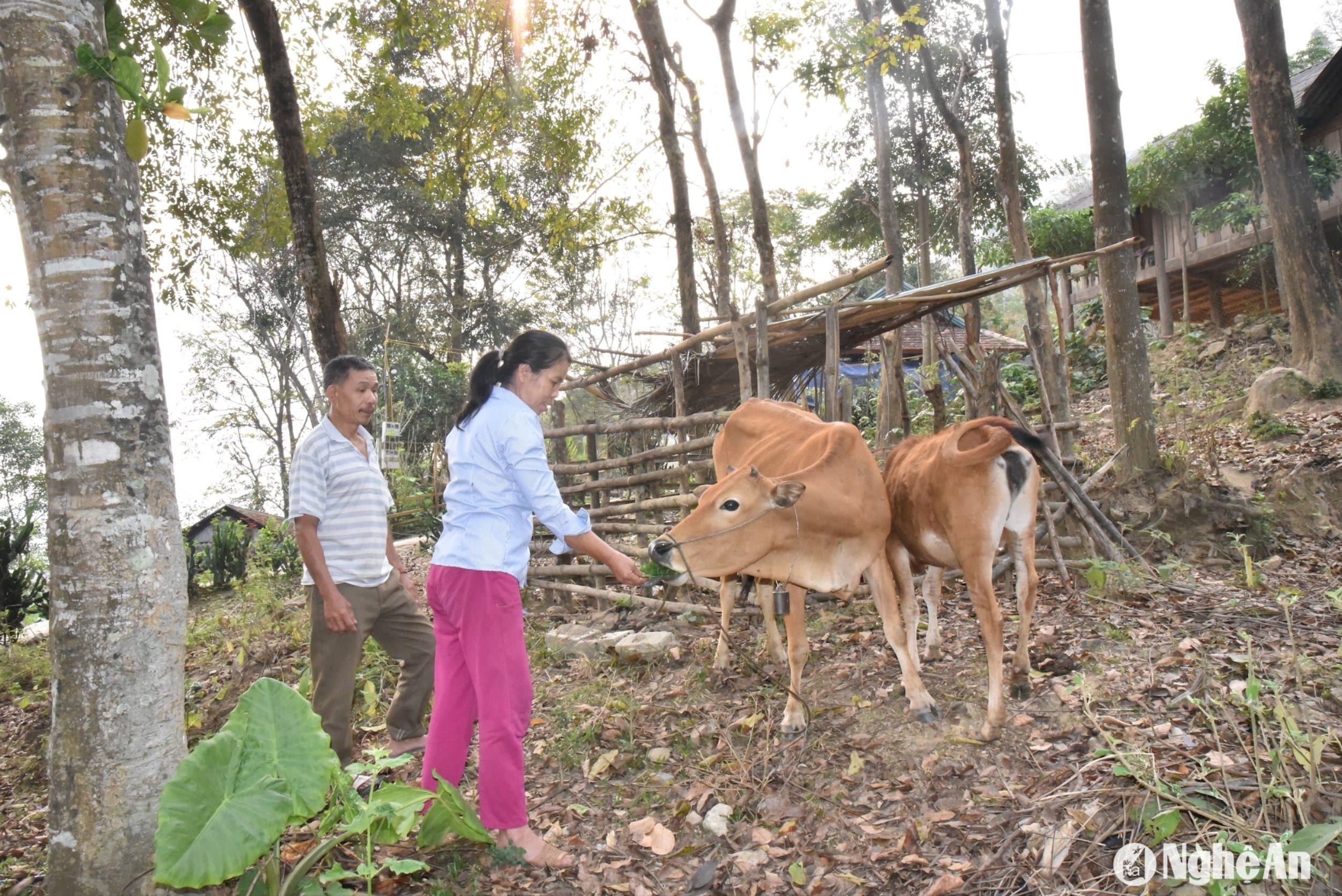
Mr. Ho Tong Xua, from Na Ni village, Huoi Tu commune (Ky Son district), said that his family also sold cows to prepare for Tet (Lunar New Year). Mr. Xua said that on January 15th, he sold two cows, a mother cow and a nearly 5-month-old calf, for a total of 9 million VND. According to Mr. Xua, the price of buffalo and cattle has been continuously decreasing for several years, and there are no signs of it increasing near Tet; in fact, it has sometimes decreased even more than usual, so he had to sell two cows to cover his expenses. If the price of buffalo and cattle were as high as it was three years ago, selling just one cow would have brought in about 12-15 million VND, enough for him to comfortably prepare for Tet.
Information gathered on the buffalo and cattle farming situation and the retail and wholesale markets for buffalo and cattle in several high-altitude mountainous districts reveals a widespread stagnation in buffalo and cattle prices. Despite the approaching Lunar New Year, prices remain low compared to previous years.
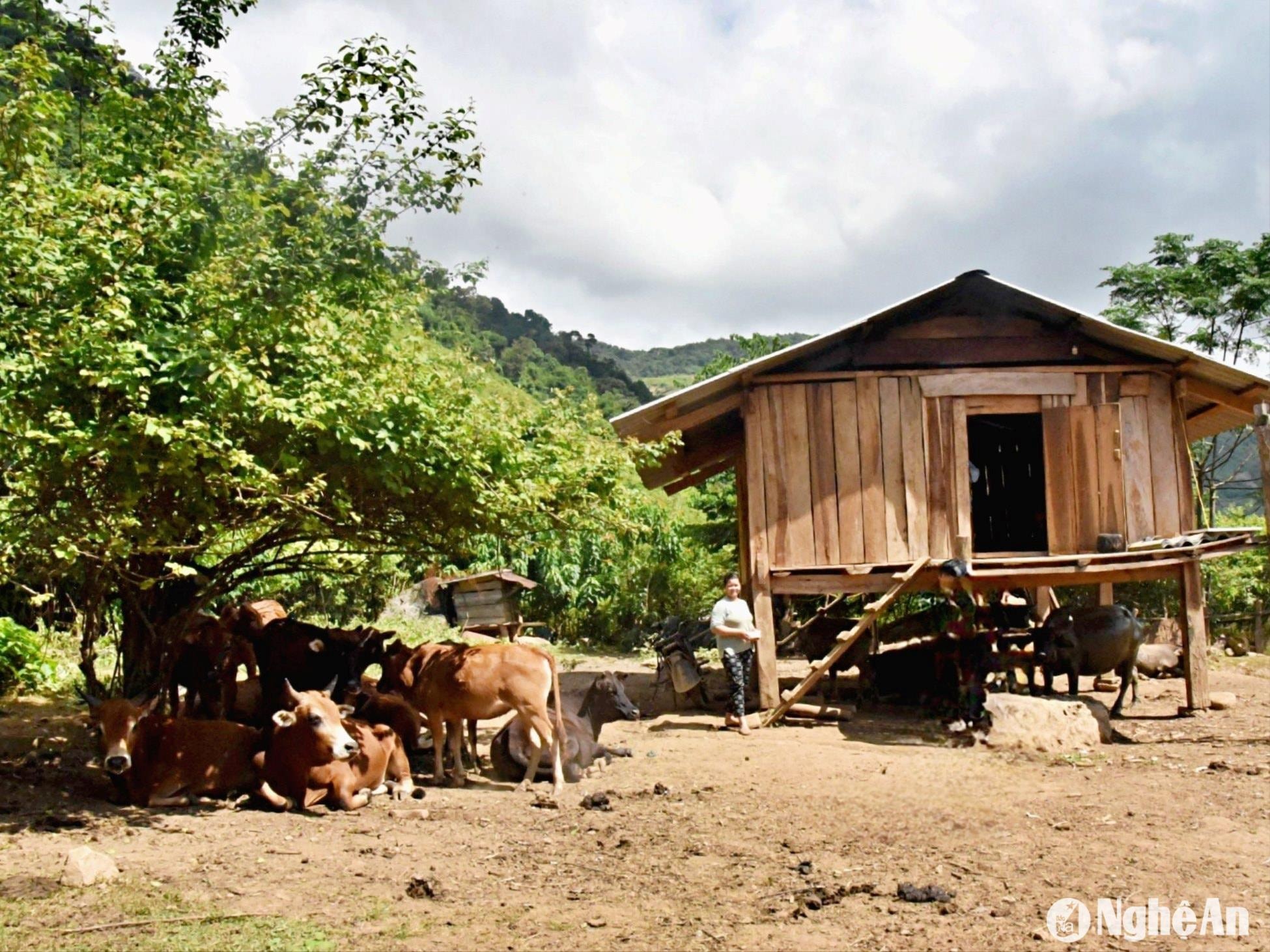
Mr. Ha Ba Ly, Vice Chairman of the People's Committee of Huoi Tu commune, said that raising buffalo and cattle is the main occupation providing income for people in the commune. However, this year, the price of cattle only fluctuates between 5-7 million VND/adult animal. As for buffalo, the selling price is 2-3 million VND lower than cattle. In Huoi Tu commune, people raise about 3,000 buffalo and cattle, but the number has not increased in the last three years, and is even trending downwards because people are reducing the number they raise and not increasing their herds due to continuously low prices. Livestock farming remains the economic spearhead of Ky Son district, a mountainous area.
Similarly, in Nam Can commune, Mr. Ho Ba Po, Chairman of the Farmers' Association, is also one of the households with a fairly large-scale livestock farming operation, maintaining a herd of 20-30 cattle per litter. Mr. Po said that in the past, raising and trading buffalo and cattle was the main source of income for most households in Nam Can. However, things have changed in the last few years because the price of buffalo and cattle has continuously decreased.
Many households in Nam Can report that, as the Lunar New Year approaches in 2025, the demand for buffalo and cattle remains sluggish, and at times, prices are even lower than usual due to a lack of purchasing by traders. Currently in Nam Can, the price of a mature cow only sells for 6-8 million VND, and there are virtually no traders buying in large quantities as before.
According to statistics from the Ky Son District People's Committee, the total cattle population in the district is estimated at over 48,000 head, and the buffalo population at over 12,500 head. In addition, there are over 38,800 pigs and more than 430,000 poultry. Each year, the livestock industry in Ky Son district supplies the market with approximately 3,500 tons of meat. Regarding buffalo and cattle, with prices consistently low, the people of Ky Son are not increasing their herds, maintaining stable numbers to serve the local market and food processing activities for holidays and Tet (Lunar New Year).
In Tuong Duong district, Tam Quang is one of the communes with a relatively developed livestock industry, especially buffalo and cattle farming, with a total herd maintained at nearly 5,000 animals annually. Mr. Tran Van Do in Bai Xa village is one of the successful livestock farmers, earning a good income from his herd of cattle, which he maintains at around 5-10 animals per litter. Using a method of raising and fattening cattle with green feed (agricultural by-products) combined with elephant grass cultivation, his family's cattle thrive and rarely suffer from disease.
.jpg)
Mr. Do said that although raising cattle is a significant source of income for his family, for more than two years he hasn't focused on increasing his livestock herd but has instead expanded into growing bamboo and other winter crops. This is because the prices of buffalo and cattle have remained low since the Covid-19 pandemic, not increasing and even showing a downward trend. During the period leading up to the Lunar New Year, the selling price of buffalo and cattle in Tam Quang only fluctuated between 8-10 million VND per animal.
Shifting the focus to value extraction.
Faced with the reality of stagnant buffalo and cattle prices for many years, and declining revenue from buffalo and cattle trading, people in the highland districts have begun to shift their focus to exploiting the value of buffalo and cattle farming. Currently, observations in many western districts such as Quy Chau, Que Phong, Tuong Duong, and Ky Son show that livestock farming combined with processing along the value chain is proving to be very effective.
.png)
“Besides households that raise buffalo and cattle for daily food and for Tet (Lunar New Year), there are quite a few households in the commune that also process smoked meat, beef, pork, and sausages for sale. These items are especially in high demand during the period leading up to Tet,” said Mr. Ho Ba Po.
In Ky Son district, besides the Nam Can border market, there are currently 850 retail outlets, stalls, and shops, and 4 markets, including Muong Xen market and the central markets of Huoi Tu, Muong Long, and My Ly. These locations help sell agricultural products for local people, including buffalo, beef, pork, and processed products made from buffalo and beef.
In addition, people are also actively selling products online, especially small traders specializing in collecting buffalo and beef, food production facilities, and cooperatives such as the Muong Long Community Agriculture and Tourism Cooperative, the Huong Son Handicraft and Service Cooperative, and OCOP product manufacturers…
.png)
In conjunction with agricultural production and processing, products such as sausages, dried beef, and dried pork are used to supply tourists, food services, and cooperative sales. Currently, the trend of production linked to processing and consumption is proving to be a sustainable direction, especially for livestock and crop farming in mountainous districts.