

Farmers in Quynh Luu earn high incomes from raising civets.
Recognizing the market demand and preferences, Ngo Minh Dong (born in 1990) from Hong Nguyen village, Cau Giat town, Quynh Luu district, boldly invested in and started a civet farming business. After more than two years, his family earned hundreds of millions of dong in profit from the model.
Mr. Ngo Minh Dong learned about the spotted civet through research on social media. Recognizing that this animal was popular in the market, was less prone to disease, and was easy to raise and care for, he boldly invested in building a breeding facility. On his family's land, Mr. Dong hired workers to build a corrugated iron roof to enclose the area, and inside, he welded 20 cages, each with an area of 1.6 square meters. At the same time, he submitted an application for a breeding facility registration number to the Forest Protection Department of Quynh Luu - Hoang Mai district. After receiving permission from the relevant authorities, in March 2022, Mr. Dong purchased 10 pairs of spotted civet breeding stock at a price of 35 million VND per pair to raise.
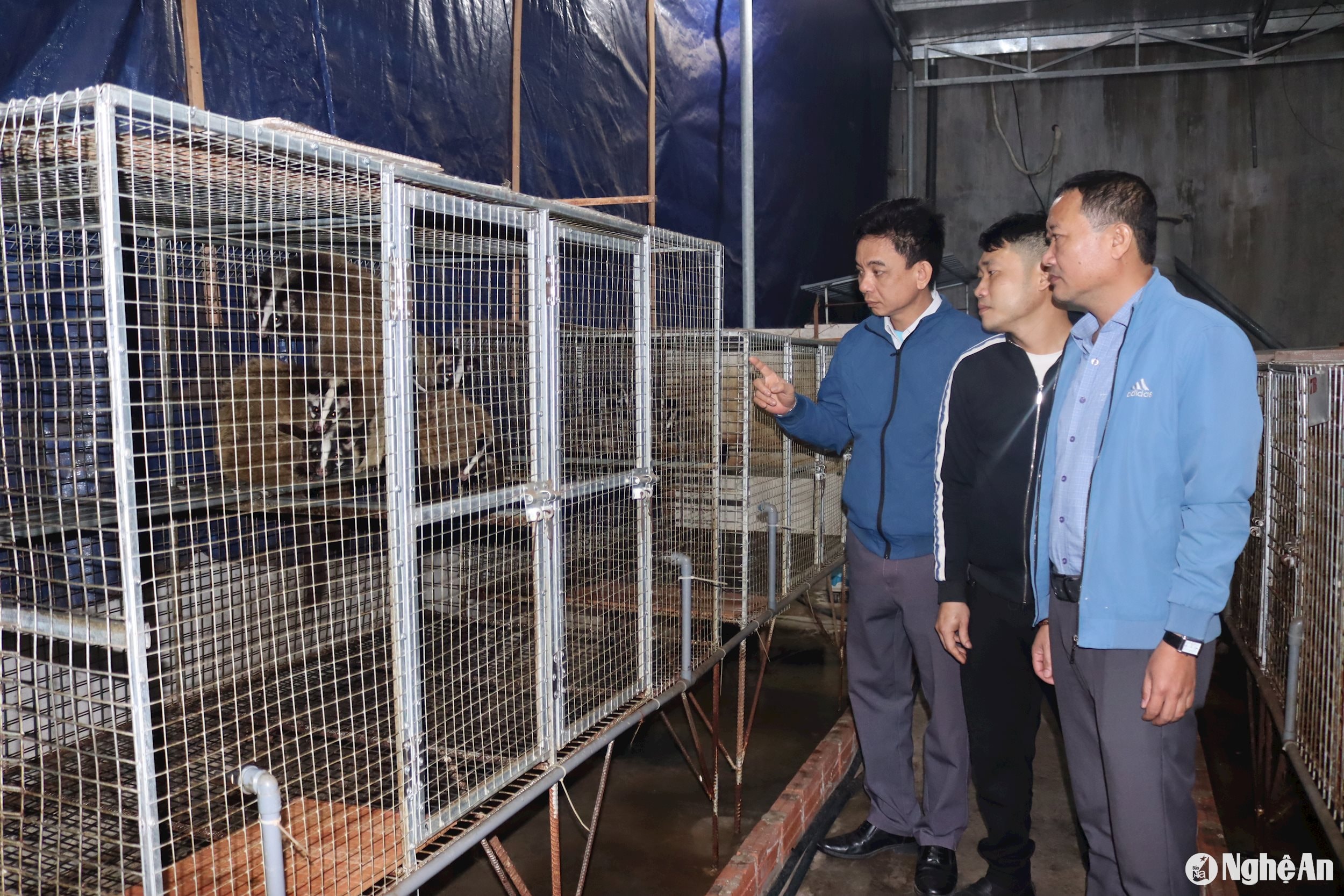
After four months of raising them, the 10 pairs of ferrets belonging to Mr. Dong's family developed healthily, entered the breeding stage, and began reproducing after 60 days.
According to Mr. Dong, civets breed after about 7-8 months, giving birth to two litters per year, each litter consisting of 3-5 offspring. After 6-8 months, the young civets are ready for sale. Mr. Dong sells each pair of young civets for 20-22 million VND. After deducting expenses, his family earned hundreds of millions of VND in profit in the first year of developing the civet farming model.

“The mink’s diet must be clean; don’t feed them spoiled or leftover food, as this can easily cause stomach aches and intestinal diseases. In addition, the breeding stock is also very important. Many households don’t know how to choose breeding stock or don’t seek out reputable mink farms to buy from, so they can’t breed. Currently, the farm has 45 breeding animals and 50 young minks, and we can breed more than 100 mink offspring a year to sell to other farmers,” Mr. Dong added.

Grizzly ferrets typically sleep during the day and prefer cleanliness, so their enclosures must be cleaned daily to prevent dampness. Unlike traditionally raised animals, gritzzly ferrets are less prone to disease, mainly digestive problems, so their food source must be hygienic and they must receive all necessary veterinary vaccinations. Their diet mainly consists of ripe bananas, pumpkin, rice porridge cooked with small fish, duck eggs, etc.
Currently, Mr. Dong's family farm has a total of 180 ferrets; of which 45 are breeding animals, and the rest are young ferrets waiting to be sold on the market after reaching maturity. Based on his experience in ferret farming over the past three years, Mr. Dong said that after successful mating, the female ferrets need to be separated for monitoring, placed in sealed wooden boxes inside the enclosure for breeding, creating a natural environment. In addition, nutritious food should be supplemented for the female ferrets during this period.

Thanks to improved breeding techniques, Ngo Minh Dong's civet farming model generates a stable income of over 600 million VND per year. To ensure a stable supply for the market, Mr. Dong focuses on developing a civet farming supply chain by providing breeding stock, transferring technology, and guaranteeing the purchase of products from other farmers.
Mr. Truong Dinh Trung, Chairman of the Farmers' Association of Cau Giat town, Quynh Luu district, said: "Mustard civets are easy to raise, have high economic value, and are very suitable for family farming. We hope that the model of Mr. Ngo Minh Dong's family will continue to develop and expand with the goal of creating jobs and increasing income. At the same time, it will reduce the pressure of illegal exploitation in nature, supporting conservation efforts and maintaining the genetic resources of rare and valuable forest animals."