

Unpleasant scenes at temples and pagodas at the beginning of the year.
In early spring, locals and tourists from all over the province often make it a habit to visit temples and pagodas. However, alongside the cultural beauty, these places still witness unsightly behaviors that affect their solemnity.
Spending millions of dong on offerings and burning paper money.
The Ong Hoang Muoi Temple in Hung Nguyen district is a famous cultural and spiritual destination in Nghe An province. During the Lunar New Year of the Year of the Snake (2015), it attracts visitors from all over who come to pray for peace, good fortune, and prosperity.
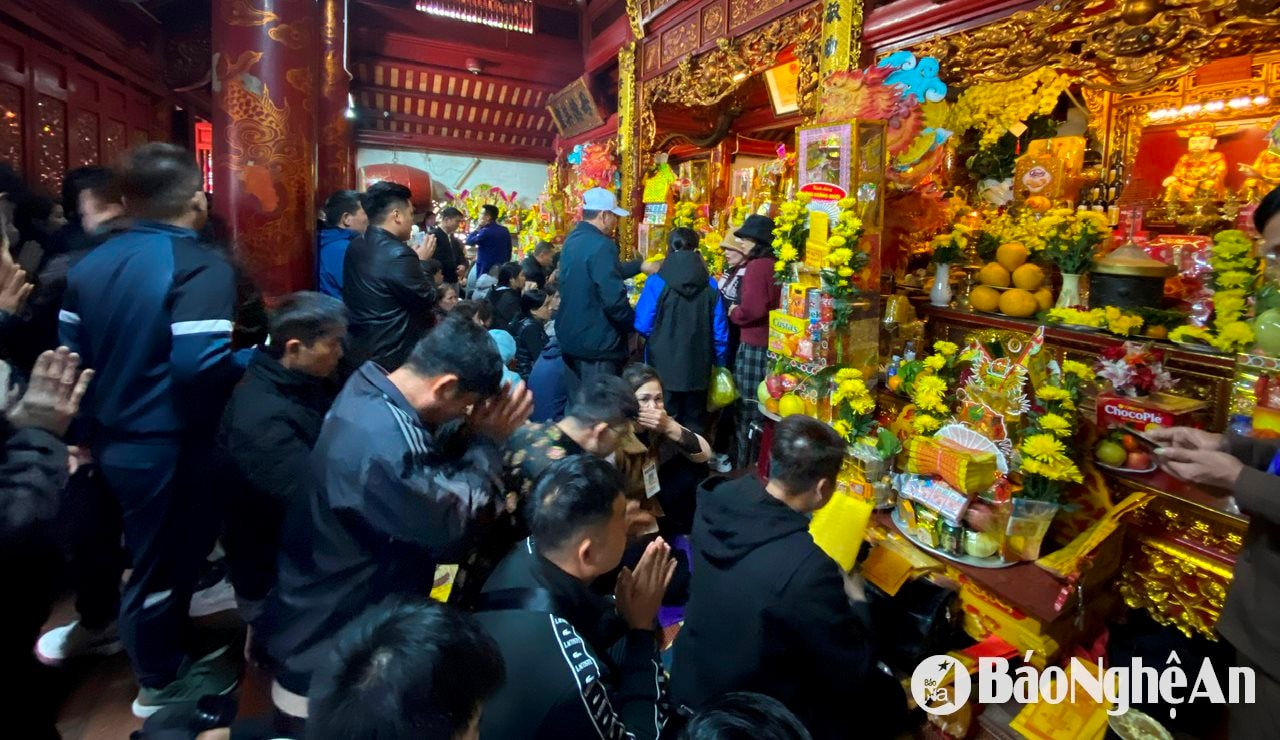
Despite this, some unpleasant scenes still appear at this temple. According to our reporter's observations, when visitors enter the temple area, many locals rush out into the middle of the road to solicit parking, buy offerings, or request prayers for good luck.
In front of the Ong Hoang Muoi Temple and the surrounding area, there are dozens of stalls selling offerings for incense burning. Each ready-made offering tray costs from several hundred thousand dong to millions of dong. Some trays even cost 2-3 million dong, expensive but still chosen by customers who believe that the more offerings and offerings they make, the more wealth and good fortune they will receive.
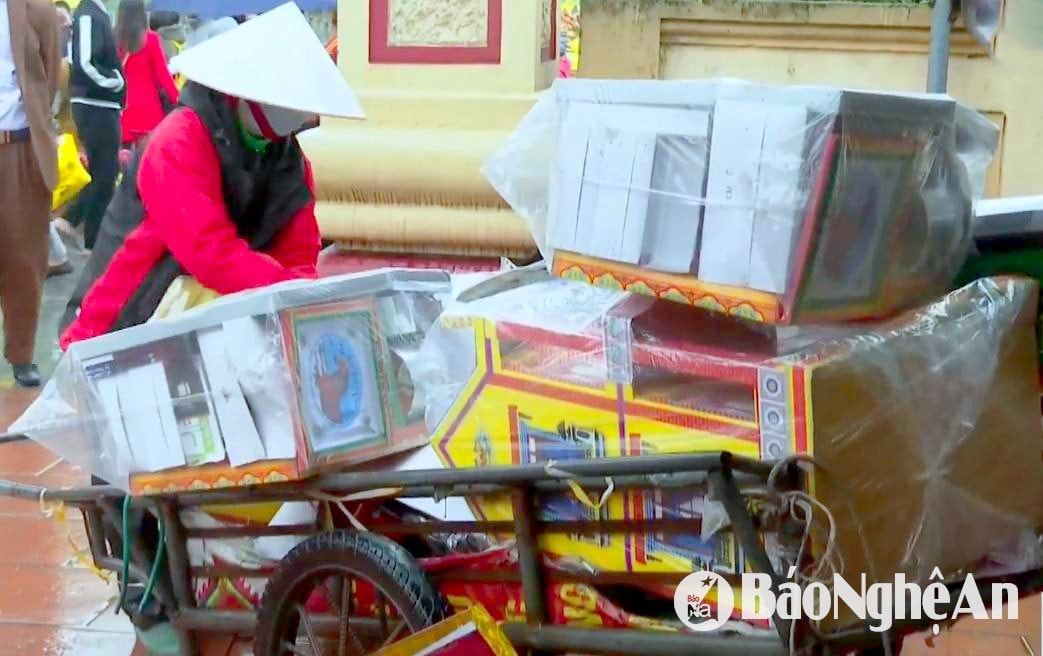
Mr. Nguyen Thanh Hai from Vinh City said: "Every year I go to worship at the Ong Hoang Muoi Temple, however, I usually sincerely prepare offerings at home, mainly fruits, tea and cakes. Making them myself shows respect, and the prices are more reasonable compared to buying them at the temple entrance, which are usually 2-3 times more expensive."
Besides the costly offerings, the burning of votive paper at the Ong Hoang Muoi temple continues despite previous warnings from relevant authorities and local governments about limiting its use, which affects the environment and poses a potential fire hazard.
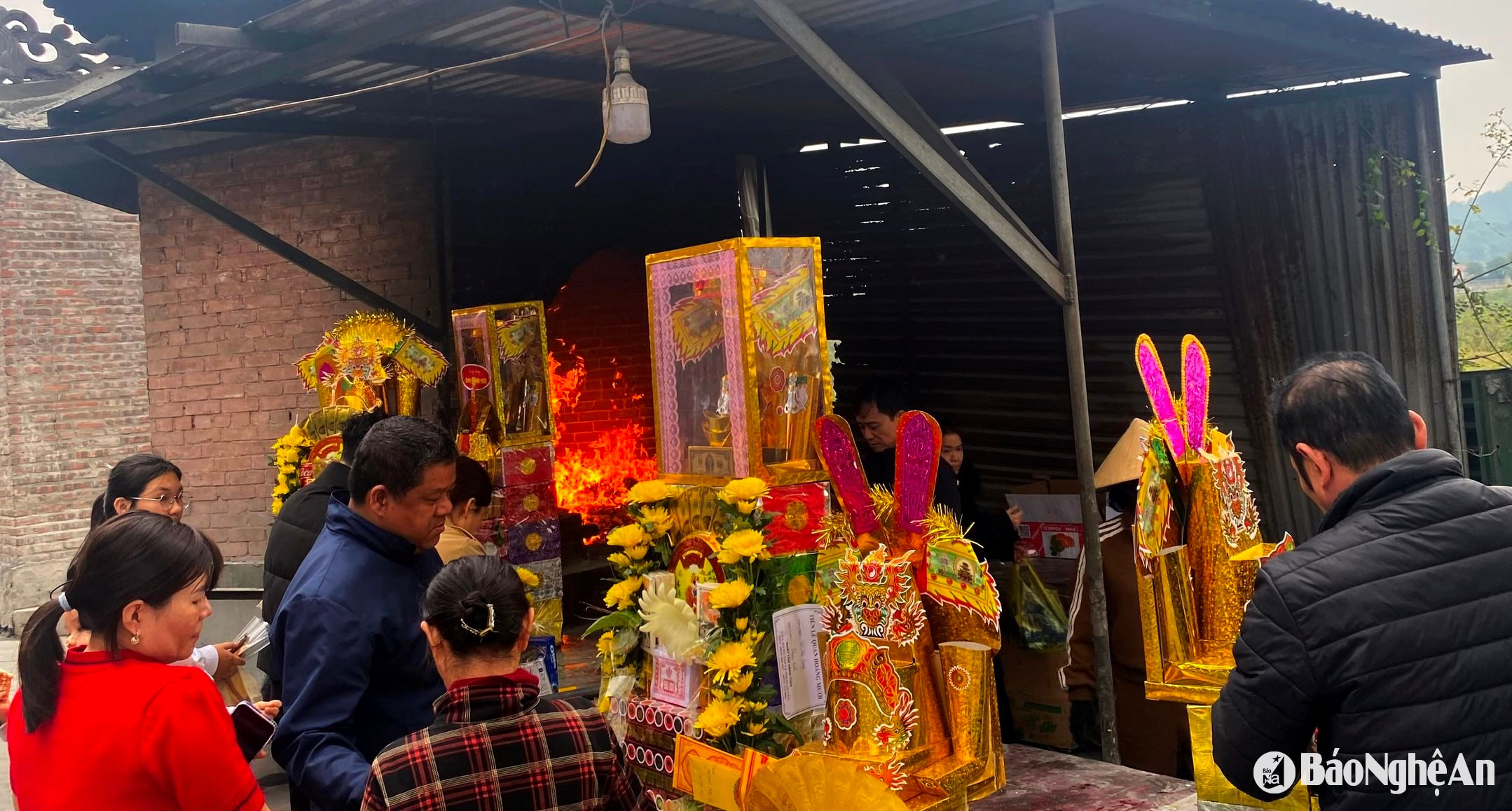
According to observations by reporters on the afternoon of February 12th, the full moon of the first lunar month, instead of civilized, economical, and environmentally friendly forms of worship, there were still trays overflowing with votive paper offerings and thick smoke from incense, large carts of votive offerings being pushed into the temple, and especially many paper horses lined up in front of the altar before being burned. Each paper horse, ranging in size from 1m to 2m, cost between 200,000 and 300,000 VND.
Furthermore, at this temple, according to our reporter's observations, there is still overcrowding and chaos, with many people scrambling for seats to worship and places to place offerings. The practice of hiring shamans to perform rituals to ward off bad luck is common, potentially leading to superstitious practices.
Begging is becoming increasingly common.
Located in Quang Trung ward, Diệc Pagoda is an ancient temple in the heart of Vinh City. During the first days of the new year, the pagoda always welcomes thousands of locals and tourists who come to offer prayers and admire its beauty.
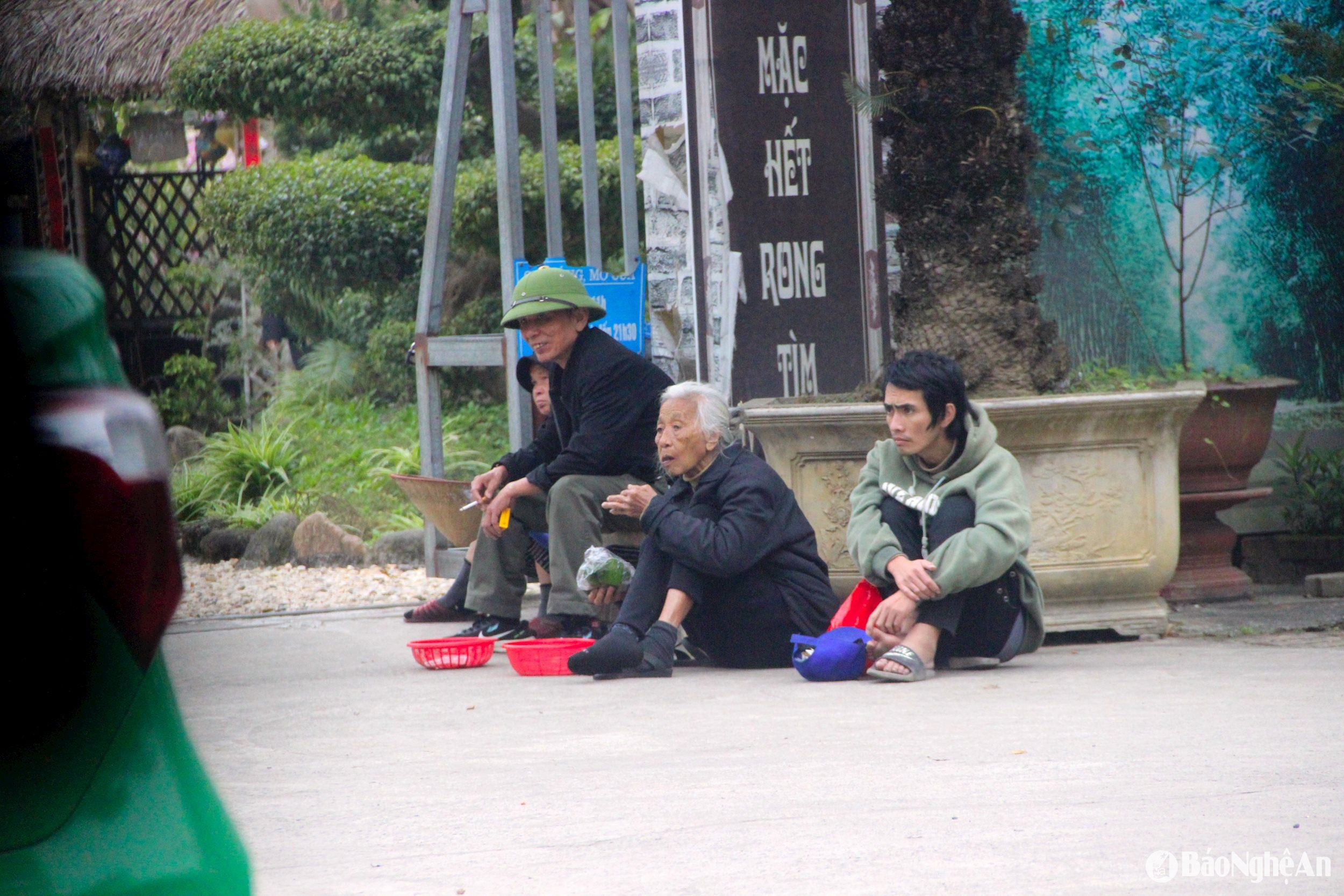
However, recently, many beggars have appeared right in front of the gate of Diec Pagoda, affecting the image of the pagoda as well as the urban landscape.
Whenever someone finishes a ceremony inside the temple, these people ask for money as they come out, which makes many people uncomfortable.
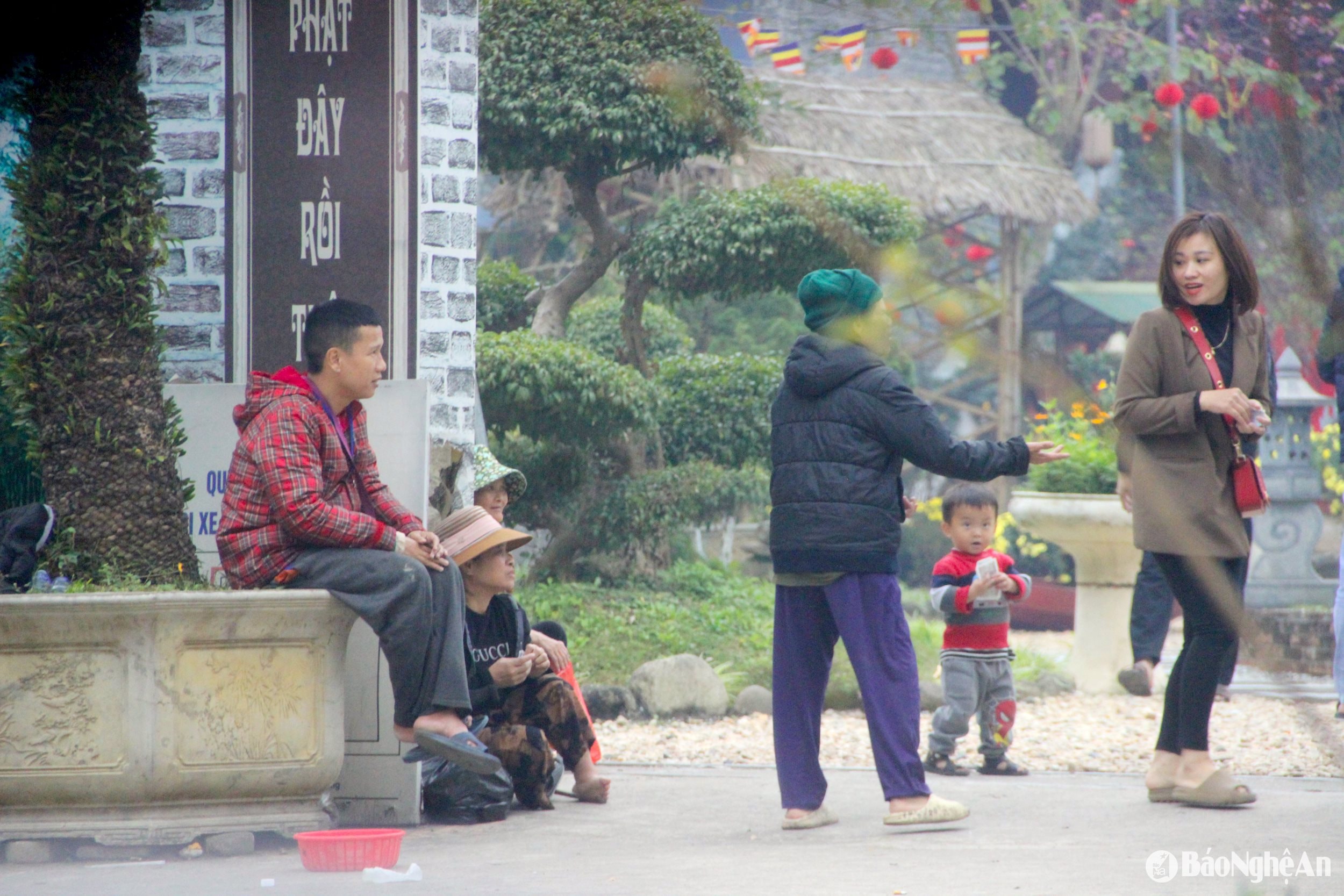
After attending a ceremony at Diec Pagoda, Ms. Nguyen Thuy Ha was pestered by beggars in front of the pagoda gate, asking for money. Ms. Ha said: "It's not good at all for people to gather around and beg for money in such a sacred and beautiful place; it makes the pagoda gate look unsightly."
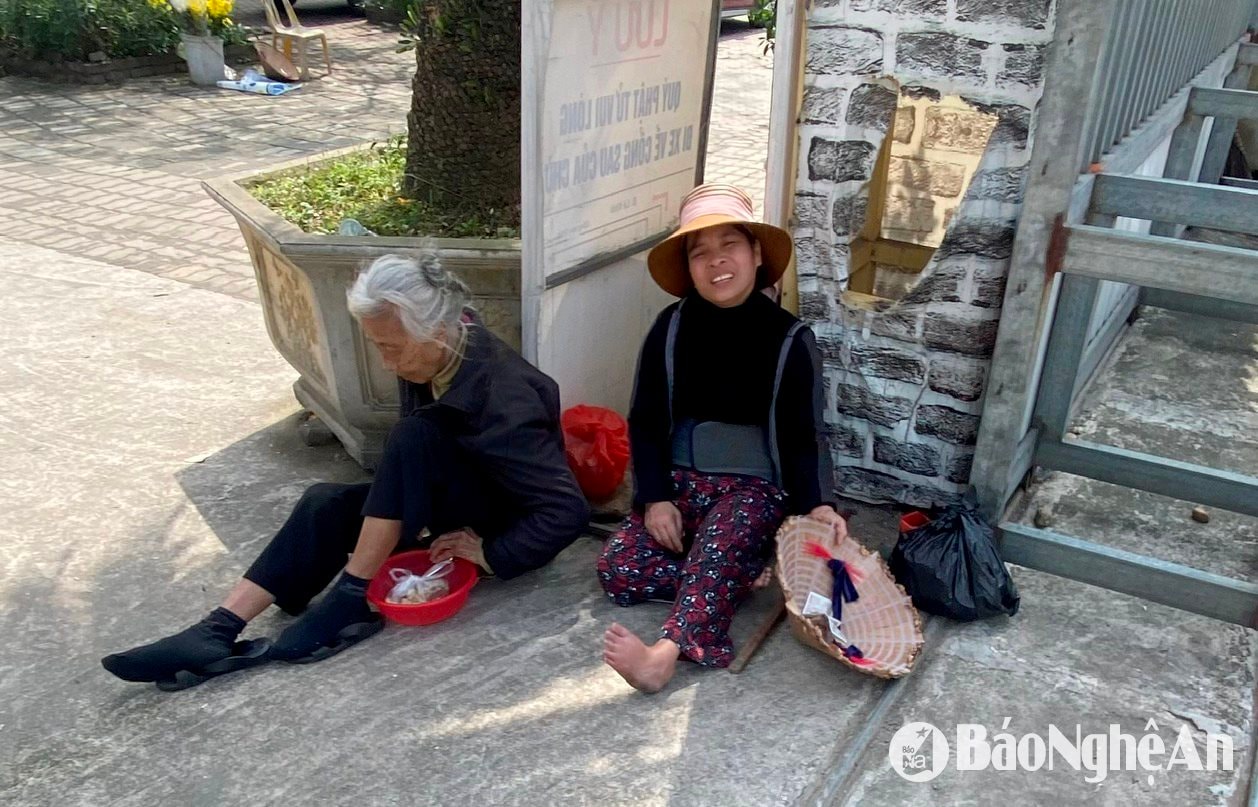
In fact, to address the issue of homeless beggars over the years, the city has issued numerous directives. However, monitoring has revealed that some wards and communes have not implemented these directives effectively. Public awareness campaigns and inspections have not been conducted regularly. The primary method used has been simply to expel them from the area. There has been very little effort in approaching, verifying their circumstances and backgrounds, and classifying them for coordinated action with relevant agencies and units to resolve the issue definitively.
Arbitrarily increasing parking fees.
Due to the large number of people visiting temples for worship and sightseeing at the beginning of the year, related services are also very vibrant. However, at some temples, the lack of price listings and inflated parking fees still occur.
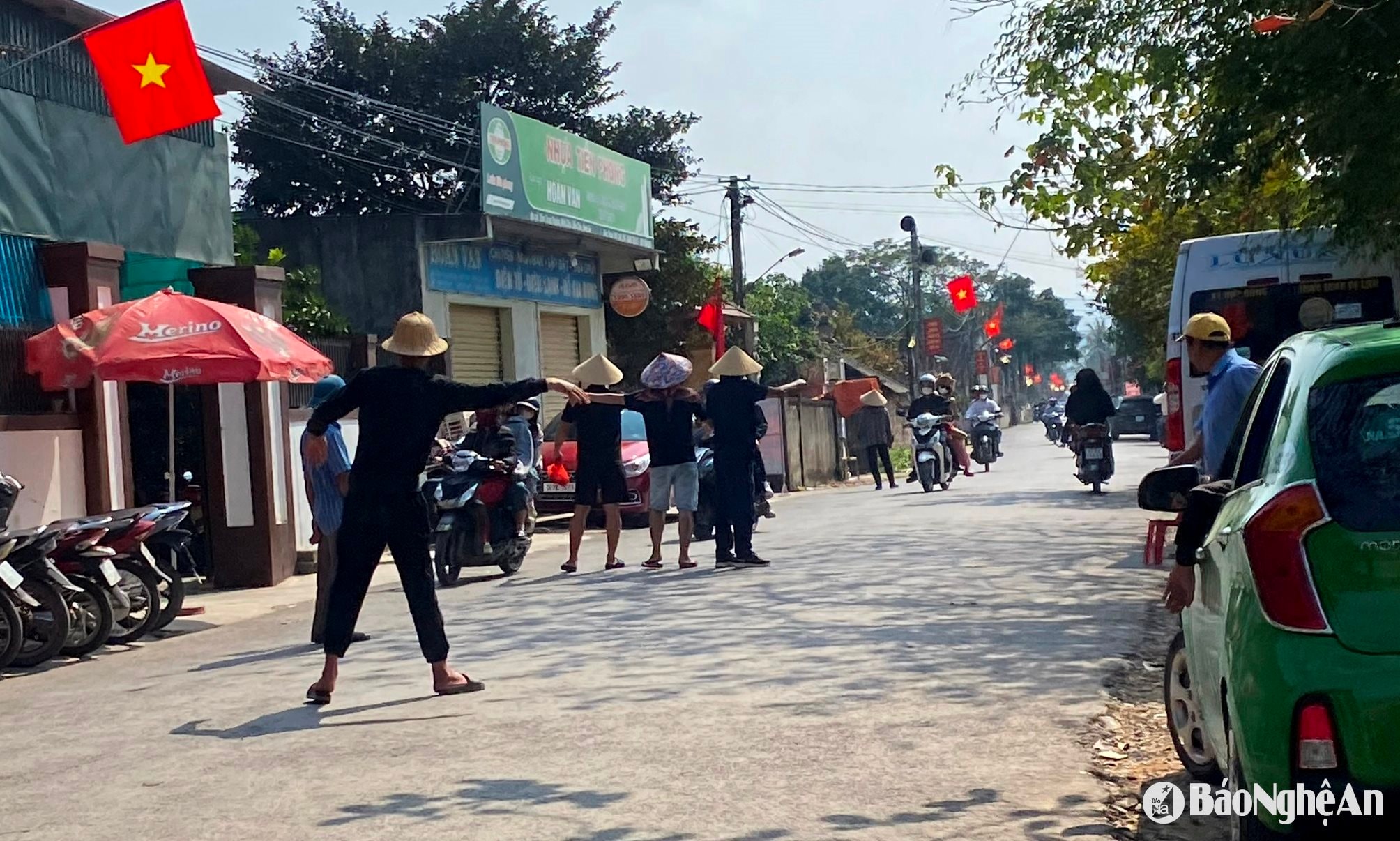
Co Am Pagoda is the largest pagoda in Dien Chau district, and in the early days of the year, it welcomes thousands of visitors from all over. The ambiguity surrounding parking fees at this pagoda continues to recur in the early part of this year.
According to our reporter's observations, whenever visitors arrive at the temple, many residents living around it spill out onto the street, waving and soliciting customers to park their vehicles, posing a potential traffic hazard. Furthermore, parking fees are almost never posted, with each household charging a different price. Motorcycle parking fees reach 10,000 VND/ticket, while car parking fees range from 30,000 to 40,000 VND/ticket, both higher than the regulated rates.
.jpg)
Ms. Phan Thi Loan from Cong Thanh commune, Yen Thanh district, said: "I go to Co Am pagoda to worship all year round. On normal days, the motorbike parking fee is only 3,000 VND, but now during Tet, the households have arbitrarily increased it to 10,000 VND per ticket. When I asked why they increased the price so much, the owners said it's more expensive during Tet. Although it's very annoying, I still accept paying."
Visiting temples at the beginning of the year is a religious custom and a spiritual need, but unsightly behaviors and images should be minimized and limited to ensure a civilized lifestyle, urban aesthetics, and a new cultural beauty.