

These areas indicate that the used car has been involved in a serious collision.
Thanks to "refurbishing" technology, old cars that have been involved in serious accidents can easily be "magically" restored to almost their original condition, but if you look closely, you can still tell the difference.
For various reasons, used cars remain attractive to customers. Buying a used car saves money compared to a new one, but inexperienced buyers may end up purchasing a vehicle that has been in an accident. According to experts, buyers can identify a car that has been in a collision or accident by observing the following areas:
Windshield
Unless subjected to a strong impact, a windshield is very difficult to damage or shatter. Therefore, cars that have had their windshields replaced are most likely those that have been involved in serious accidents or collisions.
To determine if the windshield has been replaced, pay attention to the specifications in the lower left corner. If the car was manufactured in 2010, the last line will usually have a 0. If the car was manufactured in 2011, the last line will be a 1; if it was manufactured in 2012, it will be a 2, and so on.
A replacement windshield will not have a "VIN" number matching the year of manufacture and will look less "refined".
Under the hood
When a collision occurs, the top of the hood can easily be repainted. However, the underside of the hood is where the car's condition is most clearly revealed.
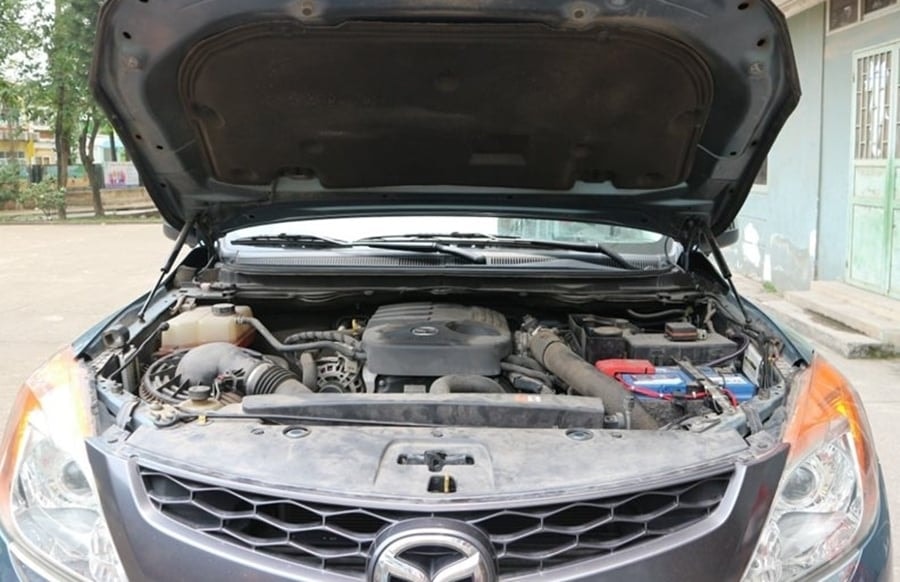
If the car has never been in an accident, the underside edge of the hood will be straight and even, without dents or depressions. The edges on both sides will also be symmetrical, and will not warp when closed.
Additionally, the small holes on the hood's frame are intact. If these circular marks are dented or deformed, the hood has certainly been tampered with.
trunk of the car
Many people buying used cars often don't check the trunk, but this is where the history of a serious rear-end collision is often recorded.
Therefore, open the trunk and carefully observe every small detail, especially the edges, to see if there are any signs of dents or repairs on either side, and whether the rear door edges are even and intact... If there are any signs of straightening or reshaping, it indicates that the car has been involved in a strong rear-end collision.
Mudguards
Often made of synthetic plastic, fenders and bumpers are prone to cracking or breaking in collisions. Therefore, if a fender or bumper shows cracks or patches, it indicates the vehicle has been in a collision.
If the bumpers or fenders have been replaced or have multiple coats of paint, it's highly likely the car has been refurbished after the accident.
Door edges and gaps
Cars being hit or struck on the sides is also quite common. Therefore, these areas will "reveal" that the car has been in an accident or collision.
When manufactured in a factory, the door gap and the edge of the car are a seamless, uniform piece. However, if the car has been subjected to significant pressure, the door edge may have been manually reshaped, resulting in discrepancies between the edge and the door gap.
The snails
One good way to identify a car that's been in an accident is to examine the bolts and nuts. Open the hood, look at the front frame, and pay attention to each bolt and nut, each detail.
If the car has been involved in a serious collision, these bolts will show signs of being removed for repair.