

Developing supporting industries for the textile and garment industry in Nghe An.
Textiles and garments are one of the major export sectors of Nghe An province. The province currently has over 50 operating companies and factories, creating approximately 40,000 jobs and exporting products to around 20 countries and territories. The supporting industries are a matter of significant concern.
Mainly imported raw materials
Nationwide, the textile and garment industry is heavily dependent on imported raw materials: 99% of cotton yarn (approximately $3 billion) is imported. Similarly, 70% of synthetic yarn ($2 billion) and 80% of fabric ($13 billion) are imported.
The An Nam Matsuoka garment factory, with 18 sewing lines, each employing nearly 130 workers (totaling over 2,500 workers), is currently the largest garment factory in the VSIP Industrial Park, specializing in producing clothing for export to Japan and other countries worldwide. To meet export requirements, the factory's raw materials and accessories are all imported.
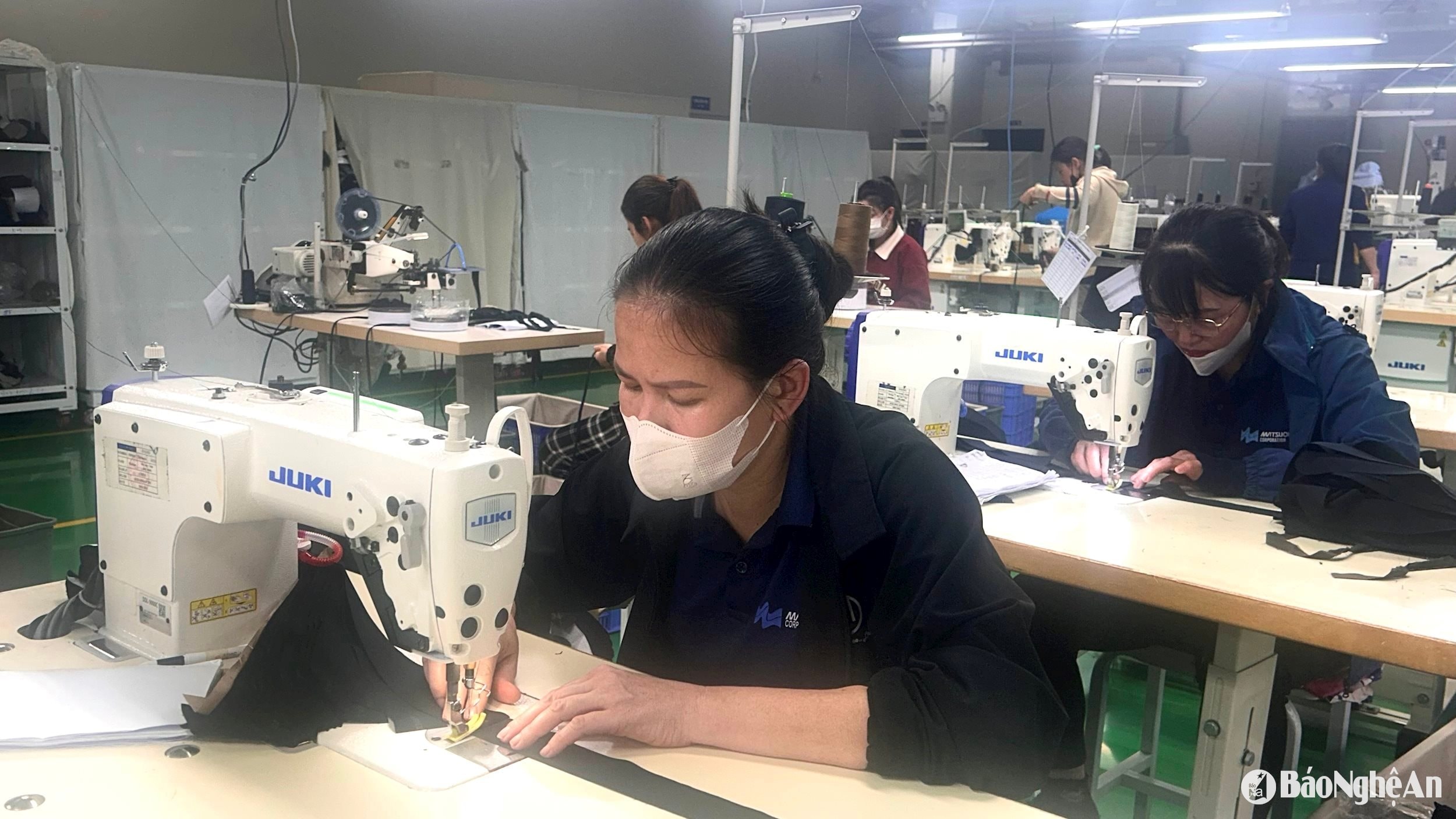
According to the company's General Director, Mr. Teramur Akito, the factory's accessories are imported from overseas, while the sewing thread and other accessories are imported from a company in Vietnam, which is also Japanese. The accessories are needed in large quantities and must meet European standards as required by customers.
The good news is that at this factory, the cardboard and plastic packaging were purchased from Thien Phu Co., Ltd. and another enterprise in Vinh, which partly shows that Vietnamese accessory products are also being considered, even if they are just by-products.
Haivina Kim Lien Company (a 100% South Korean-owned enterprise) in Kim Lien commune, Nam Dan district, specializes in processing and manufacturing export goods such as gloves and clothing for European countries. Currently, the company provides employment for over 3,000 workers, mainly in Hung Nguyen, Nam Dan, and Do Luong districts.
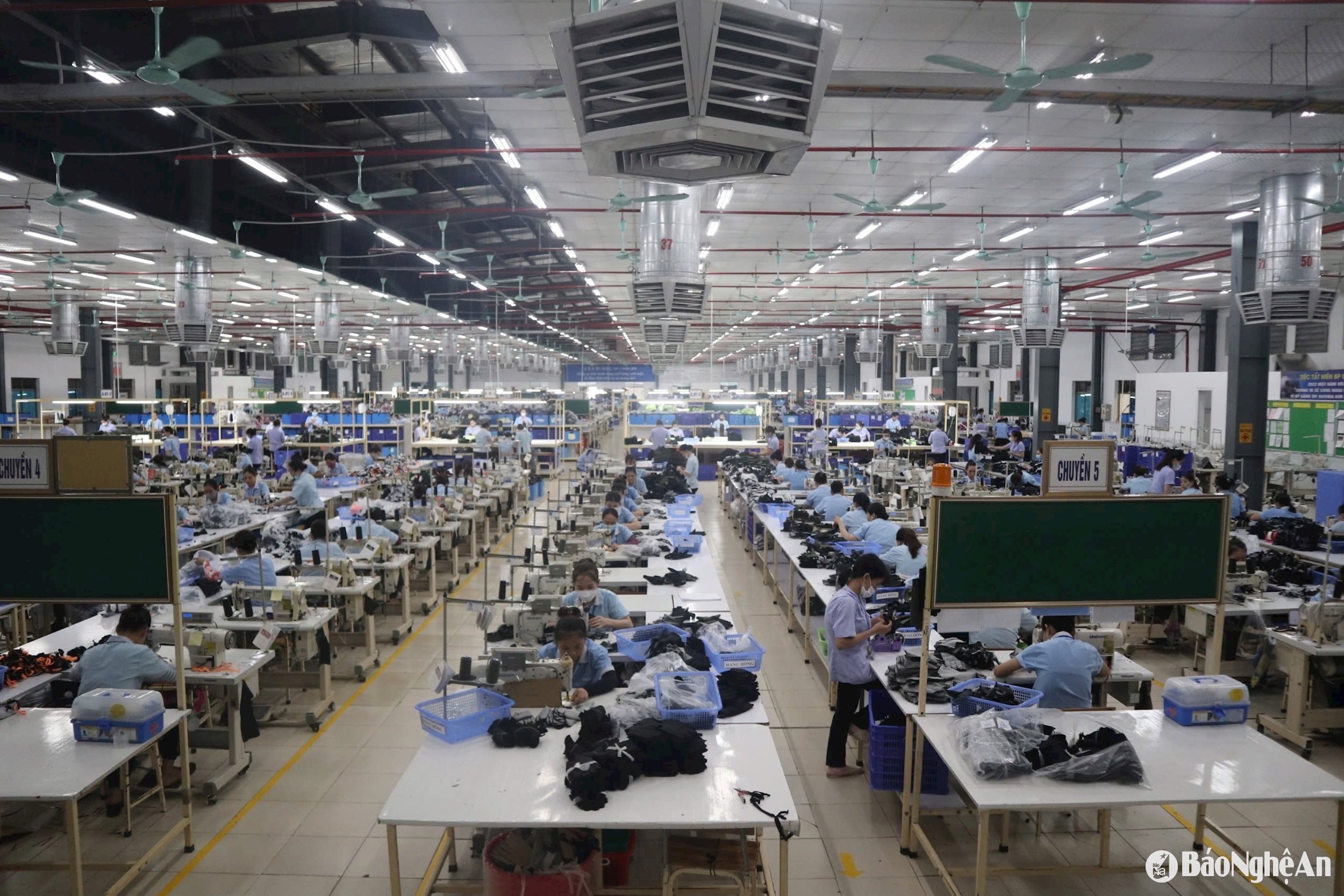
Ms. Chu Thi Ngoc, Assistant General Director of the company, said: "As a business producing goods for Europe, fabrics and accessories must meet standards, and we import the main raw materials from abroad. Other accessories such as cardboard boxes, lead, zippers, leather, labels, etc., the company also has to purchase from other businesses in the North."
Minh Anh Garment Corporation of Nghe An currently has 4 factories in Nghe An province, located in Vinh City, Do Luong, Tan Ky, Con Cuong, etc., providing jobs for more than 7,000 workers annually. Mr. Nguyen Dinh Sinh, the General Director of the company, stated that the company mainly imports garment accessories from South Korea and China. Other accessories such as fabric, thread, embroidery, lace, etc., are produced domestically.
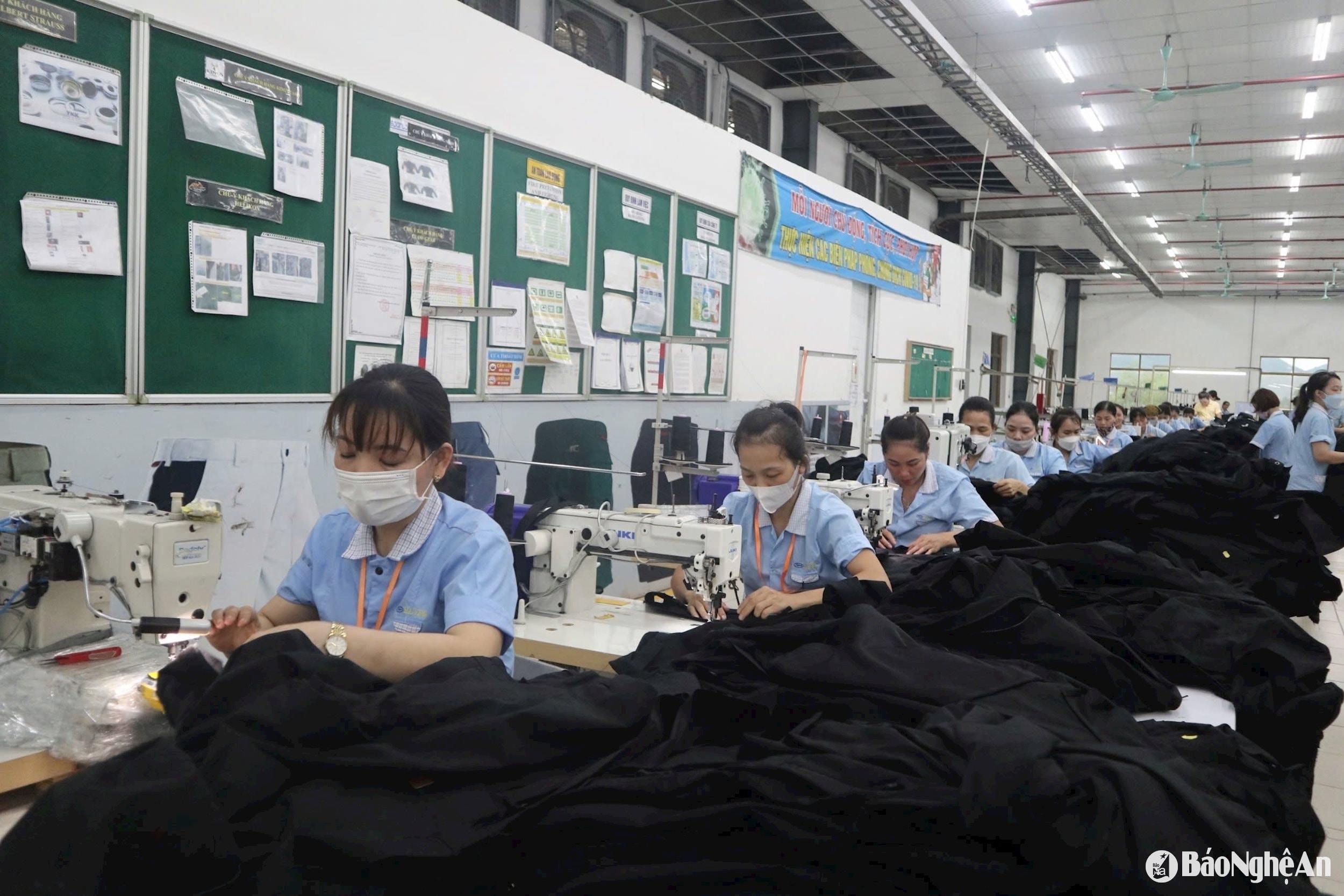
Textile and garment businesses in Nghe An province in particular, and Vietnam in general, are positioned low in the global supply chain, with approximately 65% of textile and garment businesses exporting garments through outsourcing. Net profit margins are only 1-3%. The advantage of lower wages is a key factor attracting businesses to invest in Nghe An.
Approximately 25% of exports are conducted using the OEM/FOB method – customers provide the designs, and the factory purchases the components, manufactures the garments, and ships them to the customer, with a profit margin of 3-5%. Only 10% of exports are conducted using the ODM method – original design by the manufacturer, also known as private labeling, a form of contract manufacturing, with a profit margin of 5-7%.
Like the rest of the country, Nghe An province imports up to 80% of its fabric for garment exports; approximately 70% of orders are for contract manufacturing. Most raw materials, such as fabric and accessories like buttons and zippers, must be imported from China and South Korea; domestic supply only meets the demand for some needles and sewing threads.
Currently, Nghe An only has one yarn factory belonging to Hoang Thi Loan Textile and Garment Joint Stock Company, with a production capacity of 20,000 tons of yarn per year; and one embroidery facility (Lac Son Industrial Cluster, Do Luong district) with a workforce of 150-200 people embroidering accessories for garment factories and some other handicraft weaving facilities.
Overall, the textile and garment industry has a low level of self-sufficiency in raw materials due to the underdeveloped supporting industries; it mainly focuses on garment processing for export and is trapped in a vicious cycle: importing cotton to spin yarn, then selling the yarn, and then importing fabric again.
According to the Nghe An Department of Industry and Trade, the provincial budget allocates 2-2.5 billion VND annually to support supporting industrial enterprises. The total funding from the local budget for projects implemented to date has reached 6.34 billion VND. However, access to preferential policies from the central government for supporting industries remains difficult. The local budget allocated annually for the development of supporting industries is still low and challenging to implement..
Great potential for supporting industries.
Nghe An has potential in raw materials for cellulose fiber production, such as bamboo and rattan, due to having the largest area in the country, of which forest land accounts for 53.3%; and potential in producing artificial fiber products from petrochemical raw materials from the Nghi Son oil refinery complex in Thanh Hoa.
The challenge is to be able to produce raw materials and components for the industry domestically, while simultaneously protecting the environment and forming integrated textile-garment-material supply chains. Increasing the localization rate is essential to ensure businesses have control over production, reduce costs, and enhance competitiveness.
Hiện nay, vấn đề nan giải nhất của các doanh nghiệp là làm sao tuyển dụng cho đủ lao động còn sản phẩm phụ trợ họ đang tìm kiếm nguồn cung nhập khẩu, tuy nhiên giá thành còn cao.
Trước mắt, các doanh nghiệp bám sát diễn biến trong, ngoài nước, xây dựng các kịch bản tăng trưởng và giải pháp tình huống cần thiết để chủ động và phản ứng kịp thời với những biến động thị trường, tìm kiếm các thị trường mới. Tận dụng hiệu quả ưu đãi thuế quan từ các FTA và đa dạng hóa thị trường, đối tác, khách hàng, sản phẩm có giá trị gia tăng cao…
Về lâu dài, cần nghiên cứu vận dụng Chiến lược phát triển ngành dệt may và da giày, từ nay đến năm 2030, chuyển dần từ phát triển nhanh sang phát triển bền vững theo mô hình kinh tế tuần hoàn; hoàn thiện chuỗi giá trị trong nước và tham gia ở vị trí có giá trị cao trong chuỗi cung ứng toàn cầu. Các doanh nghiệp dệt may tham gia sâu hơn vào các chuỗi cung ứng, chuỗi giá trị toàn cầu trên cơ sở tăng năng lực cạnh tranh.
Nghệ An hiện đang ưu tiên phát triển các dự án dệt may có quy mô lớn, tập trung vào các khâu có giá trị gia tăng cao, trở thành sản phẩm xuất khẩu chủ lực, tham gia vào chuỗi cung ứng toàn cầu. Phát triển các sản phẩm may mặc phù hợp với nhu cầu tiêu dùng nội địa, đủ khả năng cạnh tranh với các thương hiệu nhập khẩu nhằm thực hiện có hiệu quả cuộc vận động “Người Việt Nam ưu tiên dùng hàng Việt Nam”.
Mới đây, Nghệ An mới phê duyệt chủ trương đầu tư dự án Mega Textile - Vietnam, một dự án lớn trong ngành công nghiệp dệt may được triển khai tại xã Diễn Thọ, huyện Diễn Châu, thuộc Khu công nghiệp Thọ Lộc giai đoạn 1 (Khu kinh tế Đông Nam).
Lãnh đạo Sở Công thương Nghệ An cho biết thêm: Nghệ An cũng đặt mục tiêu tốc độ tăng trưởng kim ngạch xuất khẩu ngành dệt may, da giày bình quân đến hết năm 2025 đạt từ 17 - 18%/năm, giai đoạn 2026 - 2030 đạt 16 - 17%/năm. Phấn đấu đến hết năm 2025, kim ngạch xuất khẩu nhóm hàng dệt may, da giày đạt khoảng 755 triệu USD; đến năm 2030 đạt khoảng 1.600 triệu USD. Nâng dần tỷ lệ nội địa hóa, đến năm 2030 phấn đấu tỷ lệ nội địa hóa ngành dệt may, da giày đạt trên 45%.
Tỉnh cũng sẽ tập trung thu hút đầu tư phát triển công nghiệp hỗ trợ sản xuất các sản phẩm: Xơ, kéo sợi phục vụ cho ngành dệt, nhất là sợi tổng hợp; xơ sợi chức năng, xơ sợi nguyên liệu mới thân thiện môi trường, nâng dần tỷ lệ nội địa hóa, giảm dần nguyên liệu đầu vào của nhập khẩu. Thu hút đầu tư các sản phẩm nhựa hỗ trợ cho ngành dệt may, như: Ống nhựa, các sản phẩm hóa chất hỗ trợ cho ngành dệt…
Nghệ An cũng ưu tiên phát triển các dự án sản xuất mặt hàng vải dệt kim, dệt thoi, là sản phẩm có khả năng gắn kết các khâu sản xuất sợi, may mặc và sản phẩm vải cao cấp phục vụ may xuất khẩu đáp ứng nhu cầu các nhà máy may mặc trong nước.