

Pepper prices today, March 2nd, 2025: Slight increase at the end of the week.
Today, March 2nd, domestic pepper prices are at 157,000 - 159,000 VND/kg. This represents a slight increase of 1,000 to 2,000 VND/kg compared to yesterday, marking the end of the week. Pepper prices have increased in most major export markets since the beginning of the year.
Domestic pepper prices today
The highest pepper purchase price recorded in key pepper-growing regions (Dak Lak, Lam Dong, Gia Lai, Dak Nong, Ba Ria - Vung Tau, Binh Phuoc) was 159,000 VND/kg.
Specifically, in Dak Nong province, the price of pepper is 159,000 VND/kg, a slight increase of 1,000 VND/kg compared to yesterday.
In Gia Lai, the price of pepper is 157,000 VND/kg, an increase of 1,000 VND/kg compared to yesterday.
In Dak Lak, the price of pepper is 159,000 VND/kg, an increase of 1,000 VND/kg compared to yesterday.
In Binh Phuoc and Dong Nai provinces, the price of pepper today is 158,000 VND/kg, a sharp increase of 2,000 VND/kg compared to yesterday.
In Ba Ria - Vung Tau, the price of pepper today is 157,000 VND/kg, an increase of 1,000 VND/kg compared to yesterday.
Thus, the lowest price for pepper in the domestic market today is 157,000 VND/kg.
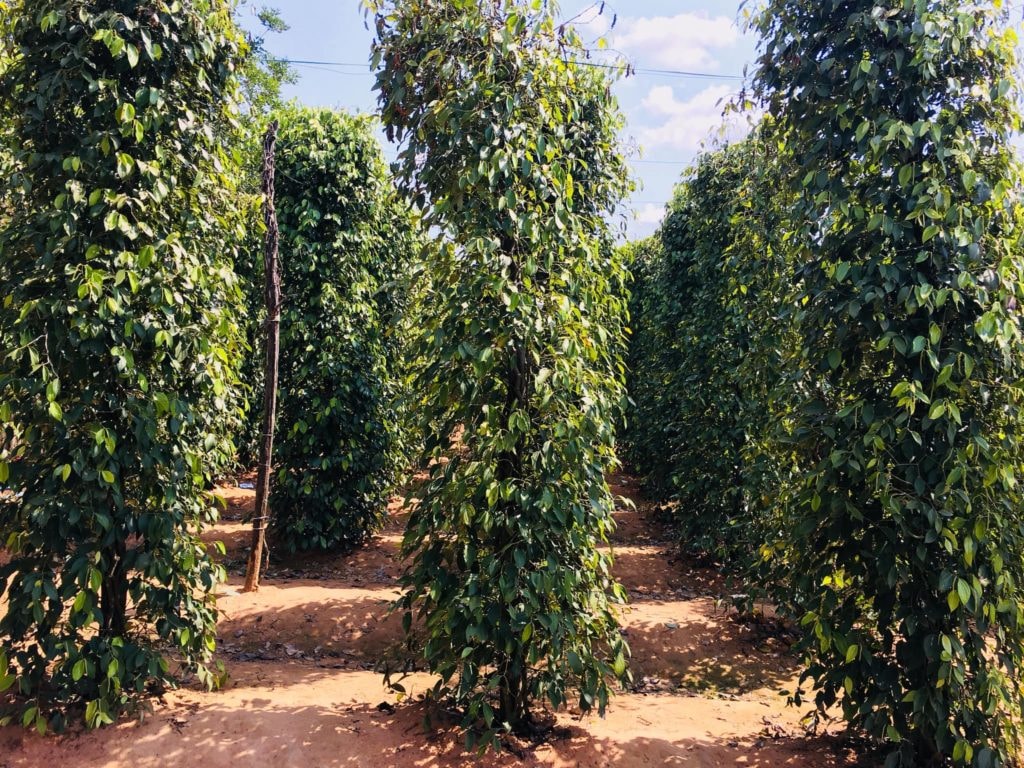
In the Vietnamese domestic market, at this time last year, pepper plantations were already in their peak harvesting season. However, this year, farmers only started setting up nets and preparing for harvest in mid-February.
The main reason is unfavorable weather conditions during the plant's growth and fruiting process. During the flowering stage, prolonged intense sunlight and drought cause flowers to fall off, resulting in a very low fruit set rate. Pepper growers have to carefully manage and cultivate the plants, leading to later ripening of the peppers and delaying the harvest season by about a month.
Today's world pepper prices
On the world market, based on quotations from exporting companies and export prices in various countries, the International Pepper Association (IPC) has updated the prices of various types of pepper traded on the international market on March 2nd (local time) as follows:
Indonesian Lampung black pepper prices remained unchanged from yesterday at US$7,235/ton. Similarly, Muntok white pepper prices also remained unchanged from yesterday at US$9,959/ton.
The price of Brazilian ASTA 570 black pepper remained unchanged from yesterday at $6,850 per ton.
Malaysian ASTA black pepper prices remained stable compared to yesterday, currently at US$9,500/ton. Additionally, the price of ASTA white pepper from the same country also remained unchanged compared to yesterday, at US$12,000/ton.
Prices for all types of Vietnamese pepper remained unchanged compared to yesterday. Specifically, the price of Vietnamese black pepper (500 gr/l) reached US$6,900/ton; and the price of black pepper (550 gr/l) reached US$7,100/ton.
Similarly, the price of Vietnamese white pepper remained unchanged from yesterday at $9,900 per ton.
According to the Import-Export Department (Ministry of Industry and Trade), pepper prices have increased since the beginning of the year in most major export markets. Indonesia recorded the strongest increase, with white pepper prices rising by 12.8% and black pepper by 6.9%. In Brazil, export pepper prices increased by 7.5%, while Malaysia also saw increases of 5.9% for black pepper and 8.4% for white pepper.
Overall, pepper prices are trending upwards and show signs of remaining high this year. Although the market is undergoing a correction, export pepper prices continue to inch up, providing positive signals for farmers.
However, inventory management strategies need to be carefully considered to minimize risks in the face of global market fluctuations.
In 2024, US importers increased their stockpiling purchases due to concerns about high prices, resulting in a 30-40% increase in actual purchases, while demand only increased by about 5%. This benefited farmers and stockpiling entities, who enjoyed favorable prices early in the season.
However, many exporting businesses are facing difficulties because they have signed long-term sales contracts with US customers. When prices rise sharply at the time of delivery, they suffer losses. This highlights the importance of supply chain integration and improved price forecasting capabilities.