

How does a lack of coolant harm a car?
Coolant is one of the most important components in a car, yet it's often overlooked.
The harmful effects of a car lacking coolant.
To ensure the engine and other components of the vehicle operate normally within acceptable temperatures, users should regularly check the coolant level. A lack of coolant can lead to several problems, including:
The engine is overheating.
As the name suggests, coolant helps to cool down the car engine. Pistons move up and down in the engine several thousand times per minute. Therefore, a lack of coolant will cause heat to build up inside the pistons, easily causing the car to overheat both inside and out. In addition, the car's engine power will also decrease significantly.
Engine stalling/failure
When an engine overheats, a car can experience a sudden drop in performance, leading to vibrations or stalling. This is especially dangerous when driving on a highway.
Excessively high engine temperatures can also melt metal parts inside the engine, such as piston rings and pistons.
Furthermore, high temperatures cause the components to expand, sealing the combustion chamber and leading to piston seizure in the cylinder, cracking the coolant reservoir seal, and potentially causing dangerous fires or explosions.
Increased repair costs
Besides damaging the engine, a lack of coolant also forces car owners to replace many parts such as cylinder head gaskets, water pumps, pistons, or even the entire engine. The cost of repairing and replacing these parts is quite high.
Increase heat consumption
An overheated engine will operate less efficiently, leading to higher-than-normal fuel consumption. This not only increases operating costs but also harms the environment.
How often should I change my car's coolant?
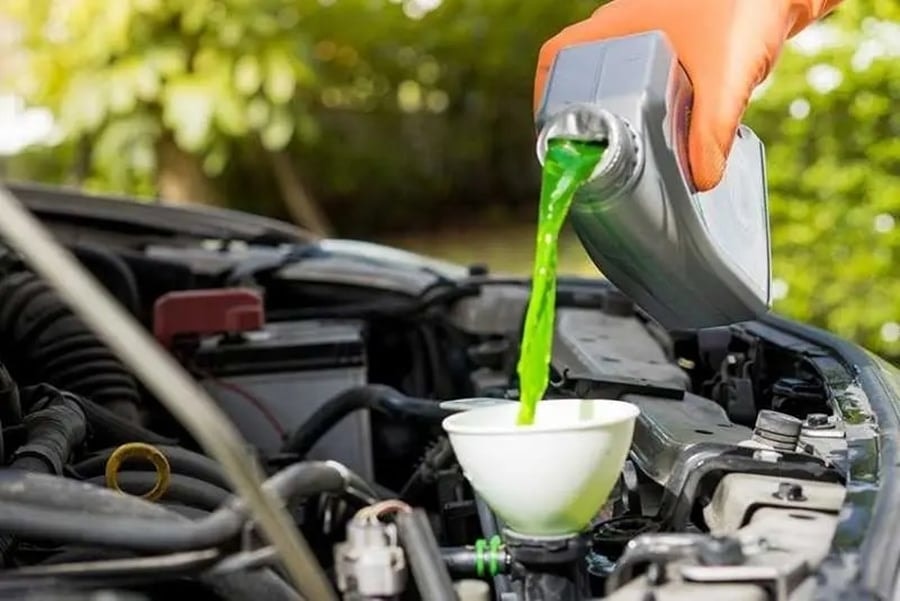
To ensure your car engine runs properly at low temperatures, you should check your coolant level regularly. The coolant reservoir is usually located under the hood, inside the engine compartment.
During operation, the operator should monitor the coolant system's condition using the digital gauge cluster. If the gauge needle is at the C (Cool) mark, the engine compartment temperature is stable. If the gauge is at the H (Hot) mark, the coolant system needs to be checked, topped up, or replaced.
Experts recommend that after approximately 40,000-50,000 km (equivalent to 2-3 years), the coolant reservoir should be cleaned and replaced. However, if the vehicle is driven more frequently or in harsh weather conditions, the coolant may run out quickly or leak. Therefore, regular coolant checks are necessary.