

Remnants of a bygone era in the Cat Van evacuation zone.
Located beside the tranquil Lam River, Cat Van (Thanh Chuong) was once considered a base and evacuation point for many agencies and units during the fierce years of the resistance war against the US to save the country.
-2ff4c5d8af5d67b35c749ca6572bd0ab.jpg)
Memories of a glorious era
I visited Cat Van (Thanh Chuong district) one day in mid-March, when the kapok flowers were ablaze with vibrant red along the banks of the Lam River. Cat Van is located on the right bank of the Lam River, formerly the communes of Thanh Cat, Thanh Bai, and Thanh Binh, a land rich in historical and cultural traditions and always full of warmth and camaraderie.
This place also features the famous Dao Ngan communal house, which served as the headquarters of the Cat Van Party branch.During the years 1930-1931, it served as the headquarters of the local Soviet government during the revolutionary upsurge of 1930-1931. After the revolution, Dao Ngan communal house was the venue for the 2nd Congress of the Nghe An Provincial Party Committee (1949), attended by comrades Pham Van Dong and Nguyen Chi Thanh.
Greeting me at the commune's headquarters, Ms. Bui Thi Nga, Vice Chairman of the People's Committee, and Ms. Tran Thi Tuyet, a policy officer, enthusiastically led me on a tour of the sites where agencies and units were evacuated. Today, the traces of the bunkers, fortifications, and trenches are gone, replaced by lush green hills covered with acacia and melaleuca trees. However, the heroic memories of those years of the great national resistance war remain deeply etched in the hearts of the people here.
-ae3961a36048be80dd868b48f6d1e193.jpg)
.jpg)
Visiting the abandoned Cluster of Schools in Hamlet 2 of Cat Van Kindergarten, we found a commemorative plaque within the school grounds that clearly stated: "Here, Military Hospital 4 stood for 16 years during the resistance war against the US and the early period of the war to protect the Fatherland (1965-1981). With the close bond between the military and the people, and with the support and care of the local Party committee, government, and people, the hospital built nearly 50 thatched houses scattered among the people, surrounded by ramparts and fortifications on more than 10 dome-shaped hills."
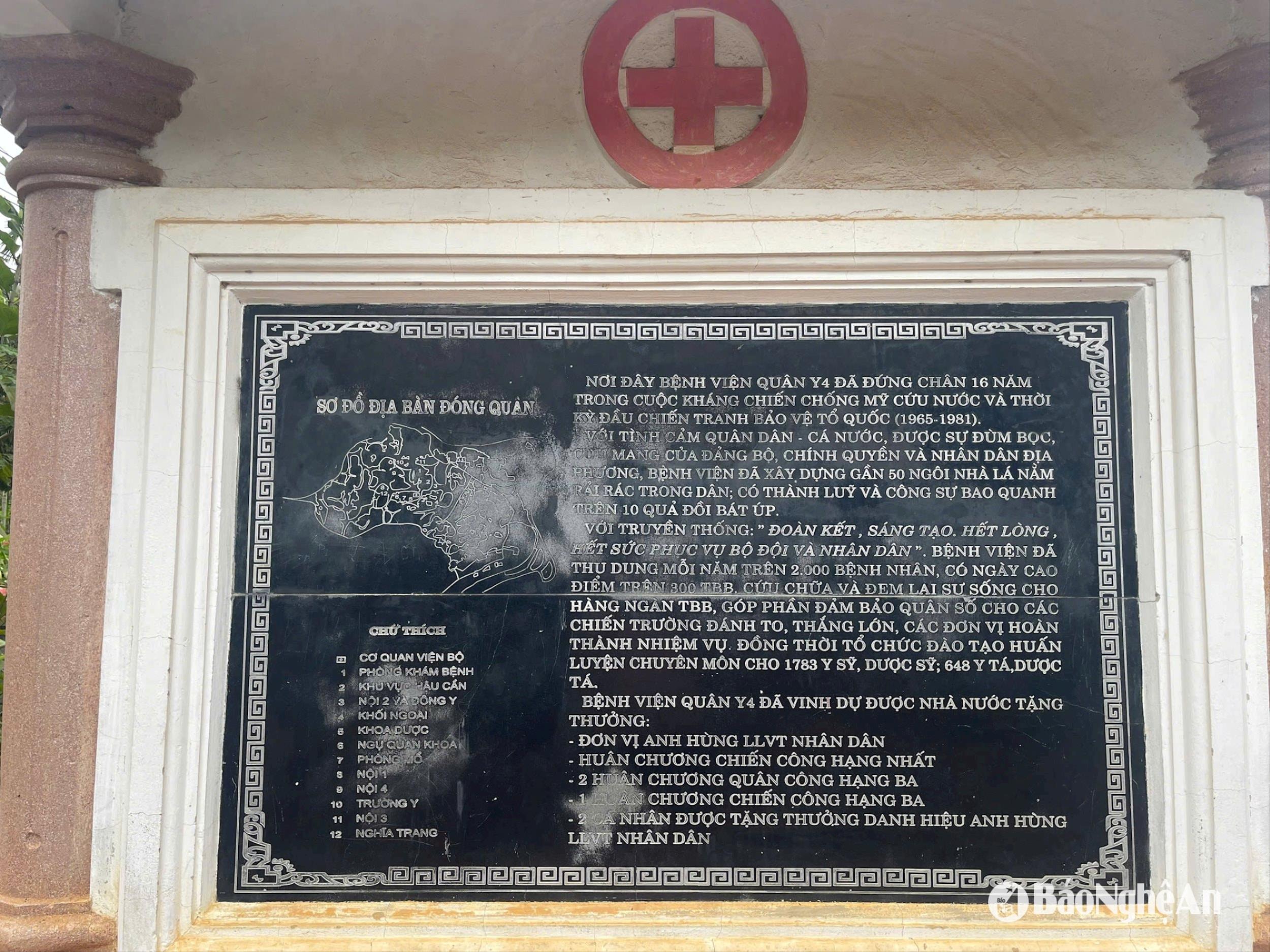
These brief descriptions are enough to convey the deep and unwavering bond between the people in the evacuation areas and the military units. It is even more precious that amidst the fierce bombing, the people's support for the hospital was not only a form of assistance, but also a symbol of patriotism and the close relationship between the military and the people during those difficult but meaningful years.
Looking back at history, since the US imperialists escalated their bombing campaign against North Vietnam in 1964, in late August 1964, the Party Committee and the Administrative Committee of Thanh Cat and Thanh Bai communes welcomed a preliminary team from Military Medical Institute 4 to survey the site so that the 4th Military Region Command could make the earliest possible decision on relocating the hospital for evacuation.
.jpg)
After a period of research and topographical surveys, and facing fierce attacks from the American imperialists, especially in areas like Dung and Rang – the political center of Thanh Chuong district – by early April 1965, trucks and ambulances traveled back and forth, crossing Thanh Cat and Luu Son. Many boats of the transport team on the Lam River also docked at Cung ferry terminal, carrying equipment, machinery, medicine, and wounded soldiers from Vinh to Thanh Cat, Thanh Bai, and Thanh Binh. By July 1965, all facilities, equipment, technical supplies, and more than 300 wounded soldiers of Military Hospital 4 had been evacuated to a safe location.
Mr. Bui Gia Hao, Secretary of the Party Committee of Cat Van commune, shared: According to the history of the commune's Party Committee, the years when agencies and units evacuated here have been clearly recorded. Due to the importance of treating wounded and sick soldiers, Military Hospital 4 arranged a forward station in Trung Son commune (Do Luong district) - opposite Cat Van on the other side of the Lam River, with a relay station at Cung and Soi ferry crossings. The hospital's administrative, logistics, political, and specialized departments were scattered among the people on 10 dome-shaped hills of the three communes of Thanh Cat, Thanh Bai, and Thanh Binh at that time.
.jpg)
According to the history of the Cat Van commune Party Committee, in just 3 months of preparation, 38 thatched houses with surrounding ramparts; 1,200 individual bunkers; and 1,500 meters of trenches were completed by the local army and people, ready to receive wounded and sick soldiers for evacuation.
Although the war is long over and Military Hospital 4 moved to Vinh City nearly 40 years ago, the memories of the time when the hospital was evacuated there remain vivid in the minds of many people in Cat Van. Many elderly people in Cat Van still remember that during the hospital's evacuation, due to the large number of wounded and sick soldiers, many families and clans even gave up their ancestral temples to be used as surgical facilities. Many families welcomed wounded and sick soldiers into their homes to care for and nurture them; if they didn't have an annex, they would set up beds and platforms right in the main house for the wounded to lie on; they even dug tunnels for the wounded to take shelter in when enemy planes attacked. Many families even placed beds for wounded soldiers in front of the main house, where the ancestral altar was located; all daily activities such as eating, drinking, hygiene, and changing bandages were done there. When a wounded soldier died, the people also took over the hospital's funeral arrangements as if they were their own family members.
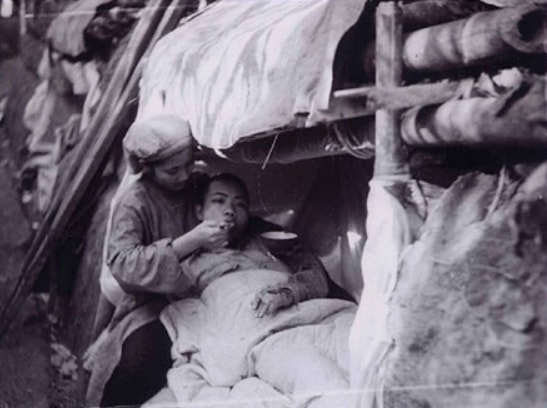
Thanks to thorough preparation, throughout the years of fierce war, Military Hospital 4 admitted over 2,000 patients each year, with peak days seeing over 300 wounded and sick soldiers; contributing to the treatment of thousands of wounded and sick soldiers, ensuring troop numbers for the battlefields...
Although Military Hospital 4 moved to Vinh City after peace was restored, the remnants of 16 years of evacuation here will forever remain a part of our glorious historical memory.
Silent cemetery of fallen soldiers
In addition to the hospital's administrative offices, clinics, and logistics areas, a cemetery was also built where Military Hospital 4 was evacuated. It served as the burial place for wounded and sick soldiers, as well as doctors, nurses, and specialists who were treated there.
.jpg)
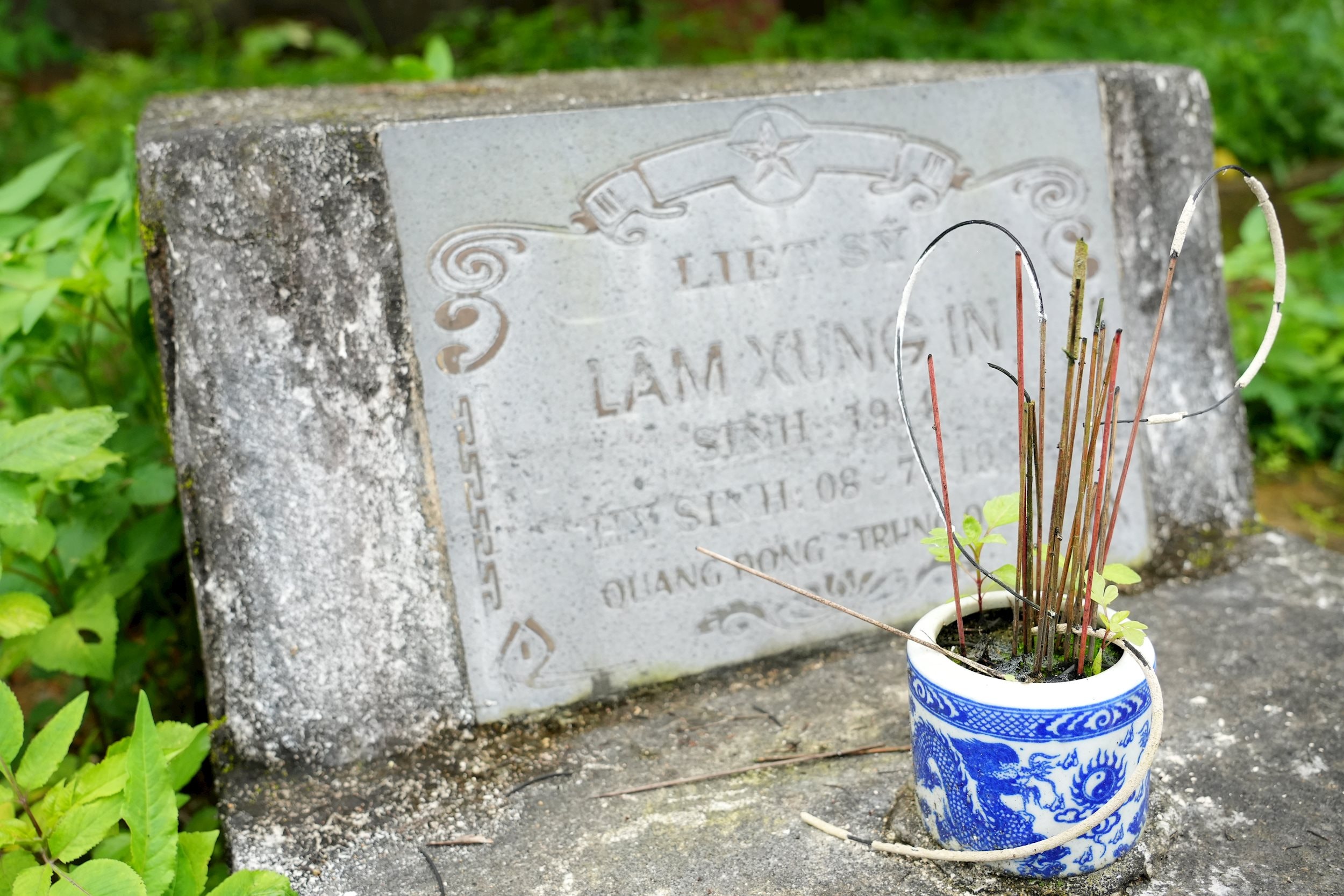
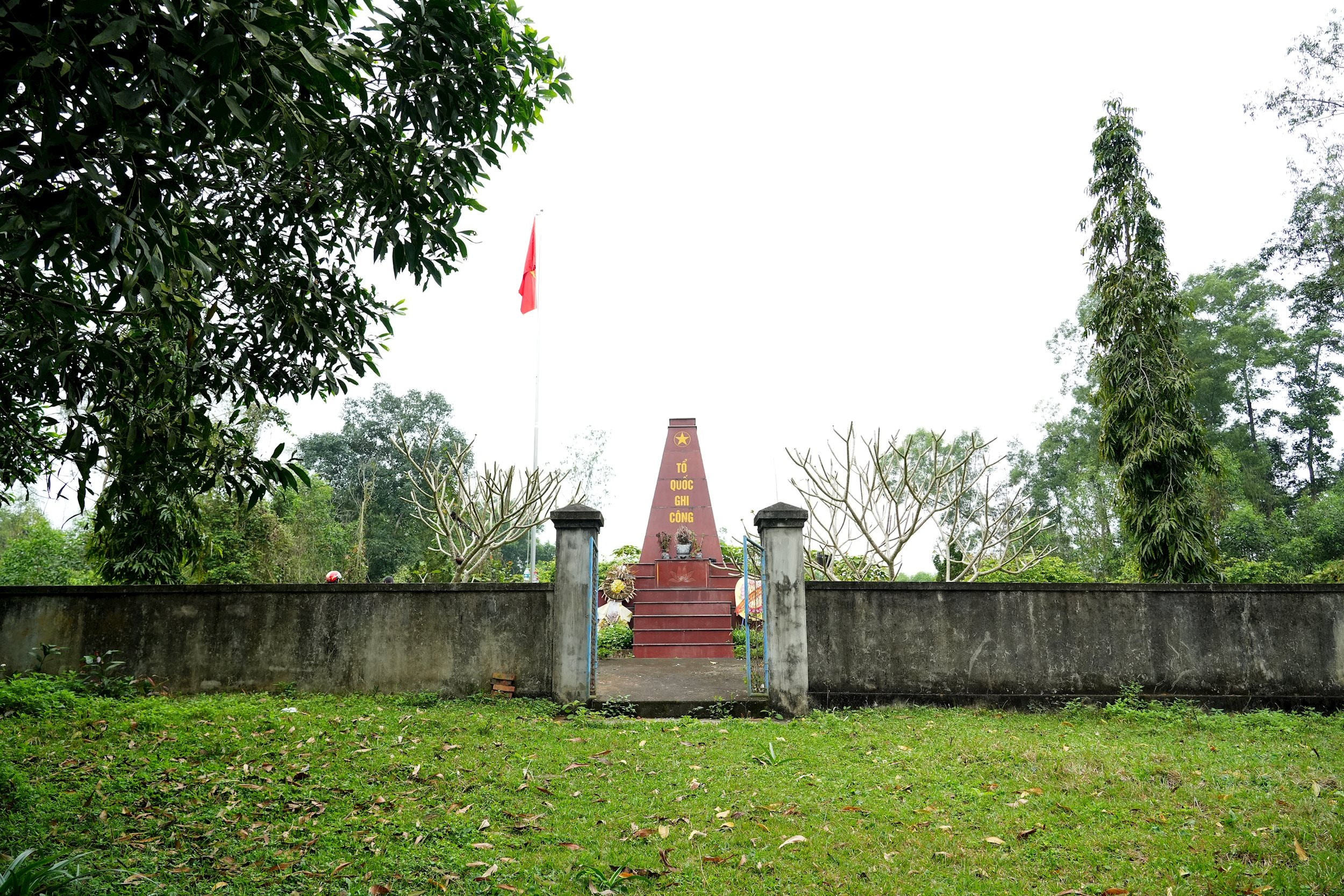
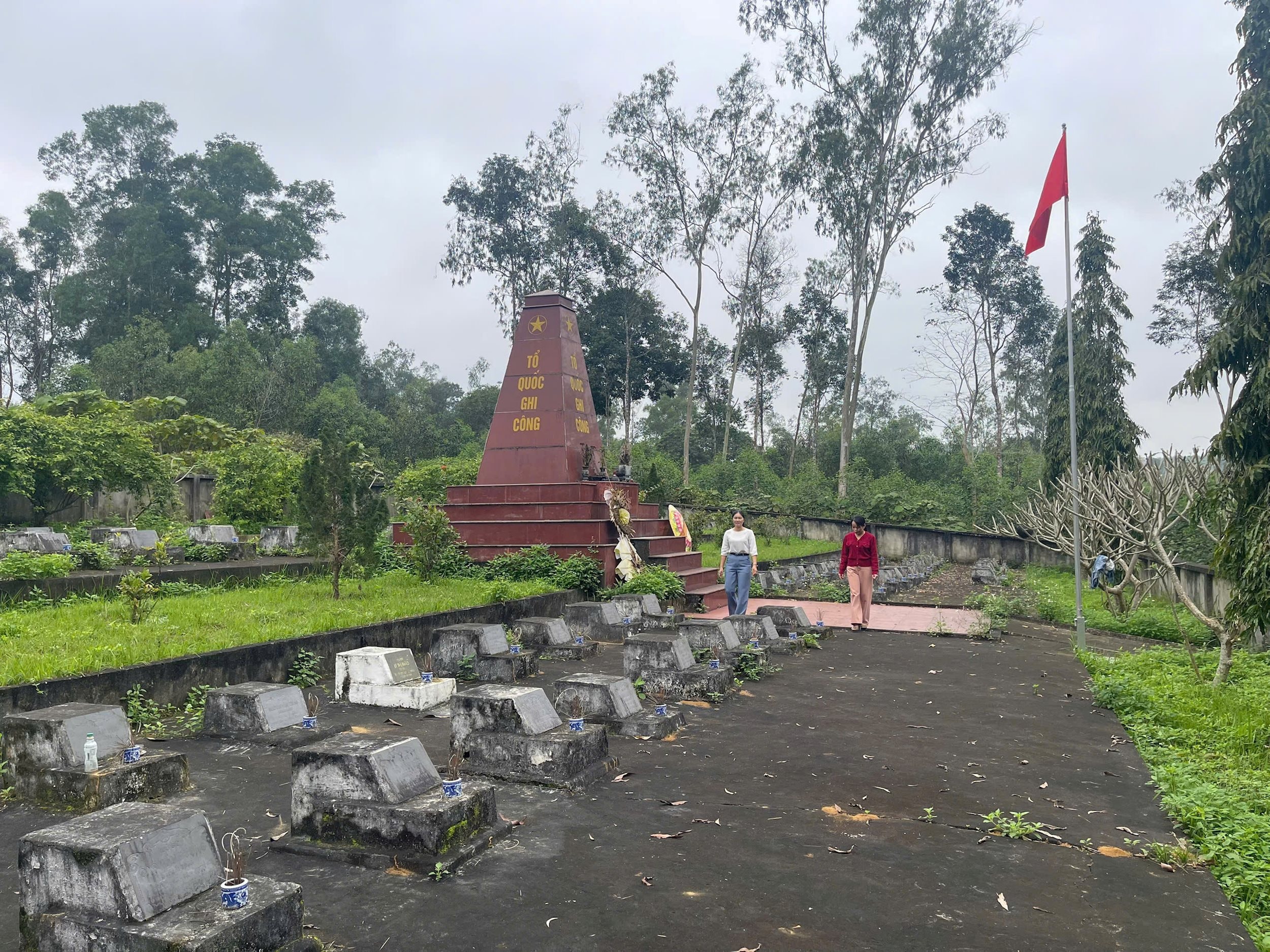
We moved up to the Ho forest area, where there is now a small cemetery nestled beneath lush green acacia hills. Ms. Bui Thi Nga told me that the cemetery used to have hundreds of graves, but now only over 130 remain, mostly those of fallen soldiers. This is because some of the martyrs' remains were moved to the district's Martyrs' Cemetery, while others were exhumed by their families and reburied in their family cemeteries. Their relatives live in many distant places and rarely, if ever, visit.
We walked in silence amidst the rows of tombstones. Besides the rows of tombstones for fallen soldiers, there were also some for martyrs; some whose names were unknown, and even the grave of a Chinese martyr.
.jpg)
Ms. Nga also stated: In addition to the martyrs whose remains have been exhumed and interred in the district's Martyrs' Cemetery, the local government and people regularly maintain and repair the site to ensure it is not forgotten. Every year, on major holidays such as the War Invalids and Martyrs' Day (July 27th), organizations, veterans, and people in the area come to light incense and express their gratitude to those who have passed away.
We recently heard that there's a plan to build a concrete road leading to the cemetery. We hope this project will be implemented soon so that we won't have to travel on the winding, muddy dirt road we currently use whenever we visit the cemetery.
Ms. Bui Thi Nga - Vice Chairperson of the People's Committee of Cat Van Commune
It is evident that, over time, despite local authorities allocating funds for restoration and repair, the area has inevitably deteriorated. The graves of fallen soldiers here appear to have been distorted by time and the erosion of memory, with long rows of tombs nestled in a desolate space.
Ultimately, although it is a cemetery for fallen soldiers, it is also a historical witness, a place that records the tragic stories of a time of bloodshed. Each grave here is a memory of patriotism, of dedication and silent sacrifice. Therefore, it is essential that relevant authorities pay more attention to preserving this place as part of its historical heritage, helping present and future generations better understand the glorious past of the nation.
Leaving Cat Van, I carried with me many lingering thoughts. The traces of a time of evacuation, of thatched houses, bunkers, and trenches that once sheltered countless wounded soldiers, now seem to have faded with time. Cat Van today has changed; the Cung Bridge is nearing completion, replacing the old Cung ferry crossing, but the memories of a time of war and the unwavering bond between soldiers and civilians still resonate, echoing from the Lam River up to the rolling hills.
Although the war is long over, the stories of the bond between soldiers and civilians, the stories of a time of evacuation in this land, remain. The Martyrs' Cemetery – the resting place of soldiers who were treated at Military Hospital 4 – still stands here, silently amidst the acacia hills, reminding us of our responsibility to preserve and honor these historical relics...