

You won't be fooled by deepfakes if you know these 6 important tips.
In the age of rapidly developing artificial intelligence (AI), deepfake scams are becoming increasingly sophisticated and harder to detect. However, you can still protect yourself from fake content if you master these six important tips.
In this era of rapidly developing digital technology, the line between reality and virtuality is becoming increasingly blurred. One of the biggest threats to truth and trust is "deepfake," a technology that creates incredibly sophisticated fake videos, images, and audio.
These deepfake products can be used for a variety of purposes, from entertainment to fraud, defamation, and even political instability. So how can we protect ourselves from these sophisticated scams?
1. Reverse image and video search - How to detect fake content
Reverse image search is one of the simplest yet most effective methods for verifying the authenticity of online content.
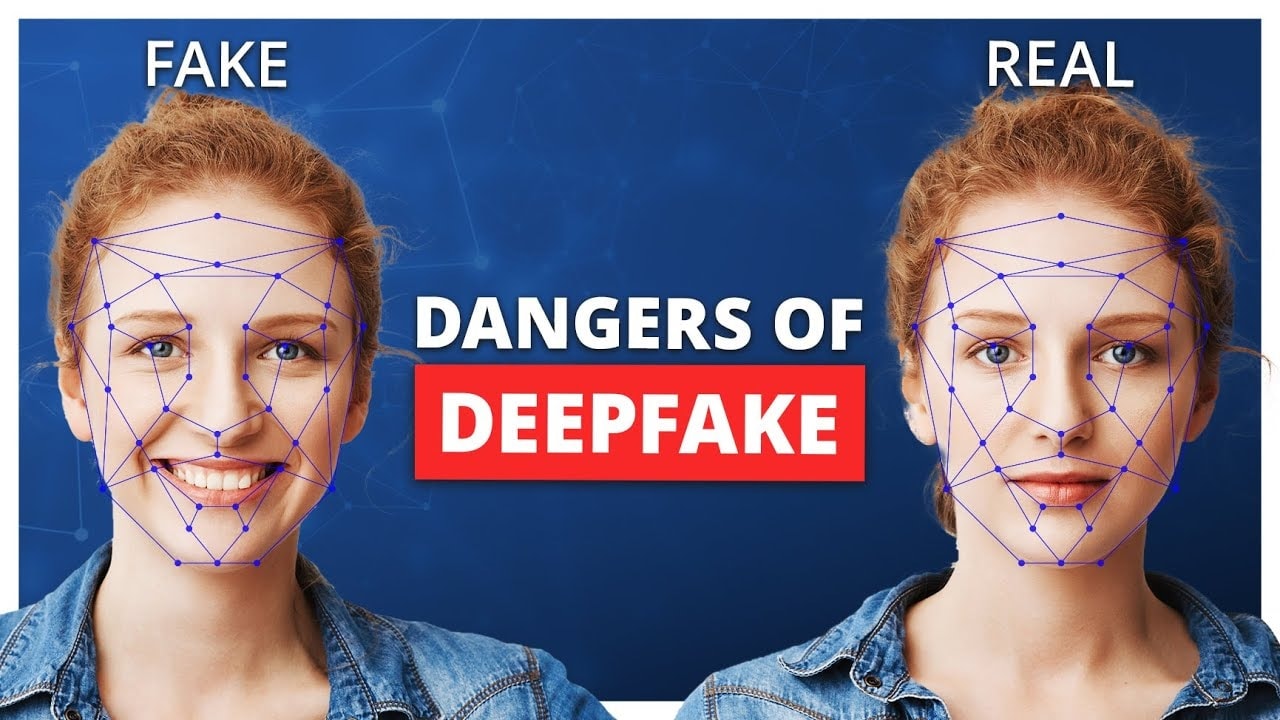
When someone tries to trick you with a fake profile, or when you need to check if a photo has been edited, you should use this method. It's also very useful in detecting deepfakes, fake videos created using AI.
How to perform reverse image search
You can easily perform a reverse search with Google Lens. Simply find the image you want to check, click the Lens icon, and Google will display the websites containing that image.
If an image appears on multiple pages with different titles or originates from a website that provides free images, it is very likely a fake image.
Reverse engineering deepfake videos
If you suspect a video is deepfake, you can use free checking tools like Deepware. These tools work similarly to reverse phone number lookup services, helping you trace the video's origin and verify its authenticity.
Fake profiles discovered on social media.
Identifying fake accounts on social media can be more complicated, but there are still ways to check:
Reverse image profile search:Upload the image to Google or use Google Lens to see if it appears on other websites.
Search for name and username:Enter the account name along with the social media platform to trace it.
Copy and search images:Right-click on the image, select Copy image address, then go to Google, select Search by image, and paste the copied address into the search bar.
Similarly to images, if a video or photo appears on multiple websites with different names or originates from a photo hosting website, it could be a sign of fake content.
By using reverse engineering tools, you can easily detect and protect yourself from online scams.
2. Live interaction verification - How to identify AI video scams
AI video call scams are becoming increasingly common, but the good news is you can protect yourself with a simple, in-person interactive test.
Observe the head movements:Ask the caller to quickly tilt their head to one side. If it's a fake video, the movement will look unnatural or distorted.
Check for latency:Deepfake videos often have a delay, making the images look stiff and robotic rather than reflecting real human reactions.
Confusing people to test their reaction:Say something unexpected or ask a random question. AI often struggles to react quickly to unexpected situations, which can catch a scammer off guard.
If you notice any suspicious signs, end the call immediately to avoid being scammed.
3.Identify deepfakes through facial inconsistencies.
When watching videos of real people, their faces always look natural, from their expressions to the way their mouths move when they speak. People often joke that AI lacks personality, but in reality, deepfake tools still cannot accurately reproduce human emotions.
If you suspect you're watching a deepfake video, pay attention to facial anomalies; this is one of the simplest ways to detect fake content:
Awkward expression:See if they can easily change their facial expressions. Deepfakes often have difficulty expressing emotions naturally.
Misaligned mouth movements:Observe carefully when they speak; if their mouth moves unnaturally or out of sync with their voice, it could be a sign of a deepfake.
While not everyone has perfect facial expressions when speaking, these small details can help you distinguish between a real person and a fake AI.
4. Detecting deepfakes through unusual details.
Deepfake images and videos often reveal signs that they are not real. One of the easiest ways to identify them is to look for subtle flaws that AI struggles to reproduce accurately.
Strange hand shape:Deepfakes often have problems recreating hands, especially when characters put their hands in their pockets or perform complex movements. Fingers may look distorted or unnatural.
Unnatural movement:If the arm or body moves in a strange way, unlike a normal human reflex, it's very likely a deepfake.
Interacting with the surrounding environment:Observe how the characters move within the background. Deepfakes often don't blend well with the background, making them appear artificially "separated" from their surroundings.
These small details may not be immediately noticeable, but upon closer inspection, you will clearly see the difference between a real video and a deepfake.
5. Identifying deepfakes through robotic or faulty voices.
One of the simplest ways to detect deepfakes is by listening to the voices. Even with increasingly advanced AI technology, the voices in deepfake videos often still have anomalies:
The sound is like a robot:The voice may lack emotion, sound stiff or unnatural, like a computer-generated voice.
Strange audio error:Sometimes, you might hear distorted, intermittent, or strangely altered audio, signs that the voice was created using AI.
Lack of synchronization:In many cases, the voice and mouth movements don't match perfectly, creating a sense of "disharmony" when watching.
These errors aren't usually due to camera malfunctions but rather stem from the deepfake creator's lack of careful editing. If you notice these signs, be cautious as you may be watching a fake video.
6. Deepfake detection through poor interaction with objects.
AI still has many limitations when it comes to recreating how humans interact with objects.
To detect deepfakes, pay attention to unnatural object interactions, such as:
Strange accessories:Hats, glasses, or jewelry may appear distorted and not fit snugly against the body as they do in real life.
The object is distorted:If someone is holding an object like a glass of water, a phone, or cutlery, observe if it looks unusual. AI often has difficulty accurately displaying the fingers gripping the object.
Interacting with the environment:When people in photos or videos touch tables, chairs, or food, see if anything appears to be floating, distorted, or out of sync with the actual movement.
Although many deepfakes are created very sophisticatedly, with a little careful observation, you can still spot the signs of forgery. If there are any details that don't match how humans interact with the real world, consider it a warning sign.