

What does the black box on the plane record?
The aircraft black box is a crucial device that helps decipher the causes of aviation accidents. So what does the black box record, how does it work, and why is it "indestructible" in every accident?
In the mid-1950s, while investigating a series of mysterious accidents involving the de Havilland Comet—the world's first commercial jet aircraft—young scientist David Warren came up with a bold idea: to create a device that would record all flight data.
He envisioned a device that could store parameters such as speed, altitude, and especially cockpit sounds to know what the pilot said and how they reacted just before an accident occurred.
.jpg)
At the time, Warren was only 28 years old and working at the Aeronautical Research Laboratory in Melbourne, Australia. Although the idea was not initially widely accepted, the black box laid the foundation for one of the most important tools in modern aviation.
Since then, the black box has become an indispensable device in all aviation accident investigations, from commercial airplanes to helicopters. So what exactly is inside a black box?
Black boxWhat is that?
The flight recorder, often referred to as the "black box," actually consists of two separate devices: a flight data recorder (FDR) and a cockpit voice recorder (CVR).
According to David Esser, an aviation scientist at Embry-Riddle University in Florida, while the FDR (Flight Data Recorder) tells you what happened, the CVR (Cockpit Voice Recorder) helps reveal why it happened. This combination of technical data and cockpit audio has become a key tool in deciphering aviation accidents.
Typically, the data recorder is located in the tail section of the aircraft, an area with a higher chance of survival after an accident, while the voice recorder is located in the cockpit to record conversations between pilots as well as unusual sounds such as system warnings or engine noises.
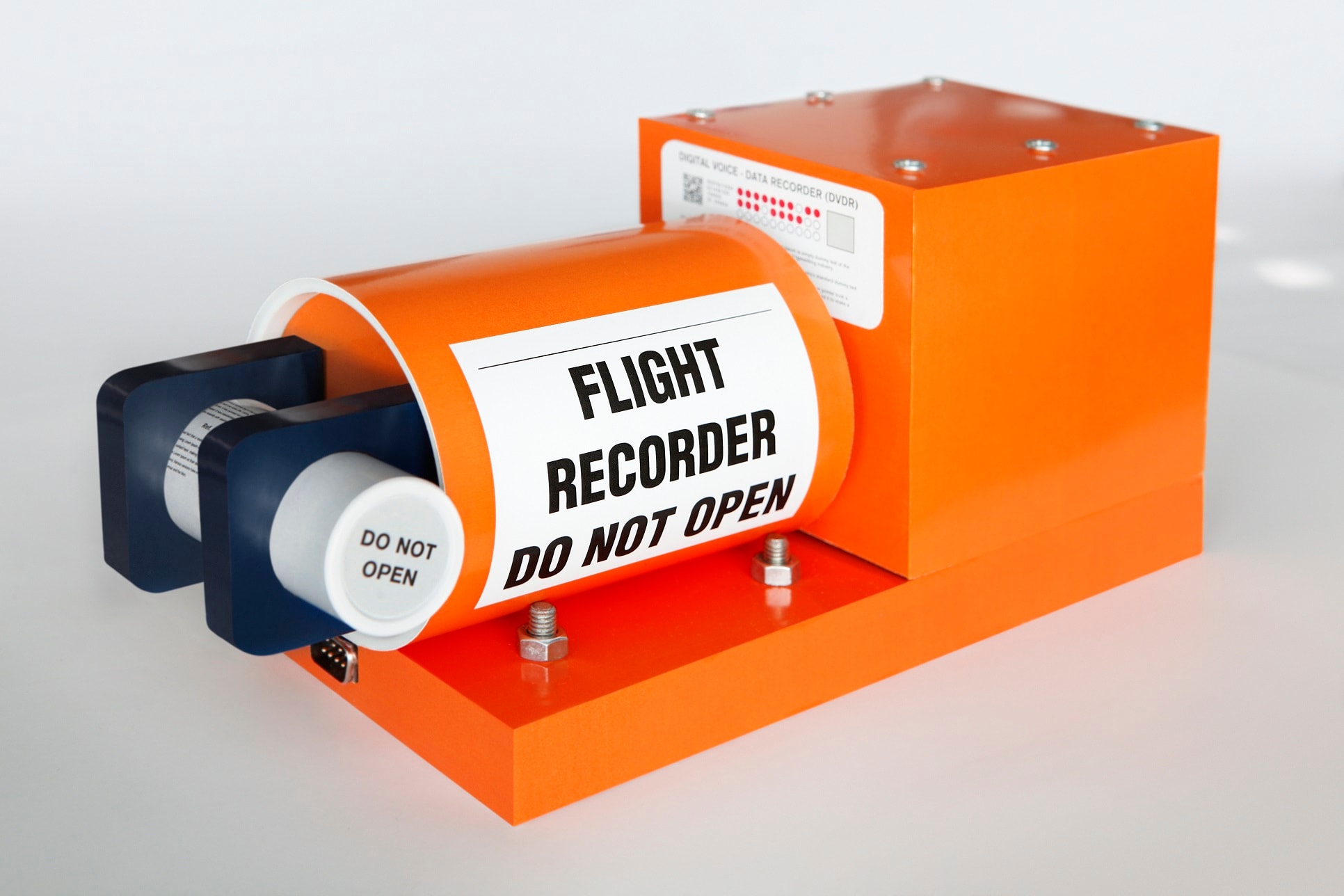
Photo: Internet
Both devices are equipped with underwater locator beacons, which help in quickly locating aircraft that have crashed into the sea.
Despite being called "black boxes," these devices are painted bright orange to make them easily identifiable in the rubble.
Regarding durability, Abdalla Elazaly, an advanced systems engineer at Honeywell, the company that manufactures black boxes for airlines such as Boeing and Airbus, said these devices are designed to withstand strong impacts, extreme temperatures, fires, explosions, and deep water pressure. The casings are typically made from titanium or stainless steel, ultra-durable materials used in the aerospace industry.
However, nothing is invulnerable. Elazaly said that in some extreme situations, such as a complete power outage, a collision at excessive speed, or prolonged submersion in deep water, even the black box can be damaged or data recovery impossible. Nevertheless, they remain crucial in post-accident investigations.
What does the black box record?
According to the U.S. National Transportation Safety Board (NTSB), many modern flight data recorders can store at least 88 key parameters about an aircraft's operation, from flight time, altitude, and wind speed to thousands of other technical details, recorded continuously over the last 25 hours of flight.
Furthermore, some advanced devices can track more than 1,000 data points inside the aircraft, supporting in-depth analysis when investigating incidents.
For example, the system can record whether and when a smoke alarm was triggered, the specific location of the flaps, or when the aircraft switched to autopilot. This information helps experts accurately reconstruct the flight path leading up to the accident.
Meanwhile, the cockpit voice recorder (CVR) focuses on capturing sounds and noises in the cockpit, from engine noises and landing gear sounds to switch noises, audio alerts, and pilot communication. This device is typically connected to a ceiling-mounted microphone located between the two pilots, ensuring that all important sounds are recorded.
.jpg)
Photo: Internet
According to regulations from the U.S. Federal Aviation Administration (FAA), all commercial aircraft are required to be equipped with a cockpit voice recorder capable of continuously recording at least 25 hours of flight time, ensuring data is readily available for investigations and improving flight safety.
When an airplane accident occurs, the flight recorder becomes a golden key that helps experts trace the cause of the incident. However, only those belonging to official investigation teams such as the NTSB, FAA, and other authorized agencies are allowed to access the data collected from these devices.
According to electrical engineer Houbing Song from the University of Maryland (USA), who was involved in developing the recording system for the FAA, analyzing data from black boxes "is no different from a criminal investigation," where every detail could be vital evidence.
Unlike older generations that used magnetic tape, modern flight recorders store data on solid-state memory cards, similar to memory cards in laptops or phones.
The initial phase of the recovery process involves checking that the memory card is intact, then backing up all its contents for analysis. Depending on the severity and complexity of the accident, the investigation can last from several weeks to several years.
In addition to assisting in post-accident investigations, flight data recorders provide significant value in daily operations. Many commercial airlines are now participating in a voluntary program called "Flight Operations Quality Assurance" (FOQA), collaborating with the FAA to download a portion of flight data for analysis, monitoring, and operational performance improvement.
For example, the FAA can use this data to detect fuel consumption problems, potential engine malfunctions, or other inefficient operating behaviors.
"The idea is to identify and address dangerous trends before they lead to serious incidents," shared expert David Esser.
However, a major drawback of the black box is that it is only accessible after the flight. In situations where the device is severely damaged or cannot be found, data recovery may become impossible.
To overcome this limitation, there are now initiatives aimed at transmitting real-time data from flight data recorders to the ground. "The technology is ready. The only question is when we decide to implement it," Esser said.