

Why should you turn off your Wi-Fi router at night before going to sleep?
In the digital age, Wi-Fi is almost always running 24/7 in every home. However, turning off your Wi-Fi router at night not only saves energy but also has implications for user health.
Wi-Fi has become an integral part of modern life, connecting phones, computers, and a host of smart devices to the digital world. We use Wi-Fi for work, study, entertainment, and even to monitor our health through wearable devices like smartwatches or sleep trackers.
However, amidst that convenience, few realize that Wi-Fi is also a source of electromagnetic fields (EMF), a type of radio radiation that our bodies are constantly exposed to, especially at night.
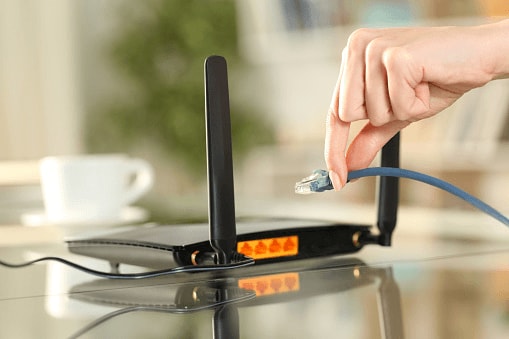
Increasing research is showing a link between long-term exposure to EMFs and health problems, including effects on brain function, cell repair processes, and even male fertility.
Although scientists are still clarifying the extent of EMFs' dangers to humans, many experts recommend proactively minimizing exposure, especially during sleep, when the body needs an ideal environment for cell repair and regeneration.
In an era where we are increasingly dependent on technology, turning off Wi-Fi at night can be a small but worthwhile action to protect our bodies from the insidious effects of the digital world.
Potential risks from Wi-Fi radiation: A scientific perspective on its effects on cells and sleep.
Electromagnetic radiation emitted from Wi-Fi devices is increasingly attracting the attention of researchers due to its potential effects on human health. Several studies presented in scientific literature show that prolonged exposure to Wi-Fi radiation can cause biological changes at the cellular level, particularly in the brain.
Specifically, EMF waves can weaken the blood-brain barrier, a crucial protective mechanism preventing harmful substances from entering brain tissue. In addition, researchers also observed changes in the expression of microRNAs – small molecules that regulate genes and play a key role in neurological functions and cellular metabolism.
One notable consequence is a reduction in cellular energy production efficiency, which in turn causes chronic fatigue and hinders the body's natural ability to recover, especially during sleep.
Sleep, a crucial period for the body to repair and regenerate cells, can be disrupted if its functions are impaired. This has far-reaching consequences for both physical and mental health, weakening the immune system, concentration, and daily recovery abilities.
Although there is still much debate in the scientific community about the true extent of the danger posed by Wi-Fi radiation, these initial findings serve as a noteworthy warning in the context of wireless devices becoming increasingly prevalent in modern life.
Continued research, monitoring, and the implementation of appropriate protective measures will be necessary to balance technological convenience and public health.
Potential health risks from Wi-Fi: From reproductive health to cardiovascular function.
While Wi-Fi has become an indispensable part of modern life, more and more research is raising questions about the long-term effects of electromagnetic radio waves on human health. Below are three areas of particular interest to scientists.
1. Male reproductive health
Some studies suggest that prolonged exposure to Wi-Fi radiation may affect male fertility. A 2014 study showed a decline in reproductive function in male mice after prolonged exposure to EMFs.
In 2016, another study found DNA damage in the testicular tissue of mice exposed to similar radiation. Notably, a large-scale 2015 study of over 1,000 men showed that those who regularly used wireless internet had lower sperm motility rates compared to those who used wired internet.
However, the scientists also noted that other influencing factors such as smoking, living environment, or diet were not tightly controlled in this study.
2. Impact on perception
The impact of Wi-Fi on the brain and neurological function is also a topic pursued by many international research groups. A 2017 study on mice indicated that exposure to Wi-Fi waves can impair recognition and orientation abilities.
.jpg)
Photo: Internet
These findings raise questions about whether radiation from Wi-Fi may be linked to neurodegenerative diseases. However, the evidence is currently limited to animal studies and cannot be definitively confirmed for humans.
3. Cardiovascular system
A 2015 study conducted on rabbits showed that radiation from Wi-Fi can affect heart rate and blood pressure. While the exact mechanism is still unclear, scientists believe that further research on humans is needed to verify the link between Wi-Fi waves and the risk of cardiovascular disorders.
Based on findings from animal studies, scientists warn that Wi-Fi is not entirely "harmless" as many people believe. However, most current research is still in its exploratory phase and requires more clinical evidence in humans to draw definitive conclusions.
In the meantime, minimizing unnecessary exposure to strong sources of radiation and using devices in a controlled manner should be considered.
Users are advised to turn off their Wi-Fi router at night.
In the context of modern life becoming increasingly dependent on wireless connectivity, many health and technology experts are beginning to question: does Wi-Fi affect sleep quality?
One of the most common recommendations nowadays is to turn off your Wi-Fi router at night, not only to save energy but also to minimize exposure to EMF radiation during sleep, when the body is in its deepest state of recovery.
EMFs emitted from devices such as Wi-Fi routers, smartphones, and computers can affect the functioning of the nervous system and sleep, especially in people sensitive to electromagnetic waves.
Turning off Wi-Fi not only helps reduce EMF exposure in the sleeping environment, but also allows the nervous system to regulate and recover more naturally, a key factor for deep and effective restorative sleep.
In addition to reducing biological impact, a technology-free sleeping environment also contributes to improved rest quality. By eliminating electronic devices and blue light from screens, users will find it easier to fall asleep and be less interrupted by notifications or wireless signals.
This also offers mental benefits by creating a quiet, less distracting space, ideal for starting your day with a refreshed mind and higher concentration.
Regarding this issue, Dr. Syamlal S., Senior Advisor at the Department of Neurology, Kimshealth Hospital (India), stated that leaving Wi-Fi on while sleeping is generally not harmful, but some factors related to EMF radiation should be considered.
He emphasized, "Currently, there is no truly convincing scientific evidence to suggest that Wi-Fi signals or EMFs emitted from routers can negatively affect human health." According to him, Wi-Fi operates at low power levels, many times lower than the limits considered harmful in current safety standards.
However, if users remain concerned about prolonged exposure to EMF waves, turning off Wi-Fi at night can be considered a reasonable precautionary measure, although the risks have not been fully verified.
"Some people claim that Wi-Fi can negatively impact their sleep quality, but there is currently no reliable scientific data to prove this link," he added.
In summary, simple actions like turning off Wi-Fi at night can be a helpful way to improve sleep and overall health, especially in an age where technology is present 24/7 around us.