

Farmers in Nghe An province head to the fields to stockpile 'dry rations' for their livestock.
After harvesting the spring rice crop, farmers in Nghe An province take advantage of the hot weather to gather straw in the fields and store it as feed for their buffaloes and cows.
During these intensely hot days, in the fields where the spring rice harvest has just been completed, alongside the plumes of smoke rising from burning straw, farmers in Nghe An have been taking advantage of the opportunity to go down to the fields to collect dry straw.
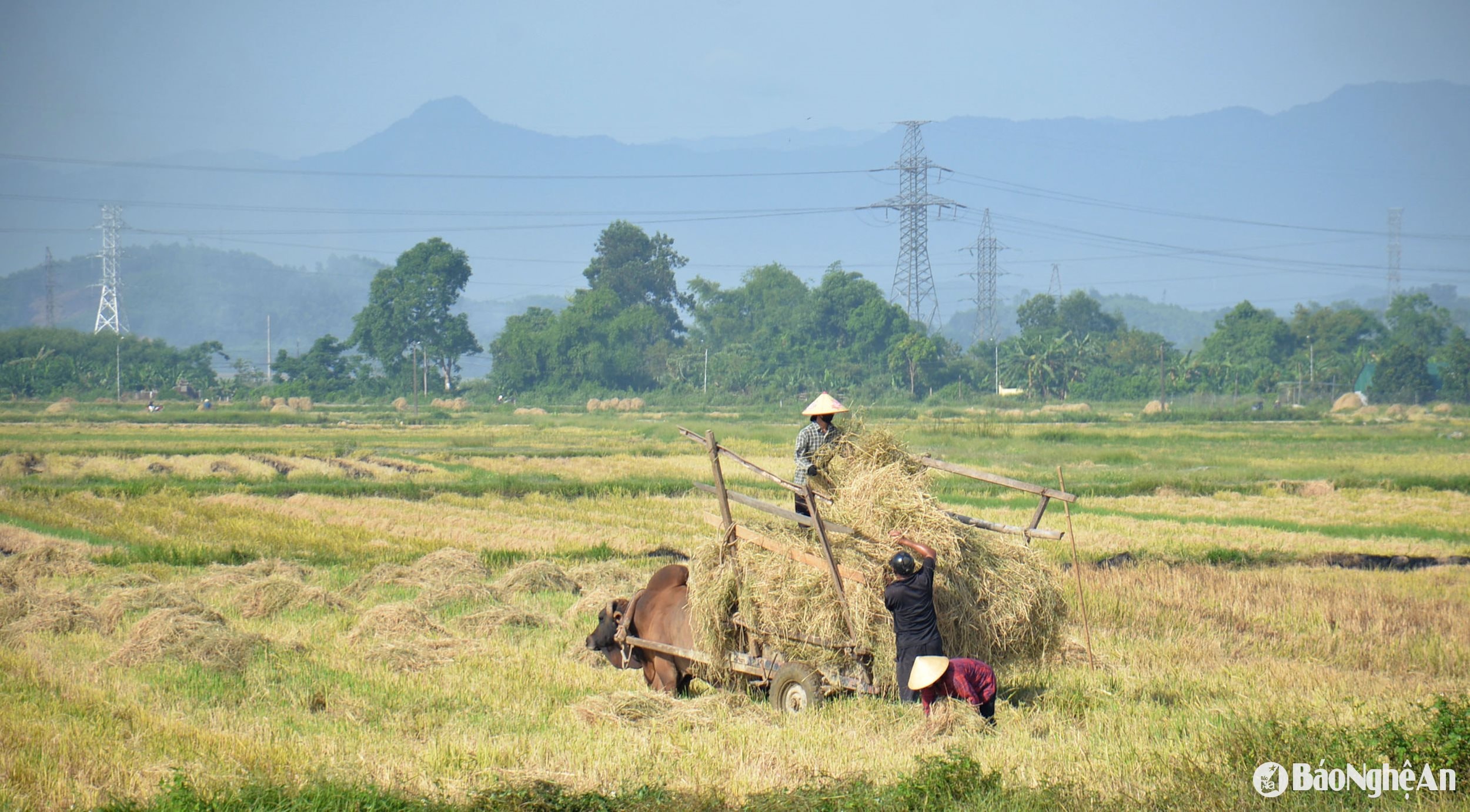
Mr. Nguyen Cong Binh from Minh Son commune (Do Luong district), along with his family members, collects straw in the fields. He says that during these hot days, his family drives ox carts to the fields daily to collect straw because the hot weather prevents the straw from becoming damp. For the past three days, his family has collected 2-3 ox carts of straw each day. To carry more straw, they use poles to tie it up to 1.5 meters high on the ox cart.
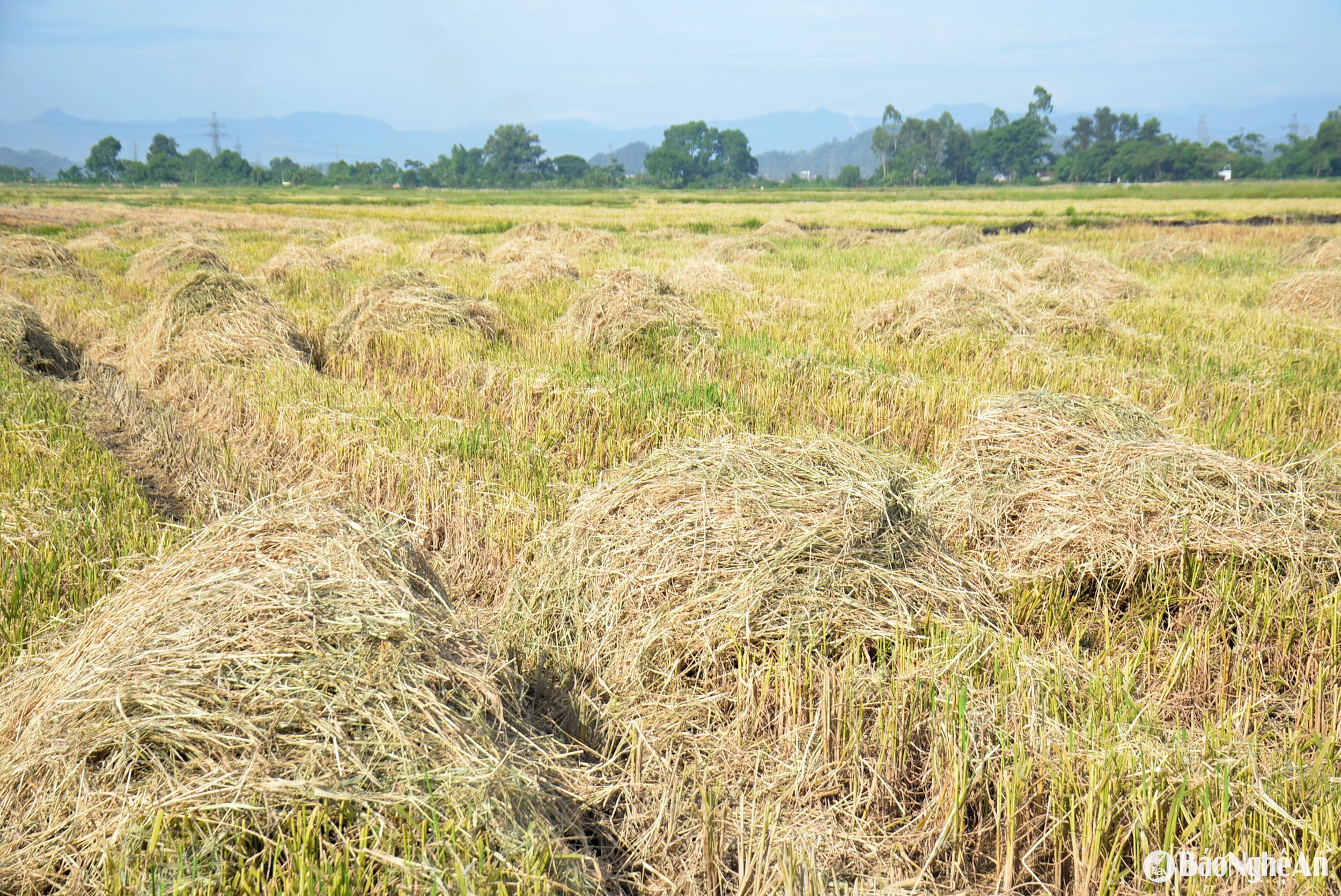
“Our family always raises 2-3 beef cattle. To ensure a year-round food supply for the cows, in addition to collecting all the straw from our family's 4 acres of rice fields, we also ask for straw from other fields in the commune. The straw is dried right in the fields, so when transported back, it's simply piled into the straw shed without needing to be dried again. To keep the straw dry and prevent it from getting wet, the straw shed has a roof to ensure it doesn't leak or get wet from rainwater. Thanks to this, the herd of cows always has enough food, especially during periods of heavy rain, storms, or prolonged cold weather, so we don't have to worry about them going hungry,” Mr. Binh shared.
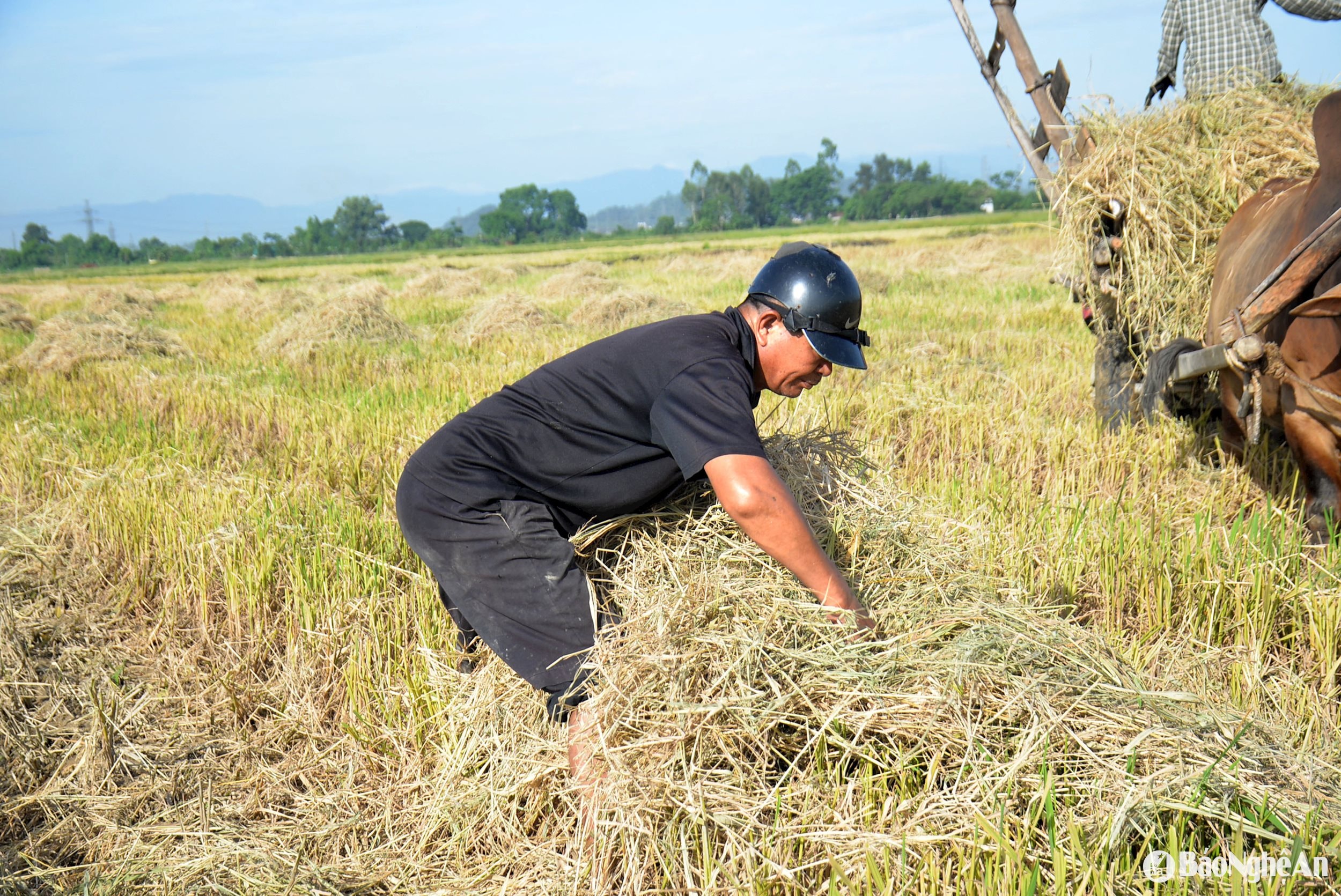
For Mr. Thai Van Lam's family in Thanh Phong commune (Thanh Chuong district), collecting straw after harvest is not only a way to stockpile "dry food" for their buffaloes and cows, but also to use it to cover the rows for growing vegetables, or to cover the base of fruit trees, in order to retain soil moisture, limit weed growth, and make the soil more porous.
To collect a large quantity of straw in the scorching heat, the combined efforts of many people are needed. Therefore, all family members are mobilized to the fields to quickly gather the straw to avoid the heat.
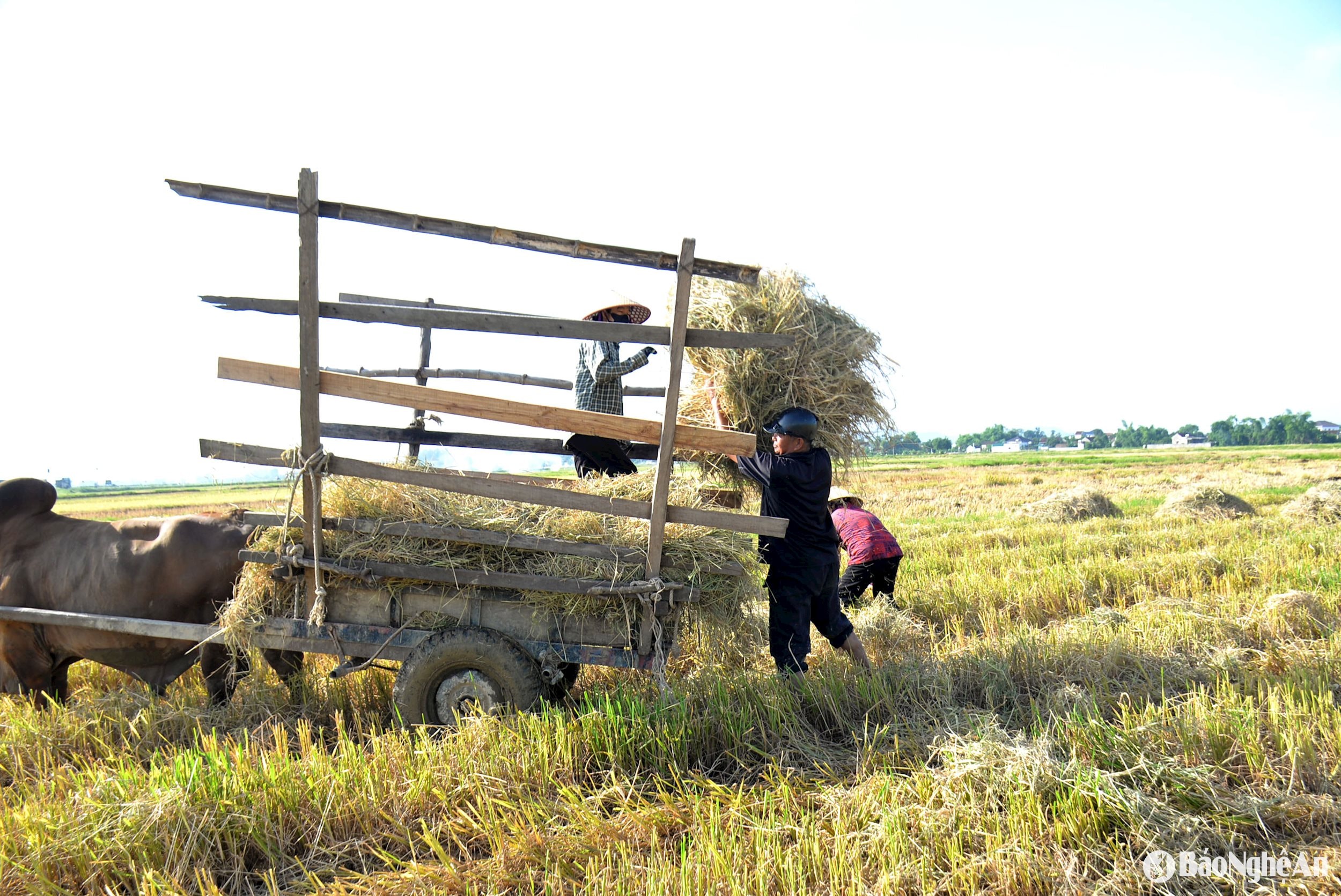
Straw is the part of the rice plant stem, from the top of the stubble upwards. After the rice harvest, the straw is discarded in rows on the stubble and dried quickly in the sun in the field. Once dry, farmers simply drive ox carts to the field and pile the straw into mounds for easy loading onto trucks.
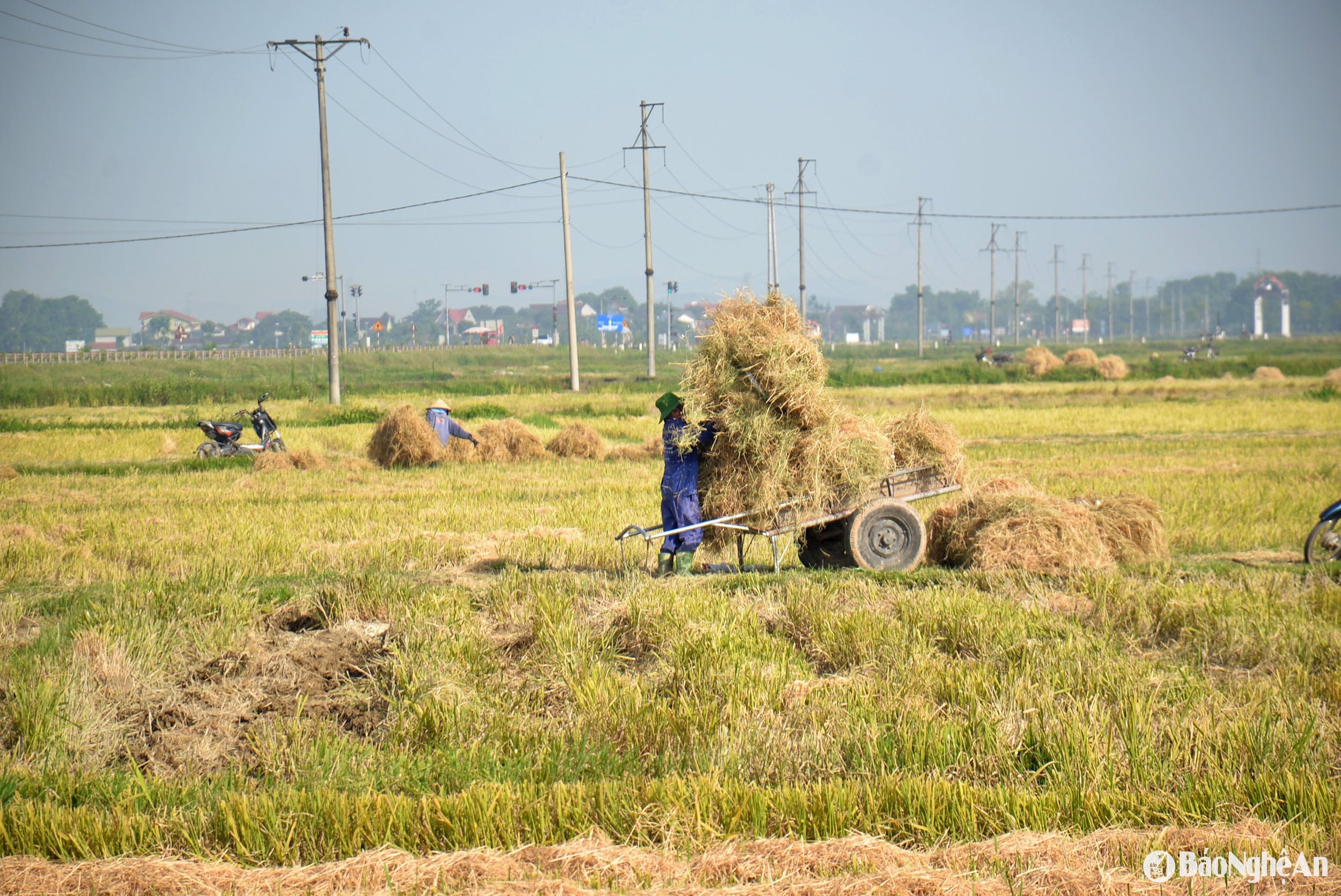
Although only a byproduct of rice farming, straw has given farmers more peace of mind during rainy, stormy, or cold days, providing them with on-site feed for their buffaloes and cows. Straw collected from the fields is stored in various ways; it can be piled into haystacks in the garden or bundled into stacks and stored in straw sheds. Because the straw is dried directly in the field, it retains the fragrant aroma of rice plants year-round, and its good preservation prevents it from rotting or becoming moldy.
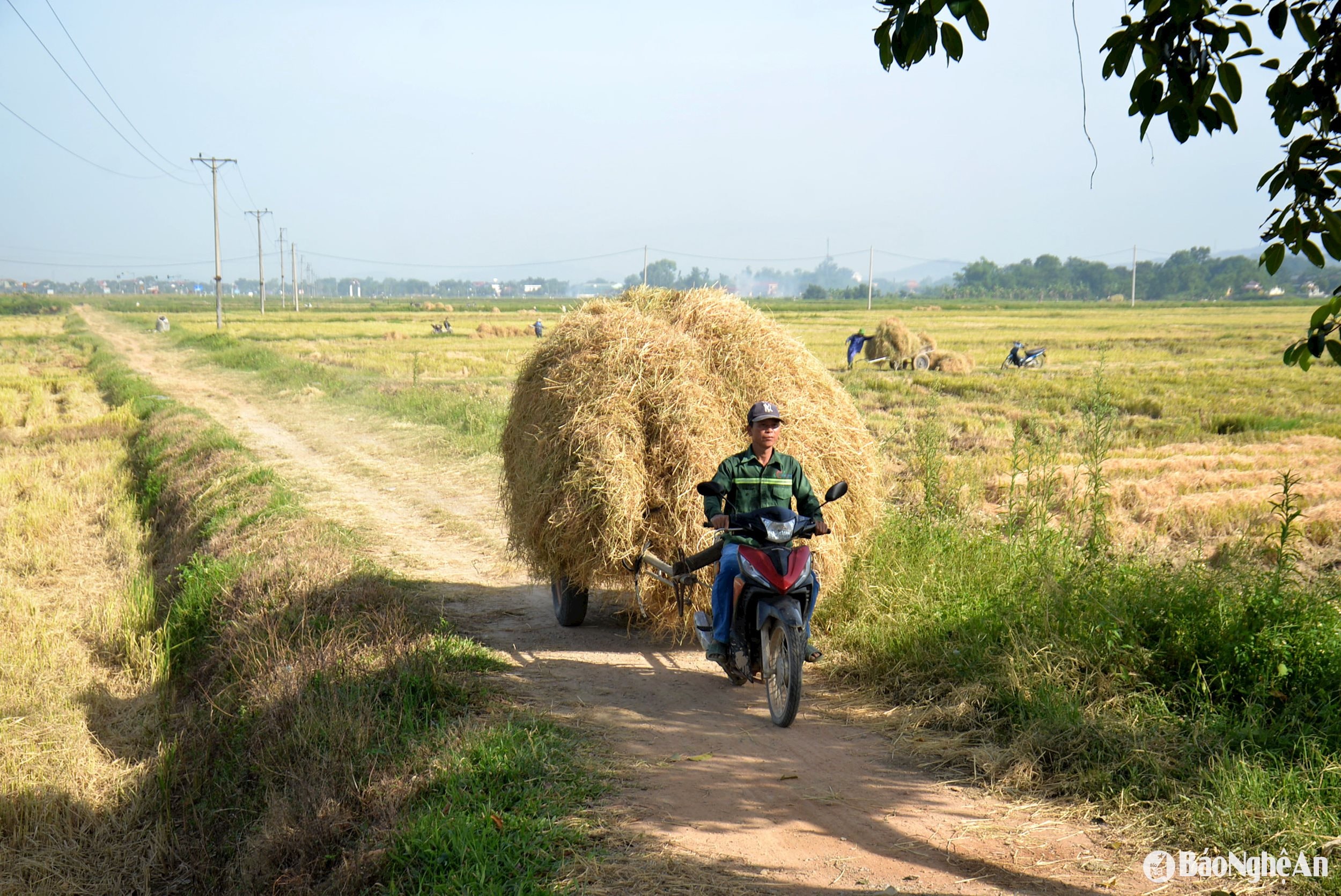
Therefore, during the rice harvest season, families who cultivate little land but raise many buffaloes and cows go to great lengths to ask other families for straw, but they must raise the issue at the beginning of the season to ensure that the straw is not burned.
According to agricultural experts, one of the most effective ways to dispose of straw is to use it as animal feed. This is a simple, cost-effective method that still ensures the health of the animals. Straw is a source of fiber, which helps improve digestion in livestock.
When selecting straw for animal feed, attention should be paid to its quality. The straw must be dry, clean, and free from signs of mold or pests.
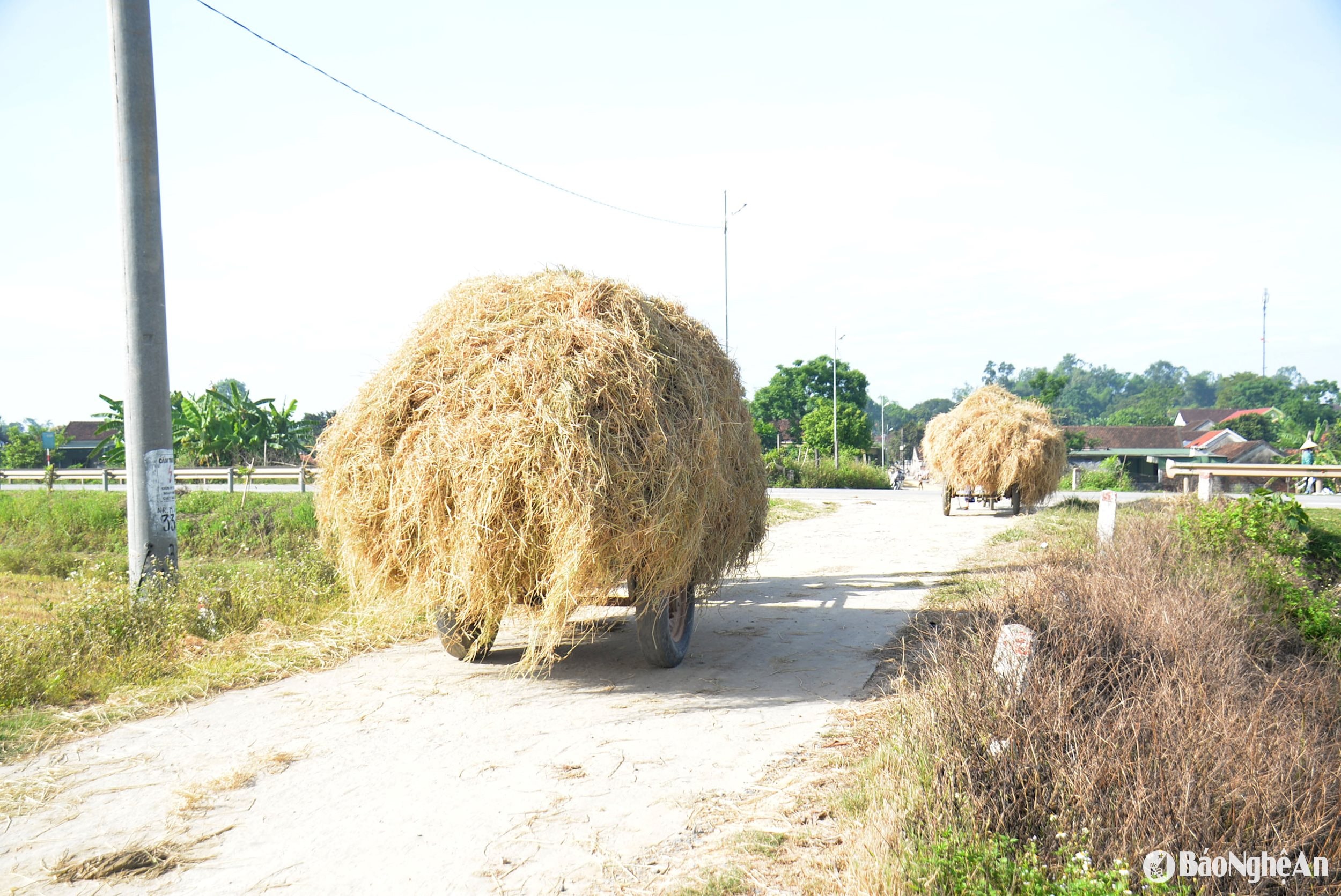
However, to convert straw into animal feed most effectively, it is first necessary to chop the straw into small pieces and soak it in water for about 1-2 hours. Afterward, it can be mixed with other feeds to make it easier for livestock to digest.
Furthermore, straw is also utilized as a raw material for straw mushroom cultivation, reducing costs and yielding high economic efficiency; or it can be used as a padding material for fragile goods or fruits during transportation, ensuring safety. Therefore, many farmers also collect straw to sell to businesses.